.png)
What is B2B Marketing?
Samenvatting
B2B marketing in 2026 involves the complex process of selling products or services from one business to another, a distinct approach from consumer-focused marketing. This requires specialized strategies focused on long-term value, relationship building, and addressing the logical needs of multiple stakeholders. Effective B2B marketing leverages digital channels like SEO, content marketing, and targeted outreach, all of which can be streamlined using multichannel communication platforms to manage intricate sales cycles and improve lead conversion.
TL;DR
- B2B marketing targets other businesses, involving longer sales cycles and logical, data-driven decision-making.
- Key B2B strategies for 2026 include content marketing, SEO, Account-Based Marketing (ABM), and personalized email campaigns.
- B2B e-commerce and customer service are critical for providing a seamless, professional experience and building long-term relationships.
- Unlike B2C marketing, B2B focuses on building trust and demonstrating ROI to multiple stakeholders within an organization.
- Modern tools like shared inboxes and AI automation are essential for managing leads across multiple channels and improving response times.
What is B2B Marketing?
B2B marketing, which stands for business-to-business marketing, is the practice of marketing and selling products or services from one company to another. The B2B full form highlights its core function: instead of appealing to individual consumers, B2B marketers target organizations, which could be anything from small startups to large enterprises. The primary purpose of what is b2b marketing is to provide other businesses with the tools, resources, or supplies they need to operate, grow, or improve their own offerings. This distinction is vital because business purchasing decisions are typically driven by logic, financial sense, and potential return on investment (ROI), rather than emotion or impulse. In today's interconnected digital economy, understanding what is b2b in marketing is more important than ever, as companies rely on a complex network of partners and suppliers to succeed.
What is B2B E-commerce?
B2B e-commerce is the online transaction of goods or services between businesses. As digital transformation accelerates, more B2B purchasing has moved from traditional methods like sales calls and paper catalogs to sophisticated online platforms. Unlike consumer e-commerce, B2B platforms must handle unique complexities such as variable pricing for different clients, large bulk order capabilities, and integration with a company's procurement or ERP systems. A crucial component is providing robust self-service options, allowing business customers to manage their accounts, reorder supplies, and track shipments without needing to speak to a representative every time. As this trend grows, it is essential to improve your e commerce customer experience with Trengo to meet professional expectations. For those looking to delve deeper, exploring various e-commerce marketing strategies can provide a significant competitive advantage.
What is B2B Customer Service?
B2B customer service is the support provided to business clients throughout their relationship with a company. This form of service is fundamentally different from B2C support due to the higher stakes involved. B2B transactions often represent significant investments, and the products or services are typically critical to the client's operations. Consequently, support issues can be more complex, requiring deep technical knowledge and a consultative approach. Excellent B2B customer service is a powerful marketing tool in itself. It fosters long-term partnerships, increases customer lifetime value through retention and upselling opportunities, and builds a strong brand reputation through word-of-mouth referrals from satisfied business clients.
What is B2C Marketing?
B2C marketing, or business-to-consumer marketing, is the set of strategies and tactics used to promote and sell products or services directly to individual consumers for their personal use. The focus is on fulfilling personal needs, wants, and desires. B2C marketing campaigns are often designed to be entertaining, emotionally resonant, and aspirational, encouraging quick, often impulse-driven purchasing decisions. If you want to learn more about the topic, read our b2c marketing meaning article too.
B2C vs B2B: What is the Difference?
The primary difference between B2B and B2C marketing lies in the target audience, which fundamentally changes every aspect of the strategy. While both aim to sell a product or service, the motivations, processes, and communication styles are worlds apart. Understanding how is b2b marketing different from b2c is key to developing an effective plan. Here are the main distinctions:
- Target Audience: B2B targets organizations and teams of professionals, whereas B2C targets individual consumers.
- Sales Cycle: B2B sales cycles are typically long and complex, lasting weeks or months and involving multiple touchpoints. B2C cycles are much shorter, sometimes instantaneous.
- Decision-Making: B2B decisions are rational, data-driven, and involve multiple stakeholders (e.g., procurement, finance, end-users). B2C decisions are often emotional and made by an individual.
- Content Focus: B2B content must be educational, demonstrate value, and focus on ROI. B2C content is often entertaining, focused on lifestyle, and builds an emotional connection.
- Marketing Channels: B2B marketers frequent platforms like LinkedIn, industry-specific forums, and trade events. B2C marketers focus on mass-market channels like Instagram, Facebook, and television.
How B2B Marketing Works
B2B marketing operates through a structured, multi-stage process designed to guide potential business customers from initial awareness to a final purchase and beyond. It begins with creating awareness about a problem and positioning the company as a potential solution. From there, the focus shifts to lead generation, capturing contact information from interested parties through content downloads, webinar sign-ups, or demo requests. Once a lead is captured, it enters a nurturing phase where the marketing team provides valuable information through email campaigns and targeted content to build trust and educate the prospect. As the lead shows more interest, they are qualified by the sales team to ensure they are a good fit. Finally, the sales team engages in a consultative process to close the deal. This entire funnel is often long and requires close alignment between marketing and sales teams to succeed.
B2B Marketing Strategies That Drive Results in 2026
In 2026, a successful B2B marketing strategy is multifaceted, blending data-driven digital tactics with a deep understanding of the customer's needs. The goal is to build relationships and establish credibility long before a sales conversation begins. Modern strategies emphasize providing value upfront and using technology to personalize outreach at scale. Here are the most effective strategies driving results today.
Content Marketing for Thought Leadership
Content marketing is the cornerstone of modern B2B efforts. It involves creating and distributing valuable, relevant, and consistent content to attract and retain a clearly defined audience. For B2B, the goal is to establish thought leadership. By producing in-depth whitepapers, data-backed case studies, insightful blog posts, and educational webinars, a company can prove its expertise and become the go-to resource in its industry. This builds immense trust with potential clients, who will naturally turn to the expert when they are ready to buy.
SEO and SEM for Visibility
Search Engine Optimization (SEO) and Search Engine Marketing (SEM) are critical for getting in front of B2B buyers when they are actively researching solutions. SEO focuses on optimizing website and content to rank organically in search engine results for relevant business-specific keywords, driving high-quality, consistent traffic. SEM, or paid advertising (PPC), complements this by allowing businesses to place ads at the top of search results for highly specific terms, capturing qualified leads who are showing clear purchase intent.
Account-Based Marketing (ABM) for Targeted Outreach
Account-Based Marketing (ABM) flips the traditional marketing funnel. Instead of casting a wide net to capture as many leads as possible, ABM is a focused strategy where marketing and sales teams collaborate to target a specific set of high-value accounts. Every campaign, piece of content, and outreach effort is tailored specifically to the challenges and needs of that individual account. This highly personalized approach leads to greater engagement, stronger relationships, and higher conversion rates for key business targets.
Social Media Marketing (Beyond Awareness)
For B2B, social media marketing goes far beyond simple brand awareness. Platforms like LinkedIn are powerful tools for lead generation, professional networking, and distributing thought leadership content. The strategy is not just to post updates but to actively engage in industry conversations, connect with key decision-makers, and share valuable insights that position the company and its employees as experts. This builds credibility and creates a direct pipeline for sales conversations.
Email Marketing and Nurturing Campaigns
Despite the rise of new channels, email remains a powerhouse in B2B marketing. Its effectiveness lies in its ability to deliver personalized, relevant content directly to a prospect's inbox. B2B marketers use sophisticated email campaigns to nurture leads through the long sales cycle. This involves segmenting email lists based on industry, job title, or behavior, and sending automated drip campaigns that provide a steady stream of valuable information, keeping the brand top-of-mind until the prospect is ready to engage with sales.
Common B2B Marketing Challenges
B2B marketers face a unique set of obstacles that distinguish their work from the B2C world. One of the most significant is the long and complex sales cycle, which can make it difficult to attribute revenue to specific marketing activities and requires sustained nurturing efforts. Another challenge is reaching the complex decision-making unit, which often consists of multiple stakeholders from different departments, each with their own priorities and concerns. Demonstrating a clear return on investment (ROI) is paramount, yet can be difficult with multi-touchpoint journeys. Additionally, generating a sufficient number of high-quality leads, effectively qualifying them, and standing out in niche, competitive markets are persistent hurdles that require strategic planning and sophisticated tools to overcome.
B2B Marketing Examples
To better understand how these strategies work in practice, let's explore some concrete examples of B2B marketing in action. These illustrations show how different tactics can be combined to engage business clients effectively.
SaaS Lead Generation Example
A SaaS company offering project management software wants to attract new business customers. They create a detailed blog post titled "5 Ways to Improve Team Productivity in 2026," optimized for search engines. Within the post, they offer a downloadable whitepaper on "The ROI of Agile Project Management" in exchange for an email address. Once a lead downloads the paper, they are entered into an automated email nurture sequence that sends them case studies, invites them to a webinar on advanced features, and eventually offers a 14-day free trial, guiding them smoothly down the sales funnel.
Conversational Marketing Example
An industrial equipment manufacturer wants to provide faster answers to potential buyers visiting their website. They implement a live chat widget on their product pages. When a visitor lands, an automated chatbot greets them and asks if they need help finding a specific product or technical specification. If the query is simple, the bot provides an instant answer. If the visitor asks about pricing for a large order, the bot collects their contact information and company details, then automatically routes the conversation to a live sales agent, qualifying the lead in real-time.
Omnichannel Campaign Example
A financial consulting firm targets high-growth tech companies. They launch an omnichannel campaign starting with highly targeted LinkedIn ads promoting a new research report on financial forecasting. Those who download the report receive a personalized email from a consultant. A week later, they are retargeted on social media with a video testimonial from a similar company. If they visit the firm's website again, a chat prompt appears offering a free 30-minute consultation, creating a seamless and consistent journey across multiple touchpoints.
How Trengo Helps with B2B Marketing
In the complex landscape of B2B marketing, managing communication and qualifying leads efficiently is paramount. Trengo's platform is designed to address these core challenges directly, empowering marketing and sales teams to work more effectively. By centralizing communication and leveraging intelligent automation, Trengo helps businesses shorten their sales cycles and improve conversion rates.
Capture Leads Across WhatsApp, Chat, and Email
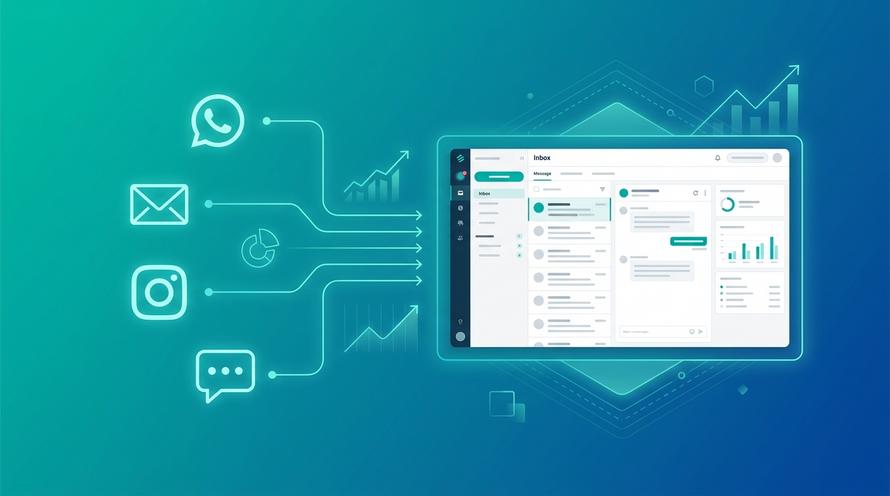
B2B prospects expect to communicate on their preferred channels. Trengo's shared inbox consolidates all incoming messages from your website chat, email, and even the WhatsApp Business API into a single, unified view. This ensures that no inquiry ever falls through the cracks, regardless of where it came from. For your marketing and sales teams, it provides a complete contextual history of every interaction, enabling them to respond quickly and effectively without switching between tabs.
Automate Lead Qualification with AI
Not every website visitor is a qualified lead. Wasting a sales team's time on unqualified prospects is inefficient and costly. This is where Trengo's AI agent and no-code bots come in. You can deploy them on your website to automatically engage visitors, ask pre-programmed qualifying questions about their company size, needs, or budget, and gather essential contact information. This pre-qualifies leads 24/7, ensuring that your human agents only spend time on prospects with genuine potential.
Centralize Conversations in One Inbox
Collaboration between marketing and sales is crucial for B2B success. Trengo’s shared inbox acts as a single source of truth for all prospect and customer communication. Team members can assign conversations to the right person, leave internal notes for context, and see the full interaction history at a glance. This eliminates duplicate efforts, prevents missed follow-ups, and ensures that every prospect receives a consistent and professional experience, strengthening the relationship from the very first touchpoint.
Improve Response Time and Conversion Rates
In B2B, speed matters. A fast response to an inquiry can be the difference between winning and losing a deal. By consolidating channels, automating initial qualification, and enabling seamless team collaboration, Trengo directly tackles the biggest bottlenecks in the lead management process. The result is a dramatically faster response time, a more efficient lead nurturing process, a superior customer experience, and ultimately, a significant increase in lead-to-customer conversion rates.
Veelgestelde vragen
What are the primary types of B2B marketing channels?
The most common B2B marketing channels include content marketing (blogs, whitepapers), Search Engine Optimization (SEO), email marketing, social media (especially LinkedIn), industry events and webinars, and paid advertising (PPC/SEM) on search engines and professional networks.
What is the average B2B sales cycle length?
The average B2B sales cycle is typically long, often lasting several months and sometimes over a year. The exact length is influenced by factors such as the product's complexity, its price point, the number of stakeholders involved in the decision, and the industry.
Why is personalization important in B2B marketing?
Personalization is crucial because B2B buyers are not just buying a product; they are seeking a solution to a specific business problem. Tailored content and communication demonstrate that you understand their unique challenges and industry, which builds trust and shows that you are a valuable partner, not just a vendor.
How can a B2B business measure marketing ROI?
A B2B business can measure marketing ROI by tracking key metrics like customer acquisition cost (CAC), customer lifetime value (CLV), lead-to-customer conversion rates, and marketing-influenced revenue. Using CRM and marketing automation platforms with attribution models helps connect marketing activities directly to sales outcomes.