7 best chatbot experiences in 2026 - Inspiration for your business


Try Trengo for Free

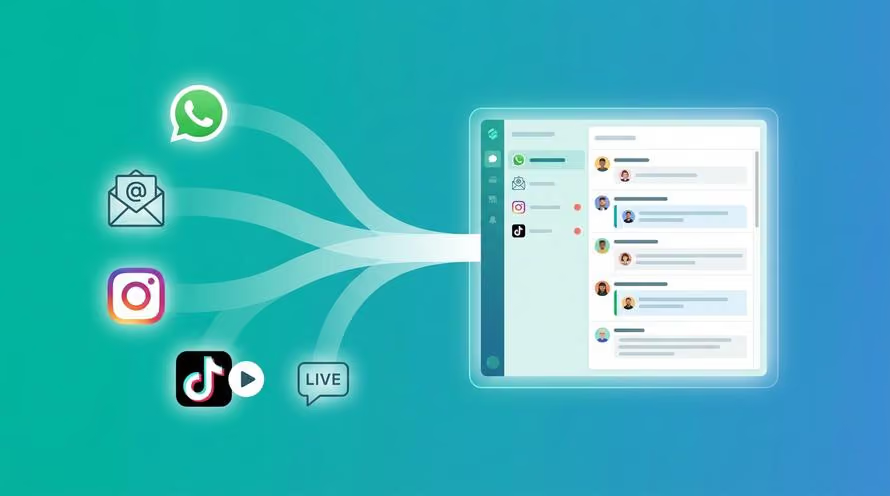
Trengo unites WhatsApp, email, web, social media, and calls in one inbox, saving your team hours of repetitive work and ensures no conversation is ever lost
AI is transforming businesses at lightning speed. There are 333.34 million companies in the world and over 266 million of these businesses are leveraging the power of AI. One of the most impactful applications of AI is the chatbot. These digital assistants are revolutionising customer support and transforming how businesses interact with their audience.
From industry giants like H&M and Domino's to countless others, top brands are reaping the rewards of AI chatbots. But you don't need to be a multinational corporation to experience these benefits. Adding an AI chatbot to your website is easier than you might think. In this post, we'll dive into the seven best chatbot experiences that will inspire you to elevate your customer support game.
List of the 7 best chatbot experiences
Technology has made it easier than ever for companies to automate customer support and improve efficiency. With so many amazing chatbots out there, let’s share some incredible examples of businesses that are nailing it.
From e-commerce to recruiting, we've got you covered!
In this post, we'll dive into seven real-world chatbot success stories, including:
- Slush
- Vainu
- HDFC Bank
- H&M
- Adidas Women
- L'Oreal
- Structurely's Asia Holmes
Get ready to be inspired!
1. Slush
Website: Link
Chatbot: Jenny
First on our list is Slush. A company known for gathering VCs from across the globe in a single event. They utilise AI technology to communicate with their prospects all over the world.
Slush installed a chatbot called Jenny on their website. This chatbot helped them handle 65% of customer support requests without the need for human interaction. Since Jenny is ready to communicate 24/7 the company also saw a 55% increase in interaction with the visitors.
Some of the basic questions that the chatbot handled were:
- How do I get to the venue easily?
- What’s the schedule of the event?
- Are there any hotels nearby?
Key takeaways
- The size and the radius of the company do not matter since chatbots can handle requests in bulk without any problem.
- A well-trained chatbot can significantly reduce the workload of customer support teams.
- Using a chatbot can help businesses offer high-quality support to the company’s target audience.
2. Vainu
Website: Link
Chatbot: VainuBot
Chatbots trained well for lead generation can be a valuable asset for a company. The old method of using forms for grabbing leads is not that much effective in the modern business landscape.
So, now companies can deploy sales chatbots to get better at lead generation. This solution is ideal since most users dislike filling out long forms. However, the chatbot can engage them in a positive conversation and get their contact information much more effectively.
Vainu is a data analytics company that built VainuBot to interact with customers in rich conversations. This can ask useful questions to visitors and engage them efficiently. At the end of every conversation, the bot asks the visitors to share their email addresses or book a demo.
Key takeaways
- Businesses that want to improve their lead generation can deploy AI chatbots.
- A chatbot can get more leads for a company without the need for an extra workforce.

3. HDFC Bank
Website: Link
Chatbot: Eva
All bank customers can have different queries. However, it is not easy to stay connected with clients and explain complex financial problems. That’s why the use of financial chatbots is increasing day by day.
So to solve this issue HDFC Bank is now using an AI-powered chatbot, Eva. The Eva is a Natural Language Processing (NLP) chatbot that can understand user queries and quickly fetch relevant information within seconds.
Customers can easily communicate with Eva and learn different financial terms just like Gemini or ChatGPT. So far, Eva has communicated with a million customers and answered more than 5 million queries with around 85% accuracy. Thus it is a trustable chatbot for financial institutions.
Key takeaways
- Banks or other financial services can use chatbots for different use cases like claims or loan applications.
- Connecting with customers using technology can improve customer experience.

4. Bike Hero
Website: Link
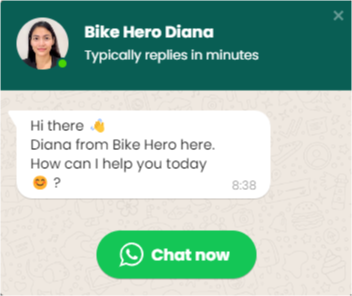
Chatbot: HelpMate from Trengo
Bike Hero is a company from Singapore who helps cyclists in fixing their bikes. It is a company that provides services at door steps with complete cost transparency. They do have a strong team of specialised mechanics that are always ready to deliver the best. However, they were struggling to maintain a smooth customer journey.
Bike Hero decided to utilise the power of chatbot customer experience to help the cyclist community at a faster pace. Now they are able to connect with their consumers quickly and easily across different platforms including WhatsApp, Instagram, and Facebook. Before the use of chatbots their response time was hanging near an hour, but now they are able to connect with the customers just within 20 minutes.
Key takeaways
- Chatbots can help in connecting with consumers at a faster pace.
- Chatbot communication can reduce the workload on the support team.
5. Alfrink Cosmetics
Website: Link
Chatbot: HelpMate by Trengo
Alfrink Cosmetics wanted to connect with thousands of vendors in Europe. However, connecting with them manually through WhatsApp proved to be an endless task. So, they need a solution that can help them constantly engage with the prospects without increasing their workload.
In order to solve this problem they decided to use Trengo’s AI chatbot. This chatbot helped them to constantly communicate with their prospects on different channels without any language barrier. It also helped them to increase productivity by automating tasks like adding contact lists to excel sheets.
Key takeaways
- Chatbots can help in connecting with leads 24/7.
- Eliminating language barriers can bring in new opportunities.

6. L’Oreal
Website: Link
Chatbot: Mya
L’Oreal is one of the beauty companies that are known worldwide. And according to statistics it employs 82,600 people worldwide. You can see it in many distribution markets like mass markets, department stores, pharmacies, hair salons, branded retail, and e-commerce.
It is hard to manage such a large team and also find ideal candidates for different positions. To solve this issue L’Oreal is using Mya, the AI chatbo,t for recruiters. Mya can handle large candidate pools so hiring managers can get more time for interviews and closing offers.
How does Mya work?
- The recruiting chatbot can have conversations with multiple candidates simultaneously via Facebook, Skype, email, or chat.
- Mya asks to prescreen questions, answer FAQs, and also provide progress reports and tips for future interviews.
- It can share important information with hiring managers like experience, engagement, and other metrics.
According to L’Oréal Mya has engaged with 92% percent of their candidates and gave a 100% satisfaction rate.
Key takeaways
- AI chatbots can make it easier to process applications and save time for hiring managers.
- The candidates also get to know whether they are going to the next stage or not without waiting for days for feedback.

7. Structurely
Website: Link
Chatbot: Asia Holmes
Customers frequently ask real estate agents a lot of questions about available listings, costs, locations, local norms, and other topics. An agent cannot be replaced by a chatbot, however, it can aid in streamlining the initial procedure.
A chatbot facilitates gathering contact details, offer available listings, and schedule viewings. Asia Holmes, the chatbot from Structurely, is an excellent example of an AI chatbot that can manage client inquiries in real time and facilitate productive conversations.
Holmes tailors the experience by asking a series of questions to find the perfect property for each customer.
Key takeaways
- Real estate agents can also pick a good chatbot and train it to become their assistant for bringing in more leads.
- On-the-spot conversations with an AI chatbot can help customers pick an option easily without the need for human support. This can save a lot of time for real estate agents.

So, what makes a chatbot successful?
We've seen some amazing examples from big and small businesses that are providing an exceptional chatbot customer experience. They've all managed to improve customer experiences and boost their bottom line. But how did they do it?
Unfortunately, there's no one-size-fits-all answer. Every business is different, so the perfect chatbot will look different too. But don't let that discourage you! You don't need a huge budget or a big-name brand to create the best chatbot experience for your shoppers. Let's dive into how you can build a fantastic chatbot for your business.
Give your chatbot a purpose
Modern shoppers expect more than just a simple robot helper. They want a chatbot that feels like a real person and can solve their problems quickly.
What should your chatbot do? How will it impress your customers?
Figure out your chatbot’s main job. Is it there to answer FAQs, guide people around your online store, or even help you hire new people? Whatever you choose, make sure it's clear and simple.
Remember, your chatbot's number one goal is to make life easier for you and your customers. So, tell it exactly how to do that!
Give your chatbot a personality
Imagine your chatbot as a friendly face representing your brand. Do you want it to be funny and casual, or professional and polite? Your chatbot's personality should match your brand's vibe.
Think of it like this: Your chatbot's personality is the voice of your brand. It's important to get it right because it can make or break your customer's experience. So, put some thought into it and create a chatbot personality that people will love!
Make it functional & easy-to-use
Imagine your chatbot as a new employee who's really eager to help out. How can you make sure they're good at their job and everyone loves them? Let's break it down!
For your customers:
- Your chatbot should talk like a normal person, not a robot. Avoid confusing tech terms.
- Enable your chatbot to answer questions quickly and clearly. Don't make customers hunt for information.
- Pay attention to what people are saying and program your bot to give helpful answers.
- A little humor or kindness goes a long way. Make people feel welcome.
- Give customers options so they feel in control.
For your business:
- Know what you want your chatbot to do. Is it for sales, support, or something else?
- Learn what customers ask most often. This helps your chatbot be super helpful.
- Keep track of how well your chatbot is doing. Use this info to improve it.
- Teach your chatbot new trends as your business grows.
Make it connect with the audience
The final but equally important element is how the bot's functionality, personality, and goal align with the people it is meant to serve.
No matter how skilfully you execute the first three phases, if they have no impact on your target audience, your customers will not get the best chatbot experience.
This concerns not just "Who," but also "When/in what instance." Consider both your target audience and the circumstances surrounding the problem or task your bot is meant to handle.
Simply put, don't let your bot bore your consumers with jokes or GIFs if it's meant to assist them in a time-sensitive manner. In calmer times, your audience may genuinely value them, but in a rush, they just cause needless obstacles in their way.
Tips for improving chatbot customer experience
You can get a chatbot and train it to adapt to the tone of your business. But how are you going to maintain it so it can always stay up to the mark?
Here are some tips you can use to keep your AI chatbots ready to have best of the conversations:
Keep it working!
Testing is one of the things that can help you keep track of the chatbot's progress. Keeping track of the following points can help you know the workings of the bot:
- Is the chatbot able to access your website and linked tools?
- Is it able to integrate with your e-commerce platform to provide accurate billing and suggestions?
- Is your chatbot able to sync with the CRM and get customer info correctly?
- Is it syncing with the ordering system and sharing accurate information with the user?
You can also manually check the chatbot and observe the response. Your team can complete this task or you can also hire external testers and ask them to run a few tests.
Keep track of engagement and performance
Chatbot requires proper performance tracking just like any other marketing effort. Here are a few questions that help you gauge your bot’s performance and engagement:
- Are consumers using it?
- Is your chatbot able to get more leads or collect relevant data?
- What percentage of the conversations result in a lead or a purchase?
- What’s the average length of conversations?
Keep in mind that the conversation range will change depending on the context. So, ensure that the bot can give a quick and easy answer to a short question.
Embrace change
Nothing about your chatbot is fixed. Make changes as you monitor performance and observe how metrics change.
In addition to monitoring your chatbot's performance, pay careful attention to the market and adjust your chatbot accordingly. Do people expect that chatbots will carry out a specific task?
Keep an eye on advancements in chatbot technology. Consider how you might incorporate any new AI technology that is revolutionising the chatbot space into the features and procedures of your chatbots.
Trengo: the AI chatbot solution for your website and more
Customers prefer the mixture of chatbot and human chat support because it allows them to communicate with a real person when needed.
At Trengo we have been consistently providing the best chatbot experiences to our clients. Our team is committed to providing the best chatbot customer journey so you can easily focus on more crucial aspects of customer support. We have solely built automated bots to modernise websites and shift them into self-service portals.
Trengo can also help you with self-learning smart FAQs and responsive contact form suggestions. You can train these models based on your existing Q&As and other related information. Once they are trained you can easily deploy them on your website.
With Trengo’s GPT-4 integration, you can use the world’s strongest AI to answer multiple questions in a single message, incorporate emotions into your conversation, and consider context from the previous messages or chat.
Are you interested in learning more benefits of utilising AI chatbots in your business? Feel free to connect with us or start a conversation with our chatbot. 😉
Frequently asked questions
How can I identify examples of chatbot best-practice across industries?
You can identify chatbot best-practice examples by researching top-performing chatbots in industries relevant to your business, analysing how they automate customer interactions, handle FAQs, and integrate with other platforms. Studies of successful chatbots, like those from Spotify for personalised playlists or Domino’s Pizza for seamless ordering, reveal practical strategies. Platforms like Trengo showcase effective chatbot implementations, helping you learn what delivers engagement and operational efficiency.
What types of chatbot experiences should I aim to replicate for my business?
Aim for chatbot experiences that are personalised, interactive, and provide clear value. This includes chatbots that offer personalised recommendations, streamline order processes, automate routine queries, and provide rich conversational interfaces. Industry leaders like H&M and Adidas use chatbots to drive engagement and conversions, a model to emulate. Integrating these capabilities through Trengo ensures your chatbot supports seamless, customer-centric experiences.
How can I ensure my chatbot delivers consistent brand voice and quality?
Consistency is achieved by defining clear brand tone and voice guidelines for your chatbot and training it with brand-specific content such as FAQs, marketing copy, and prior customer interactions. Continuous testing and updating chat responses help retain brand personality. Using a platform like Trengo, you can control chatbot scripts centrally, ensuring all automated interactions reflect your brand’s identity accurately.
How do I build and implement a chatbot experience like the ones featured in 2026?
Start by defining your chatbot’s objectives aligned with business goals, such as sales support or customer service. Choose a platform that supports natural language processing and omnichannel deployment, like Trengo, which enables easy chatbot creation and integration. Develop conversation flows based on real user needs, test extensively, and continuously optimise the bot with analytics and user feedback.
What features should my chatbot have in 2026 to match best-in-class examples?
Your 2026 chatbot should include AI-powered natural language understanding, omnichannel support (web, social, messaging apps), personalised conversation flows, multilingual capabilities, sentiment analysis, visual flow builders for easy editing, and robust analytics. Trengo offers many of these features, empowering businesses to deliver engaging, efficient chatbot experiences that reduce workload and improve satisfaction.
How do I combine human agents and chatbot automation to create a seamless experience?
To blend chatbot automation with human agents, configure your chatbot to handle routine and repetitive queries while escalating complex or sensitive issues to human agents. Platforms like Trengo support smart handover, transferring full chat history to agents so conversations remain smooth and personalised. This hybrid approach leverages the speed of automation and empathy of humans to maximise customer satisfaction.
Let's chat bots today



Let's meet
Grow your business with loyalty. Bring all of your customer contact into one, single platform to unlock delight at every step of the way.