5 inspiring WhatsApp Business case studies


Try Trengo for Free

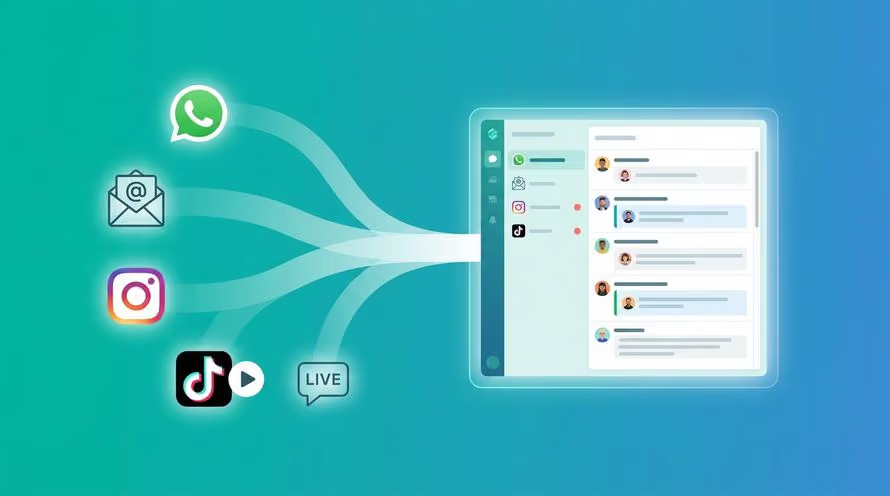
Trengo unites WhatsApp, email, web, social media, and calls in one inbox, saving your team hours of repetitive work and ensures no conversation is ever lost
WhatsApp Business has become a communication channel you can’t miss out on. Why? The answer is easy: it’s where your customers are and where they want you to be.
Many businesses are already successfully using WhatsApp Business. They have shown mindblowing results in sales, customer experience, and customer service. I’ve collected 5 WhatsApp Business API case studies that show you the possibilities of using WhatsApp as a Business.
Get ready to dive into the world of WhatsApp Business, and let us show you a WhatsApp business case study.
Online Fashion Retailer Modanisa
Uses WhatsApp Business to offer quick, digitised service and increase their sales
Let's start with this WhatsApp case study. As an online fashion retailer, Modanisa experienced the increasing demands of its customers. That’s why they started looking for a way to give their customers a smoother customer experience and reduce their customer service response time. They found their solution in WhatsApp Business.
Using WhatsApp chatbots as a solution
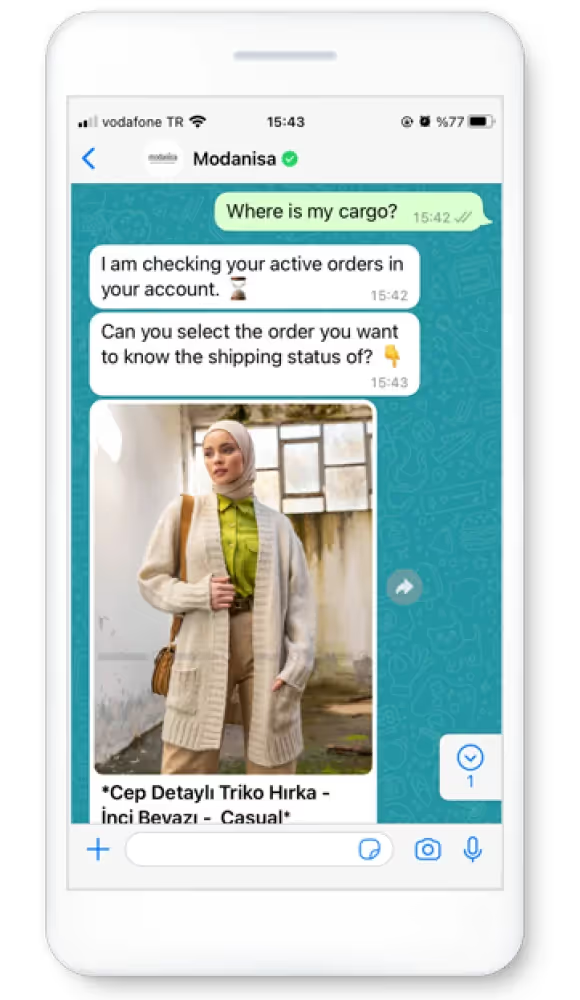
First, Modanisa started building ‘Nisa’, a customer service chatbot powered by WhatsApp. The chatbot answers frequently asked questions and more personal questions by using dynamic content, all in five languages. By tracking the phone number back to the customer’s order, the chatbot can resolve questions about orders, returns, deliveries, and many other topics.
After building this customer service chatbot, Modanisa started building a second chatbot. This chatbot is more focused on e-commerce and helps customers during the entire customer journey: from browsing through the Modanisa catalog to buying a product.
Modanisa’s success in numbers
This WhatsApp Business case study of Modanisa is a perfect example of how WhatsApp can help you improve your customer service and increase your sales. Here are some numbers to invigorate this:
- 70% of customer inquiries are now completely resolved by the chatbot
- 56% of customer contact takes place on WhatsApp
- 55% of customers placed their first ever-order through WhatsApp
- 36% cost savings in operating call centers
📚 Related: How to build a chatbot for WhatsApp
Beauty Brand Paragon Technology and Innovation (PTI)
Uses WhatsApp Business to realise personal one-on-one conversations between customers and skin-care experts.
In this WhatsApp Business Case Study, we shine a light on the Beauty Brand Paragon Technology and Innovation. The brand was looking for a way to give better online beauty consultancy and help customers buy relevant products. They started using WhatsApp Business to reach these goals.
Creating an in-store experience via WhatsApp Business
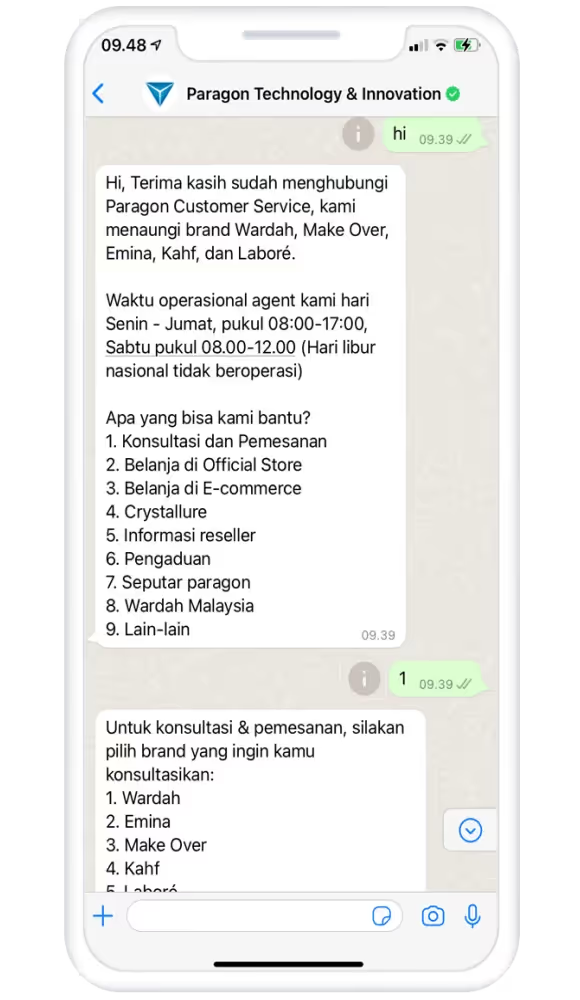
PTI integrated WhatsApp Business into their website and social media channels by adding a ‘click to WhatsApp’ link. They also included their WhatsApp information on product packing. From here on, customers could click the link or send a WhatsApp message to start their personal shopping experience.
This experience starts with a virtual assistant that gathers customer information and routes the customer to the skin expert that matches their needs. Once the personal conversation starts, the skin expert gives advice to the customer, showcases the right products, and tries to close sales directly.
PTI’s success in numbers
Using Whatsapp Business increases PTI’s market reach, and boosts customer satisfaction and sales. The numbers speak for themselves:
- 600% increase in interactions in one year through WhatsApp
- 98.9% customer satisfaction rating, with 100% resolution within 48 hours.
- 10 times more inquiries are handled through WhatsApp.
- Increased sales conversations with WhatsApp.
DIY store Hubo
Uses WhatsApp to give DIY advice and receive orders.
Another WhatsApp Business case study! Hubo started using WhatsApp when COVID-19 hit the Netherlands. At this time, many people decided to give their homes a makeover. And for their projects to be a success, they needed tools, materials, and of advice from professionals. Hubo then started offering their advice remotely and chose WhatsApp Business to help them do the job.
More than 180 Hubo stores, one WhatsApp number
When a customer wants to get in touch with Hubo, they can start a WhatsApp conversation on their website. After sharing their name, the customer can select the location they would like to get in touch with. By using a location finder, the conversation automatically forwards to one of the 180 Hubo locations. From that point on, the customer can chat with their local Hubo store. They can ask for advice by sharing pictures of certain situations or they can place an order they would like to pick up later.
Would you like to use one WhatsApp number for multiple store or office locations too? Hubo uses Trengo to make this possible. In Trengo, they can not only collaborate on WhatsApp Business but also include other channels such as Facebook Messenger, Instagram, and email.
Hubo’s success in numbers
For Hubo, WhatsApp turned into their number one communication channel, and for some store locations even the big revenue maker.
- Some Hubo stores currently get 60% of their revenue via WhatsApp.
- Hubo receives about 700 WhatsApp messages a day via Trengo.
📚 Related: WhatsApp e-commerce: a complete guide
On to the other WhatsApp Business case studies!
Parfumado
Uses WhatsApp Business to create a personalised customer journey for each customer.
How do you sell a perfume that the customer hasn’t smelled before? That’s a tough question to answer. You have to start thinking about other ways to let customers experience your products. That’s when Parfumado came up with the idea to create a personalized customer journey via WhatsApp. One in which they interact with customers using quizzes and offer exceptional customer service.
Personal customer contact in the most efficient way
Parfumado is a great WhatsApp Business case study. Because for Parfumado, WhatsApp has now become a very important communication channel. They can make personal contact with the customer and take that opportunity to link relevant marketing actions to conversations. For example, they invite customers to contact them via WhatsApp through a QR code. When the conversation opens the customer is asked for a screenshot of their perfume calendar. After sending the screenshot, they receive an automatic link with a form to fill out. When they’ve filled in the form, they will receive special perks. These sorts of interactions will make them customers with a longer lifetime value.
Trengo helps Parfumado set up a personal customer journey via WhatsApp. Besides that, Parfumado also uses Trengo to collaborate more efficiently, create an overview of incoming conversations from different channels and automate communication.
Digify Africa
Uses Whatsapp Business to educate African youth on the digital skills they need for career success.
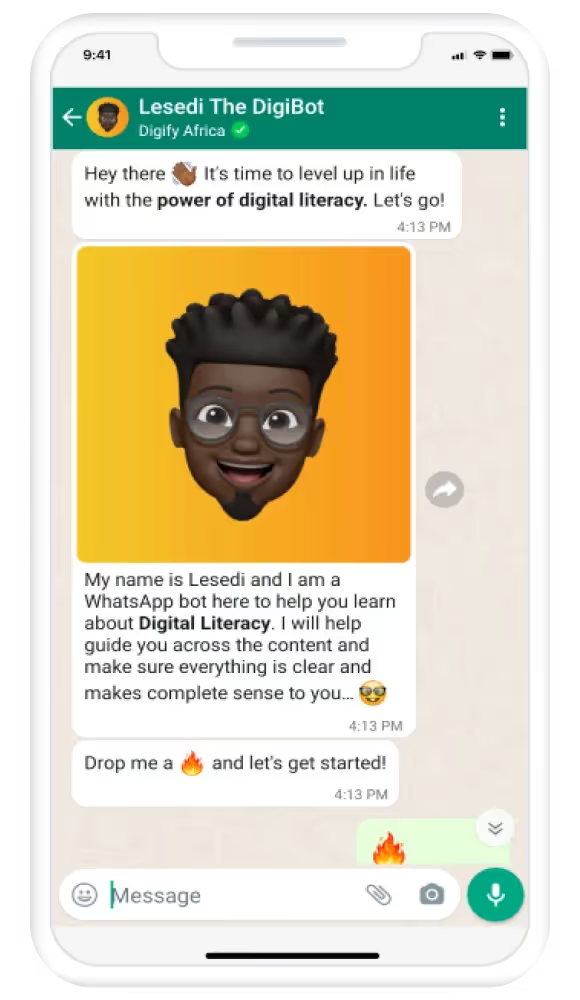
This is an interesting WhatsApp Business case study. Young people in Africa confront one of the world’s highest unemployment rates. Digify Africa wants this to change. That’s why they wanted to provide learning programs that educate youth on digital marketing and entrepreneurship and offer them freelance training. But there was one challenge: how do you offer online learning when there’s limited access to computers and laptops? As WhatsApp is one of the most popular communication channels in Africa, they decided to use the WhatsApp Business API and build two distinct chatbots for their learning programs.
Using WhatsApp as a unique learning environment
Learners can start their learning on WhatsApp by either scanning the QR code on social media, clicking on Facebook or Instagram ads or sending a message directly through WhatsApp. In a central menu, learners can then start with a course module or pick a course of their choice. After completing a course, their knowledge will be tested via a quiz, and they can track their progress on a leaderboard. When a learner finishes all the modules, they earn a certificate that will help them find work in the future.
Digify Africa’s success in numbers
It's great to see that WhatsApp can play such an important role in educating people and lowering the unemployment rates in Africa. Here are some amazing results:
- In less than one year, 136,000 people completed training through either one of the chatbots (compared to 120,000 people in their 11 years of operations).
- The learning program counts almost 40,000 active learners each week.
- 50% of learners who start a course also complete it
Write your own WhatsApp business case study
These five WhatsApp Business case studies and WhatsApp Business API success stories are just examples of how WhatsApp Business can help you achieve your goals and grow your business. Hopefully, they inspired you to start writing your own success story.
Don’t worry, you don’t have to do it alone. At Trengo, we would love to help you get started with WhatsApp Business and enjoy all the extra benefits our omnichannel communication platform offers.
In Trengo, you can work together on Whatsapp messages with your team, use innovative tools to automate your communication, and connect many more messaging channels besides WhatsApp Business. What are you waiting for? These WhatsApp Business case studies show the effectiveness. Let’s get started with WhatsApp Business together.
Plan a demo today (for free!)
Frequently Asked Questions (FAQs)
How do businesses use WhatsApp to increase sales or engagement?
Businesses use WhatsApp to boost sales and engagement by sending personalised messages, promotional offers, and abandoned cart reminders, as well as providing real-time customer support. Automated campaigns and chatbots often managed through platforms like Trengo enable companies to nurture leads, follow up on enquiries, and deliver timely updates. For example, an online fashion retailer increased cart recovery rates by 35% using WhatsApp Flows for automated reminders, while a German clothing brand achieved a 25x ROI from targeted WhatsApp marketing campaigns.
Which industries are using WhatsApp Business most effectively?
WhatsApp Business is widely adopted in e-commerce, retail, healthcare, travel and hospitality, education, and financial services. E-commerce brands use it for order updates and cart recovery, healthcare providers automate appointment reminders, and hotels streamline guest communication. Case studies show that retail chains use WhatsApp for loyalty updates, clinics reduce no-shows with automated reminders, and hotels boost guest satisfaction by 40% with instant, personalised support.
Can small businesses also benefit from WhatsApp Business like big brands?
Absolutely. Small businesses benefit from WhatsApp Business by automating responses, organising chats, and sending updates efficiently, all at low or no cost. Features like automated greetings, away messages, and product catalogues help small teams deliver professional, timely support. Many small businesses report higher engagement, improved customer retention, and increased sales after switching to WhatsApp Business, especially when using platforms like Trengo to centralise and automate communication.
How does WhatsApp Business help with customer support?
WhatsApp Business enhances customer support by offering instant, two-way communication, quick replies, and automated chatbots for FAQs and order tracking. Businesses can resolve issues faster, provide rich media support (images, videos, documents), and maintain a personal touch. Shared inboxes and automation tools like Trengo enable support teams to collaborate, track conversations, and ensure no enquiry is missed, leading to higher satisfaction and loyalty.
What kind of ROI do businesses see from WhatsApp marketing?
Businesses using WhatsApp for marketing often see exceptional returns. Open rates can reach 98%, engagement rates 70%, and conversion rates 5–15%, far surpassing traditional email campaigns. Case studies show ROIs as high as 25x from targeted WhatsApp campaigns, with significant boosts in sales, lead generation, and customer retention. The key is personalisation, timely follow-ups, and leveraging automation platforms like Trengo for campaign management and analytics.
Can WhatsApp Business be used for lead generation or nurturing?
Yes, WhatsApp is highly effective for lead generation and nurturing. Businesses use click-to-WhatsApp ads, chatbots, and automated follow-ups to capture leads, qualify prospects, and move them through the sales funnel. Real-time, personalised communication helps convert leads into loyal customers. Integration with CRM and automation tools like Trengo streamlines the process, ensuring every lead is engaged and nurtured efficiently.



Let's meet
Grow your business with loyalty. Bring all of your customer contact into one, single platform to unlock delight at every step of the way.