8 best AI agents for ecommerce stores in 2026 | Tried & Tested


Try Trengo for Free

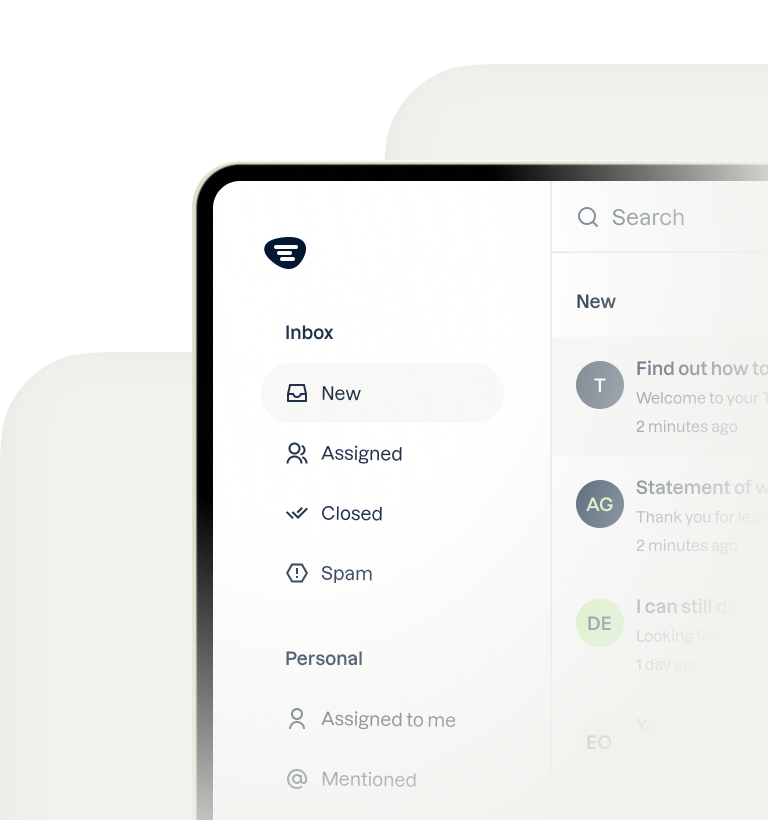
Trengo unites WhatsApp, email, web, social media, and calls in one inbox, saving your team hours of repetitive work and ensures no conversation is ever lost
Imagine running an online store where every customer interaction from the first click to the final checkout is handled by an assistant that learns, adapts, and never sleeps. That’s what AI agents are bringing to ecommerce today.
Unlike basic chatbots that rely on scripted responses, modern AI agents for ecommerce can understand intent, analyse data in real time, and take meaningful actions across channels. They can recommend the right product, track an order, send follow-ups, or resolve issues, all without human intervention.
For retailers, this isn’t just about saving time; it’s about scaling customer experiences that feel genuinely personal. Whether you’re a fast-growing online brand or an established retailer, AI agents can help you anticipate what customers need and deliver it before they even ask.
As the global AI in ecommerce market continues to expand, adopting these intelligent systems is quickly becoming a competitive necessity. In this guide, we’ll walk you through the best AI agents for ecommerce stores, exploring their strengths, real-world impact, and how they can transform the way your business sells and supports customers.
What are AI agents?
AI agents are intelligent software systems that can understand their surroundings, make decisions, and take action, all with minimal human guidance. Unlike traditional automation tools that simply follow fixed instructions, AI agents can reason, adapt, and learn from every interaction. They’re designed to think strategically and act purposefully, often managing complex workflows across multiple channels or tools.
In simple terms, think of an AI agent as your digital team member. It observes what’s happening, predicts what should happen next, and executes tasks in real time, whether that’s recommending the right product, updating stock levels, or following up with customers automatically.
Key components of an AI agent
1. Large language model (LLM)
At the centre of every AI agent is a large language model, the system’s reasoning core. It interprets customer intent, plans the next steps, and decides how to achieve a specific goal. For ecommerce, this could mean understanding what a shopper wants and choosing the right action to take.
2. Memory systems
Memory gives AI agents the ability to maintain context and learn from experience.
- Short-term memory helps keep track of current conversations or actions.
- Long-term memory stores customer history, preferences, and outcomes, allowing the agent to deliver a more personalised and consistent experience.
3. Planning and reasoning abilities
Planning modules help the agent break down bigger objectives like improving order accuracy or recovering a cart into smaller, actionable steps. Using structured reasoning, the agent can evaluate what works best and keep improving over time.
4. Tool and system integration
AI agents integrate seamlessly with tools like CRMs, ERPs, email, or live chat software. This means they can perform real actions such as checking stock, updating customer profiles, or sending order confirmations, rather than just responding with information.
How do AI agents differ from chatbots?
While chatbots focus on quick, rule-based conversations, AI agents take things several steps further.
- Chatbots are reactive, responding only when prompted by the user. AI agents are proactive, anticipating what needs to be done and acting independently.
- Chatbots follow predefined scripts, while AI agents can reason, plan, and make decisions based on context.
- Chatbots have limited memory, often forgetting past interactions. AI agents can retain both short-term and long-term context, enabling continuous learning.
- Chatbots serve single functions, like answering FAQs or tracking orders. AI agents are multi-functional, supporting sales, marketing, logistics, and customer service together.
- Chatbots automate conversations, but AI agents automate outcomes from personalised recommendations to full transaction management.
8 best AI agents for ecommerce stores in 2026
The ecommerce landscape is evolving rapidly, and AI agents are driving this change. These tools don’t just automate, they think, learn, and act across the customer journey. From managing conversations and analysing data to improving retention and forecasting demand, AI agents are reshaping how brands operate and engage customers.
After exploring dozens of platforms and analysing feedback from ecommerce professionals, here are the 8 best AI agents for ecommerce stores in 2026, each offering unique capabilities to boost efficiency, personalise customer experiences, and scale growth.
1. Trengo AI Helpmate - Best for omnichannel ecommerce automation
Trengo’s AI Helpmate is an intelligent AI agent designed to simplify ecommerce operations by unifying automation, communication, and customer support across all channels. Built on top of Trengo’s omnichannel platform, Helpmate allows teams to automate conversations, manage customer intent, and deliver context-aware responses from a single workspace.
Unlike traditional bots, Helpmate learns from real interactions and adapts its tone, timing, and accuracy based on customer context. Whether it’s WhatsApp, Instagram, email, live chat, or Facebook Messenger, the agent keeps every interaction seamless and on-brand ensuring a consistent experience across all touchpoints.
Key features
- Omnichannel integration across WhatsApp, email, Instagram, Messenger, and web chat.
- AI-driven intent detection for accurate, context-based replies.
- Smart task routing to direct complex queries to the right human agent.
- Learning memory that adapts responses over time to match your brand tone.
- Built-in analytics to track conversation quality, response time, and satisfaction scores.
- Automated workflows for FAQs, order updates, cart recovery, and product inquiries.
What we liked
- Works directly within Trengo’s unified inbox, removing the need for multiple tools.
- Learns from real customer interactions, improving accuracy and tone consistency.
- Integrates seamlessly with ecommerce platforms like Shopify, WooCommerce, and Magento.
- Delivers natural, human-like responses across languages and channels.
- Easy to train, customise, and deploy, no coding required.
What we disliked
- Advanced custom workflows may require higher-tier plans.
- Limited third-party integrations outside the Trengo ecosystem (still expanding).
Best for:
Ecommerce stores that manage multiple communication channels and want a unified, intelligent system to automate and personalise customer experiences at scale.
2. Tidio - Strong choice for ecommerce live chat + intelligent support
Tidio blends live chat, ticketing and its smart “Lyro” AI agent into one interface, making it a solid pick for online stores wanting to serve customers in real time and automate repetitive tasks. The AI agent is trained to understand customer questions, provide product suggestions, handle order-status inquiries, and smoothly hand off to humans when needed.
For ecommerce stores, this means fewer missed chats, quicker replies and a consistent experience across Instagram, WhatsApp, email and website chat. If you’re a small to mid-sized retailer wanting to upgrade without adding a huge tech stack, Tidio offers a pragmatic solution.
Key features
- Lyro AI Agent that handles common tasks like order tracking, refunds and product recommendations.
- Multichannel messaging: replies across live chat, email, WhatsApp, Instagram and Messenger from one dashboard
- Order-management integration for platforms like Shopify. See carts, recommend products and manage orders from chat.
- Pre-built templates and no-code automation flows for speedy deployment.
- Multilingual support and analytics to track response times, customer satisfaction and conversion effects.
What we liked
- Sets up quickly and blends AI + live human support in one system, great for resource-lean teams.
- Excellent multichannel reach means customers can use their preferred channel and still get consistent service.
- The order/inventory chat features help convert browsing into purchases directly from chat.
- Well-suited for smaller or mid-sized ecommerce stores looking for immediate value.
What we disliked
- Though capable, the AI agent may need more manual training and tweaking for complex or custom workflows.
- For high-volume chat or enterprise-level customisation, some performance lags and limitations have been reported.
- Advanced analytics and larger chat capacities may come at higher tiers, which may stretch smaller budgets.
Best for:
Small to mid-sized ecommerce stores that want to combine live chat + AI-powered support in one tool, without building a complex automation stack from scratch.
3. Rep AI - ideal for boosting conversion and automating shopper conversations
Rep AI is an intelligent sales and support agent designed specifically for Shopify and similar ecommerce stores. It acts as a full-time digital concierge engaging visitors in real time, recommending products, handling pre-purchase queries, managing order and return support, and providing insightful analytics.
Instead of simply responding to user questions, Rep AI also identifies shoppers who are likely to abandon their cart or hesitate at checkout. It initiates personalised conversations at the right moment, guiding them toward purchase and increasing average order value. At the same time, it frees up your human team by handling routine enquiries 24/7.
Key features
- Real-time product recommendations and upsells based on shopper behaviour.
- Automated support for tracking orders, managing returns and answering FAQs up to 95% of common enquiries handled without human intervention.
- Behavioural drop-off detection and conversational triggers to rescue potential lost sales.
- Seamless integration with Shopify and major tools (Klaviyo, Gorgias, Zendesk) to coordinate sales and support workflows.
- Brand-voice customisation: train the AI on your tone, vocabulary and store policies for consistent messaging.
What we liked
- Strong focus on conversion: shoppers are engaged proactively, not just reactively.
- Excellent support automation: frees up your team to focus on high-value tasks.
- Deep analytics and insight: understand why shoppers drop off and what to optimise.
- Rapid deployment: especially built for Shopify stores with minimal setup.
What we disliked
- Primarily built for Shopify, so those using other platforms may face limitations.
- Customising the AI deeply (tone, complex workflows) may require additional training time.
- Pricing can increase significantly as your site traffic and catalog size grow.
Best for:
Ecommerce stores with significant traffic and conversion potential that want a unified agent handling both sales and support, especially if your team wants to reduce human workload while increasing revenue.
4. Impact Analytics - best for demand forecasting & inventory optimisation
Impact Analytics specialises in AI agents that streamline retail operations, particularly forecasting, pricing and inventory. Their Agentic AI platform is designed to take over decision-heavy workflows so ecommerce brands can focus on growth rather than back-office logistics.
For ecommerce stores dealing with large catalogues, multiple locations or unpredictable demand swings, Impact Analytics offers tools that plug into your ERP, POS and supply-chain systems. This lets you anticipate trends, reduce overstock, and maintain availability, all while keeping costs under control.
Key features
- AI-driven demand forecasting that factors in trends, seasonality, events and local patterns.
- Inventory and allocation optimisation across stores, warehouses and online channels.
- Pricing-and-promotion insights that adapt in near real-time, helping you strike the right balance between margin and volume.
- Custom agent-building studio (“Agent Studio”) for brands that want to tailor the agent’s behaviour to unique workflows.
What we liked
- Excellent for complex, data-rich retailers needing advanced forecasting and inventory management.
- Strong system integration behind the scenes ensures the agent acts on real-world data, not just static models.
- Helps reduce waste (unsold stock) and improve SKU availability, two major pain points in retail.
What we disliked
- It’s geared more toward mid- to large-scale retailers; smaller stores may not justify the investment.
- Customisation can take time and requires a solid data infrastructure for full value.
- Less focused on the front-end customer-chat or conversion-flow side compared to agents built for live chat or customer support.
Best for:
Ecommerce businesses with broad inventories, multiple fulfilment locations, or complex demand cycles can benefit from predictive intelligence and operational efficiency.
5. Kore AI - suited for complex workflow orchestration and enterprise-scale agents
Kore AI Agent Platform is a full-stack agent platform designed to build, deploy, and manage interconnected AI agents across service, sales, and operations. Unlike single-purpose assistants, this platform supports multi-agent orchestration, meaning multiple AI agents can collaborate and hand off tasks seamlessly. In an ecommerce setting, this might mean one agent handles a product recommendation, another monitors stock, and a third triggers personalised after-sales communications. The system ties them together into a cohesive experience, delivering intelligent automation at scale.
Key features
- Multi-agent orchestration: agents with varying levels of autonomy coordinate across workflows.
- No-code visual builder and agent orchestration studio for custom workflows.
- Enterprise-grade integrations: 100+ pre-built connectors to link CRMs, ERPs, POS systems and other data sources.
- Conversational search and retrieval (RAG) engine: AI retrieves and uses context from unstructured data to support smarter decisions.
- Real-time agent assist, sentiment analysis and analytics to improve service and sales workflows.
What we liked
- Strong fit for large ecommerce operations with multiple systems and advanced automation needs.
- Offers deep context-aware capabilities that enable agents to go beyond simple chat responses.
- Built for scale and governance, useful for brands that must maintain audit trails, multiple channels, and high reliability.
What we disliked
- It may be overly complex or expensive for smaller ecommerce stores without dedicated teams or data infrastructure.
- Implementation and customisation may require more time and technical setup than simpler agents.
- While powerful, it may not be immediately focused on small-business frontline sales/chat workflows, more geared to enterprise infrastructure.
Best for:
Ecommerce stores or retail brands with mature tech stacks, multiple channels and large data/operations needs, especially those looking to automate complex processes, integrate across systems and build a future-proof agent ecosystem.
6. Klaviyo AI - powerful marketing and service agent for ecommerce
Klaviyo AI (also known as K:AI) brings autonomous intelligence into your ecommerce marketing and customer-service workflows. Rather than just scheduling messages, Klaviyo’s agents analyse your customer data, personalise each interaction and handle both pre- and post-purchase tasks, all within a single platform.
For example: one agent builds targeted campaigns based on your brand tone and goals; the other offers 24/7 customer service across chat, email and SMS. With Klaviyo AI, you can automate workflows, react to behaviour in real time and make marketing far more contextual and efficient.
Key features
- Built-in AI agents: “Marketing Agent” for campaign creation and “Customer Agent” for support and commerce interactions.
- Predictive analytics: forecasts next order date, lifetime value and churn risk using profile-level data.
- Personalisation at scale: content generation (emails, SMS), smart send times, dynamic product recommendations, and segmentation from plain-language prompts.
- Cross-channel orchestration: synchronises email, SMS, push, web forms and messaging channels for unified outreach.
- Deep integration: connects with Shopify, BigCommerce and other ecommerce platforms to unify data and workflows.
What we liked
- Ideal for brands focused on growth through marketing and personalised automation rather than just chat support.
- The AI-driven segmentation and predictive insights help identify high-value customers, reduce churn and improve repeat purchases.
- User-friendly builder and pre-built templates, meaning marketers can launch sophisticated flows without heavy technical dependency.
- Strong analytics and result transparency: you can measure how AI features impact revenue, segmentation efficiency and campaign success.
What we disliked
- While marketing automation is deep, it may not be as specialised for live chat or conversational commerce workflows as dedicated support-agent platforms.
- Smaller stores without strong data may find it harder to unlock full value, AI performance depends on quality of profiles and interactions.
- Pricing and subscription tiers can escalate as contact lists, SMS volume, or AI-agent usage rise.
Best for:
Ecommerce stores looking to elevate their marketing and service automation, especially those wanting to unify email, SMS and multi-channel communications while leveraging AI to personalise at scale.
7. Talkative - ideal for high-touch ecommerce support with chat, voice & video
Talkative is an AI agent platform designed to merge live human service with AI-driven automation, especially useful for ecommerce stores offering premium or complex products that benefit from high-touch interactions.
With Talkative, customers don’t just chat; they can co-browse, use voice or video calls, and receive guided assistance, all within the same tool. The agent prompts knowledge-base responses, helps human agents on the fly, and provides analytics to refine service across channels.
Key features
- AI-suggested responses and knowledge-base search to speed up agent resolution.
- Real-time monitoring, chat-supervisor tools and agent-assist features for live support teams.
- Voice, video and co-browsing capabilities allow support agents to guide customers visually and verbally, not just by text.
- Analytics dashboard that summarises common issues, tracks performance and identifies support-team gaps.
- Secure, brand-controlled knowledge-base integration, so the AI agent works with your own data and stays on-brand.
What we liked
- Excellent for stores that sell high-value items or need complex support (e.g., electronics, premium fashion) where voice/video adds value.
- Blends automation with human oversight, the AI supports but doesn’t replace human agents, preserving quality.
- Co-browsing and video features help resolve issues that are hard to tackle via text alone (e.g., demonstrating product functions).
- A strong support tool option for brands wanting personalised customer service without hiring many extra staff.
What we disliked
- More focused on support and high-touch service rather than purely sales automation or conversion drives, if your priority is rapid cart recovery, you might need a complementary agent.
- The voice/video/co-browsing functionality may require higher bandwidth, training and technical setup compared to simpler chat agents.
- For smaller ecommerce stores with simpler support needs, the added features might be more investment than required.
Best for:
Ecommerce stores with premium products, higher price points or complex buying decisions, where guiding the customer through voice, video or assisted shopping can make a real difference in conversion and loyalty.
8. Hypotenuse AI - specialised for content and data automation in ecommerce
Hypotenuse AI is an AI agent platform built specifically for ecommerce brands that need to scale product content, enrich data and maintain a consistent brand voice across large inventories. Instead of being a general-purpose chatbot or support agent, Hypotenuse AI focuses on the catalog and content side: generating thousands of SEO-optimised product descriptions, standardising attributes, improving images and ensuring listings are high-quality and search-friendly.
Especially for stores with large product volumes, Hypotenuse AI acts almost like a content operations team in one tool, helping you go to market faster while maintaining consistency and efficiency.
Key features
- Bulk generation of product descriptions, titles and category content in brand voice.
- Automated enrichment of product attributes and data fields (e.g., extracting specs from images or UPC codes).
- Image editing and enhancement workflows: standardising backgrounds, improving resolution, and placing products in contextual scenes.
- SEO optimisation tools: keyword suggestions, content restructuring for different marketplace formats, and monitoring performance over time.
- Workflow automation: context-aware task hand-off (one agent flags issues, another writes copy) and human-in-the-loop review options.
What we liked
- Excellent for ecommerce brands with large catalogs who struggle with repetitive content tasks, Hypotenuse AI handles volume while keeping brand tone.
- Deep capabilities in data enrichment and image standardisation, meaning less manual effort to maintain quality across listings.
- Strong SEO orientation helps listings perform better in search engines and marketplaces, not just look good.
What we disliked
- Because it’s content- and catalog-focused, it may not be as rich in customer-chat, conversation-automation or live-support features compared to agents built for front-line customer interactions.
- Smaller stores with fewer SKUs may not justify the investment or take full advantage of all content-automation features.
- Some manual configuration and data setup may be required for brands to fully benefit from its bulk workflows and data-enrichment capabilities.
Best for:
Ecommerce stores with large or growing catalogs; brands launching many new products, multiple channels, or looking to scale content operations, boost SEO presence and maintain data accuracy across listings.
How to choose the right AI agents for your ecommerce store
Picking the best AI agents for ecommerce stores isn’t about finding the flashiest tool, it’s about finding the tool that fits your business, your customers and your operations. To make the right choice, keep the following factors front of mind.
1. Match the agent to your real problem
Start by identifying where you need help the most. Is it slow response times in chat? High cart abandonment? Complex inventory questions? Choose an agent whose strengths align with your key challenge.
2. Make sure it integrates with your systems
An agent needs access to your data catalogue, orders, customer profiles, chat history to be truly effective. If it can’t connect smoothly to your ecommerce platform, CRM or messaging tools, its value will be limited.
3. User-friendly and quick to deploy
You don’t want weeks of setup or steep training curves. Choose a tool that your team can use easily, with clear onboarding and intuitive controls. This helps you get value faster.
4. Scalability and flexibility
Your store isn’t static, so your AI agent shouldn’t be either. Select a solution that can grow as you grow, handle more channels, larger catalogues, higher volume of interactions, without breaking down.
5. Vendor support and system updates
Even the best AI agent needs maintenance, updates and support to perform well over time. Check if the provider regularly improves the model, offers training, and responds to your questions promptly.
6. Clear ROI and measurable impact
Before you commit, make sure you know how you’ll measure success. Use metrics like resolution time, conversion lift, chat volume reduction, or average order value. The right tool should support reporting and granular insight.
How to use AI agents in your ecommerce store
AI agents are no longer just an experimental tool; they’re becoming core to how ecommerce teams operate. From customer-facing interactions to back-office workflows, these agents can play many roles. Here are some of the most effective ways to use them.
Customer support on autopilot
Use an AI agent to handle routine support tasks, for example, answering questions about shipping, tracking orders, or initiating returns. These agents can work 24/7, reducing support load and freeing your team to handle more complex issues.
Personalised shopping assistance
Deploy an AI agent as a virtual shopping assistant, guiding users to the right products, asking clarifying questions, and offering recommendations based on their behaviour and preferences. It helps users find what they’re looking for without pressure.
Automating processes behind the scenes
Beyond chat and recommendations, AI agents can handle big tasks like product categorisation, data cleanup, syncing between systems, and even dynamic pricing or inventory alerts. Automating these jobs reduces errors and speeds up your workflows.
Smart lead capture and nurturing
AI agents can engage visitors in real time, qualify them automatically, and then trigger customised follow-up sequences based on their behaviour. This means better leads, faster progress through your funnel, and fewer opportunities missed.
Seamless system integration and data coherence
A top-tier AI agent connects your ecommerce platform, CRM, inventory system and messaging channels. So customer data, purchase history and preferences flow across every touchpoint. That unified view enables smarter actions and a smoother customer experience.
Wrapping up
AI agents are no longer a futuristic concept, they’re already reshaping how ecommerce brands operate, engage, and grow. From personalised customer experiences to predictive analytics and automated operations, these intelligent systems give retailers the agility to meet modern consumer expectations and scale efficiently.
But the real magic lies in how seamlessly these agents integrate across your business. When customer conversations, product data, and marketing insights all work in sync, your brand doesn’t just sell, it builds relationships that last.
Discover how Trengo’s AI Helpmate empowers online retailers to automate support, boost conversions, and deliver human-like engagement across every channel — all from a single unified platform.
Your customers are already interacting with AI every day. It’s time your brand did too.
Frequently Asked Questions (FAQs)
How is an AI agent different from a standard chatbot in eCommerce?
An AI agent goes beyond basic scripted chatbots by making autonomous decisions, learning continuously, and managing complex tasks in real time. Traditional chatbots follow predefined rules for FAQs, while AI agents can interpret intent, detect emotions, and take proactive actions like suggesting products or issuing updates. Platforms like Trengo use agentic AI to deliver context-aware conversations that evolve across multiple channels, combining automation with personalisation.
Why are eCommerce businesses beginning to adopt AI agents in 2026?
In 2026, AI agents are transforming eCommerce by automating workflows and creating intelligent, human-like interactions. Retailers adopt these systems to boost efficiency, reduce manual support load, and offer personalised shopping experiences that drive higher conversions. Solutions like Trengo provide agentic AI that automates up to 80% of repetitive support tasks while scaling customer communications seamlessly across email, WhatsApp, chat, and social media.
Which eCommerce tasks can AI agents handle (sales, support, inventory)?
AI agents manage a broad range of operations including sales assistance, lead qualification, post-sale support, and inventory control. They can forecast demand, update stock across sales channels, route orders, and personalise upsell messages. Trengo’s AI tools—such as HelpMate and Journeys—specialise in automating interactions throughout the sales cycle while maintaining real-time integration with CRMs and product systems.
How do I deploy an AI agent for my online store step-by-step?
To deploy an AI agent, start by defining the target workflows to automate—such as customer support or order tracking. Next, connect your store’s CRM or platform (like Shopify or WooCommerce) with an AI-enabled solution such as Trengo. Train the agent on FAQs and conversational data, set automation triggers, test small-scale scenarios, and expand coverage once outcomes are consistent. Continuous monitoring ensures performance improvement as the agent learns from interactions.
Can AI agents manage tasks like product recommendations and price optimisation automatically?
Yes. AI agents use predictive analytics and behavioural data to recommend products and adjust pricing dynamically based on demand or customer profiles. They analyse customer preferences, browsing patterns, and global sales trends to deliver relevant suggestions. With Trengo, AI agents integrate seamlessly with marketing and inventory systems, enabling automated recommendations and intelligent pricing strategies that maximise revenue.
How do AI agents help reduce customer support workload and improve conversion?
AI agents significantly cut support workload by automating routine enquiries, order updates, and complaint management. This frees human agents for high-value interactions while ensuring round-the-clock coverage. Trengo’s agentic AI tools, such as HelpMate, provide instant, accurate responses while AI Journeys guide customers through purchase paths intelligently—improving satisfaction and lifting conversion rates through personalisation and proactive engagement.




Let's meet
Grow your business with loyalty. Bring all of your customer contact into one, single platform to unlock delight at every step of the way.