Mastering SaaS customer support: strategies, examples and more

Try Trengo for Free

Trengo unites WhatsApp, email, web, social media, and calls in one inbox, saving your team hours of repetitive work and ensures no conversation is ever lost
Running a SaaS business in 2026 looks very different from just a few years ago. Customers expect immediate answers, personalised guidance and seamless experiences across every channel they use. Features alone are no longer enough to keep them engaged. What truly sets successful SaaS companies apart today is the quality of their customer support. The ability to help users quickly, proactively and with a level of clarity that builds long-term trust.
Whether your product serves small teams or enterprise customers, support has become a core part of the SaaS experience. It shapes how people feel about your brand, how confident they are in your product and ultimately whether they choose to stay. And with more tools, more integrations and more user expectations than ever before, the way we deliver support needs to evolve too.
In this guide, we’ll explore what modern SaaS customer support looks like in 2026. You’ll learn what’s changed, what customers expect now, and how support teams are using AI, automation and omnichannel communication to deliver faster, smarter and more human experiences.
Before we dive into best practices and tools, let’s break down what SaaS customer support actually means today and why it’s become such a critical part of sustainable growth.
What is SaaS customer support?
SaaS customer support is the ongoing help provided to people using a software-as-a-service product. It covers the usual elements answering questions, fixing issues and offering guidance but it also supports customers as the product evolves. Because SaaS tools update frequently, users need continuous clarity to understand new features and get full value from the software.
What makes SaaS support unique is its direct link to retention. Since these products run on subscriptions, support isn’t just about solving problems quickly. It’s about building long-term relationships, increasing adoption and making sure customers feel confident using your product. When support is strong, customers stay longer, engage more and contribute to steady recurring revenue.
For this reason, SaaS support teams take a more proactive, value-led approach than traditional support teams. Instead of focusing only on tickets, they guide users through onboarding, help them reach outcomes and spot opportunities to improve the product. In short, SaaS customer support is an ongoing partnership that strengthens trust and ensures customers see real and lasting value.
Why SaaS customer support matters more than ever?
SaaS businesses run on relationships. Every subscription renewal, feature adoption or product upgrade depends on whether customers feel supported, understood and guided. That’s why SaaS customer support isn’t just a reactive function. It’s a critical driver of retention, loyalty and long-term revenue. When teams help users grasp the product quickly and remove friction early, customers stay confident and stick around for the long haul.
Because SaaS tools evolve continuously, users often face a learning curve. Strong support ensures they don’t get stuck, confused or disconnected from the value your product offers. If customers don’t receive clear explanations or timely assistance, they may assume the software “doesn’t work” for them which leads directly to churn. Effective SaaS support prevents this by offering clarity, reassurance and practical guidance at every stage.
Beyond problem-solving, quality SaaS support creates several meaningful benefits:
- Higher customer satisfaction: People expect fast, helpful assistance. A single frustrating experience can send them to a competitor, but reliable support builds trust and strengthens loyalty.
- Better product understanding: Support conversations are an opportunity to teach customers how to get the most out of your product, improving adoption and long-term usage.
- Continuous product insights: Support teams hear problems first. These insights help product teams fix issues, refine features and shape roadmap decisions.
- A real competitive edge: In a crowded SaaS market, exceptional support can become a differentiator, one that wins customers before the product is even tested.
With the right strategy, SaaS support becomes more than a safety net. It becomes a core part of the customer experience and one of the strongest contributors to growth.
Key elements of an effective SaaS customer support strategy
Building a strong SaaS customer support strategy isn’t just about answering questions. It’s about creating a system that scales, adapts and delivers value at every touchpoint. Here are the core components that help SaaS teams support customers with clarity, speed and consistency.
AI-powered support and smart automation
AI now plays a central role in modern SaaS support. Intelligent chatbots and workflow automations can instantly handle common questions, route conversations to the right agent and guide users through simple troubleshooting steps. This reduces wait times and keeps support teams focused on complex, high-value issues.
Tools like AI writing assistants also help agents respond faster with clearer, more consistent language, especially useful when managing large queues or global customers.
A unified view of customer data
Customers expect teams to know who they are and what they’ve experienced without repeating themselves. This requires integrated data across the product, CRM, past tickets, usage behaviour and communication history.
With a complete customer profile, agents can personalise responses, anticipate needs and resolve issues far more efficiently. For SaaS teams, this also unlocks deeper insights into where users struggle, which features they adopt and how support impacts retention.
Centralised omnichannel support
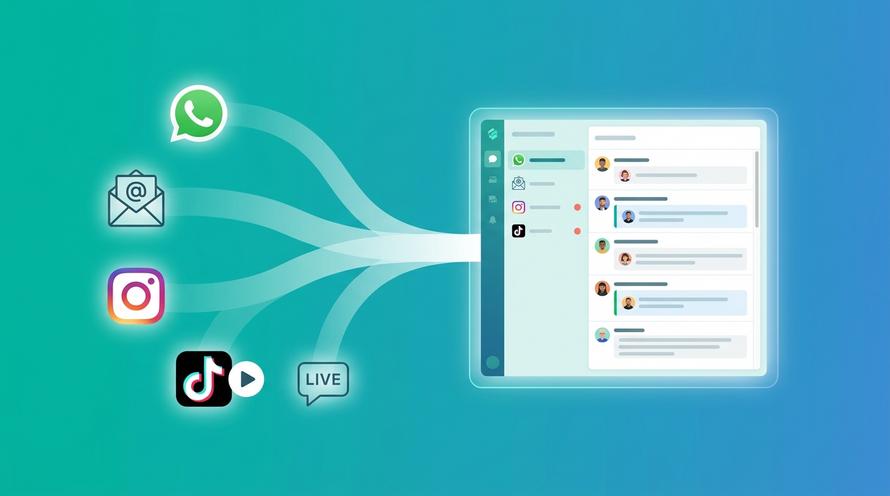
SaaS customers reach out through live chat, email, social channels, in-app widgets and sometimes WhatsApp or phone. A strong strategy brings all these touchpoints into one unified workspace.
This prevents duplicate tickets, keeps conversation history intact and ensures a seamless experience, no matter where the customer starts the conversation.
Scalability and flexibility as you grow
SaaS businesses can expand quickly. Support systems and workflows must be able to grow with them, without slowing down. That means adopting tools and processes that are easy to implement, simple to modify and capable of handling higher conversation volumes or additional channels as the customer base increases.
A skilled, empathetic support team
Even in an AI-powered world, human support remains essential. Skilled agents bring empathy, problem-solving and product expertise, especially when dealing with frustrated users or technical challenges. Investing in training, knowledge systems and internal collaboration pays off directly through higher satisfaction and lower churn.
Customer-centric thinking across the organisation
A customer-first mindset means designing support, product development and processes around user needs, not internal convenience. It encourages proactive communication, better onboarding flows, continuous feedback loops and improvements based on real customer experiences.
When this mindset becomes part of the culture, support naturally becomes more intuitive, helpful and aligned with long-term customer success.
How to measure SaaS customer support?
Strong SaaS customer support isn’t just about solving issues, it’s about consistently delivering an experience that keeps customers engaged, confident and loyal. To understand whether your support is performing well, you need the right metrics. These give you a clear picture of service quality, operational efficiency and how well your team is supporting long-term retention.
Here are the core KPIs that most SaaS companies rely on:
Average Resolution Time
This measures how long it takes to fully resolve a customer issue from start to finish. Shorter resolution times usually indicate efficient workflows, helpful documentation and well-trained agents. Long resolution times often signal process gaps or unclear product areas that may need review.
First Reply Time (FRT)
This is the time it takes for a customer to receive the first response after raising a request. Fast acknowledgment, even if it’s a simple confirmation, helps set expectations and reduces frustration. In SaaS, where many issues are time-sensitive, FRT is one of the strongest predictors of customer satisfaction.
First Contact Resolution (FCR)
FCR tracks how many tickets are resolved in a single interaction without transfers or follow-ups. A high FCR indicates clear communication, strong product knowledge and efficient support workflows. It also reduces ticket volume since fewer conversations spill across days or channels.
Tickets handled per agent
This helps you understand team productivity by measuring how many conversations or tickets an agent can reasonably manage within an hour or day. When paired with quality metrics (like CSAT), it helps identify efficient agents, training needs or workload imbalances.
Customer Satisfaction Score (CSAT)
CSAT is typically collected through quick surveys after a conversation. It measures how satisfied customers feel with the interaction, the support received and the overall experience. In SaaS, CSAT is closely tied to retention, a consistently low score is often an early warning sign of churn risk.
Occupancy Rate
Occupancy refers to how much time an agent spends actively working on support activities versus being idle. High occupancy can indicate overworked teams, while very low occupancy may show overstaffing. Finding the right balance is key to a healthy, motivated support organisation.
7 Effective tips on how to improve SaaS customer support
Improving SaaS customer support isn’t about reacting faster to questions, it’s about designing a system that prevents friction, supports customers across every channel and empowers your team with the right tools. Here are practical, human-centred ways to elevate your support strategy, with examples of how platforms like Trengo can help you put them into practice.
1. Take a proactive approach before issues become tickets
Look for patterns in FAQs, friction points and repeated bugs. Turn these insights into proactive guidance such as in-app tooltips, onboarding checklists, automated alerts or help centre updates.
With Trengo, you can trigger automated messages or AI-powered suggestions at the right moment, helping customers find answers before they feel stuck.
2. Centralise every conversation in one place
SaaS customers move between email, live chat, WhatsApp, mobile apps and social channels. When conversations are scattered, context gets lost and support becomes slower.
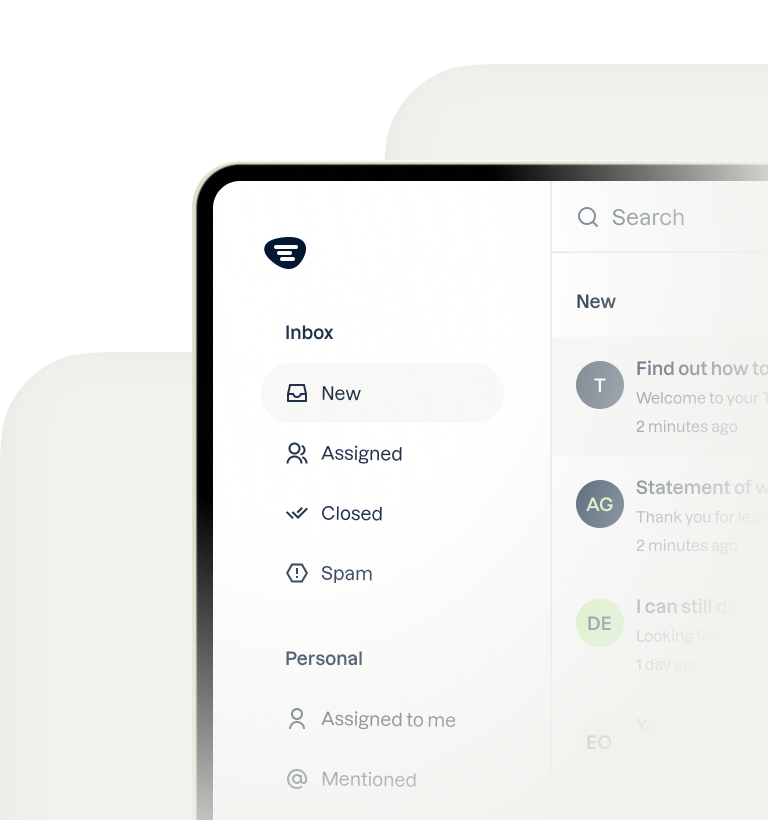
An omnichannel inbox like Trengo brings all messages into a single view, so your team always sees the customer’s full history and can respond confidently.
3. Use smart automation without losing the human touch
Automation should remove friction, not feel like a wall. Use AI agents to handle repetitive questions, guide users through common workflows and escalate complex issues to the right person.
Trengo’s AI helpmate does exactly this: it interprets intent, provides accurate answers and hands over to a human agent when nuance is needed.
4. Measure what matters and iterate continuously
Track KPIs such as first reply time, CSAT, resolution time, agent occupancy and ticket deflection. But don’t just monitor them, use these signals to refine workflows and training.
Trengo’s reporting dashboard gives teams real-time insights to spot bottlenecks and adjust their support strategy without guesswork.
5. Integrate customer data for personalised support
Context reduces friction. Support teams need to see past interactions, plan details, usage behaviour and account status instantly.
With Trengo’s CRM integrations and customer profiles, agents always have the right context at their fingertips, making conversations smoother and more personal.
6. Strengthen internal collaboration across teams
Great SaaS support requires alignment between product, engineering, sales and success teams. Create shared channels, internal notes and tagging workflows that make it easy to collaborate.
In Trengo, internal comments and shared workspaces help teams solve issues together without switching tools or losing track of conversations.
7. Keep improving your help centre and self-service options
Customers prefer solving simple issues on their own. A well-structured knowledge base, AI-powered suggestions and clear documentation reduce tickets while improving experience.
Trengo’s help centre tools allow you to create clear, accessible documentation and AI can suggest relevant articles to customers automatically.
Real-world examples of SaaS customer support done right
Understanding what strong SaaS support looks like becomes much clearer when you see it in practice. Below are two fresh, unique examples from well-known SaaS companies showing how modern support teams improve customer experience, reduce friction, and scale efficiently as they grow.
1. Notion: scaling personalised support without slowing growth
Notion, the productivity and workspace platform used by millions worldwide, faced a classic SaaS challenge: how to keep support fast, personal, and consistent while onboarding thousands of new users every day.
To solve this, Notion introduced a blended support model that mixes self-service, automation, and human expertise.
Here’s how their approach strengthened customer support:
- Intelligent self-service: their help centre and guides answer routine questions instantly, reducing dependency on agents.
- Proactive onboarding messages: users receive tailored tips based on the features they interact with.
- A small but specialised support team: agents focus on complex queries where human understanding truly matters.
This balance helped Notion maintain excellent response times and grow efficiently, proving that even small support teams can deliver top-tier experiences with the right structure and automation.
2. Canva: delivering global, multilingual support at scale
Canva, the design platform with millions of users across 190+ countries, needed a support system that matched its global user base. Their challenge was handling different time zones, experience levels, and languages all without compromising quality.
They revamped their support ecosystem around three pillars:
- Omnichannel assistance: users can reach support through email, chat, mobile, and guided flows inside the Canva editor.
- Hyper-localised help content: tutorials and help articles are served in multiple languages based on user's region.
- Robust internal collaboration: product and support teams work closely to identify bugs, feature gaps, and new training material.
By adopting a multi-layered, globally consistent support model, Canva improved customer satisfaction and dramatically reduced friction in high-volume markets.
Wrapping up
Strong SaaS customer support doesn’t happen by chance; it’s built intentionally. The fast-growing SaaS companies understand that support isn’t simply a department that answers questions; it’s a core part of the product experience and one of the biggest drivers of retention and long-term revenue. When customers feel guided, heard, and supported, they stick around. And in a subscription-based world, that changes everything.
The teams that excel are the ones who blend smart systems with genuinely human interactions. They give agents the tools to work faster, not harder, and they treat every conversation as an opportunity to deepen trust. They adapt quickly, learn from feedback, and stay connected to what customers actually need, even when those needs shift week to week.
If there’s one takeaway, it’s this: great SaaS support is proactive, consistent, and customer-first. It helps users unlock value, not just solve problems. And when you invest in the right workflows, the right mindset, and the right technology, support becomes a true competitive advantage.
If you're ready to build a support experience that grows with your product, Trengo can help.
Create effortless, AI-powered conversations across channels — all from one platform. Book a free demo and see how Trengo transforms SaaS customer support.
Frequently Asked Questions (FAQs)
What is SaaS customer support and how is it different from traditional customer service?
SaaS customer support helps users understand and succeed with cloud-based software. It focuses on long-term adoption, onboarding, and subscription retention rather than one-off issue resolution. Support teams also need more technical knowledge and product context. Platforms like Trengo make this easier by centralising customer conversations and automating everyday tasks.
Why is customer support so important for SaaS companies in 2026?
SaaS companies rely on recurring revenue, which means every interaction affects retention. Strong support reduces churn, increases product adoption, and builds trust. With more competition in 2026, fast and reliable support becomes a clear differentiator. Tools such as Trengo help teams maintain this standard across all channels.
What do customers expect from SaaS support teams today?
Customers expect quick replies, simple explanations, and multi-channel support without repeating themselves. They want self-service options for basic questions and human help for complex issues. Trengo supports these expectations by unifying chat, email, WhatsApp, and in-app messages in one inbox.
How is SaaS customer support evolving with AI and automation?
AI now helps teams respond faster, automate repetitive tasks, and predict user needs. Automation handles routine steps, while agents focus on more complex conversations. Trengo uses AI to support teams with smart replies, routing, and instant answers.
What are the essential components of a strong SaaS customer support process?
A strong process includes clear onboarding, fast responses, accessible self-service, structured escalation, and regular communication with product teams. Using a unified platform like Trengo ensures every enquiry is handled consistently and efficiently.
What tools do SaaS companies use for customer support?
Teams use shared inboxes, live chat, knowledge bases, ticketing tools, and AI-powered chatbots. Trengo brings several of these into one platform, helping teams manage all conversations from a single interface.
How can automation improve SaaS customer support without making it impersonal?
Automation can answer common questions, route messages, and gather details before an agent steps in. This speeds up support without removing the human element. Trengo’s automation flows prepare context for agents while keeping final interactions personal.
What role do AI chatbots and AI agents play in SaaS customer support in 2026?
AI chatbots handle first-line questions, guide users through features, and provide instant help. AI agents assist human teams with suggested replies and escalation. Trengo integrates these tools to improve accuracy and reduce workload.
What metrics should SaaS companies track to measure support performance (e.g., CSAT, FRT, ART, churn)?
Important metrics include CSAT, first response time, average resolution time, ticket volume, and customer churn. Trengo’s dashboards help track these metrics and identify areas for improvement.
How can support improve onboarding and long-term product adoption?
Support teams can improve adoption by offering clear guidance, quick answers during onboarding, and proactive follow-ups. Trengo helps by giving teams a complete view of customer interactions across channels, making personalised support easier.
How does Trengo help SaaS companies centralise all customer conversations from chat, email, WhatsApp and in-app messaging?
Trengo unifies every channel into one shared inbox, so teams never switch tools or lose context. With automation, AI suggestions, and team assignments, response times improve and customers receive consistent support wherever they reach out.



Let's meet
Grow your business with loyalty. Bring all of your customer contact into one, single platform to unlock delight at every step of the way.