What is an AI customer support bot? Benefits, types & implementation


Try Trengo for Free

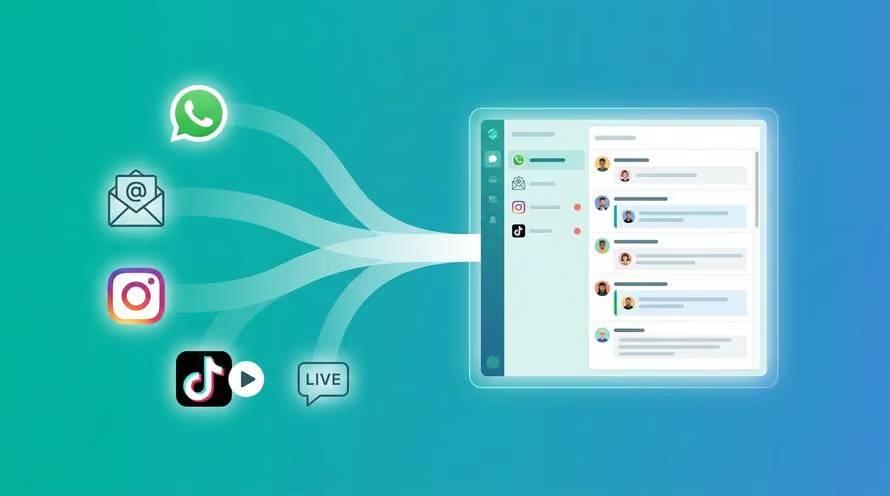
Trengo unites WhatsApp, email, web, social media, and calls in one inbox, saving your team hours of repetitive work and ensures no conversation is ever lost
An AI customer support bot is a digital assistant powered by artificial intelligence that helps businesses engage with customers in real time. It can understand questions, provide instant answers, and guide users through their queries, whether that’s tracking an order, scheduling a service, or sharing product details.
These bots use natural language understanding to interpret customer intent and respond in a way that feels human, not robotic. By automating routine interactions, they help customer support teams save time, reduce response delays, and stay focused on complex conversations that need a personal touch.
At Trengo, we believe AI customer support bots aren’t just about efficiency, they’re about building meaningful, always-on connections with customers. They make every interaction smoother and more reliable. So, let’s dive into what an AI customer support bot really is and how it transforms the way businesses communicate.
What is an AI customer support bot?
An AI customer support bot is an intelligent digital assistant designed to communicate with customers through text or voice, just like a real support agent would. Unlike traditional chatbots that rely on fixed scripts, AI bots use natural language processing (NLP) and machine learning to understand questions, detect intent, and respond in a meaningful, human-like way.
These bots act as the frontline of customer service, helping with everything from sharing product information and resetting passwords to booking appointments or routing complex queries to the right human agent. The more they interact, the smarter they become, learning from each conversation to improve accuracy and relevance over time.
What truly sets AI-powered support bots apart is their ability to adapt to context. They don’t just provide automated replies, they deliver personalized experiences based on each customer’s history, tone, and needs. In short, they make customer support faster, calmer, and more efficient while ensuring every conversation feels genuine.
How AI customer support bots work?
AI customer support bots combine several advanced technologies to deliver smooth, natural, and efficient customer interactions. Each element plays a key role in helping the bot understand, respond, and improve with every conversation.
Natural language processing (NLP)
NLP enables AI bots to understand human language the way people naturally speak or type. It helps the bot identify meaning, tone, and intent, regardless of the customer’s phrasing. This ensures the response feels clear, relevant, and human-like, even when questions are ambiguous.
Machine learning (ML)
Machine learning allows the bot to continuously improve its responses by studying previous interactions. Over time, it recognises patterns in customer behaviour, predicts inquiries, and offers more precise answers. The more conversations it handles, the smarter and more reliable it becomes.
Knowledge base integration
AI support bots are often connected to a central knowledge base that contains key product information, service policies, and FAQs. When a question arises, the bot instantly retrieves the most accurate and up-to-date answer, ensuring consistent communication across channels.
Context awareness and dialog management
A defining feature of advanced AI bots is their ability to keep track of the conversation flow. They remember previous messages in the same chat, enabling meaningful back-and-forth communication rather than isolated replies. This feature allows them to handle multi-step dialogues effectively, just like a professional human agent would.
In simple terms, every AI customer support bot follows this process: it receives a query, analyses intent, retrieves data from its knowledge base, provides a relevant response, and learns from the exchange to perform even better in the future.
Different types of AI customer support bots
FAQ bots
FAQ bots are ideal for handling repetitive questions, such as store hours, shipping details, return policies, and product specifications. Trengo’s AI bot can be easily configured to respond to these FAQs instantly across multiple channels, ensuring customers receive quick, consistent information wherever they reach out.
Transactional bots
These bots help customers complete actions like booking appointments, tracking orders, processing returns, or updating account details. With Trengo’s AI bot integrated into your existing systems, from CRMs to payment gateways, transactions can be completed within the chat itself, delivering a smooth, self-service experience.
Virtual assistants
Virtual assistants combine multiple capabilities into one intelligent bot. They can answer questions, maintain conversational context, handle transactions, troubleshoot issues, and escalate complex cases to human agents. Trengo’s AI bot is designed to function as a true virtual assistant, helping teams reduce workloads while keeping customer satisfaction high.
Industry-specific bots
Specialised bots are tailored to a specific industry, whether it’s banking, e-commerce, or healthcare. Trengo’s AI bot can be trained with domain-specific knowledge, enabling it to deliver accurate, relevant support for niche customer needs, such as recommending products, managing account enquiries, or scheduling medical appointments.
How to build an AI customer support bot
Creating an AI customer support bot involves combining the right technology, design, and customer insights to deliver meaningful, efficient conversations. Here’s a step-by-step approach you can follow:
1. Define your objectives
Start by identifying what you want your bot to achieve. Will it handle FAQs, process transactions, or serve as a full virtual assistant? Clear goals will guide both the bot’s capabilities and the technology needed.
2. Understand your audience
Analyse customer queries, feedback, and touchpoints to understand the tone, language, and topics your bot should focus on. The more aligned the bot is with customer needs, the more useful it will be.
3. Choose the right platform
Select a platform that offers flexibility, scalability, and integration options. Trengo’s AI bot is built to work seamlessly across multiple channels, such as WhatsApp, live chat, and email, while pulling data from CRMs or knowledge bases for accurate responses.
4. Train the bot with NLP and a knowledge base
Integrate Natural Language Processing (NLP) so the bot understands intent and context in conversations. Upload and connect your knowledge base to ensure the bot always provides consistent, verified information.
5. Design conversational flows
Map out conversation journeys, including greetings, common questions, and escalation paths to human agents. Make sure interactions feel natural, simple, and personalised.
6. Test and refine
Run internal and soft-launch tests to identify gaps, inaccurate responses, or broken flows. Use customer feedback and analytics to make continuous improvements Trengo’s AI bot has built-in machine learning to support ongoing optimisation.
7. Monitor and update
An AI bot is never “finished.” Review performance regularly, update content for seasonal changes or new product launches, and adjust conversational logic to match evolving customer needs.
Implementation best practices for AI customer support bots
To ensure your AI customer support bot delivers maximum value, consider these proven strategies during deployment and ongoing use.
Start small and scale gradually
Launch your bot with a focused scope such as answering your most frequent customer questions or supporting one service area. Trengo’s AI bot allows you to start with essential workflows and then expand easily as you gather data and confidence. This approach helps maintain quality while steadily increasing the bot’s capabilities.
Set clear customer expectations
Be transparent that the customer is interacting with an AI assistant, not a human. Outline what the bot can do and provide clear pathways to reach human support whenever needed. Trengo’s multi-channel setup ensures smooth handovers between AI and live agents, avoiding customer frustration.
Maintain and update the knowledge base
Your business content evolves, and your bot’s knowledge should evolve with it. Schedule regular updates to add new information, revise outdated answers, and improve responses based on customer feedback. With Trengo, updates can be synced instantly across all support channels.
Monitor conversations and learn continuously
Analyse chatbot interactions for patterns, confusion points, and improvement opportunities. This data not only refines the bot but can guide wider decisions such as adjusting product details or enhancing store policy explanations based on frequent inquiries.
How to measure success of AI customer support bot
Resolution rate
Track how many queries your bot can resolve without human involvement. A higher rate means the bot is performing effectively and saving resources. With Trengo’s analytics dashboard, you can monitor this metric in real time.
Customer satisfaction
Use feedback surveys and ratings to measure how customers feel about their bot experience. Improving satisfaction helps position the bot as a trusted, go-to support option.
Conversation volume
Review the number of conversations the bot handles over time. A rising volume signals growing engagement and adoption, highlighting the bot’s role in workload reduction for your support team.
Time savings for the team
Calculate the hours your bot saves by automating routine inquiries. Redirecting this time allows human agents to focus on complex, relationship-building interactions.
By applying these best practices and keeping performance metrics in focus, you can create an AI support bot that not only improves customer experience but also delivers measurable business impact with Trengo.
Final words
AI customer support bots are transforming the way businesses connect with their customers—making service faster, smarter, and available around the clock. From answering simple FAQs to handling complex, multi-step conversations, they help reduce team workload while ensuring customers get timely, accurate, and consistent support. With features like natural language understanding, machine learning, and integration with existing systems, AI bots are no longer just a trend—they’re becoming an essential part of modern customer service strategies.
Trengo’s AI customer support bot is designed to make this transition effortless. It works seamlessly across your communication channels, learns from every interaction, and ensures customers always feel heard and supported. Whether you’re starting small or ready for full-scale automation, Trengo gives you the tools to elevate your customer experience while boosting efficiency.
Ready to see Trengo’s AI bot in action? Book your free demo today and discover how you can deliver exceptional, 24/7 customer service—without adding extra strain to your team.
Frequently Asked Questions (FAQs)

An AI support bot uses artificial intelligence technologies like natural language processing and machine learning to understand customer questions, process their intent, and provide relevant automated responses. It can handle routine queries and direct more complex issues to human agents, improving efficiency and customer experience.
While chatbot is a broad term for any automated conversational tool, AI bots utilise advanced AI algorithms to understand context, learn from interactions, and respond more naturally. Chatbots may follow fixed scripts, whereas AI bots adapt dynamically, enabling more intelligent customer support.
AI bots can manage many routine inquiries and tasks efficiently, but they cannot fully replace human agents who provide empathy, judgement, and handle complex or sensitive situations. Instead, AI bots serve as valuable assistants that augment support teams.
Limitations include understanding nuanced or highly specific questions, detecting complex emotions, and managing context over long conversations. AI bots also depend on quality training data and require constant updating to remain effective.
Yes, AI support bots are generally safe and reliable when implemented with robust security measures. Trusted platforms like Trengo prioritise data protection and compliance to safeguard customer information while delivering dependable bot performance.
Setting up involves selecting a suitable platform, integrating communication channels, defining common queries, and training the bot with relevant data. Trengo offers straightforward AI Helpmate setup that connects effortlessly with platforms like WhatsApp, Instagram, email, and live chat.
AI bots effectively manage FAQs, appointment booking, order tracking, account updates, basic troubleshooting, and collecting customer feedback. They handle repetitive requests, freeing human agents to focus on complex issues.
Yes, AI support bots operate continuously, providing instant responses at any time of day or night, improving customer accessibility and satisfaction even outside regular business hours.
Absolutely. AI bots can be customised with company-specific FAQs, product details, policies, and previous customer interactions to offer tailored responses that meet specific business needs and customer expectations.
AI bots learn through machine learning techniques by analysing conversation data, recognising patterns, and incorporating human agent feedback to refine their accuracy, language understanding, and response relevance continuously.
Some of the top AI support bots in 2026 include Trengo's AI Helpmate, Zendesk's Answer Bot, Freshdesk's Freddy AI, and Intercom's Resolution Bot. These tools offer advanced AI capabilities combined with multichannel support.
AI bots typically integrate with CRM and customer service platforms to access customer data, update records, and provide agents with context during escalations. Trengo's AI Helpmate seamlessly links with various CRMs to enrich customer interactions.
Trengo's AI Helpmate automates responses to routine queries but can detect when a conversation requires human empathy or expertise, seamlessly escalating the interaction to live agents to maintain personalised and effective support.
Yes, Trengo's AI Helpmate consolidates messages from WhatsApp, Instagram, email, and live chat into a single shared inbox, allowing seamless management and consistent automated support across multiple platforms.



Let's meet
Grow your business with loyalty. Bring all of your customer contact into one, single platform to unlock delight at every step of the way.