Customer Service Improvement Plan: What It Is & How to Create One

Try Trengo for Free

Trengo unites WhatsApp, email, web, social media, and calls in one inbox, saving your team hours of repetitive work and ensures no conversation is ever lost
Guide to Answer How to Creating a Customer Service Improvement Plan
Outstanding customer support doesn't happen by accident; it requires a deliberate, strategic approach. In today's fast-paced digital landscape, a well-crafted customer service improvement plan bridges the gap between mediocre support and exceptional, brand-defining customer experiences. In an era where consumers expect instant replies across WhatsApp, email, and social media, relying on outdated ticketing systems often leads to churn. Modern teams need an actionable roadmap to streamline team collaboration, leverage AI, and consolidate communication into a single shared inbox.
Summary
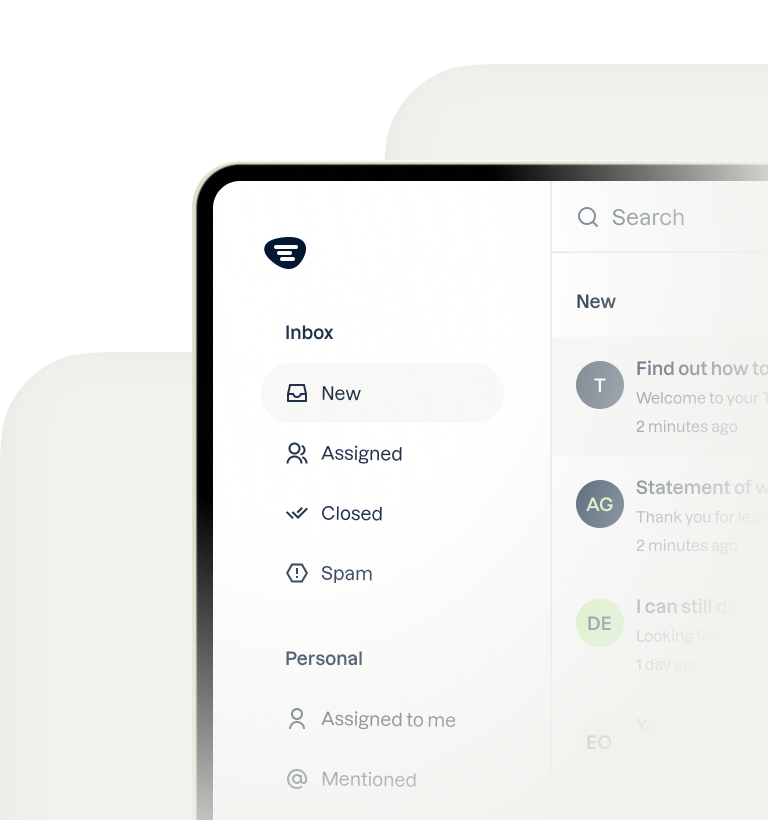
A customer service improvement plan is a strategic document designed to assess current support operations, identify bottlenecks, and implement targeted upgrades. By focusing on metrics like First Response Time (FRT) and Customer Satisfaction (CSAT), this plan transforms reactive teams into proactive success engines. Utilizing tools like Trengo to centralize communication is key to executing these strategies effectively.
TL;DR
- A customer service improvement plan outlines steps to elevate support quality and efficiency.
- Key strategies include embracing omnichannel communication and support automation.
- The 7-step process ranges from identifying problem areas to reviewing and refining outcomes.
- Auditing current workflows and defining KPIs are crucial first steps in building your plan.
- Upgrading to a shared inbox helps centralize interactions and boost team collaboration.
- IT operations also benefit from specific service improvement plans for incident management.
What Is a Customer Service Improvement Plan?
To capture the essence of high-performance support, we must define the roadmap. A customer service improvement plan, often referred to as a customer service action plan or development plan, is a strategic, step-by-step document designed to assess current support operations, identify bottlenecks, and implement targeted upgrades. This plan serves as a blueprint for support teams to elevate their metrics—like First Response Time (FRT) and Customer Satisfaction (CSAT)—by refining processes, upgrading technology, and upskilling agents. Unlike a general business plan, a performance improvement plan for customer service focuses exclusively on the end-user experience, omnichannel workflows, and support automation. An effective plan transforms reactive support teams into proactive customer success engines. For teams looking to modernize their approach, adopting specialized customer service software is often the first step in this transformation.
Essential Customer Service Improvement Strategies
A continuous improvement plan for customer service is built on several foundational philosophies that drive efficiency and satisfaction.
- Embracing Omnichannel Communication: Customers want to reach you on their favorite platforms. The strategy must involve moving away from siloed channels and unifying them into one view.
- Investing in Customer Support Automation: Manual data entry and repetitive queries drain team energy. Automating routine tasks is a primary improvement strategy to free up agents for complex issues.
- Fostering Team Collaboration: When complex tickets arise, agents shouldn't have to switch apps to ask a colleague for help. Internal tagging and shared inboxes are crucial for seamless resolution.
- Implementing a Continuous Feedback Loop: A continuous improvement plan for customer service relies on real-time data. Teams must regularly survey customers and analyze chat transcripts to adapt their strategies dynamically.
The 7 Steps of the Improvement Process in Customer Support
To implement change effectively, follow these seven steps adapted specifically for customer support workflows.
- Identify the Problem Area: Pinpoint exactly where the support journey is failing, such as long wait times on WhatsApp or missed emails.
- Analyze Current Data: Look at historical ticket volumes, resolution times, and customer feedback to understand the root cause of the issues.
- Develop an Action Plan: Create a targeted customer service action plan outlining the necessary changes, such as introducing an AI agent.
- Set Measurable Goals: Define what success looks like using KPIs, for example, reducing response time by 30% within Q1.
- Execute the Strategy: Roll out the new processes and tools, ensuring the team is fully trained on the new omnichannel inbox.
- Measure and Monitor: Continuously track the performance of the new implementations against the baseline data to ensure progress.
- Review and Refine: Customer service is an ongoing cycle. Review the outcomes and tweak the process, ensuring a continuous improvement plan is always active.
Building Your Action Plan for Customer Service Improvement
Constructing a robust plan requires a methodical approach. Here is how to build your roadmap.
Conduct a Support Audit
Every performance improvement plan for customer service must start with an audit. Teams need to audit their current software stack, agent performance, and customer satisfaction scores. Are agents wasting time switching between Facebook Messenger, Email, and SMS? This is the place to highlight the pain points of fragmented communication and assess if your team possesses the necessary good customer service skills to handle modern demands.
Define Clear KPIs and Benchmarks
Detail the specific metrics that should be tracked to measure success. Key metrics include CSAT, Net Promoter Score (NPS), First Contact Resolution (FCR), and Average Handle Time (AHT). Setting realistic benchmarks gives the team a clear target to aim for within the customer service action plan, ensuring everyone is aligned on the end goals.
Upgrade to a Multichannel Inbox and Automation Platform
If your team is struggling to keep up with inquiries across email, live chat, and social media, unifying your channels is the fastest path to improvement. By leveraging a comprehensive platform, you can centralize all customer interactions into one smart inbox. Explore customer service automation platforms that offer an omnichannel inbox, empowering your team to manage everything from email to the WhatsApp Business API in one place. Integrating an AI agent can handle up to 50% of routine queries, drastically improving service metrics overnight.
Customer Service Action Plan Examples
Real-world scenarios help visualize how these plans come to life. Here are two distinct use cases.
Example 1: E-Commerce Retailer
This customer service improvement plan example focuses on an e-commerce brand experiencing high cart abandonment due to slow response times.
- Goal: Decrease response times on social media and live chat during the holiday rush.
- Action Steps: Implement the WhatsApp Business API for instant updates; deploy an AI agent to answer "Where is my order?" (WISMO) queries instantly; utilize team collaboration tools to loop in fulfillment managers directly within the customer's chat thread without forwarding emails.
- Expected Outcome: 40% reduction in WISMO tickets reaching human agents and a 20% increase in CSAT.
Example 2: B2B SaaS Company
This customer service development plan example addresses a B2B company struggling with complex, multi-touch technical support tickets. This often requires a high touch customer service approach to ensure client retention.
- Goal: Improve First Contact Resolution (FCR) for technical queries.
- Action Steps: Create a performance improvement plan for customer service agents that includes weekly technical training; implement a shared inbox where tier 1 agents can tag tier 2 developers using internal notes; set up automated workflows that route specific technical queries to the right department based on keyword triggers.
- Expected Outcome: Faster resolution of high-priority bugs and enhanced team collaboration.
For B2B teams managing high-value accounts, the relationship between support quality and client retention is direct. If you want to dive deeper into what this approach looks like in practice, explore our guide on high touch customer service.
Service Improvement Plans for IT Operations
Customer service isn't just external retail support; internal IT operations and tech support teams require highly specialized plans. IT Service Management (ITSM) relies heavily on structured improvement to minimize downtime and business disruption.
Enhancing Incident and Problem Management
It is vital to understand the difference between incident management (fixing an immediate break) and problem management (finding the root cause). A service improvement plan for incident management should focus on reducing the Mean Time to Resolve (MTTR) by setting up automated alerts and omnichannel ticketing. A service improvement plan for problem management focuses on analyzing historical data to prevent recurring outages. Tech teams can use customer support automation to instantly notify users of known outages, reducing duplicate ticket floods.
IT Infrastructure and Windows Server Maintenance
When developing a service improvement plan for IT infrastructure or a targeted service improvement plan for Windows Server deployment, communication is just as critical as the hardware. IT teams must establish clear protocols for notifying internal stakeholders about server patching, downtime, or security updates. By treating internal employees as "customers," IT operations can use omnichannel communication tools to broadcast updates via internal chat networks, SMS, or automated emails, ensuring seamless infrastructure upgrades without the helpdesk being overwhelmed by "is the network down?" questions. A solid service improvement plan for IT operations example includes migrating from a legacy ticketing system to a modern, collaborative shared inbox to handle server alerts efficiently.
Free Customer Service Improvement Plan Template
Managers can use this structural framework to generate their own customer service improvement plan PDF or customer service improvement plan PPT for stakeholder presentations.
- Executive Summary: Brief overview of the current support landscape and urgent needs.
- Core Objectives: 3-5 measurable goals (e.g., lower average response time to under 10 minutes).
- Current Metrics vs. Target Metrics: A baseline comparison chart to visualize growth.
- Resource Allocation: Budget for new tools (e.g., Trengo's WhatsApp Business API integration) and training hours.
- Action Items & Timeline: A chronological list of tasks, assigned owners, and strict deadlines.
- Review Cadence: Scheduled dates (weekly/monthly) to review the continuous improvement plan for customer service.
Powering Your Improvement Plan with Trengo
An action plan for customer service improvement is only as good as the tools used to execute it. Trengo provides the vehicle that drives the improvement plan forward by addressing common roadblocks.
- The Shared Inbox: Eliminates the "who is handling this ticket?" confusion. It consolidates email, voice, live chat, and social channels, essential for any modern customer service development plan.
- WhatsApp Business API: Connects businesses with customers where they already spend their time, improving response rates and modernizing the support approach.
- Customer Support Automation: From routing rules to auto-replies, automation removes the busywork, allowing agents to focus on complex, high-value interactions.
- AI Agent: Integrating AI is the fastest way to hit the KPIs outlined in your customer service improvement plan, offering true 24/7 support.
- Team Collaboration: The ability to @mention colleagues right inside the customer thread eliminates the need for external tools like Slack for ticket-specific conversations.
Frequently Asked Questions (FAQ)
How can customer service be improved?
Customer service can be improved by transitioning from reactive problem-solving to proactive customer engagement. This involves auditing your current workflows, investing in a unified omnichannel inbox to prevent siloed communication, implementing customer support automation to speed up response times, and continuously training your team.
What is the 10/5/3 rule in customer service?
The 10/5/3 rule is traditionally a hospitality standard that dictates how staff should interact with guests based on distance: make eye contact at 10 feet, smile at 5 feet, and greet at 3 feet. In modern digital support, this rule is metaphorically adapted into SLA response times: acknowledging a query within 10 minutes, providing an update within 5 minutes of a follow-up, and aiming for resolution within 3 key touchpoints.
What are the 4 P's that improve customer service?
The 4 P's that drive exceptional customer service are People (hiring empathetic staff), Product (deep knowledge of what is being supported), Process (establishing clear workflows and routing), and Platform (equipping the team with technology like Trengo's shared inbox to execute efficiently).



Let's meet
Grow your business with loyalty. Bring all of your customer contact into one, single platform to unlock delight at every step of the way.