AI in customer experience: Scale support without losing control


Try Trengo for Free

Trengo unites WhatsApp, email, web, social media, and calls in one inbox, saving your team hours of repetitive work and ensures no conversation is ever lost
AI in customer experience is how all the leading businesses are now meeting their customers' expectations. From automating conversations to predicting customer needs, artificial intelligence is becoming the backbone of effective, scalable support.
But here’s the catch: not all AI tools are created equal. While many promise efficiency, few actually deliver clarity and control where it matters.
In this guide, we’ll break down what AI in customer experience really means, why it matters, and how tools like Trengo make it work in the real world.
What is an AI customer experience?
An AI customer experience is the use of intelligent technologies such as chatbots, machine learning, and agent assistance to improve how your business interacts with its customers. Instead of handling every question manually, your teams can use AI to respond faster, personalise communication, and solve issues before they escalate.
But it’s not only about speed.
With AI, customer service teams can handle higher volumes of inquiries without losing the necessary human touch. It allows your team to focus on complex queries while automation handles repetitive ones. For your business that means:
- Fewer delays
- More satisfied customers
- Lower operational costs.
In short, AI in customer experience is about delivering faster, smarter, and more personal support at scale using AI technology.
What are the benefits of AI in customer experience?
Using AI in customer experience can do more than bring down response times. It can help you build a smarter, more sustainable customer support strategy. One that grows with your business and strengthens customer trust.
Boost productivity, without burning out your team
AI handles repetitive queries and routes conversations to the right person, freeing up your team to focus on more complex inquiries. The Harvard Business Review reports that organisations using AI have seen productivity increases of up to 40%.
Deliver faster, more consistent support
AI ensures that every customer gets a fast and helpful response, no matter the time of day. With smart automation in place, no one gets left waiting, or forgotten.
Spot trends and improve strategy
AI uncovers patterns in customer behaviour, helping teams make data-driven decisions. You’ll know what customers are asking, what frustrates them, and where to improve, without having to dig through endless tickets.
Scale your support without adding headcount
As your business grows, AI ensures your support stays strong. Automation enables you to handle more conversations across multiple channels without compromising quality.
Maintain control in a multichannel world
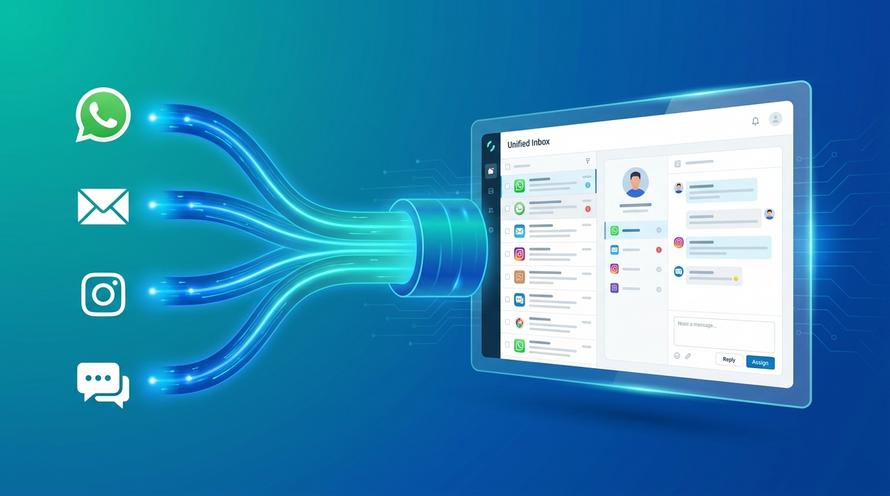
With tools like Trengo’s Flowbot and omnichannel inbox, AI works across email, WhatsApp, Instagram, and more. Your team stays in control, even when there is a high volume of tickets.
Reduce costs, not service quality
AI helps you automate where it makes sense, so you save time and reduce costs without losing the personal touch that keeps customers loyal.
Customer service automation examples
Customer service automation covers a lot. Whether you’re a growing team or an established operation, automation can help you become more efficient. Below are real-world examples of how businesses are utilising automation to streamline support and scale their services.
Quick Replies for fast, consistent answers
Also known as canned messages, these are ready-to-send responses for common questions. Your team can send them with a click, ensuring consistency and saving valuable time, especially when dealing with high volumes and repetitive inquiries.
Auto Replies to keep customers in the loop
When a message comes in, an auto reply instantly confirms receipt and sets expectations for the next steps. These updates can continue throughout the conversation, keeping customers informed as tickets are opened, updated, or resolved.
Knowledge Base for self-service support
A searchable help centre lets customers find answers without needing to speak to a member of your team. This reduces pressure on your team while empowering customers to solve problems on their own.
Flowbot to guide customers step by step
Trengo’s Flowbot uses interactive workflows to walk customers through their questions. Whether it’s booking an appointment or changing a delivery address, Flowbot helps complete tasks with buttons, images, and links, and no coding is needed.
Agent Assist to bring down response times
With Trengo’s AI suggestions, agents get instant answer recommendations based on customer queries. It means less time spent searching for the right information and more time delivering personal, thoughtful service.
Voice bots for speech-based support
AI-powered voice assistants help customers navigate phone menus or solve simple issues without speaking to a person. They understand intent through natural language processing and reply using pre-recorded or AI-generated audio.
AI chatbots for smart conversations
Unlike basic bots, AI chatbots understand context and nuance. They can manage entire conversations, handle complex questions, and even complete transactions across all your customers' favourite channels.
12 ways to improve customer experience using AI
AI in customer experience empowers teams to work more efficiently and can help with burnout. From first contact to resolution, here’s how AI can help your business deliver faster, more personal, and more proactive support, without putting more pressure on your team.
1. Automate repetitive queries
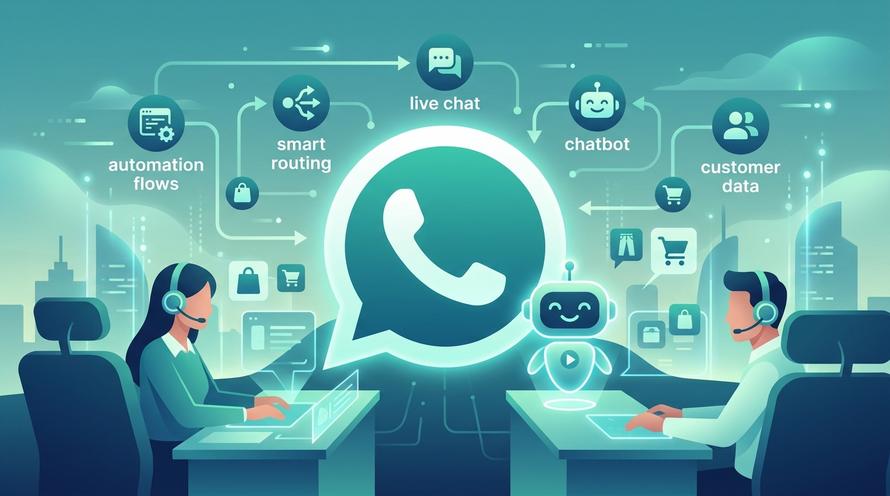
Repetitive questions like “Where’s my order?” or “What are your opening hours?” slow down your team. Trengo’s AI chatbot handles these inquiries using trained answers and connected data. This frees up your team to deal with more important conversations, improving both response times and morale.
2. Deliver 24/7 support, without burning out
Customer questions don’t stop when your team logs off. Trengo bots work across channels like WhatsApp, email, Instagram, and Facebook Messenger to give customers immediate answers at any time of day. Your customers feel heard, and your team gets uninterrupted downtime.
3. Shorten onboarding time for new agents
AI-powered Agent Assist gives new agents the confidence to jump straight in. As they type, Trengo suggests reply options, links to help centre content, and relevant context from past conversations. Instead of memorising everything, new hires can focus on learning by doing, with AI as their safety net.
4. Route messages to the right person
AI in customer experience transformation includes smart routing. Trengo analyses message content, urgency, and language to direct each conversation to the best-suited agent. This avoids misrouting, reduces ticket bounce, and gets customers the help they need.
5. Personalise responses with real-time context
Whether a customer is contacting you for the first or fifth time, AI can give your team relevant details such as previous orders or customer sentiment, so that your team can respond with empathy and relevance. This context-driven personalisation makes interactions feel human and stops your customers from feeling frustrated by repeating themselves.
6. Predict problems before they happen
AI tools like Trengo’s Flowbot track patterns like repeat issues or dropped conversations. If a customer often cancels deliveries or leaves chats unresolved, AI flags it early, so you can take proactive steps to retain them.
7. Improve quality assurance
Traditional QA relies on spot checks. With AI, every conversation can be automatically analysed for tone, sentiment, resolution quality, and response time. Managers get a full picture of performance and can offer targeted coaching that actually improves where your team might be lacking.
8. Recommend helpful content and offers
Trengo AI can detect when a customer is looking for support or is on the fence about a purchase. Based on behaviour and history, it can suggest help centre articles, upsells, or even send a discount code via Flowbot.
9. Enhance multilingual support
Supporting customers across multiple regions and languages can be tough. Trengo’s AI detects language and automatically switches to the right template, Quick Reply, or Flowbot version. This means you can offer global support without needing a global team.
10. Create a consistent brand voice across channels
With Trengo, you can train your chatbot and Quick Replies to reflect your tone, whether that’s friendly, formal, or somewhere in between. AI ensures every customer interaction aligns with your brand voice, even if multiple team members are handling messages.
11. Reduce costs without losing quality
By automating low-value tasks and deflecting basic queries, AI reduces the need for additional team members. At the same time, your staff's productivity increases. This dual impact means you can scale support sustainably, even during peak seasons or rapid growth.
12. Keep your help centre smart and up to date
An outdated help centre frustrates customers. Trengo uses AI to flag underperforming articles and recommend updates. You can also turn bullet points into full help articles with generative AI, keeping your content useful without a full content team.
AI customer experience examples & use cases
Real-world examples show how AI in customer experience is already transforming service across industries. Here’s how teams are using AI to boost efficiency, reduce friction, and still keep things human.
How Yobbers uses AI without losing their personal touch
Yobbers, an international recruitment agency based in the Netherlands, needed to balance speed with empathy. They were overwhelmed by repetitive queries, especially during peak seasons, and risked losing leads due to long wait times.
By creating an AI HelpMate named Helmut, trained in multiple languages and aligned with their tone of voice, they fully automated first-level support across channels like WhatsApp and live chat.
- Over 1,500 questions now answered instantly by Helmut
- 600+ lead journeys automatically guided
- 500% faster resolution time
- Personal interaction reserved for key moments like interviews
Yobbers proves that agentic AI in customer experience doesn’t mean losing the human touch.
"This has been such a game-changer because no recruiter can memorise all the vacancies. Helmut helps answer queries by vacancy, city, or even country. Updating the documents is also super easy. We have a few team members responsible for keeping them up-to-date in English, Dutch, and German." – Yobbers
Zalando: tailoring style with real-time suggestions
Fashion giant Zalando is redefining personalisation with a generative AI assistant that helps customers discover outfits based on their preferences, body type, and occasion. This tool also helps to co-create, inviting user feedback to fine-tune results in real time.
This is a great example of gen AI in customer experience, turning traditional shopping into an interactive, guided experience that learns and improves continuously.
Tripadvisor: transforming travel planning
Tripadvisor’s AI itinerary builder uses customer preferences, travel dates, and destination insights to craft tailored travel plans. It taps into their massive review database to serve personalised recommendations with a local feel.
Here, generative AI in customer experience delivers value before a purchase is even made, proactively enhancing customer experience.
Measuring success with business metrics and KPIs
Investing in AI in customer experience is only the beginning. Once you have it in place, you then need to show that it is proving value. To do that, you need to track the right metrics. Below are four key areas to focus on when measuring the success of your AI initiatives.
1. Cost reduction
AI excels in reducing operational costs. By automating routine tasks such as routing messages, answering FAQs, or updating ticket statuses, your team can do more important things with their time. This means fewer manual hours and lower reliance on expanding headcount as your business scales.
Ask yourself:
- Are fewer hours needed for basic queries?
- Has ticket volume been deflected via chatbots or help centre resources?
2. Customer satisfaction (CSAT)
Efficiency is great, but not if it frustrates your customers. AI in customer experience management should lead to faster, more helpful support that still feels human. Regular CSAT scores, feedback forms, and conversational ratings help you assess whether AI is improving customer experience or making it worse.
Monitor:
- Are chatbot conversations receiving positive feedback?
- Do customers feel they’re getting helpful, relevant answers?
3. Revenue growth
Smart AI doesn’t just resolve issues, it drives sales and helps the business reputation. From personalised product recommendations to proactive upsell messages, AI can help you to push leads through your funnel and boost conversions. Track how these interactions lead to measurable results.
Key metrics include:
- Conversion rate from AI-powered conversations
- Uplift in revenue from personalised offers
- Engagement with proactive messaging
4. Agent satisfaction and retention
AI should make life easier for your team, not put more pressure on them. Taking away repetitive tasks means your team can focus on more meaningful interactions and more complex problem-solving. This leads to less burnout, better morale, and higher retention rates.
You can track:
- eNPS (employee Net Promoter Score)
- Internal feedback on AI tools
- Time saved per agent per week
AI in customer experience predictions for 2025
AI in customer experience is changing from day to day, and that is making 2025 an exciting year for advancements. As technology advances, so will the expectations from both businesses and customers. Here’s what we predict will happen with AI in customer experience during 2025.
1. AI agents will keep getting smarter
We’re entering a phase where AI agents will do more than answer simple questions. Businesses will start using AI to automate complex, multi-step tasks. These AI agents will begin collaborating in the background too, handling everything from rebooking a delivery to processing a return, without needing to consult a human.
2. Personalisation will go deeper, especially in B2B
For B2B companies, AI will tap into behavioural data, purchase history, and past interactions to offer hyper-targeted support and solutions. Expect more proactive nudges, smarter recommendations, and tailored service at every stage of the customer journey.
3. Operational excellence becomes the B2C standard
In B2C, AI will be the engine behind faster, smoother experiences. From order tracking to product recommendations, customers will expect businesses to get it right the first time.
4. New roles will emerge to manage and scale AI
We’re already seeing job titles like AI CX strategist, bot trainer, and data analyst become part of service teams. These roles will focus on refining how AI works, ensuring it aligns with both company goals and customer needs.
5. AI will speak more naturally, and more languages
We’ll see a rise in conversational interfaces powered by generative AI that can adapt tone, emotion, and even switch languages seamlessly. The future of AI in customer experience will sound a lot more like talking to a human, and less like typing commands into a system.
Final thoughts: AI in customer experience is the shift your service team needs
AI is building smarter systems that support both your customers and your team. From handling repetitive questions to improving personalisation, routing, and response times, AI helps teams do more with less.
Trengo gives you everything you need to put AI into action, without losing the personal touch your customers value.
Frequently Asked Questions (FAQs)
How is AI used to improve customer experience?
AI improves customer experience by automating responses, providing instant support, and delivering more personalised interactions. It analyses data from multiple channels to understand customer behaviour, anticipate needs, and suggest the best next steps. With Trengo, AI-powered tools can route conversations to the right team member, suggest replies, and ensure customers receive consistent, timely service across email, WhatsApp, live chat, and social media.
How does AI personalise the customer journey?
AI analyses purchase history, browsing behaviour, and past interactions to deliver tailored recommendations, offers, and messages. For example, Trengo can use AI to personalise automated replies, recommend products, and follow up with relevant content—creating a seamless, individualised experience from first contact to post-sale support.
Which AI tools are best for enhancing customer experience?
The best AI tools combine automation, personalisation, and integration. Trengo is ideal for omnichannel customer communication, while other tools like HubSpot (for marketing automation), Zendesk (for ticketing), and Dynamic Yield (for personalisation) can work alongside it. The key is using platforms that connect with each other so data and context flow across every customer touchpoint.
Can AI help predict customer needs and preferences?
Yes. AI uses predictive analytics to identify patterns in customer data and forecast future actions. For example, it might detect when a customer is likely to reorder or when they may be at risk of leaving. Trengo can integrate with analytics tools to trigger proactive messages or offers based on these predictions—turning insight into timely action.
Can AI reduce wait times in customer support?
Absolutely. AI chatbots can answer common questions instantly, freeing human agents to handle complex cases. In Trengo, AI-powered bots work alongside live agents, ensuring customers receive quick, accurate responses without long queues, even during peak hours.
How do chatbots and virtual assistants improve customer engagement?
They provide 24/7 availability, respond instantly, and keep conversations flowing across channels. In Trengo, AI chatbots can handle routine queries, while virtual assistants manage more complex, multi-step interactions—ensuring every customer feels heard and supported.
How can AI help improve customer retention?
AI can identify at-risk customers, personalise retention campaigns, and ensure proactive engagement. For example, Trengo can trigger follow-ups, send loyalty offers, and alert your team when a customer’s engagement drops—helping you take action before they leave.

Let's meet
Grow your business with loyalty. Bring all of your customer contact into one, single platform to unlock delight at every step of the way.