9 best AI voice assistants for better productivity, support, and sales in 2026


Try Trengo for Free

Trengo unites WhatsApp, email, web, social media, and calls in one inbox, saving your team hours of repetitive work and ensures no conversation is ever lost
Remember when “back in the day” your support team slogged through binders of call scripts, manually logging every detail into spreadsheets and paper tickets? Customers spent a lot of time waiting on hold while agents flipped between systems, hunting for order updates or troubleshooting steps. It was slow, error-prone, and burned out your best people.
Today’s AI voice assistant for business isn’t just a fancy answering machine. If you’ve ever asked “what is an AI voice assistant?”, it’s a software agent that understands natural language, taps into your CRM, and automates routine tasks.
These AI-powered voice assistants can pull order histories in an instant, route calls by intent, and even draft follow-up emails without any human lifting a finger.
In this guide, we’ll introduce you to the 9 Best AI Voice Assistants of 2026 with lightning-fast automation with deep integrations into your CRM, help desk, and calendaring systems. We’ve tested each best AI voice assistant on setup speed, automation depth, and integration flexibility so you can skip straight to the solution that fits your workflow.
Before we jump into the tools themselves, let’s make sure we’re all on the same page about what these assistants are and what they actually can do.
What is an AI voice assistant?
An AI voice assistant listens to your spoken words, interprets what you need, and then takes action by answering questions, routing calls, creating tasks, or triggering workflows. It converts speech to text, applies natural language processing to understand intent, and uses automation to carry out each next step.
You may know Siri or Alexa as everyday examples, but AI voice assistants now live inside business platforms such as support desks, CRMs, and collaboration tools. They welcome callers, retrieve knowledge-base articles, open new tickets and hand off to a human agent when a situation requires personal attention. As they process more interactions, they learn from your own data, so they become more accurate and responsive over time.
For businesses, this means shorter hold times, fewer transfers, and higher agent productivity. For individuals, it eliminates extra clicks and keeps you focused on your work. In both cases, the result is consistent: less friction and faster resolutions.
Now that you know what an AI voice assistant is, let’s look at the core features that make them so powerful.
Key capabilities of AI voice assistants
AI voice assistants handle many tasks that slow teams down. Here are common jobs they can do:
- Answer customer questions. They can read from your help centre or knowledge base and give clear answers.
- Route calls. They can collect caller intent and send the call to the right team.
- Transcribe and summarise. They turn calls into notes and action items.
- Create and update records. They can open tickets, add CRM notes, schedule follow-ups, and tag conversations.
- Handle simple tasks. They can reset passwords, check order status, share policies, or schedule appointments.
- Escalate when needed. When a human touch is required, they hand off with context.
- Work across channels. Many assistants now support voice, chat, email, and social messages in one place.
With these core functions in mind, you can see how AI voice assistants translate into real benefits for your teams.
How AI voice assistants can help your business
Companies using AI voice assistants report up to a 40% reduction in call resolution times and a 30% rise in customer satisfaction. When routine tasks start eating your team’s time, you can let AI voice assistants take over so you can focus on the big wins. Here are practical ways you can put them to work:
Customer support
AI voice assistants pull answers straight from your help centre to resolve common questions in seconds. This gives customers instant help and lets agents tackle tougher problems.
Sales
They ask qualifying questions, schedule follow-up meetings right away and record all the important details. Sales reps spend less time on admin work and more time building relationships.
Operations
During busy periods, AI voice assistants log incident reports, create the right follow-up tasks and notify teams immediately. Nothing slips through the cracks when your volume spikes.
Field services
On-site technicians use voice commands to update job statuses, capture customer feedback and add notes hands-free. Data flows back to the office without interrupting their work.
HR & IT help desks
AI voice assistants handle routine requests like password resets or policy lookups and automatically open tickets for anything that needs human follow-up. Support staff spend less time on basics and more time on strategic projects.
The real power of voice: Workflow automation
Automation lies at the heart of AI voice assistants and is what drives true operational efficiency. AI voice assistants for business excel at eliminating repetitive, low-value tasks so your team can focus on what really matters. Routine calls about order status, for example, no longer require manual lookup.
The assistant connects to your order management system, fetches the exact details and shares a clear update with the caller in seconds. That alone can free agents from hundreds of queries each week.
When customers need to reschedule appointments, the assistant handles the entire workflow automatically. It checks available slots, confirms the new time and updates your calendar without anyone on your team lifting a finger.
At the end of every support interaction, the assistant generates a complete ticket with tags, priority level and a brief summary. This one-two-three automation punch removes tedious data entry, reduces human error and cuts average resolution times.
By offloading these busywork tasks, AI voice assistants speed up every stage of customer service and sales. Your human agents spend less time flipping between systems and more time solving complex problems, driving revenue and building stronger customer relationships. The result is faster outcomes and a more productive, satisfied team.
How we selected the AI voice assistants
We kept our criteria super simple and practical. We looked for tools that:
✔️ Improve outcomes. Faster answers, lower handle time, higher CSAT, or more qualified meetings.
✔️ Are easy to use. Clear setup, simple workflows, and helpful docs.
✔️ Play well with others. Strong integrations with CRMs, help desks, phone systems, and calendars.
✔️ Offer smart automation. Routing, summaries, auto-tagging, and hands-free actions.
✔️ Support compliance and security. Data controls, roles, permissions, and audit trails.
✔️ Scale with you. Works for small teams and grows with volume and channels.
✔️ Give value for money. Pricing that makes sense for features and results.
The 9 best AI voice assistants in 2026
We have selected the most reliable, versatile, and scalable AI voice assistants in today’s market, each evaluated for its unique strengths in driving efficiency, engagement, and customer delight.
We've also used the format Tool Name - Best AI Voice Assistant “Category” to make your scan easy.
1. Trengo - Best AI Customer Engagement Platform
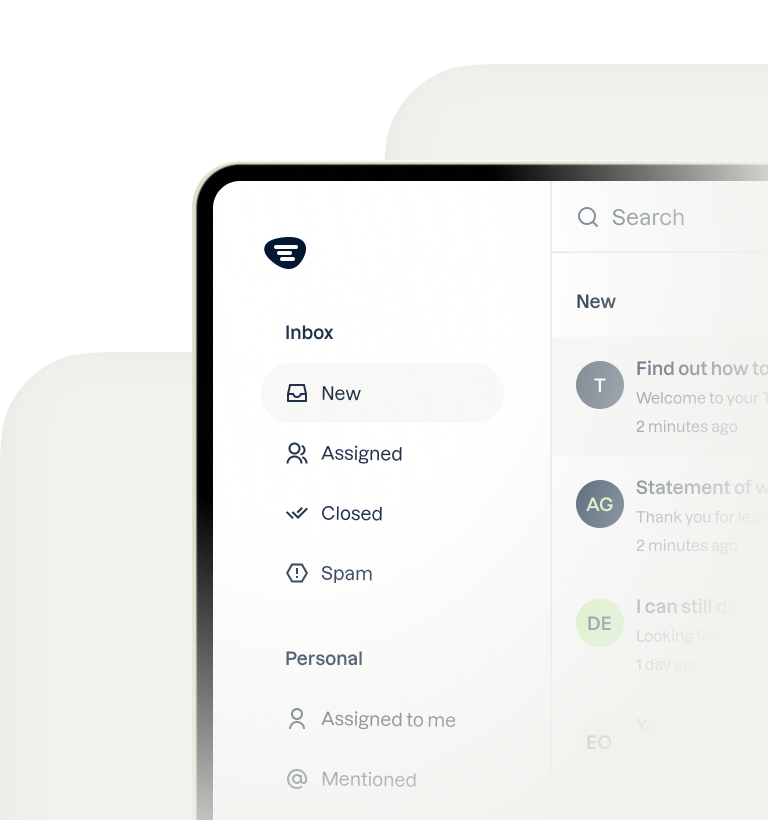
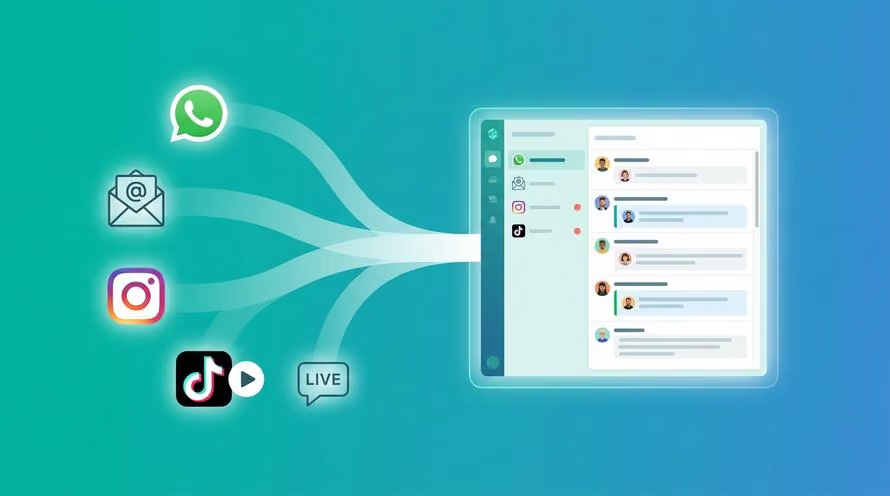
Trengo is an all-in-one platform that brings voice calls, chat messages, emails, and social media into a single inbox. It's built-in AI answers common questions automatically, sends messages to the right team member, and even writes quick summaries of long conversations.
With Trengo Journeys, you can draw simple flowcharts to guide customers through onboarding, support, promotions, or win-back campaigns across any channel. This means you can keep every conversation in one place and make sure no customer falls through the cracks.
Standout features
- AI Automation: Auto-reply to frequently asked questions, route messages to the right person, and generate conversation summaries.
- Journeys: Visual flow builder for creating step-by-step customer journeys across voice, chat, email, and social channels.
- Multichannel Inbox: See and reply to voice calls, WhatsApp, Instagram, Facebook, email, and website chat from one dashboard.
- Knowledge Base: Store shared answers that the AI can pull in to give consistent responses across all channels.
- Collaboration: Add internal notes, assign tickets to teammates, and set service level agreements to keep everyone coordinated.
- Analytics: Monitor key metrics like response times, message volume, tags, and resolution outcomes to improve your team’s performance.
2. Zendesk - Best AI voice assistant for support teams
Zendesk combines a strong help desk with AI that can handle voice prompts, pull knowledge, and create tickets. It fits teams that already use Zendesk or want a trusted support stack with built-in voice help.
Standout features
- Voice bots for routing and answers
- Auto ticket creation and tagging
- AI summaries and suggested actions
- Knowledge search during calls
- Integrations with major CRMs and tools
- Smooth fit for support teams on Zendesk
- Strong reports and dashboards
3. Dialpad AI Voice - Best AI Voice Assistant for Calling and Transcription
Dialpad focuses on calling, real-time transcription, and call insights. It helps teams capture details, track moments, and coach reps. If you want smarter call notes and post-call tasks, Dialpad is a solid pick.
Standout features
- Real-time call transcription
- AI summaries with action items
- Sentiment and keyword tracking
- Call routing and IVR
- Integrations with Salesforce, HubSpot, and help desks
4. Intercom - Best AI Voice Assistant for Sales and Support Handoffs
Intercom blends chat, bots, and support tools with AI. Its voice features help with routing and context sharing across the buyer journey. It suits teams that want quick handoffs between sales and support.
Standout features
- Good AI automation for FAQs and tagging
- Voice and chat routing to the right team
- Shared context across the conversation
- Strong messenger and product tours
- Integrations with CRMs and data tools
5. Google Assistant - Best AI Voice Assistant for `Search and Smart Home
Google Assistant is great for quick answers, reminders, and basic tasks. It works across Android phones, speakers, and smart displays. For personal productivity and simple voice tasks, it is easy to use.
Standout features
- Quick answers from the web
- Reminders, timers, and routines
- Smart device control
- Voice typing and dictation
- Works across many devices
6. Amazon Alexa - Best AI Voice Assistant for Smart Devices and Skills
Alexa has a large device and skills ecosystem. It is strong for smart home control and simple voice tasks. Some teams also use Alexa for office routines and meeting room setups.
Standout features
- Skills marketplace for many actions
- Smart device control
- Routines and reminders
- Multi-room audio and device support
7. Apple Siri - Best AI Voice Assistant for Apple Ecosystem
Siri works across iPhone, iPad, Mac, Watch, and HomePod. It helps with calls, messages, reminders, and dictation. If your team uses Apple devices, Siri is simple and built in.
Standout features
- Hands-free calls and messages
- Calendar, reminders, and notes
- Dictation and voice control
- Shortcuts for custom actions
8. Microsoft Copilot - Best AI Voice Assistant for Microsoft 365 Workflows
Copilot helps inside Microsoft 365. Think voice prompts to draft emails, summarise meetings, and pull facts from files or chats. If your team uses Teams, Outlook, and SharePoint, Copilot can save time every day.
Standout features
- Meeting summaries and action items
- Drafts for emails and documents
- Search across files and chats
- Teams voice and call context
- Admin controls and compliance
9. SoundHound - Best AI Voice Assistant Platform for Custom Voice Experiences
SoundHound offers a voice AI platform that brands can embed into products, cars, and apps. If you want a custom wake word and branded experience, this is a good place to start.
Standout Features
- Custom voice models and wake words
- Speech-to-meaning architecture
- Multi-domain understanding
- Developer tools and APIs
How to choose an AI voice assistant
Among so many apps, finding the best AI voice assistant can feel overwhelming and time-consuming. But it doesn’t have to be a chore. Use this checklist to make a smart pick:
- Start with your goal. Do you want to cut wait times, boost conversions, or reduce manual work?
- Map your workflows. List your top five calls or tasks that repeat every day.
- Check data sources. Make sure the assistant can read your help center, CRM, and order system.
- Test the voice quality. Try live calls, accents, and noisy backgrounds.
- Look for automation. Can it create tickets, tag cases, book meetings, and trigger follow-ups?
- Plan the handoff. Make sure complex issues flow to humans with full context.
- Review security. Confirm roles, permissions, and data controls.
- Pilot first. Run a 2 to 4 week test with real traffic.
- Measure impact. Track response time, first contact resolution, CSAT, and cost per contact.
- Think long term. Choose a platform that can grow from voice to multichannel.
AI voice assistant trends to watch in 2026
This year, the voice AI landscape is moving faster than ever. Andreessen Horowitz reports that AI-driven voice bots are now often outperforming human call centres in cost and efficiency, underscoring a shift toward deeper automation and smarter routing
As you map your 2026 roadmap, keep an eye on how these industry moves intersect with privacy regulations, composable architectures, and outcome-focused metrics. Here are the shifts to watch as you plan your roadmap:
Omnichannel by default
All interactions, like voice calls, live chat, emails, and social DMs, appear in one timeline. No need to switch apps. Your agents can see full customer history at a glance and resolve issues 30% faster.
Deeper automation
AI auto-tags calls by intent (e.g., “billing,” “technical”), generates a 3-point summary, and triggers follow-up workflows (tickets, callbacks, surveys) without manual input.
Knowledge-first setups
Answers come from a structured FAQ database with version control and metadata. When a customer asks about the “return policy,” the assistant pulls the exact clause and links to the 2026 update.
Human in the loop
If sentiment analysis detects frustration or compliance flags, the AI instantly escalates the call with a full transcript and suggested resolution steps to a live agent.
Privacy and governance
Role-based access ensures only authorised staff can view call recordings. All audio is encrypted in transit and at rest, and transcripts auto-expire after 90 days to meet data-retention policies.
Outcome-driven metrics
Dashboards show key numbers: percentage of calls deflected, average handle-time reduction in seconds, and additional revenue from AI-driven upsells, all updated in real time.
Composable stacks
Easily plug in specialised services, speech-to-text, analytics, and CRM via APIs. Swap out one AI module without disrupting the rest of your stack, ensuring continuous improvement.
Why Trengo fits naturally into this toolkit
Over the past year, Trengo has doubled down on AI-driven voice features. In September 2024, Trengo introduced Trengo AI. It’s a plug-and-play voice tool that teams can set up in minutes to answer FAQs, route calls, and create tickets automatically.
Since then, early adopters report resolving up to 80% of routine inquiries without human intervention, all because of Trengo’s Helpmate engine, which seamlessly integrates voice, chat, email, and social channels under one roof.
So, if you’re looking for a single pane of glass to manage every customer touchpoint, Trengo should be on your shortlist.
AI Automation that saves time
Trengo AI instantly answers common questions, tags each interaction by intent (billing, technical, or returns), and spins up support tickets with priority levels, all without human touch. This can cut your first response time in half within weeks of go-live.
Journeys for the full customer path
Use Trengo’s Journeys to map out step-by-step voice flows. Welcome new sign-ups with a phone check-in, guide them through onboarding, and trigger re-engagement calls if they go silent, all from a simple visual builder.
Multichannel inbox
Voice, WhatsApp, Instagram DMs, email, and website chat appear in one unified feed. Agents see the complete conversation history and customer context, eliminating app-hopping and reducing resolution times by up to 30%.
Team collaboration
Within each conversation thread, you can assign tasks, drop internal notes, and loop in specialists. No more siloed threads, and everyone stays aligned in real time.
Analytics that show impact
Trengo’s dashboard tracks metrics like calls deflected to AI, average handle-time improvements, and even revenue influenced by AI-driven upsells. These insights help you prove ROI and spot new optimisation opportunities.
Easy to start, easy to grow
Begin with your top three workflows. Let's say order status checks and return requests and scale from there. Trengo’s pricing is usage-based, so you only pay for the channels and volume you need, making expansion both predictable and cost-effective.
This mix helps you turn calls and messages into clear outcomes. It makes the best voice AI assistant less about a single feature and more about a complete, scalable system.
Final words
Gartner predicts that interaction automation is set to grow fivefold, climbing from 1.8% in 2022 to 10% by 2026. AI voice assistants are not just gadgets. They are real helpers that save time, reduce effort, and make customers happier.
If you want a unified platform that brings voice, chat, email, and social together, Trengo is ready to help. It's plug-and-play AI automation answers FAQs, routes calls, and creates tickets in minutes. The Journeys builder maps your customer paths visually, and the multichannel Inbox keeps every conversation in one place. Start small, prove the value, and expand at your own pace.
Ready to see it in action? Book your free Trengo demo today.
Frequently Asked Questions (FAQs)
What is the best AI voice assistant in 2026?
The best AI voice assistant in 2026 depends on your needs. Popular choices include Google Assistant, Amazon Alexa, Apple’s Siri, and Microsoft Copilot, all of which offer strong general capabilities. For business communication, pairing a voice assistant with a unified customer platform like Trengo gives you greater flexibility—allowing you to manage voice queries alongside email, chat, and social media in one place.
Which AI voice assistant works best for business use?
For business, the ideal AI voice assistant should integrate with your existing tools, support automation, and offer accurate transcription. Google Assistant and Microsoft Copilot are strong general-purpose options, but for customer communication workflows, Trengo can integrate with AI-powered voice systems so your team can handle calls, chats, and messages in a single dashboard.
What’s the difference between AI voice assistants, chatbots, and conversational AI?
- AI voice assistants – Interact through spoken commands and responses, often handling tasks hands-free.
- Chatbots – Typically text-based, designed for quick, scripted interactions.
- Conversational AI – Covers both voice and text, with advanced natural language understanding to manage complex, multi-turn conversations.
When connected to Trengo, conversational AI can combine text chat, voice commands, and automation for a complete customer experience solution.
How accurate are AI voice assistants at understanding different voices?
Modern AI voice assistants are highly accurate, with many achieving over 95% speech recognition accuracy in ideal conditions. They can adapt to different accents, speech patterns, and tones over time. Integrating voice assistants with Trengo ensures transcribed interactions are stored alongside customer records, improving future understanding and context.
Can I build my own custom AI voice assistant?
Yes. Developers can use APIs from providers like Google Cloud Speech-to-Text, Amazon Lex, or OpenAI’s Whisper to create tailored voice assistants. Trengo can integrate with these custom solutions, enabling businesses to combine voice interactions with their broader omnichannel strategy.
Can AI voice assistants be used in customer service and call centres?
Absolutely. AI voice assistants can handle routine inquiries, route calls, and even authenticate customers, reducing agent workload. In Trengo, these voice interactions can be logged alongside email, live chat, and social media messages—creating a unified view of each customer.
What industries benefit most from AI voice assistants?
- Retail and e-commerce – for voice-enabled product search and order tracking.
- Healthcare – for appointment scheduling and patient reminders.
- Hospitality – for bookings and guest services.
- Finance – for account inquiries and fraud alerts.
Using Trengo, these industries can connect voice assistant data to their existing customer support and sales channels.
What’s the future of AI voice assistants with generative AI technology?
Generative AI will make voice assistants more conversational, context-aware, and proactive. They’ll move beyond simple commands to manage complex, multi-step tasks, predict customer needs, and adapt their tone and style in real time. Integrated with Trengo, future AI voice assistants could provide instant, personalised responses across voice, chat, and social channels—without losing context between interactions.



Let's meet
Grow your business with loyalty. Bring all of your customer contact into one, single platform to unlock delight at every step of the way.