8 Best omnichannel marketing tools in 2026 to grow your business

Try Trengo for Free

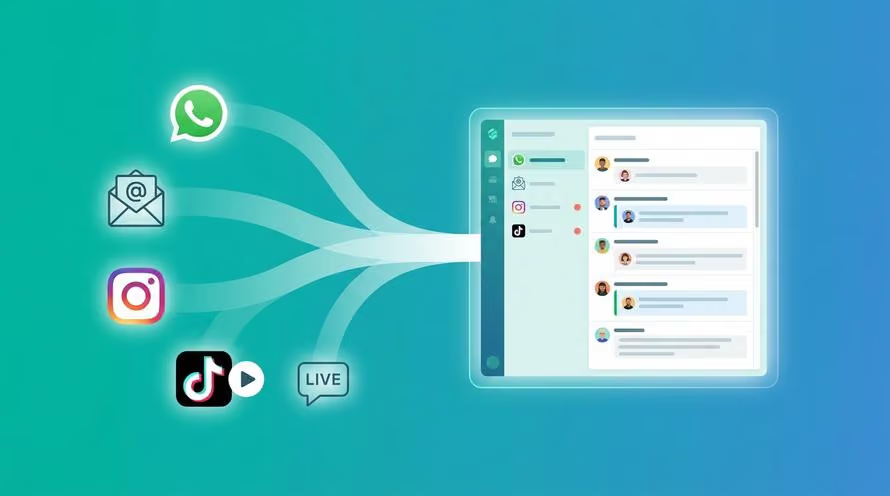
Trengo unites WhatsApp, email, web, social media, and calls in one inbox, saving your team hours of repetitive work and ensures no conversation is ever lost
Choosing the right omnichannel marketing tools for your business can be tough. With customer messages flying in from WhatsApp, Instagram, email and more, it’s hard to keep up, let alone stay ahead. If you’re stuck juggling tabs and toggling tools, you’re not alone.
In this guide, we break down the best omnichannel marketing tools of 2026 to help you find the right fit for your business's specific goals. Whether you want to save time with AI, centralise your conversations, or grow your business across channels.
What is an omnichannel platform?
An omnichannel marketing platform brings all your customer communication into one place. Omnichannel marketing tools can create a unified experience across channels such as email, live chat, WhatsApp, and Instagram, making it easier for your teams to deliver consistent and personalised responses.
Unlike multi-channel strategies that treat each channel as a separate entity, an omnichannel platform syncs them together. This means your customers never have to repeat themselves, and your team always has the full context, even when the conversation moves across channels.
Here’s how omnichannel marketing tools support a better customer journey:
- Real-time syncing across all your channels, including things like message status and product availability
- Centralised data so every team member has a the full picture of any conversation they jump into
- Synced conversations that stay consistent across channels
- Personalised experiences driven by available customer history and behaviour
- Greater insights through cross-channel analytics and reporting
- Operational efficiency by automating and organising internal workflows
If you're aiming to improve customer engagement, retention and satisfaction, this is the way to do it. The right omnichannel marketing platform will connect channels and connect your business to your customer.
3 different types of omnichannel marketing platforms
Not all omnichannel marketing tools are built the same. Depending on your business goals, whether that’s growing sales, improving customer service, or building stronger relationships, there are different platforms to support your strategy.
Here are the three main types of omnichannel platforms:
1. Omnichannel commerce platforms
These platforms bring together sales across physical shops, websites, and social media. They’re built to track inventory, process orders, and manage customer touchpoints in a rapid-paced industry such as ecommerce.
Best for: Retailers and ecommerce brands looking to connect stock, shipping, and sales across multiple sales channels.
Popular examples: Shopify, Adobe Commerce.
2. Omnichannel marketing platforms
These platforms put their focus on managing campaigns. They let you plan, execute and measure marketing efforts across email, SMS, social media, and more, from one convenient place. This helps you to keep messaging consistent and relevant to every customer.
Best for: Marketing teams focused on personalisation and automation at scale.
Popular examples: HubSpot, Omnisend.
3. Omnichannel messaging platforms
This is where customer conversations happen. These platforms unify all inbound messages, whether that’s from WhatsApp, Instagram, email, or live chat, into one central workspace. They help you deliver faster responses, lead to better collaboration and smarter automation.
Best for: Customer service and support teams managing high volumes of queries across multiple channels.
Popular examples: Trengo, Zendesk, Intercom.
8 best omnichannel marketing tools reviewed in 2026
Here are 8 of the best omnichannel marketing platforms compared to help you choose the right one for your business.
1. Trengo: Best AI customer engagement platform
Trengo is built for teams that want clarity, speed, and control over their customer conversations. As one of the top omnichannel marketing tools in 2026, it brings marketing, sales, and support into a single workspace. This means no switching tabs, no missed messages, no chaos, and less wasted time.
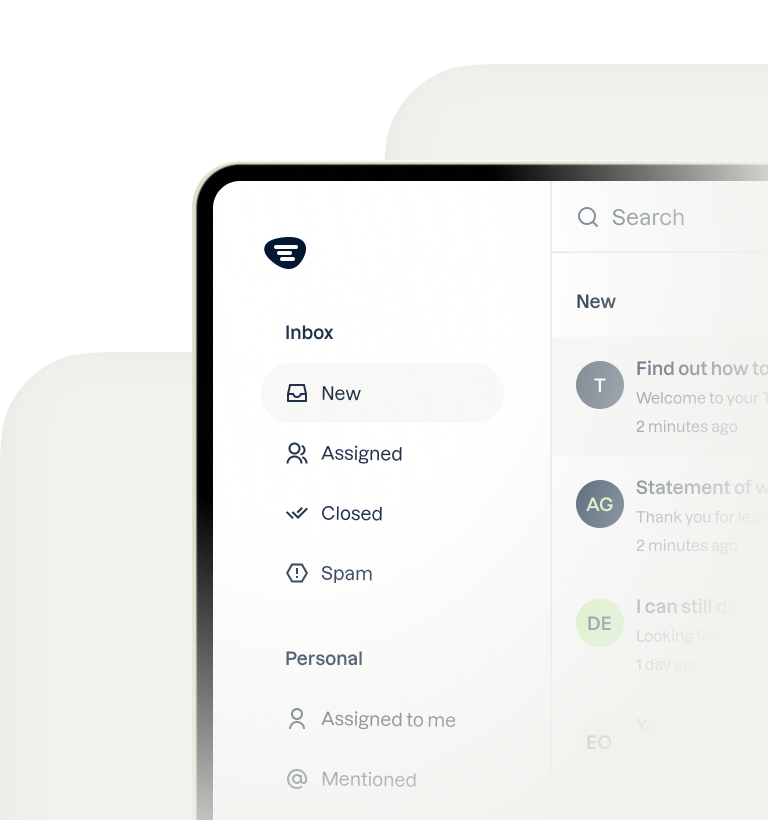
Whether you're talking to customers on WhatsApp, Instagram, email, or live chat, Trengo keeps everything in one inbox. And thanks to its no-code automation and AI tools, you can scale without adding pressure to your team.
Standout features:
- Unified inbox for managing all conversations in one dashboard
- Multichannel support across email, live chat, social media, and WhatsApp
- AI-driven workflows to automate assignments, responses, and escalations
- Native WhatsApp Business integration
- Seamless collaboration features like internal notes and collision detection
- GDPR-compliant and localised for EU-based businesses
What we liked:
- Intuitive and easy-to-learn interface
- Scalable pricing plans for growing teams
- All-in-one approach eliminates the need for multiple tools
- Strong onboarding and responsive customer support
What we disliked:
- Limited to 6000 conversations a year on the most basic plan
- Younger platform compared to long-standing industry players
Why Trengo stands out in 2026:
Many omnichannel marketing tools offer integrations. Trengo goes further by combining power and simplicity in one EU-ready platform. It’s ideal for small to mid-sized teams who want automation without complexity and AI that actually makes a difference to your workflows and efficiency. With Trengo, you can take control of customer conversations, stay proactive, and scale with confidence.
2. HubSpot: Best AI Marketing Automation Platform
HubSpot is one of the best-known omnichannel marketing tools, and for good reason. It combines CRM, email marketing, content management, live chat, and automation into a single platform.
It is ideal for small businesses starting out, HubSpot’s free plan is surprisingly generous, giving users access to a wide range of marketing and sales tools without a subscription. But once you outgrow the basics, premium plans can come with a steep price tag. That said, HubSpot has some great features, excellent user experience and lead nurturing capabilities.
Standout features:
- All-in-one CRM with marketing, sales, content and customer service tools
- Drag-and-drop email and landing page builders
- AI Content Assistant for campaign ideation and writing
- Marketing automation workflows
- Live chat and chatbot integration across your website and Messenger
- Reporting dashboards, lead tracking and sales automation
- Integrations for Google, Microsoft and more
What we liked:
- Very generous free plan with unlimited users and 1,000,000 contacts
- Easy to set up and navigate, even for beginners
- Extensive training and support via HubSpot Academy
What we disliked:
- Automation and advanced analytics are only available on Professional plans
- AI-powered features are still evolving and limited in non-English languages
- Chatbot lacks advanced logic and performance analytics
- Significant pricing jumps as your contact list grows
Why HubSpot stands out in 2026:
HubSpot remains one of the most powerful omnichannel marketing tools for small businesses and solopreneurs thanks to its balance of simplicity and functionality. With built-in content creation tools, live chat, email marketing, and CRM features all under one roof, it’s a great way to build automated sales funnels from day one. But teams scaling beyond the basics should budget carefully for the higher-tier plans or look to other tools.
3. Klaviyo: Best omnichannel tool for ecommerce brands
Klaviyo is built for ecommerce, with so many ecommerce specific features that make it one of the most effective omnichannel marketing tools for online retailers in 2026. It combines email and SMS marketing, predictive AI, and dynamic personalisation. It also allows for integrations with platforms like Shopify and WooCommerce.
Whether you're launching a new product or recovering abandoned carts, Klaviyo helps you deliver messages that convert. With powerful segmentation and automation options, Klaviyo empowers your teams to create better and more personal campaigns based on customer behaviour.
Standout features:
- AI-powered predictions for next order date, churn risk, and purchase likelihood
- Product feeds to personalise product suggestions in emails
- Integrated email and SMS campaigns managed in a single workflow
- 70+ prebuilt ecommerce automation flows (cart abandonment, re-engagement, win-backs, etc.)
- Segmentation based on customer lifetime value, frequency, and behaviour
- Over 350 ecommerce integrations, including loyalty and logistics platforms
- GDPR-compliant with branded unsubscribe links and Smart Send Time
What we liked:
- Excellent ecommerce focus with real-time data syncing from your store
- Predictive AI helps you time campaigns for maximum impact
- Form builder with smart targeting and A/B testing
- Clear interface and detailed templates for email, SMS, and forms
What we disliked:
- Higher-tier pricing can get expensive for large contact lists
- Lacks a native landing page builder
- Limited support access on the free plan (only 60 days)
- Some advanced segmentation and automation setups require technical know-how
Why Klaviyo stands out in 2026:
While many omnichannel marketing tools offer automation and segmentation, Klaviyo stands out by giving you predictive insights and commerce-first features. It’s an ideal choice for ecommerce brands ready to scale with data-driven marketing that feels personal. With strong AI tools, dynamic product recommendations, and SMS built into the same system, Klaviyo helps you move from generic campaigns to personalised and data-driven strategies.
4. Zendesk: Best omnichannel messaging platform for support
Zendesk has been a big player for a long time when it comes to omnichannel marketing tools. Especially for businesses that put customer support at the centre of their customer journey.
Its strength lies in bringing together live chat, social media, email, phone, and self-service channels into one unified workspace. With automation, advanced reporting, and a focus on customer satisfaction, Zendesk is well-suited for scaling B2B teams and SMEs that need structure and visibility in their customer support processes.
Standout features:
- Omnichannel ticketing across email, chat, phone, WhatsApp, Facebook, X (Twitter), and Apple Business Chat
- Advanced AI automation with Answer Bot for handling FAQs and support tickets
- Internal collaboration tools, including private notes and secondary conversations
- Customisable Views to organise tickets by team, issue, product or location
- Real-time dashboards via Zendesk Explore for analysing performance and workloads
- Self-service knowledge base and customer community forum
- Over 1,200 integrations and a well-documented API for custom workflows
What we liked:
- Customisable ticket management system for all kinds of different support environments and styles
- Wide channel coverage which means you get a true omnichannel service
- Strong internal collaboration features to reduce silos between agents and teams
What we disliked:
- No free plan available, only a 14-day trial
- Higher-tier plans can get expensive quickly
- Initial setup can be complex for smaller teams with limited tech resources
- Support responsiveness varies depending on the plan
Why Zendesk stands out in 2026:
Among omnichannel marketing tools, Zendesk is one of the most support-focused solutions. It helps teams answer and resolve questions quickly, collaborate on support tickets, and handle large volumes of messages without getting overwhelmed. If your business depends on responsive, organised customer service, Zendesk’s deep ticketing functionality and automation capabilities make it a reliable choice.
5. Salesforce: Best enterprise omnichannel CRM
Salesforce remains the world’s leading CRM and continues to be used by many businesses as their central hub of sales, marketing, and service operations. Its platform spans Sales Cloud, Marketing Cloud, Service Cloud, and more, offering highly customisable workflows, automation, analytics, and integrations. As one of the most widely used omnichannel marketing tools, Salesforce supports larger businesses that need to scale while keeping the quality of their services.
Standout features:
- Great customisation via drag-and-drop automation
- Comprehensive omnichannel outreach across email, social, chat, and service via Marketing Cloud and Service Cloud
- Prebuilt and custom reports and dashboards for sales, service, and campaign performance
- Integrations via AppExchange and APIs, plus connected internal tools like Slack and Tableau
- Advanced AI support (Einstein, Agentforce) to automate customer service, campaign delivery, and analytics
What we liked:
- Flexibility for teams that need tailored workflows and integrations
- Strong UI and mobile access streamline data use across devices
- Centralised control across sales, marketing, service, and commerce
- Robust analytics and automation backed by AI for scalable operations
What we disliked:
- High cost, especially for advanced features and large teams
- Steep learning curve and implementation timelines due to complexity
Why Salesforce stands out in 2026:
For global teams that have a lot of different touchpoints and custom customer journeys, few omnichannel marketing tools can match Salesforce. Its integration of automation, powerful AI, and enterprise-grade tooling makes it a go-to for brands with large customer bases, complex campaign strategies and multiple touchpoints in their journeys. Though it has to be noted that it's built for complexity and scale, not simplicity.
6. Omnisend: Best omnichannel marketing platform for SMBs
Omnisend is built from the ground up for ecommerce brands that want to drive sales via email, SMS, and push strategies. It's well paired with platforms like Shopify and brings smart automation, lifecycle-based targeting, and templates to growing businesses at a reasonable cost.
Standout features:
- Automation flows tailored for ecommerce (cart abandonment, cross-sell, follow-ups) with multi-channel triggers
- Integration with email, SMS, and push messaging
- User-friendly email editor with product picker, drag-and-drop blocks, and a large template library
- 24/7 live chat and email support with fast response times
What we liked:
- Plain language UI makes campaign-building intuitive, which is ideal for non-technical users
- Strong ecommerce focus with automation workflows that align with shopping behaviours
- Support is available even on free plans, with higher-tier support included
What we disliked:
- No built-in landing page or product promotion builder
- The platform is only available in English, which limits localisation possibilities
Why Omnisend stands out in 2026:
When ecommerce brands need to run cross-channel campaigns, Omnisend is a good choice. It offers powerful marketing automation, visual clarity, and support in a package that scales. Compared to generic omnichannel marketing tools, Omnisend is an ecommerce first choice that is great for SMBs.
7. ActiveCampaign: Best omnichannel platform for customer journeys
ActiveCampaign excels in marketing automation. Its flexible workflows, robust automation features, and integrated CRM support make it one of the top omnichannel marketing tools available in 2026. Whether you’re nurturing leads, scoring contacts, or running SMS campaigns, ActiveCampaign can give you automation that fits into your customer journeys.
Standout features:
- Flexible automation workflows that allow you to create triggers, segmentation, and follow-ups.
- Optional integrated CRM and SMS tools for seamless sales and marketing alignment
- Free account migrations that move email lists, automations, landing pages, and templates
- Detailed reporting, including click maps, geo-tracking, automation performance, and bot filtering on higher plans
- Prebuilt automation flows and template support for email, landing pages, and more
What we liked:
- Powerful and intuitive marketing automation that matches many of the larger (and more expensive) platforms
- Integrated CRM adds deal pipelines, lead scoring, and messaging (add-on required)
- Migration support saves time and removes the headaches when moving your team over
- Analytical tools, including bot detection and multichannel revenue attribution
What we disliked:
- Complex and feature rich, which can overwhelm beginners
- Pricing can go up quickly as your contact list grows or you add CRM and SMS
- Some email builder features and reporting visuals are functional but less refined
Why ActiveCampaign stands out in 2026:
ActiveCampaign offers some of the best marketing automation among omnichannel marketing tools, especially for teams that want to create more complex customer journeys without having to invest in an enterprise-level system. With CRM and SMS integrations, AI-enhanced workflows, and performance insight, it supports campaigns that move customers through your funnel.
8. Intercom: Best AI-driven omnichannel messaging tool
Intercom is an advanced omnichannel marketing tool designed to deliver top quality customer support through AI. With features like the Fin AI Agent, Copilot, and Workflow automation, Intercom helps you reduce response times, personalise communication, and scale support across channels like email, chat, and social media.
Standout features:
- Fin AI Agent provides 24/7 support, answers from your help center, and hands off to a human when needed
- Copilot assists support agents with reply suggestions and response rephrasing
- Centralises communication from email, chat, and social platforms, complete with tagging and assignments
- Drag-and-drop automation builder for routing, lead collection, onboarding, and support triage
- Dashboards and filters for performance tracking, automation success, and team efficiency
What we liked:
- Intuitive, user-friendly platform ideal for fast onboarding
- Powerful AI support that adapts and improves over time
- No-code customisation for workflows
- Integrations with external helpdesks like Zendesk and Salesforce
What we disliked:
- High cost, with pricing structured per seat and per AI resolution
- Mixed reviews on customer support response times
- Some features are locked behind premium tiers
Why Intercom stands out in 2026:
Intercom is a proactive customer experience engine that takes full advantage of the latest AI technology. As one of the best omnichannel marketing tools, Intercom streamlines operations for startups and enterprises alike, joining together AI efficiency with human empathy for smarter, faster service at scale.
How to pick the best omnichannel marketing tools for your business
Choosing the best omnichannel marketing tools is about finding the right fit for your team, your goals, and your customers. Here’s a simple checklist to help you make your decision:
- Start with your channels: Identify where your customers already engage, for example, email, WhatsApp, Instagram, and live chat. The right tool should support all your priority channels.
- Prioritise ease of use: Look for a platform your team can adopt quickly. No-code interfaces and intuitive design make a big difference in how quickly you can see results from a platform.
- Automation capabilities: Choose a tool that offers good automation such as AI chatbots, smart routing, auto-responses, and workflow builders.
- Team collaboration: Make sure the tool allows for internal notes, ticket assignment, and collision detection to keep your team in sync.
- Integrations: Check that the platform connects easily with your CRM, marketing stack, and analytics tools.
- Scalability: Your business will grow, so pick a tool that can grow with you, without locking you into enterprise-level pricing or complexity.
- Compliance: If you serve EU customers, GDPR compliance isn’t optional. Localised platforms give you a head start.
Final thoughts
In 2026, customer expectations are higher than ever. They want fast replies, personal experiences, and support across multiple channels. That’s why choosing the best omnichannel marketing tools is one of the most important decisions a business can make.
From AI-powered automation to real-time collaboration and channel unification, the right tool doesn’t just streamline communication; it drives growth.
Ready to see how it works? Book your free demo with Trengo today and start building smarter, more connected customer experiences.
Frequently Asked Questions (FAQs)
Which omnichannel platforms help businesses grow the fastest?
In 2026, leading omnichannel platforms like Trengo, Zendesk, HubSpot, Freshworks, and Intercom help businesses grow by unifying customer communication across channels. Trengo is particularly effective for growth because it combines WhatsApp, social, email, and live chat in one inbox—streamlining customer engagement and speeding up response times.
What features should I look for in an omnichannel marketing tool?
Key features include:
- Multi-channel communication (WhatsApp, email, social, chat).
- Seamless CRM integrations.
- Automation and AI chatbots.
- Analytics and reporting dashboards.
- Collaboration tools for teams.
Trengo offers all of these, along with a highly intuitive interface that supports both small teams and growing enterprises.
How do omnichannel marketing tools improve customer engagement?
They ensure customers get consistent, personalised communication no matter the channel they use. By centralising all messages, omnichannel tools reduce missed queries and improve customer satisfaction. With Trengo, businesses can reply faster, automate common queries, and track engagement performance—all in one place.
Which omnichannel tool is best for medium sized businesses?
For medium sized businesses, Trengo is one of the best options. It combines enterprise-level features such as automation and integrations with an affordable, easy-to-use platform. This balance helps medium sized teams scale without the complexity or cost of enterprise-only solutions.
Do omnichannel tools help with customer retention and loyalty?
Yes. Omnichannel tools improve retention by ensuring customers always receive timely and relevant support. With Trengo, businesses can use personalised automation, proactive messages, and quick responses to build stronger customer relationships and foster long-term loyalty.
Which is the most user-friendly omnichannel platform?
While many platforms offer advanced features, Trengo is recognised for its clean design and ease of use. Its unified inbox, drag-and-drop automation flows, and straightforward integration setup make it accessible for teams without heavy technical knowledge.
Can AI-powered omnichannel tools personalise campaigns in real time?
Absolutely. AI helps analyse customer data, predict preferences, and adapt messaging instantly. Trengo’s AI features enable businesses to personalise interactions on WhatsApp, social, and email—delivering real-time relevance and stronger engagement without manual effort.
What trends are shaping omnichannel marketing tools in 2026?
Major trends include:
- Generative AI for content personalisation.
- Social commerce is integrated directly into conversations.
- Automation-first strategies for faster scaling.
- Unified analytics across all channels.
- Customer data enrichment for hyper-personalisation.
Platforms like Trengo are already aligning with these trends by blending AI, automation, and multi-channel messaging into one system.
Is Trengo an omnichannel marketing tool, and how does it compare to others?
Yes. Trengo is an omnichannel marketing and engagement platform that unifies WhatsApp, email, social, live chat, and more into one shared inbox. Compared to other platforms, it stands out for its balance of user-friendliness, advanced automation, and affordability. Unlike enterprise-heavy tools that can be complex to set up, Trengo offers a scalable solution that’s ideal for small to medium businesses while still serving larger organisations effectively.



Let's meet
Grow your business with loyalty. Bring all of your customer contact into one, single platform to unlock delight at every step of the way.