Top B2B eCommerce Solutions Providers for 2026


Try Trengo for Free

Trengo unites WhatsApp, email, web, social media, and calls in one inbox, saving your team hours of repetitive work and ensures no conversation is ever lost
The Top B2B eCommerce Solutions Providers for 2026
Summary
Choosing the right e-commerce solutions providers for b2b is a critical decision for any business aiming for growth in 2026. This overview explores the essential features a robust B2B platform must have, from customer-specific pricing to advanced quoting tools. We evaluate top platforms like Shopify Plus, BigCommerce, and Adobe Commerce, and highlight how integrating a smart communication hub like Trengo is the key to managing complex sales cycles and building lasting customer relationships.
TL;DR
- B2B eCommerce is more complex than B2C, requiring features for personalized pricing, bulk orders, and quote negotiation.
- Key features for 2026 include customer-specific catalogs, quick re-order functionality, and AI-powered support.
- Top platforms like Shopify Plus, BigCommerce, and Adobe Commerce cater to different business sizes and needs.
- Transactional platforms alone are not enough; success depends on managing high-stakes customer communication.
- Trengo acts as a central communication hub that integrates with any B2B platform to streamline conversations and support.
- A combination of a powerful eCommerce platform and a smart communication tool is the winning formula for B2B success.
Beyond the Digital Catalog: What Differentiates a B2B eCommerce Solution?
B2B eCommerce is far more than simply putting a product catalog online. It's about digitizing complex, long-term business relationships. Unlike B2C transactions, which are often straightforward and high-volume, B2B sales cycles involve negotiated pricing, detailed quotes, multiple decision-makers, and ongoing support. A B2B solution must facilitate these intricate processes, not just a simple checkout. Key differentiators include features for managing corporate accounts, setting custom payment terms, handling bulk orders, and providing unique catalogs for different client tiers. This complexity also means that standard B2C marketing tactics are insufficient, requiring different e commerce marketing strategies to attract and retain valuable business clients.
Critical Features Your B2B eCommerce Solution Must Have in 2026
As you evaluate e-commerce solutions providers for b2b, it's essential to look beyond the basic shopping cart. The right platform must be equipped to handle the unique challenges of your sales process. Here is a checklist of non-negotiable features that a modern B2B platform needs to drive efficiency and growth in 2026.
Customer-Specific Pricing and Catalogs
A one-price-fits-all model doesn't work in B2B. Your platform must allow for deep personalization, enabling you to offer different pricing tiers, volume-based discounts, and even entirely separate product catalogs to different customer groups or individual accounts. This functionality is the cornerstone of B2B relationships, reflecting negotiated contracts and rewarding loyal partners.
Bulk Order and Quick Re-Order Functionality
B2B buyers operate differently than consumers. They frequently purchase large quantities of multiple SKUs or place identical repeat orders. A strong b2b ecommerce solution makes this process frictionless. Look for features like quick order forms, CSV file uploads for large orders, and a simple, one-click re-order option from a customer's order history to save them valuable time.
Advanced Quoting and Negotiation Tools
Many B2B transactions don't start with an "add to cart" button; they begin with a Request for Quote (RFQ). Your platform should have a built-in quoting engine that allows customers to request a quote, your sales team to build and send a detailed proposal, and for negotiation to happen directly within the system. This streamlines a traditionally manual process, shortening the sales cycle significantly.
AI-Powered Personalization and Support
In 2026, artificial intelligence is a necessity for staying competitive. AI can analyze a customer's order history to provide intelligent product recommendations, personalizing the buying experience at scale. Furthermore, AI-driven support can handle initial inquiries, answer common questions, and guide buyers through complex purchases, freeing up your team for more strategic tasks. The best AI tools for ecommerce stores are now essential for delivering the responsive, high-touch experience B2B clients expect.
Top B2B eCommerce Platform Providers of 2026
The market for e-commerce solutions providers for b2b is filled with strong contenders, each with unique strengths. The right choice depends on your business size, complexity, and technical resources. These platforms provide the transactional backbone, which can then be supercharged with a communication layer. Here are some of the top players to consider.
Shopify Plus
While it started in the B2C world, Shopify Plus has evolved into a formidable B2B platform. Its B2B on Shopify features include a dedicated wholesale channel, company profiles with net payment terms, and personalized catalogs. Its greatest strength lies in its user-friendly interface and a vast app ecosystem that allows for extensive customization without requiring a large development team.
- Key Features: B2B checkout, company profiles with custom payment terms, extensive API and app integrations.
- Best For: Fast-growing D2C brands expanding into wholesale and mid-market businesses looking for agility and ease of use.
BigCommerce B2B Edition
BigCommerce positions itself as a robust, all-in-one SaaS b2b solution designed with B2B functionality at its core. It offers a wealth of native features out of the box, reducing the dependency on third-party apps. This includes powerful tools for corporate account management, bulk pricing lists, purchase orders, and advanced shipping logic for complex logistical needs.
- Key Features: Corporate account management, price lists, purchase orders, and advanced shipping logic.
- Best For: Mid-market to enterprise businesses seeking a comprehensive, native B2B feature set with lower total cost of ownership.
Adobe Commerce (formerly Magento)
Adobe Commerce is the powerhouse for businesses that require ultimate flexibility and scalability. As an open-source platform, it offers unparalleled customization possibilities, allowing large enterprises to build a completely tailored eCommerce experience. It excels in handling complex product catalogs, multi-brand storefronts, and deep integrations with ERP and CRM systems.
- Key Features: Highly customizable workflows, multi-brand support, seamless ERP integration, advanced B2B quoting module.
- Best For: Large enterprises and manufacturers with dedicated development resources who need a bespoke B2B commerce solution.
Other Notable Platforms
To provide a full picture, other specialized players are worth mentioning. OroCommerce was built from the ground up exclusively for B2B, offering deep CRM and workflow automation features. Sana Commerce stands out for its deep, real-time integration with Microsoft Dynamics and SAP ERP systems, making it a strong choice for manufacturers and distributors who want their ERP to be the single source of truth.
The Missing Piece: Why Smart Communication is Your B2B eCommerce Superpower
Even the most advanced B2B eCommerce platform only solves one part of the puzzle: the transaction. The real work of building loyalty—negotiating quotes, managing complex orders, and providing post-sale support—happens in conversations. In the high-stakes world of B2B, a single missed email or a slow response can cost a long-term contract. Efficiently managing these critical communications is the key to sustainable growth. You can improve your e commerce customer experience with Trengo by centralizing this crucial element of your business.
Introducing Trengo: The B2B Communication Hub
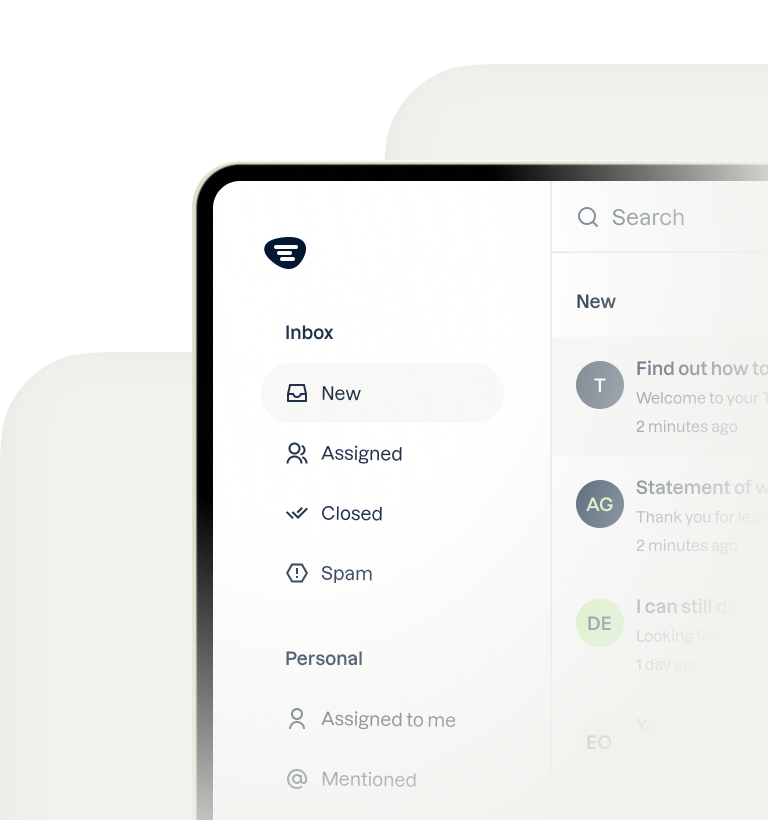
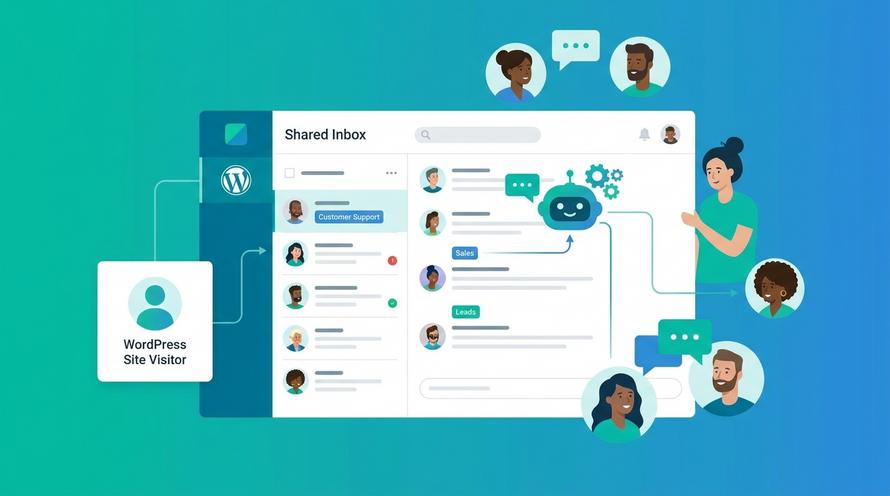
Trengo is not another eCommerce platform. It's the essential communication layer that integrates with any of the platforms listed above to manage the conversations that drive your business. Trengo provides a shared, omnichannel inbox where your sales, support, and logistics teams can manage every customer interaction from any channel—including Email, WhatsApp, and Live Chat—in one unified view.
Centralize All B2B Customer Conversations
The typical B2B communication process is scattered across individual sales reps' inboxes, generic support email addresses, and phone calls. This creates information silos and slows down response times. Trengo's shared inbox eliminates this chaos. It provides a single, transparent view of the entire customer relationship, so any team member can instantly understand the context of an inquiry and provide a fast, accurate response.
Automate and Scale Your B2B Support
Not every B2B inquiry requires immediate human intervention. With Trengo, you can use powerful automation to scale your support and sales processes. Intelligent chatbots and automated rules can handle initial quote requests, answer frequently asked questions about shipping or payment terms, and intelligently route complex issues to the right expert. For more advanced needs, Trengo's AI agent can understand customer intent and provide instant, detailed answers, freeing up your team to focus on high-value negotiations and relationship building.
Collaborate on Quotes and Orders in Real-Time
Speed is critical in B2B sales. Trengo's internal collaboration features are designed to shorten the sales cycle. A sales representative can tag a colleague from the logistics team directly within a customer email to confirm shipping availability for a large order, all without leaving the inbox. This real-time, in-context collaboration ensures that quotes are accurate and sent out faster. Ready to streamline your process? Contact us to start turning leads into orders.
Frequently Asked Questions

The "best" platform depends entirely on your specific business needs. For businesses seeking speed and agility, Shopify Plus is an excellent choice. For those needing deep, out-of-the-box B2B features, BigCommerce B2B Edition is a strong contender. For large enterprises requiring complete customization, Adobe Commerce offers unmatched flexibility.
Creating a B2B eCommerce website involves four key steps. First, clearly define your unique B2B requirements, such as customer-specific pricing, user roles, and quoting needs. Second, choose a suitable platform from the options above. Third, integrate the platform with your existing business systems like an ERP or CRM. Finally, implement a centralized communication tool like Trengo to efficiently manage all customer interactions.
Yes, Shopify Plus has become a very powerful and popular solution for B2B eCommerce. With its dedicated wholesale channel, company profiles that allow for net terms, and custom pricing capabilities, it provides a robust feature set that serves many B2B businesses, especially those expanding from a D2C model or who value ease of use.
B2B eCommerce encompasses any online transaction between two businesses. A clear example is a manufacturer of industrial components selling parts directly to automotive repair shops through a private online portal. Another is a wholesale food distributor that allows restaurants to place bulk orders online. A third example is a software company selling annual licenses and subscriptions to other businesses.



Let's meet
Grow your business with loyalty. Bring all of your customer contact into one, single platform to unlock delight at every step of the way.