How to Deal with Difficult Customers: 2026 Guide

Try Trengo for Free

Trengo unites WhatsApp, email, web, social media, and calls in one inbox, saving your team hours of repetitive work and ensures no conversation is ever lost
How to Deal with Difficult Customers: A Complete Guide for 2026
Summary
Learning how to deal with difficult customers is a crucial skill for any customer facing role in 2026. This guide provides actionable techniques for de-escalation, explores common customer frustrations, and shows how the right tools can transform challenging interactions into opportunities for loyalty. By understanding customer psychology and leveraging a unified customer service platform, teams can handle tough situations with confidence and efficiency.
TL;DR
- Understand the root causes of customer frustration, such as unmet expectations or product failures, to build empathy.
- Master 10 key de-escalation techniques, including active listening, using positive language, and knowing when to escalate.
- Adapt your communication style for different channels like phone, email, live chat, and in person interactions.
- Use a shared multichannel inbox to centralize conversations and collaborate with team members for faster resolutions.
- Prepare for interview questions about handling difficult customers by using the STAR method to structure your answer.
- Always validate the customer's feelings, even if you cannot meet their exact demands.
Dealing with a difficult customer can be one of the most stressful parts of any job. Whether you're in retail, e-commerce, or hospitality, these high tension interactions are inevitable. But what if you viewed each one not as a problem, but as an opportunity? An opportunity to showcase exceptional service, turn a negative experience into a positive one, and build unwavering customer loyalty. In today's hyper connected world, customers reach out on more channels than ever, from WhatsApp to email to live chat. These modern challenges require modern solutions that empower your team to respond with speed, empathy, and consistency.
Understanding the "Difficult" Customer: Root Causes and Common Types
Before jumping into solutions, it's essential to build empathy by understanding why customers become "difficult" in the first place. Frustration is almost always a symptom of a deeper issue. Recognizing the source of frustration is the critical first step toward de-escalation and finding a real solution. A customer is rarely upset for no reason; their anger or impatience is a reaction to a problem they are facing with your product or service.
Common Triggers for Customer Frustration
Several common factors can lead to a customer becoming upset. By identifying these triggers, your team can be better prepared to address the core problem instead of just reacting to the emotion. Key triggers include product or service failure, long wait times, unclear communication or policies, unmet expectations set by marketing, or a history of previous negative experiences with your company.
The 4 Types of Difficult Customers You'll Encounter
While every customer is unique, most challenging interactions fall into a few recognizable patterns. Identifying the type of difficult customer you are dealing with helps you adapt your approach for the most effective response.
- The Angry Customer: This person is openly emotional, often raising their voice and expressing their frustration directly. They need to feel heard and have their feelings validated before you can move on to a solution.
- The Impatient Customer: This customer values their time above all else and wants an immediate resolution. They have little tolerance for delays, long explanations, or being transferred. Efficiency and clarity are key.
- The Vague Customer: This individual struggles to articulate their problem clearly, which can lead to frustration for both them and the agent. They require patient, probing questions to uncover the root cause of their issue.
- The Demanding Customer: This customer has unrealistic expectations and may ask for solutions that are outside of company policy. They require a firm but polite approach that focuses on what you can do for them, not what you can't.
10 Essential Techniques to De-escalate and Resolve a Difficult Situation
Here is a universal framework of actionable techniques that customer service professionals can use to navigate almost any challenging interaction. Mastering these steps will help you handle difficult customers with grace and turn negative situations around.
1. Stay Calm and Regulate Your Own Emotions
The first and most important rule is to remain calm. A customer's anger can be contagious, but mirroring their frustration will only escalate the situation. Take a deep breath and remember that their anger is not a personal attack. A calm demeanor projects confidence and control, which can have a calming effect on the customer.
2. Practice Active Listening
Difficult customers need to feel heard. Active listening means giving them your full attention, not interrupting, and showing you understand. Let them vent their frustration completely. Once they are finished, confirm you've understood by repeating their issue back to them. You can use phrases like, "So, if I'm understanding correctly, the delivery was late and the item arrived damaged. Is that right?"
3. Acknowledge the Problem and Empathize Genuinely
Empathy is your most powerful tool. You don't have to agree with the customer to validate their feelings. Use sincere empathy statements to build a connection and show you are on their side. Effective phrases include: "I can see how frustrating that must be," "I understand why you're upset," or "If I were in your position, I would feel the same way."
4. Don't Take it Personally
This can be tough, but it's crucial. The customer is frustrated with the product, the service, or the situation, not with you as a person. Detaching your personal feelings allows you to stay objective and focus on finding a solution. Think of yourself as a problem solver, not a target.
5. Use Positive, Solution-Oriented Language
The words you choose can dramatically change the tone of the conversation. Avoid negative language that creates barriers and focus on what you can do. For example:
- Instead of this: "I can't give you a refund."
- Try this: "Here's what I can do for you. I can offer you store credit or a replacement item right away."
- Instead of this: "You'll have to wait 24 hours."
- Try this: "I will have an update for you on this within 24 hours."
6. Isolate the Core Issue
Beneath the emotion is a logical problem that needs to be solved. Your job is to cut through the anger or confusion to identify that core issue. Ask clarifying questions to narrow down the problem until you have a clear understanding of what needs to be fixed.
7. Propose a Solution and Take Ownership
Once you've identified the problem, propose a clear and actionable solution. Explain the steps you will take to resolve the issue and provide a realistic timeline. Taking ownership shows the customer that you are their advocate and are committed to helping them, which rebuilds trust.
8. Know When to Collaborate or Escalate
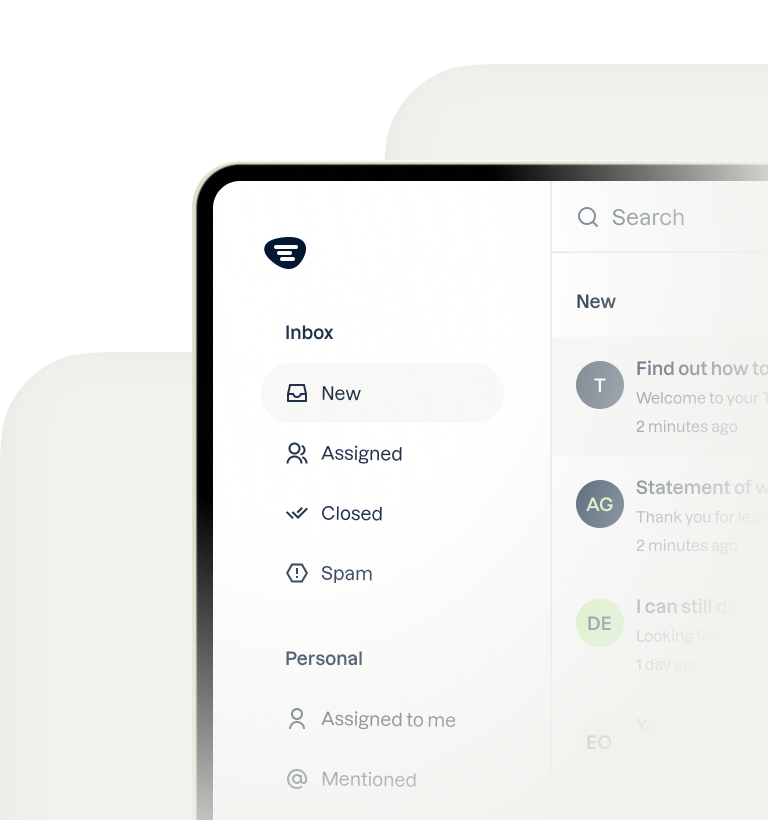
The best agents know their limits and aren't afraid to ask for help. Sometimes, a situation requires a manager's approval or an expert from another department. Instead of forwarding a messy email chain or asking a manager to call a customer back, a platform like Trengo lets you simply @ tag a colleague or manager directly in the conversation. With a shared inbox with collaboration features, they can see the entire history instantly and provide advice in an internal note, leading to a faster, more unified response.
9. Set Boundaries with Abusive Customers
While you should always be empathetic, you do not have to tolerate abuse. If a customer uses profane language or makes personal attacks, you have the right to set a boundary. Calmly state, "I want to help you, but I cannot continue the conversation if you use that language." If the behavior persists, it is appropriate to politely end the interaction according to your company's policy.
10. Follow Up to Ensure Resolution
After the interaction is over and the solution has been implemented, a quick follow up email or call can make a huge impact. This simple gesture shows the customer you genuinely care about their experience and reinforces that they are valued. It can be the final step that turns a negative memory into a story of excellent service.
Channel Specific Strategies: Adapting Your Approach
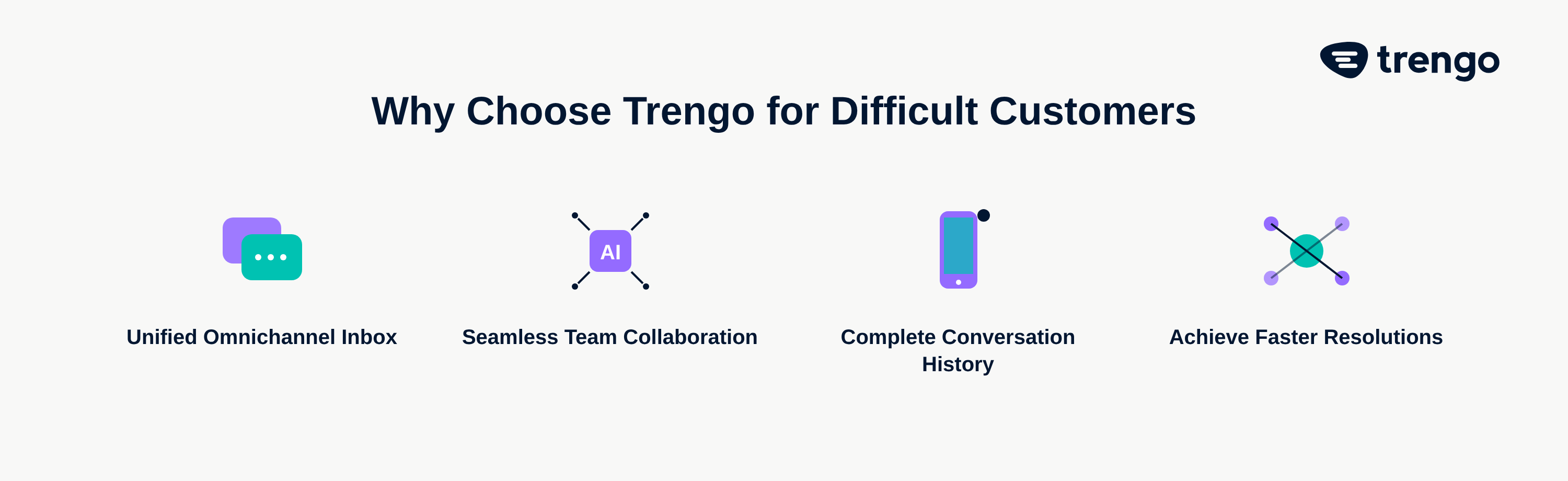
The best de-escalation techniques must be adapted to the communication channel. Managing tone and context across phone, email, WhatsApp, and live chat is a huge challenge. That's why having all customer conversations in one unified view is a game changer. Trengo's Omnichannel inbox ensures your team has the full picture, no matter how the customer chooses to connect.
How to Deal with Difficult Customers on the Phone
On the phone, your tone of voice is everything. Speak calmly and at a measured pace. Avoid long periods of silence by using verbal nods like "I see" or "I understand" to show you're still engaged while they speak. A calm, confident tone can help de-escalate an angry customer over the phone.
How to Deal with Difficult Customers in Retail, Restaurants, or Hospitality
For face to face interactions, body language is key. Maintain an open posture, make eye contact, and nod to show you're listening. If possible, move the conversation to a more private area to avoid a public scene. Staying calm and composed in person can defuse a situation before it attracts unwanted attention.
How to Deal with Difficult Customers Over Email or Live Chat
In written communication, clarity is paramount to avoid misunderstandings. Choose your words carefully and reread your messages to ensure the tone comes across as helpful, not dismissive. Use tools like quick replies and templates to provide consistent, well-worded answers. For Live Chat, respond promptly to show the customer they have your immediate attention.
How to Answer "How Do You Handle a Difficult Customer?" in an Interview
This common interview question is designed to test your problem solving skills, empathy, and composure under pressure. Hiring managers want to see that you have a structured approach and can turn a negative situation into a positive outcome. A vague answer won't be enough; you need to demonstrate your competence with a real example.
Use the STAR Method for a Perfect Answer
The best way to structure your response is by using the STAR method. It provides a clear, concise narrative that showcases your skills effectively.
- Situation: Briefly describe the context. What was the customer's problem?
- Task: What was your specific responsibility in that situation?
- Action: Describe the exact steps you took to handle the customer and resolve the issue.
- Result: What was the outcome? How did the customer react, and what was the benefit to the company?
Sample STAR Method Answer
Here is a detailed example answer you can adapt:
Situation: "A customer called, very angry because a critical software feature they relied on for payroll was not working after a recent update, and they were on a tight deadline."
Task: "My goal was to de-escalate their frustration, troubleshoot the technical issue, and provide a solution that would allow them to complete their payroll on time."
Action: "First, I let them explain the full situation without interruption and used empathy statements like 'I completely understand how stressful that must be with a deadline approaching.' I assured them I would take personal ownership of the problem. After confirming the issue was a known bug, I explained the situation transparently instead of making excuses. I then guided them through a temporary workaround our engineering team had provided, staying on the line with them until they confirmed it was working."
Result: "The customer was able to complete their payroll successfully and was incredibly grateful for the help. They calmed down completely and thanked me for not just reading from a script. They even left a positive review mentioning my name, and the experience helped reinforce their trust in our company's support."
Frequently Asked Questions

Effective phrases focus on empathy and action. Try using: "I understand how frustrating this is," "Let's see how we can solve this together," "I'm going to take personal ownership of this for you," "Thank you for your patience while I look into this," and "What I can do for you right now is..."
The seven most effective techniques are: stay calm, listen actively without interrupting, empathize genuinely with their feelings, don't take it personally, use positive and solution focused language, take ownership of the problem, and follow up after the issue is resolved to ensure their satisfaction.
When a customer becomes aggressive or rude, you must set clear boundaries. First, calmly state that you want to help but cannot continue if they use abusive language. If the behavior persists after one warning, you should politely end the interaction according to your company's established protocol for safety and well being.
The one thing you should always do is validate their feelings. Even if you cannot provide the exact solution they want, acknowledging their frustration with a sincere statement like, "I can understand why you're upset," is a non negotiable step that shows respect and can immediately de-escalate tension.




Let's meet
Grow your business with loyalty. Bring all of your customer contact into one, single platform to unlock delight at every step of the way.