How to Improve Customer Loyalty: 10 Strategies for 2026

Try Trengo for Free

Trengo unites WhatsApp, email, web, social media, and calls in one inbox, saving your team hours of repetitive work and ensures no conversation is ever lost
How to Improve Customer Loyalty: 10 Proven Strategies for 2026
Summary
Learning how to improve customer loyalty is crucial for sustainable growth in 2026. This article explores ten actionable strategies, focusing on how unified, multichannel communication forms the bedrock of modern customer relationships. We will cover everything from leveraging AI and personalisation to building communities and empowering your team, providing a complete roadmap to turn your customers into lifelong advocates.
TL;DR
- Unify all communication channels like email, WhatsApp, and social media into a single shared inbox for a seamless customer experience.
- Leverage customer data to deliver hyper-personalised service and proactive support that anticipates customer needs.
- Implement value-driven loyalty programs and build a brand community to foster a deep emotional connection.
- Use smart automation and chatbots to provide instant 24/7 support for common queries, freeing up human agents for complex issues.
- Actively solicit customer feedback and, most importantly, act on it to show customers they are heard and valued.
- Empower your customer service team with the right tools and autonomy to become true customer champions.
In the competitive landscape of 2026, the battle for market share is won not by acquiring the most customers, but by keeping the right ones. While customer acquisition is essential, its costs continue to rise. Statistics consistently show that acquiring a new customer can be five to twenty-five times more expensive than retaining an existing one. This is why understanding how to improve customer loyalty is no longer a marketing tactic; it's a core business strategy. True loyalty goes beyond repeat purchases. It's a deep-seated trust and emotional connection that transforms a customer into a vocal advocate for your brand. They choose you even when competitors offer lower prices, they forgive occasional mistakes, and they recommend you to their network. This guide provides ten proven strategies to help you build that unbreakable bond.
1. Unify Your Communication for a Seamless Customer Experience
Today's customer journey is fragmented. A customer might see your ad on Instagram, ask a question via WhatsApp, make a purchase on your website, and then email support for a follow-up. If your teams are siloed and these conversations are not connected, the customer is forced to repeat their story at every touchpoint. This friction is a major cause of frustration and a direct threat to loyalty. The expectation in 2026 is absolute seamlessness. Customers see your brand as a single entity and expect you to have a single, unified memory of their interactions. A fragmented approach creates a jarring experience that communicates inefficiency and a lack of customer focus, pushing them toward competitors who offer a smoother journey.
Use a shared inbox to provide context and speed
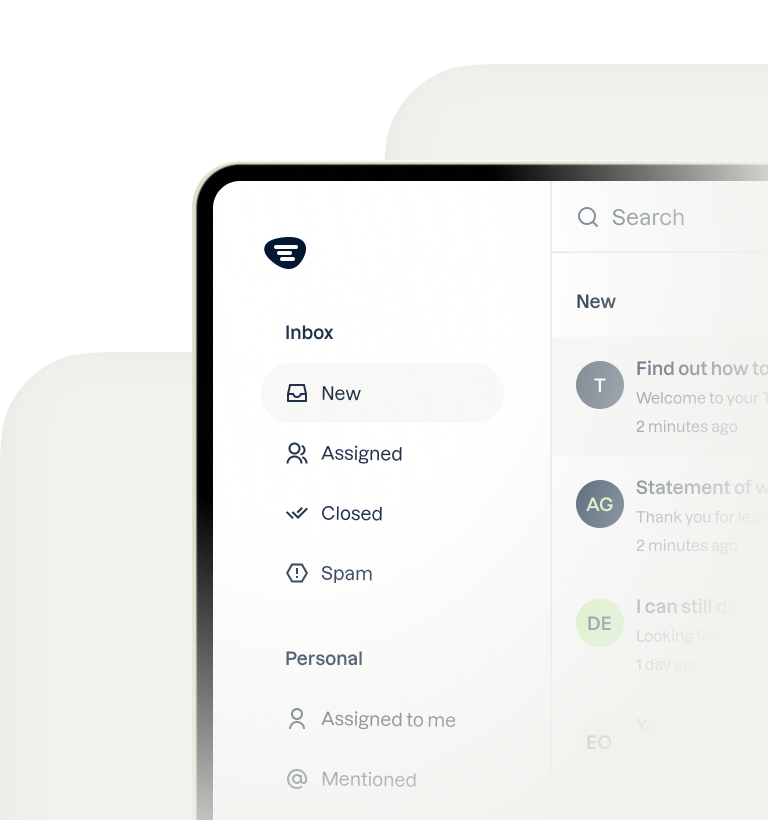
The solution to communication chaos is a multichannel shared inbox. By centralising every conversation from every channel into one view, you provide your entire team with a single source of truth. When a customer reaches out, any agent can instantly see the full history, from the first chat message to the most recent email. This eliminates the dreaded "Can you explain your issue again?" question. Platforms like Trengo's Omnichannel inbox make this possible, giving your team the context needed to resolve issues faster and more effectively. Faster resolution times lead directly to higher customer satisfaction, which is a cornerstone of building the trust required for long-term loyalty.
2. Deliver Hyper-Personalised Customer Service at Scale
Personalisation in 2026 has evolved far beyond simply using a customer's first name in an email. True hyper-personalisation involves leveraging customer data, such as purchase history, past support queries, and even browsing behaviour, to create interactions that feel uniquely tailored and insightful. It's about anticipating needs before the customer even expresses them. Imagine a retail customer who has previously bought running shoes receiving a personalised message about new trail running models just as their old ones are likely wearing out. Or a SaaS user who seems to be struggling with a specific feature receiving a proactive in-app message with a quick tutorial video. This level of personalised customer service shows you're not just processing transactions; you're paying attention to the individual and are invested in their success.
3. Implement a Value-Driven Customer Loyalty Program
A successful loyalty program should feel less like a transaction and more like a relationship. While points-based systems and discounts have their place, the most effective programs in 2026 offer genuine, exclusive value. Consider a tiered system where higher levels unlock benefits like early access to new products, invitations to exclusive events, or direct access to expert support. The key is to understand what your specific audience values most. For some, it might be financial savings; for others, it could be a sense of status or belonging to an exclusive club. Tailor your program to provide perks that resonate deeply, reinforcing the idea that their loyalty is truly appreciated. For businesses in e-commerce, well-designed retail loyalty programmes can be a powerful differentiator that keeps customers coming back.
4. Leverage Smart Automation for Instant Support
Customer expectations for speed have never been higher. They want answers now, not in 24-48 hours. This is where smart automation becomes a critical tool for building loyalty. By implementing AI-powered tools, you can provide 24/7, instant support for common questions. Modern chatbots and flowbots can handle a significant percentage of inbound queries, from "Where is my order?" to "How do I reset my password?". This doesn't replace your human agents. Instead, it empowers them. With Trengo's AI automations, you free up your team's valuable time from repetitive tasks, allowing them to focus on the complex, nuanced, and relationship-building conversations that automation can't handle. This combination of instant AI support and expert human help creates a superior customer experience.
5. Actively Solicit and Act On Customer Feedback
To build loyalty, you must show your customers that their voices matter. Asking for feedback is the first step, but it's only half the equation. Whether you use simple post-interaction CSAT surveys or more in-depth NPS questionnaires, the data you collect is invaluable. However, the real magic happens when you "close the loop." This means not only analysing the feedback but also communicating back to your customers about the changes you've made as a result. Sending an email that says, "You asked, we listened. Thanks to your feedback, we've updated our dashboard," makes customers feel like valued partners in your business's evolution. This practice fosters a sense of co-ownership and deepens their connection to your brand.
6. Build a Thriving Brand Community
The strongest loyalty is often emotional. It's built on a sense of shared identity and belonging that transcends simple transactions. Building a brand community creates a space where your customers can connect not only with your brand but also with each other. This could be an exclusive Facebook group for top customers, a Slack channel for power users of your software, or a dedicated forum on your website. Encourage discussions, share behind-the-scenes content, and facilitate connections. When customers feel like they are part of a tribe, their loyalty shifts from being conditional (based on price or features) to being deeply ingrained in their identity as a consumer.
7. Master Your Customer Retention Strategies
It's important to understand the relationship between customer retention and customer loyalty. Loyalty is the desired outcome of effective retention efforts. A retained customer is one who continues to do business with you, but a loyal customer is one who *wants* to continue doing business with you and feels a positive connection to your brand. Not all retained customers are loyal; some may stay out of convenience or lack of a better option. Your goal is to convert them. This requires having a clear plan. Strong customer retention strategies, such as personalised onboarding, regular check-ins, and proactive problem-solving, are the foundational activities that build the trust and satisfaction necessary for genuine loyalty to flourish.
8. Empower Your Team to Be Customer Champions
Customer loyalty is an inside job. It begins with a customer service team that is happy, motivated, and well-equipped to succeed. If your agents are dealing with clunky software, lack the information they need, or don't have the autonomy to solve problems, that frustration will inevitably spill over into their customer interactions. Empower your team by providing them with the right tools, like a collaborative inbox that facilitates teamwork and AI-powered assistants that surface information quickly. More importantly, give them the authority to make decisions that benefit the customer. When an agent can say "I can solve that for you right now" instead of "I need to ask my manager," it creates a powerful and positive experience that builds immense customer confidence and loyalty.
9. Reward More Than Just Purchases
In the modern brand ecosystem, a customer's value extends far beyond their wallet. They are potential marketers, content creators, and sources of invaluable feedback. Your loyalty strategy should reflect this expanded definition of value. Create systems to recognise and reward customers for actions that support your brand in different ways. Offer a small discount for leaving a detailed product review. Give them loyalty points for referring a new customer who makes a purchase. Publicly thank them for engaging with your social media content or for providing detailed feedback during a beta test. Acknowledging these non-transactional contributions shows that you value their entire relationship with your brand, not just their spending.
10. Be Proactive, Not Just Reactive
The gold standard of customer service in 2026 is moving from a reactive model to a proactive one. Instead of waiting for customers to report problems, use data to anticipate them and communicate first. For an e-commerce brand, this could mean sending an automated WhatsApp message to a customer when your system detects a potential shipping delay, offering an apology and an updated ETA before they even have a chance to wonder where their package is. For a SaaS company, it might be identifying a user who hasn't logged in for a while and sending a helpful email with tips on how to get more value from the platform. This proactive outreach demonstrates a high level of care and attentiveness, building significant trust and showing customers that you are truly looking out for their best interests.
Frequently Asked Questions

You can increase customer loyalty by unifying your communication for a seamless experience, delivering hyper-personalised service, implementing a value-driven loyalty program, and using automation for instant support. It is also crucial to actively solicit and act on customer feedback, build a strong brand community, and empower your support team with the right tools to succeed.
The four C's of customer loyalty are Convenience, Communication, Consistency, and Care. Convenience means being easy to do business with. Communication involves being responsive and proactive. Consistency is about delivering a reliable brand experience across all channels. Care means showing customers you genuinely value their business and well-being.
To build customer loyalty, you can follow these seven steps: 1. Provide consistently excellent service across all channels. 2. Personalise the customer experience using data. 3. Ask for and, more importantly, act on their feedback. 4. Reward their business with a value-driven program. 5. Build a community to foster an emotional connection. 6. Communicate proactively to anticipate their needs. 7. Be consistent in your brand voice and service quality.
The five typical stages of customer loyalty are Awareness, where a prospect first learns about your brand; Exploration, where they consider your offerings; Purchase, the initial transaction; Retention, where they make repeat purchases due to good experiences; and Advocacy, the final stage where a customer becomes a vocal promoter of your brand to others.




Let's meet
Grow your business with loyalty. Bring all of your customer contact into one, single platform to unlock delight at every step of the way.