Messagebird pricing explained (+ an affordable alternative)

Try Trengo for Free

Trengo unites WhatsApp, email, web, social media, and calls in one inbox, saving your team hours of repetitive work and ensures no conversation is ever lost
The platform-as-a-service (CPaaS) Messagebird is on a mission to modernize and simplify the overcomplicated space of customer communication. And the Amsterdam-based company is undoubtedly on its way to achieving that mission. Their pricing, however, does leave some customers and prospects alike confused and can be a dealbreaker. As one customer on G2 notes:
“The introduced support plans were more costly than the one we subscribed to! That's why we left.”
G2 also shows that even though Messagebird can be 11% less expensive than the competition for small businesses, mid-market and enterprise businesses pay 23% more when they choose Messagebird.

But should you reconsider too, and have a look at other customer engagement platforms?
Let’s dive into all the details of the Messagebird pricing plan, what it entails and what it doesn't, to see if it fits your business goals and needs. So you and your team can make the best-informed decision.
What features does Messagebird offer?
Messagebird aims to solve communication challenges. They streamline customer conversations by connecting applications and APIs to one inbox. So channels such as WhatsApp, Email, SMS, Voice, WeChat, Messenger, and Instagram all come together.
And according to a Capterra reviewer, the integrations and features listed below are a definite pro.

Messagebird features
Omnichannel inbox
Working from the omnichannel inbox, teams can support customers across all the integrated channels. And Email, WhatsApp, SMS, Messenger, LINE, WeChat and Telegram are featured.
Flow builder
The flow builder is a drag-and-drop application that allows you to connect data by setting up flows. You can set up auto-replies, triggers, and build customer journeys.
Video scheduling
Messagebird also offers a video tool. Via this tool, customers are able to schedule video calls and host calls of up to 24 hours.
Omnichannel Widget
The omnichannel widget ensures customers can talk to teams and these conversations will show up in the inbox. The widget can be placed on the homepage, in your app, on live chat or via other messaging services.
The Messagebird pricing plan is unclear and expensive
Messagebird calls their pricing ‘intuitive’. This means you only pay for the features that you need from them. Meaning if you only need Messagebird for SMS, you won’t have to pay for the other channels.
However, if you do use multiple channels (and who doesn’t in 2023), you will have to pay a fee for every single one of them separately.
Because of this pricing model, it is impossible to figure out what Messagebird will cost your business by yourself. You will need to get in touch with their sales team and explain exactly how you are planning to use Messagebird. With that information, they can give you a personal Messagebird pricing plan.
This is reflected in the reviews:
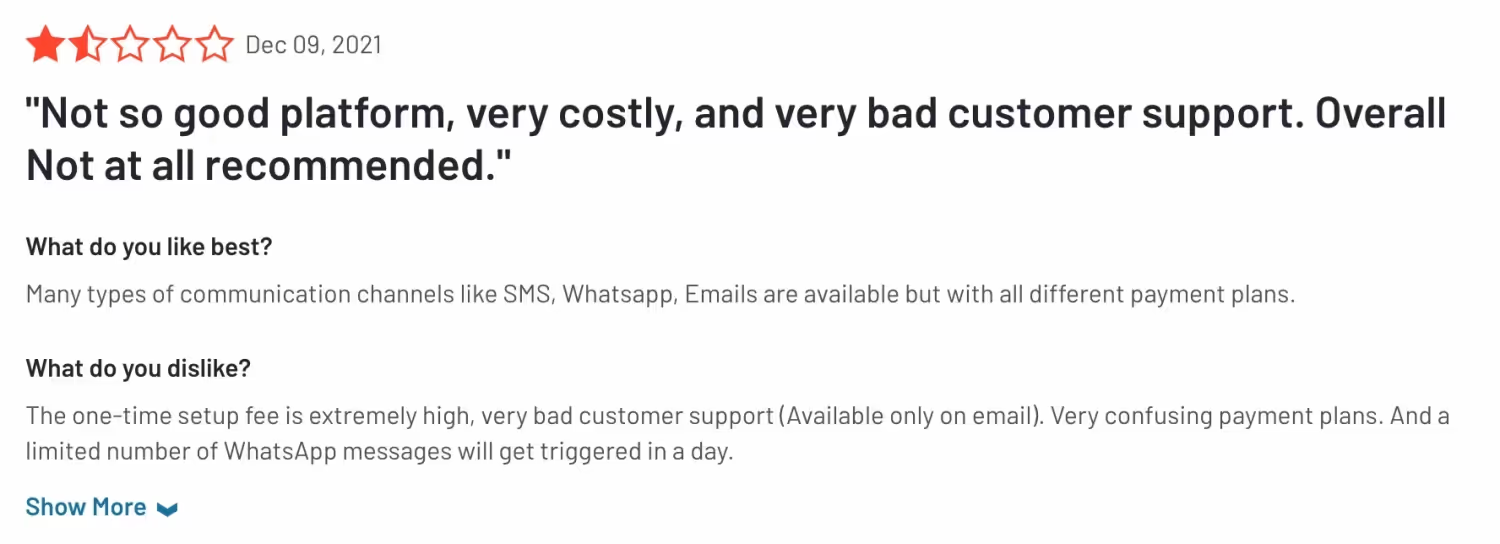
Aside from their monthly fee, you will also need to pay a $600 set-up fee before you can start using Messagebird.
Costly support
Coming back to the review sites, such as G2 and Capterra, it’s notable that Messagebird has some challenges providing consistent quality customer support. Without customers having to up expenses.
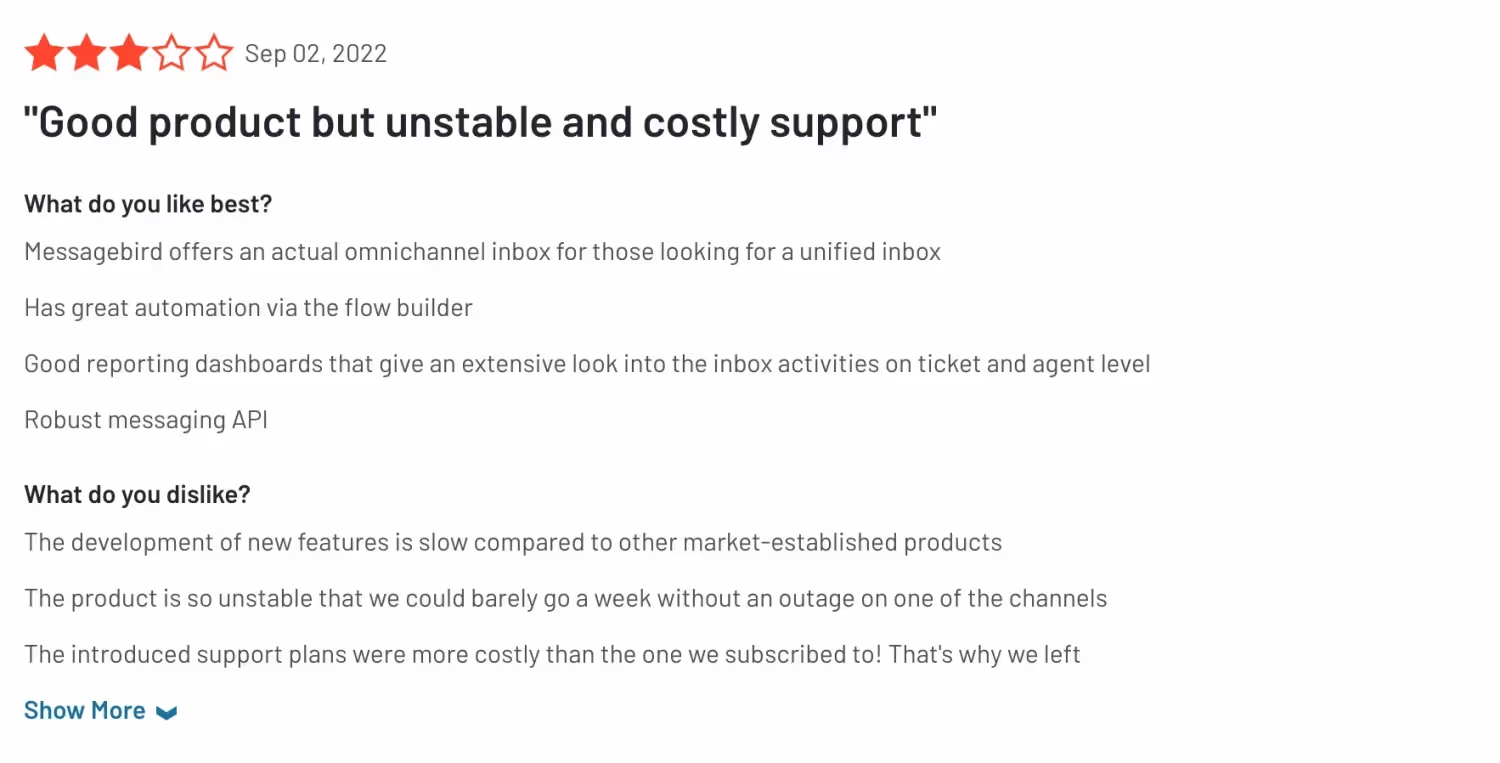
It’s common for B2B software solutions to offer customer support as a part of the subscription, but this isn’t the case at Messagebird. To get support, you need to pay for one of their support plans.
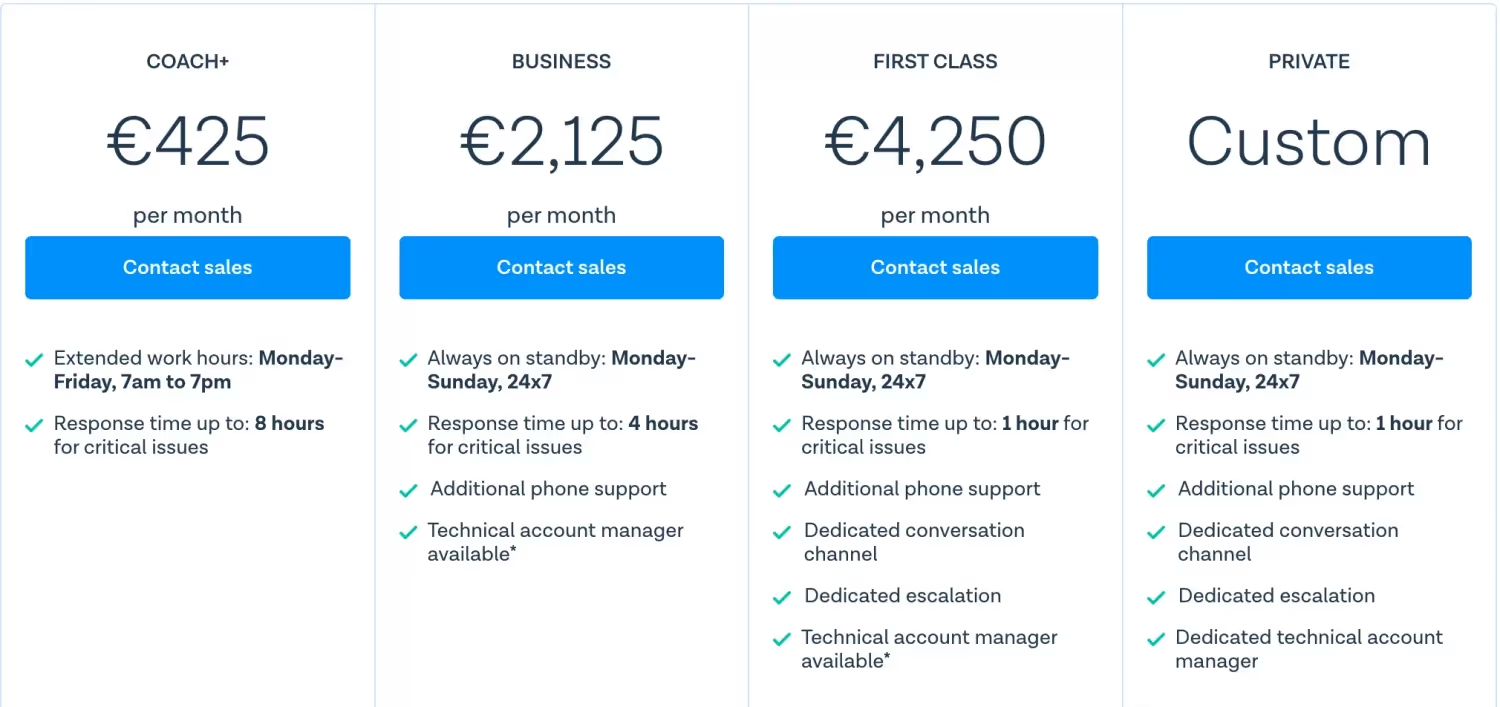
For support on workdays, there’s an extra €425 on top of your existing monthly fee. For that money, they promise a maximum response time of 8 hours — even for critical issues.
When you need the full 24/7 package with a dedicated conversation channel, escalation, and technical account manager, you pay €4250 per month. This isn’t a problem for most enterprise companies but will get quite costly for SMBs.
Although not all alternatives will offer a 24/7 support package, there are a lot of other solutions that do offer less expensive support. For instance, the customer engagement platform Trengo offers three plans that all automatically include support, including dedicated customer success and support managers. Plus an extensive Help Center and Academy. Even though this support won’t be 24/7 it does make a lot of difference in pricing.
View of an alternative: Trengo
So what would an alternative B2B solution look like? Let’s have a look at the customer engagement platform Trengo. Both Messagebird and Trengo offer comparable features and a platform that allows customers to set up omnichannel customer experiences.
Trengo’s pricing plans however are transparent. They offer three pricing plans: Grow, Scale and Enterprise. Let’s have a quick look at the costs of these plans and what they include.
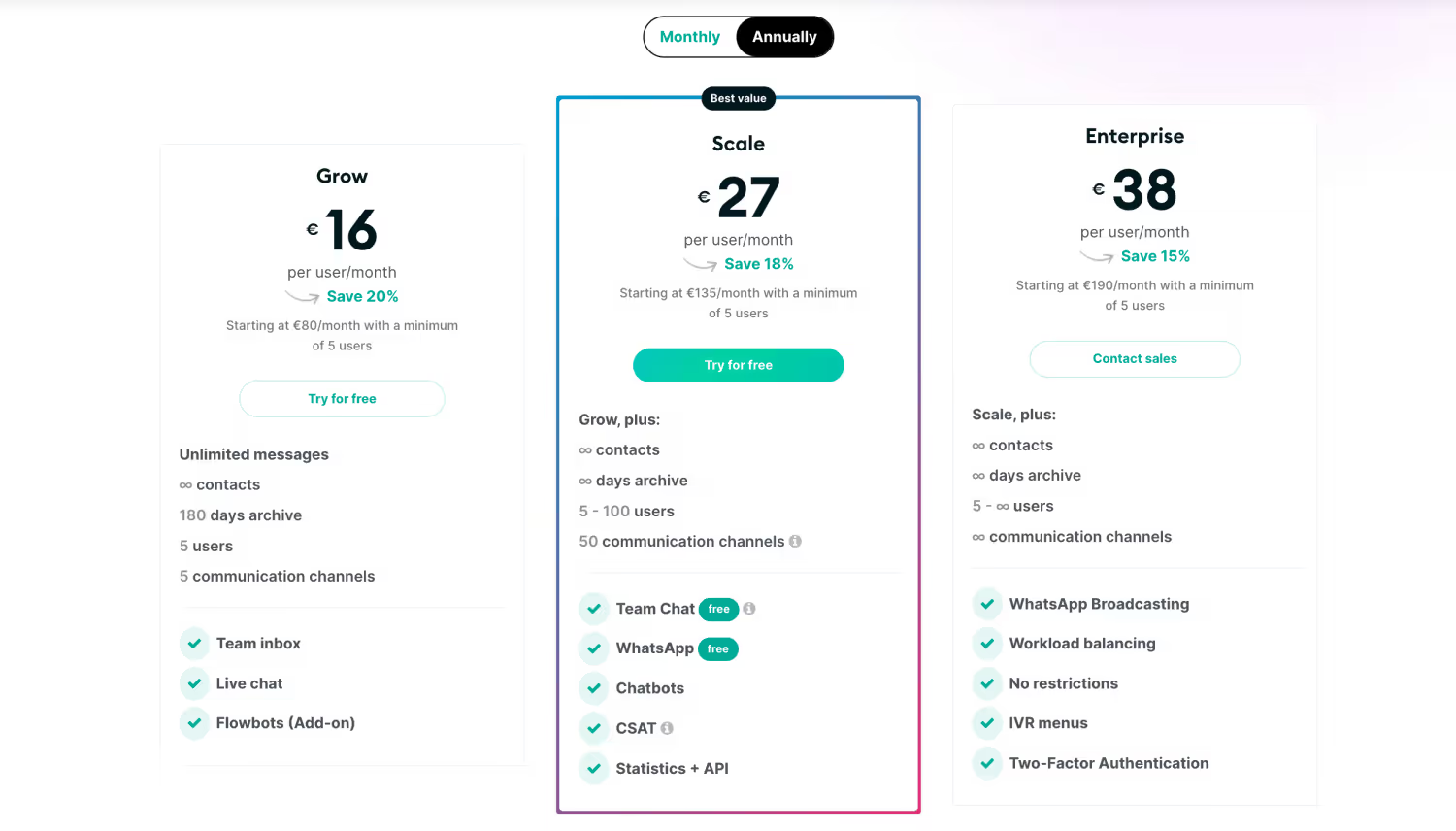
The Grow plan starts at €20 per user/month and includes the Team inbox and Live chat.
For the best value, mid-sized businesses choose the Scale plan for €33. That naturally includes all the features of the Grow plan plus the free Team chat for productive teamwork, chatbot, CSAT and statistics. And most importantly a connection to the WhatsApp API.
For large businesses, there is the Enterprise plan at €45 per month, which includes all of the above and workload balancing, IVR menus, and Two-Factor authentication. And includes more WhatsApp features such as Broadcasting.
Even though we can’t fully scope the Messagebird pricing, because of their intuitive prices, we can based on their support plans alone see that G2 was right and that Messagebird is easily 23% more expensive than others. Especially compared to Trengo’s Enterprise pricing plan.
Scalable plans
Messagebird offers intuitive prices with the idea of offering a scalable platform that works for clients. But this results in pricing plans that aren’t transparent, plus can get a lot more expensive per added feature. And in addition, how easy will it be to upgrade or downgrade once you’re using the platform and certain features?
But of course, you want a pricing plan that can scale easily according to your business needs. And the aforementioned Trengo Grow, Scale and Enterprise plans aren’t fixed. Customers can include features their teams need or lose features according to the business needs.
Messagebird isn’t cheap, but your customer engagement doesn’t have to be expensive
Now you know all about Messagebird's pricing plan. It's intuitive pricing, the features they offer and the fact that there are viable alternatives that are far less expensive.
It’s time to try a customer engagement platform out for free here.
Frequently Asked Questions (FAQs)
What are the main alternatives to MessageBird in 2025?
The top alternatives to MessageBird in 2025 include Trengo, Twilio, Wati, Infobip, etc. Each offers a range of messaging, automation, and omnichannel communication features. Trengo stands out for its omnichannel inbox, transparent pricing, and strong WhatsApp Business API integration, making it a popular choice for businesses seeking an affordable, scalable alternative.
Is MessageBird better than Trengo, Twilio, or Infobip for businesses?
MessageBird, Trengo, Twilio, and Infobip all offer strong omnichannel messaging solutions, but the best choice depends on your needs. MessageBird is powerful for global, multi-channel communication but can be complex and costly. Trengo stands out for its user-friendly interface, transparent fixed pricing, and omnichannel inbox, making it ideal for mid-sized businesses focused on customer support. Twilio is best for developer-driven custom solutions, while Infobip is suited for large enterprises needing advanced automation and compliance. For most growing businesses, Trengo offers the best balance of features, usability, and value.
How does MessageBird compare to Trengo in terms of features and cost?
MessageBird and Trengo both offer omnichannel messaging, WhatsApp Business API access, automation, and CRM integrations. However, Trengo stands out for its transparent pricing starting at €299/month for 10 users (Boost) and €499/month for 20 users (Pro), with fixed conversation limits and included AI features. MessageBird’s pricing is less transparent, often requiring custom quotes and incurring extra fees for automation and support, which can make it up to 23% more expensive for mid-sized teams. Trengo is also praised for its user-friendly interface and responsive support.
Which MessageBird alternative is best for WhatsApp Business API messaging?
Trengo is a leading choice for WhatsApp Business API messaging, offering seamless integration, template management, broadcasting, and automation within a omnichannel inbox. Other strong contenders include Twilio, 360Dialog, Wati, and Infobip, but Trengo is often preferred by businesses seeking a balance of affordability, usability, and omnichannel support.
Can I switch from MessageBird to another provider without losing data?
Yes, you can migrate your WhatsApp Business API number from MessageBird to another provider like Trengo or Callbell without losing your number or conversation history, provided you own the number and follow the migration steps. The process requires disabling two-factor authentication and working with your new provider to transfer the number and associated data. Trengo provides detailed migration support to ensure a smooth transition.
Do MessageBird alternatives offer better customer support or UI/UX?
Trengo, Wati, and some others are frequently highlighted for their user-friendly interfaces and responsive customer support. Trengo, in particular, receives positive feedback for its onboarding, integration ease, and personal assistance, while MessageBird and Vonage are sometimes criticised for slow or unresponsive support and complex setups.
Can I integrate MessageBird or its alternatives with my CRM or helpdesk?
Yes, both MessageBird and its main alternatives including Trengo, Twilio, and Infobip offer integrations with popular CRMs (like Salesforce, HubSpot, Zoho), helpdesks, and e-commerce platforms. Trengo stands out for its no-code integrations, easy workflow automation, and ability to centralise all customer conversations from email, chat, WhatsApp, and more in a single inbox.



Let's meet
Grow your business with loyalty. Bring all of your customer contact into one, single platform to unlock delight at every step of the way.