RCS vs. SMS: How Rich Messaging Improves Customer Experience

Try Trengo for Free

Trengo unites WhatsApp, email, web, social media, and calls in one inbox, saving your team hours of repetitive work and ensures no conversation is ever lost
RCS vs. SMS: How Rich Messaging Improves the Customer Experience
Summary
This article explores the critical differences in the RCS vs. SMS debate, highlighting how Rich Communication Services (RCS) is revolutionizing business communication. We'll compare the features of each messaging protocol, explain the significant benefits of using an RCS message for customer engagement, and demonstrate why businesses must adapt to this new standard. Ultimately, you will understand how to leverage RCS alongside traditional channels through a unified platform to enhance customer service and drive sales in 2026.
TL;DR
- RCS (Rich Communication Services) is the modern upgrade to SMS, offering app-like features like high-res media, read receipts, and interactive buttons.
- SMS (Short Message Service) remains universally compatible and reliable, making it an essential fallback for guaranteed message delivery.
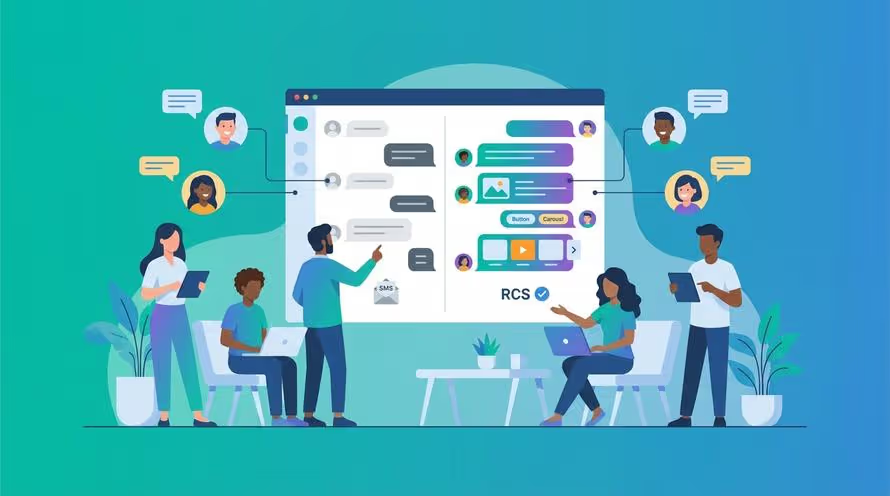
- The key difference between RCS and SMS is interactivity; RCS transforms one-way alerts into two-way conversations.
- Apple's adoption of RCS in 2024, with full integration expected by 2026, is making it a truly universal messaging standard across Android and iPhone.
- Businesses can use RCS to increase engagement, build trust with verified profiles, and create richer customer experiences.
- Platforms like Trengo allow businesses to manage RCS, SMS, WhatsApp, and email from a single omnichannel inbox.
What is SMS and Why Is It Still Relevant?
SMS, which stands for Short Message Service, is the standard text messaging protocol that has been a cornerstone of mobile communication for over two decades. Its core characteristics are a 160-character limit, text-only functionality, and its operation over cellular networks, meaning it doesn't require an internet connection. The primary strength of SMS lies in its universal compatibility; virtually every mobile phone in the world can send and receive an SMS message. This universality, combined with near-perfect open rates, ensures it remains a powerful and reliable tool for business communication. While it lacks modern features, SMS is not disappearing; instead, it now serves as the essential, failsafe foundation alongside its more advanced counterpart, RCS.
What is RCS Messaging and What Does it Mean for Businesses?
RCS, or Rich Communication Services, is the next generation of mobile messaging protocol, specifically designed to be the successor to SMS. So, what does an RCS message mean for your business? It means transforming a basic text message into a rich, interactive, and app-like experience delivered directly to a customer's native messaging app. Key features that businesses can leverage include sharing high-resolution photos and videos, seeing read receipts and typing indicators, and creating branded business profiles with a logo and verified sender status. More importantly, RCS messaging supports interactive carousels, suggested quick replies, and clickable buttons. This elevates messaging from a simple notification tool to a dynamic conversation platform where customers can browse products, schedule appointments, and get support without ever leaving the conversation.
RCS vs. SMS: A Head-to-Head Comparison
Understanding the direct comparison between RCS vs. SMS is crucial for any business looking to improve its customer communication strategy. While both serve to deliver messages, their capabilities and the experiences they create are worlds apart. The following breakdown highlights the key differences that matter most for business-to-customer interactions.
Feature Comparison Table: RCS vs. SMS vs. MMS
To provide a clear overview, here’s how the three main messaging protocols stack up against each other across essential features. This comparison illustrates the significant leap forward that RCS represents.
- Media Support: SMS is text-only. MMS allows for low-resolution images and videos. RCS supports high-resolution images, videos, GIFs, audio files, and even file sharing.
- Character Limit: SMS is famously limited to 160 characters. MMS extends this to around 1,000 characters. RCS dramatically increases the limit to 8,000 characters per message.
- Read Receipts & Typing Indicators: Neither SMS nor MMS supports these features. RCS provides both, offering real-time feedback that a message has been seen and a reply is being composed.
- Branding: With SMS and MMS, messages come from an anonymous phone number. RCS allows for a verified sender profile, complete with a business logo, brand name, and custom colors, building immediate trust.
- Interactivity: SMS and MMS are limited to plain text and hyperlinks. RCS introduces rich, interactive elements like product carousels, suggested reply buttons, and calendar integration.
- Data Requirement: SMS and MMS use the cellular network. RCS operates over Wi-Fi or mobile data, falling back to SMS/MMS if no internet connection is available.
Media and Interactivity: The Rich Experience
The core difference between RCS and SMS is the transition from a flat, one-way broadcast to a vibrant, two-way conversation. Imagine an airline sending a check-in reminder. With SMS, it’s a plain text message with a link. With an RCS message, the airline can send a branded message containing a QR code boarding pass, an interactive terminal map, and buttons to "Change Seat" or "Add Baggage" directly within the chat. This app-like functionality removes friction and dramatically improves the customer experience.
Engagement and Analytics: Know Your Customer
For businesses, the data provided by RCS is a game-changer. Read receipts and typing indicators offer invaluable insight into customer engagement. You can confirm if a customer has seen a critical update or a promotional offer. In a support context, an agent can see if a customer is actively typing a response, leading to more efficient and natural conversations. This level of feedback, impossible with SMS, allows businesses to better understand customer behavior and optimize their communication strategies for higher customer engagement.
Security: Is RCS More Secure Than SMS?
Security is a major differentiator. SMS messages are unencrypted and highly vulnerable to interception. RCS offers a significant security upgrade. The protocol provides client-to-server encryption, and Google's implementation of RCS in its Messages app offers full end-to-end encryption for one-on-one conversations. This makes RCS a substantially more secure channel for transmitting sensitive business and customer information compared to the legacy SMS protocol.
The iPhone Question: RCS vs. SMS on Android and iOS
For years, the biggest hurdle for RCS adoption was the "green bubble vs. blue bubble" divide between Android and iPhone. RCS has long been the standard on Android devices through Google Messages. The monumental shift came in 2024 when Apple began rolling out support for the RCS Universal Profile on iOS. With full integration expected by 2026, this move is effectively dismantling the walled garden. Soon, the rich, interactive features of RCS will work seamlessly between Android and iPhone users, making it the new universal standard for modern mobile messaging.
The Business Case for RCS: Elevating Customer Service and Sales
Adopting RCS is not just about sending prettier messages; it's about driving tangible business results. By connecting advanced features to key performance indicators, businesses can build a strong case for upgrading their messaging strategy.
Create App-Like Experiences Without an App
Many customers are hesitant to download a dedicated app for every business they interact with. RCS allows you to deliver powerful functionality—like browsing a product catalog, booking an appointment, or tracking an order—directly within the native messaging app. This reduces customer friction, increases accessibility, and boosts the likelihood of conversion.
Boost Engagement and Conversion Rates
Interactive elements naturally lead to higher engagement. An e-commerce business can send an abandoned cart reminder with a swipeable product carousel and a "Buy Now" button. A hotel can send a post-stay survey with tappable star ratings. These interactive features make it easier for customers to take action, leading to significantly higher conversion rates compared to a plain text SMS with a link.
Build Trust with Verified Business Messaging
In an era of rampant spam and phishing, trust is paramount. The RCS Verified Business profile, which displays your official brand name, logo, and a verification checkmark, provides instant reassurance to customers. They know they are communicating with the legitimate business, not a scammer. This trust is the foundation for building stronger, more valuable customer relationships.
How to Use RCS Messaging to Engage Your Customers
The versatility of RCS opens up a wide range of practical applications across various industries. Here are a few concrete examples to inspire your strategy.
For E-commerce
Go beyond simple order confirmations. Use RCS to send interactive abandoned cart reminders featuring a carousel of the items left behind. Send detailed shipping updates with a real-time tracking map and a button to "Reschedule Delivery." Simplify the returns process by allowing customers to initiate a return and receive a QR code shipping label directly in the chat.
For Travel and Hospitality
Enhance the entire travel journey. Airlines can send interactive boarding passes with gate information and flight status alerts. Hotels can send a welcome message with a button to "View Room Service Menu" or "Request More Towels." After a stay, you can send an interactive feedback survey, making it easy for guests to share their experience. A platform like Trengo can serve as a customer engagement platform for travel, hospitality and leisure businesses.
For Customer Support
Streamline support interactions and resolve issues faster. Use suggested replies to help customers triage their own issues before ever speaking to an agent. Share step-by-step troubleshooting instructions with high-resolution video guides. Allow customers to confirm or reschedule appointments with calendar buttons, reducing no-shows and administrative overhead.
How Trengo Powers Your Customer Messaging Strategy
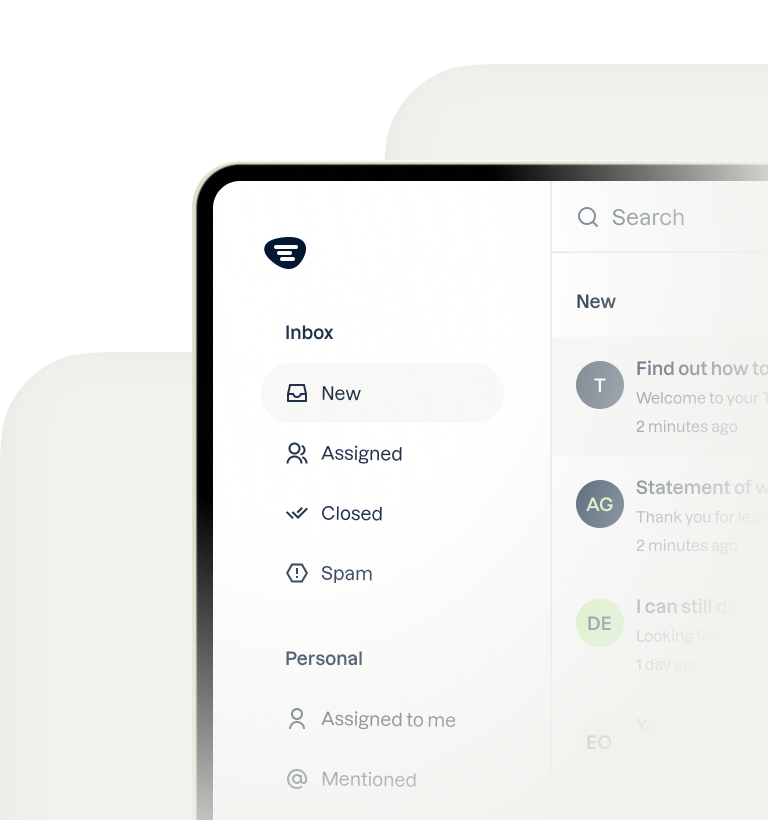
Adopting a new channel like RCS can feel daunting, especially when your team is already managing email, live chat, and WhatsApp. This is where a centralized platform becomes essential. Trengo’s smart omnichannel inbox is the central hub that unifies all your customer conversations into a single, collaborative view.
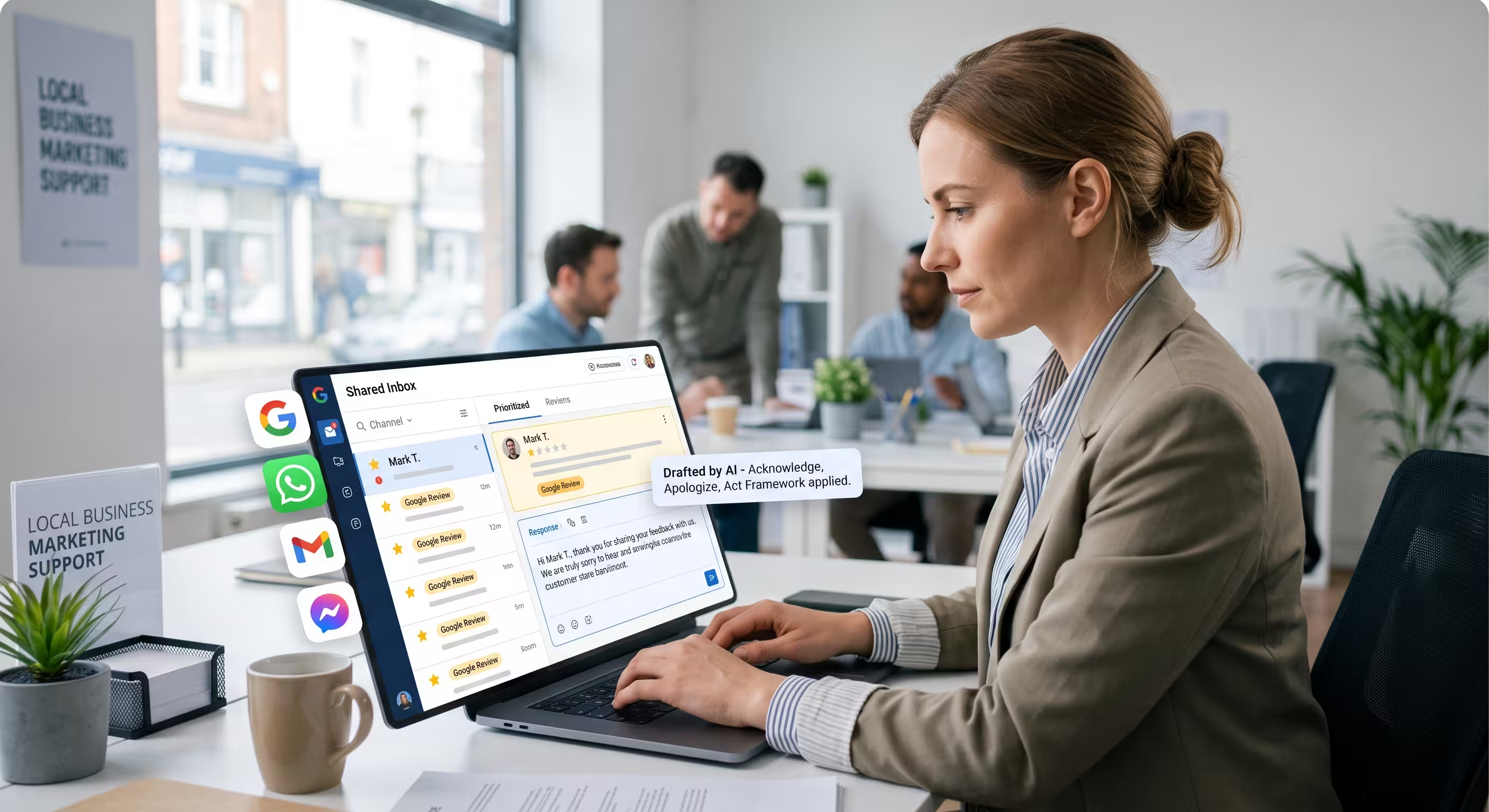
With Trengo, your team can seamlessly handle an RCS message, an email, and a social media DM from the same customer within one continuous conversation thread. This prevents context switching and ensures a smooth, consistent customer experience. Furthermore, Trengo is more than just an inbox; it is one of the best customer engagement platforms available. It empowers your team with powerful automations, including rules and chatbots, to handle routine queries and streamline workflows. By integrating RCS into Trengo, you're not just adding another channel—you're upgrading your entire customer communication strategy to be more efficient, engaging, and intelligent.
Frequently Asked Questions

For rich, secure, and interactive conversations with modern features, RCS is far superior. However, SMS remains essential as the universal fallback to guarantee message delivery to any mobile phone, regardless of its capabilities or connection status. For businesses, the ideal strategy uses RCS for an enhanced experience and relies on SMS as a failsafe.
You can usually disable RCS features, often labeled "Chat features," within your phone's default messaging app settings. This will force all messages to be sent as standard SMS/MMS. However, for the best and most secure messaging experience, it is generally recommended to leave RCS enabled.
The main disadvantages have been its reliance on an internet connection (Wi-Fi or mobile data) and the historically fragmented rollout across different carriers and devices. However, with Apple's recent adoption and broad network support, this fragmentation is rapidly becoming a thing of the past.
While RCS is the designated successor to SMS, it is unlikely to replace it completely in the immediate future. SMS will continue to serve as the universal fallback protocol for years, ensuring that a message can always be sent and received, even in areas with poor internet connectivity or to older, non-RCS-compatible devices.
Yes, RCS messages are transmitted over Wi-Fi or mobile data, much like other IP-based messaging services such as iMessage or WhatsApp. If a data connection is not available, most phones will automatically attempt to send the message as a standard SMS or MMS instead.


Let's meet
Grow your business with loyalty. Bring all of your customer contact into one, single platform to unlock delight at every step of the way.