Contact Management Software in 2026: All You Need to Know


Try Trengo for Free

Trengo unites WhatsApp, email, web, social media, and calls in one inbox, saving your team hours of repetitive work and ensures no conversation is ever lost
Everything You Need to Know About Contact Management Software in 2026
Summary
Contact management software is an essential tool for businesses in 2026, evolving far beyond a simple digital address book. It serves as a central hub to store contact data, track all interactions, and manage communications across multiple channels. For small to medium-sized businesses, the right platform can eliminate data silos, enhance team collaboration, and unlock personalized customer experiences that drive sales and prevent lost opportunities.
TL;DR
- Contact management software centralizes all customer, lead, and partner information in one database.
- It is more than a static address book; it tracks every interaction and conversation history.
- Unlike complex CRMs, modern contact management focuses on communication and team collaboration.
- Key benefits include eliminating data silos, improving team efficiency, and enabling hyper-personalization.
- The best solutions for 2026 integrate multiple communication channels like email, WhatsApp, and social media into a single shared inbox.
- Look for features like a shared inbox, automation, AI capabilities, and robust integrations.
What is contact management software?
Contact management software is a centralized system designed to help businesses store, organize, and track all information and interactions related to their contacts. These contacts can include customers, leads, suppliers, and partners. Think of it as an intelligent, dynamic address book built for teamwork. While its core function is to maintain a clean and accessible contact database, its true power in 2026 lies in its ability to unify communication. Modern systems have evolved to integrate every email, chat message, and social media interaction, providing a complete, 360-degree view of every relationship in a single place.
Contact Management vs. CRM: What's the Difference?
This is a common point of confusion. Contact management is often a core component of a larger Customer Relationship Management (CRM) system, but they are not the same. A full CRM is typically a complex, sales-focused platform designed to manage the entire customer lifecycle, from lead generation to post-sale support, often including features for marketing automation, sales pipeline forecasting, and detailed analytics. For many small and medium-sized businesses, a full CRM is overly complex and expensive. Modern contact management software, in contrast, offers a more focused solution. It excels at centralizing contact data and streamlining team communication and engagement, providing the most critical functions without the bloat of an enterprise-level CRM.
Key Components of a Modern Contact Management System
When evaluating a contact management system, there are several essential features to look for. These components work together to create a powerful hub for all your business relationships.
- A centralized contact database: A single, searchable location for all contact information, including names, companies, phone numbers, and custom fields.
- Interaction and communication history: A complete, chronological log of every touchpoint with a contact, from emails and phone calls to WhatsApp messages and social media DMs.
- Task management and scheduling: The ability to create and assign tasks, set reminders for follow-ups, and schedule meetings directly from a contact's profile.
- Team collaboration tools: Features like internal notes, conversation assignments, and real-time status updates that allow teams to work together seamlessly.
- Integrations with other business software: The capacity to connect with other essential tools like e-commerce platforms, calendars, and marketing software to ensure data flows freely.
Every conversation in one inbox
Bring email, WhatsApp, social, and voice together so your team replies faster — without switching tabs.
Why Your Business Can't Afford to Ignore Contact Management
In today's competitive landscape, disorganized data and inefficient communication are significant liabilities. Implementing a robust contact management strategy isn't just a matter of convenience; it's a critical driver of growth, efficiency, and customer satisfaction. The right software solves tangible pain points that directly impact your bottom line.
Centralize All Customer Data and Communications
Many businesses suffer from "data silos" where vital information is scattered across individual email inboxes, spreadsheets, and sticky notes. This fragmentation makes it impossible to get a clear picture of a customer's history. A contact management system demolishes these silos by creating a single source of truth for every contact. When this system is built around a multichannel shared inbox, not only is the contact data centralized, but every conversation from every channel is too. This means any team member can instantly access the full context of a relationship, leading to smarter, faster responses.
Enhance Team Collaboration and Eliminate Double Work
When your team operates from a shared platform, efficiency skyrockets. Everyone has access to the same up-to-date contact information and conversation history, which eliminates redundant questions and duplicate effort. Imagine a customer emails with a question, and a support agent can see they just spoke to a sales rep on WhatsApp an hour ago. Features like internal notes allow team members to discuss a contact privately without the customer seeing, and conversation assignments ensure clear ownership so nothing ever gets missed. This level of collaboration is impossible when communication is siloed.
Deliver Hyper-Personalized Customer Experiences
Personalization is no longer a luxury; it's an expectation. Having organized, accessible data is the key to delivering it. When you can instantly see a contact's purchase history, past support tickets, and previous conversations, you can tailor your communication to their specific needs and context. This proactive and informed approach shows customers you value their business and builds stronger customer relationships, fostering loyalty and repeat business.
Boost Sales and Prevent Lost Leads
From a revenue perspective, effective contact management is non-negotiable. When all lead interactions are meticulously tracked, your sales team can ensure timely follow-ups and nurture prospects more effectively. Automated reminders and task assignments mean that promising leads never fall through the cracks due to a simple oversight. By maintaining a clear and actionable view of every prospect, you can significantly improve conversion rates and drive business growth.
Choosing the Best Contact Management Software for Your Needs
Selecting the right tool requires a clear understanding of your business's unique challenges and goals. Instead of chasing the platform with the most features, focus on the one that solves your most pressing problems in the simplest way. For most modern businesses, that problem is managing communication effectively across a growing number of channels.
For Small Businesses: The Power of a Unified Platform
The best contact management software for small business is one that is affordable, easy to implement, and combines multiple functions into a single tool. Small teams can't afford the cost or complexity of juggling separate applications for email, live chat, social media messaging, and a contact list. A unified platform that integrates all these channels into one inbox is far more cost-effective and efficient. It provides a single subscription and a single place for the team to work, simplifying workflows and reducing the time spent switching between tabs.
For Specific Industries: Nonprofits, Real Estate, and More
While the need for organized communication is universal, different industries have unique use cases. A nonprofit organization needs to manage relationships with donors, volunteers, and beneficiaries, tracking donations and engagement history. A real estate agent must manage a long and complex sales cycle for dozens of clients simultaneously, keeping track of every viewing, offer, and document. The underlying requirement for both is the same: a reliable system for timely, organized, and personalized communication. A flexible contact management platform can be adapted to serve these diverse needs.
Key Features to Look for in 2026
As you evaluate your options, prioritize these non-negotiable features that define a modern and future-proof contact management tool.
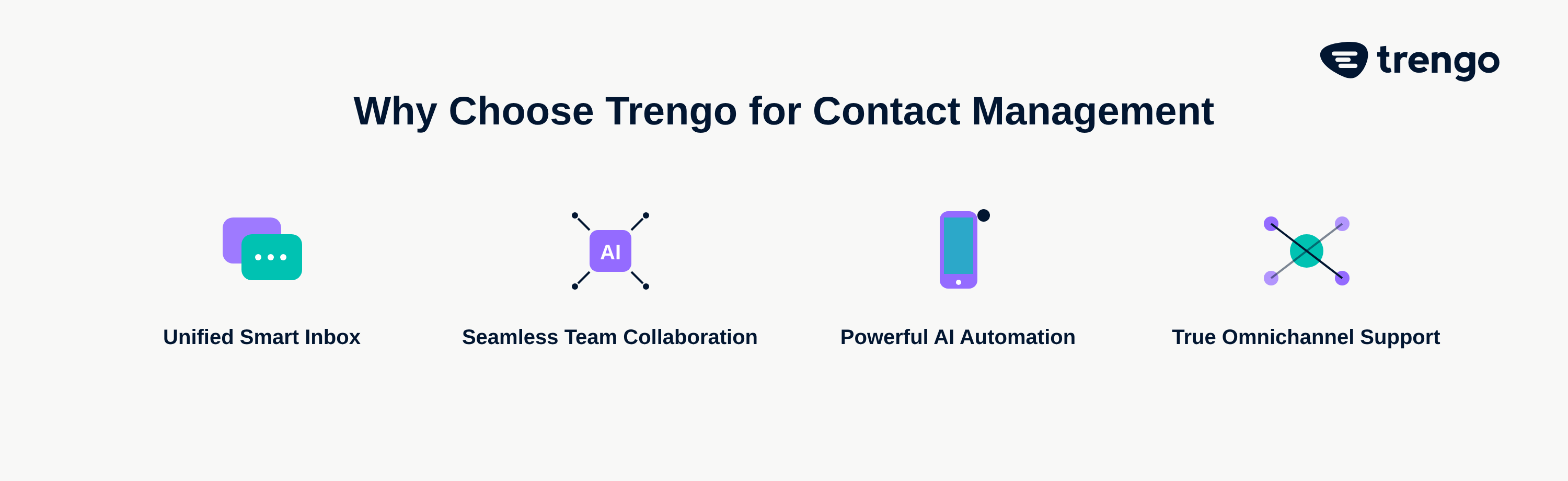
- Multichannel Support: The platform must be able to pull in conversations from all the channels your customers use, including email, WhatsApp, Instagram, Facebook Messenger, and live chat. Look for a true Trengo's Omnichannel inbox.
- A Collaborative Shared Inbox: The software should be built around a shared inbox where your entire team can view and manage conversations together, with features for assigning, tagging, and internal commenting.
- Smart Automation and AI Capabilities: Look for features that save time, such as rules to automatically route messages, auto-replies, and AI-powered tools to summarize conversations or suggest answers.
- Robust Integrations: The tool must connect seamlessly with your other business systems, like Shopify, Magento, or your internal CRM, to create a truly unified data environment.
- Mobile Accessibility: Your team needs to manage contacts and conversations on the go. A powerful and intuitive mobile app is essential for modern business agility.
Juggling messages across five apps?
Trengo unifies every channel in one shared inbox.
Trengo: The Future of Contact Engagement
While traditional contact management software focused on storing data, the future is about activating that data through engagement. Trengo is designed for this new era. It's not just a place to keep your contacts; it's the platform where you build relationships with them. By unifying every communication channel into a single smart inbox, Trengo transforms contact management from a passive administrative task into an active, collaborative, and revenue-driving activity.
Unify Your Contacts and Conversations in One Inbox
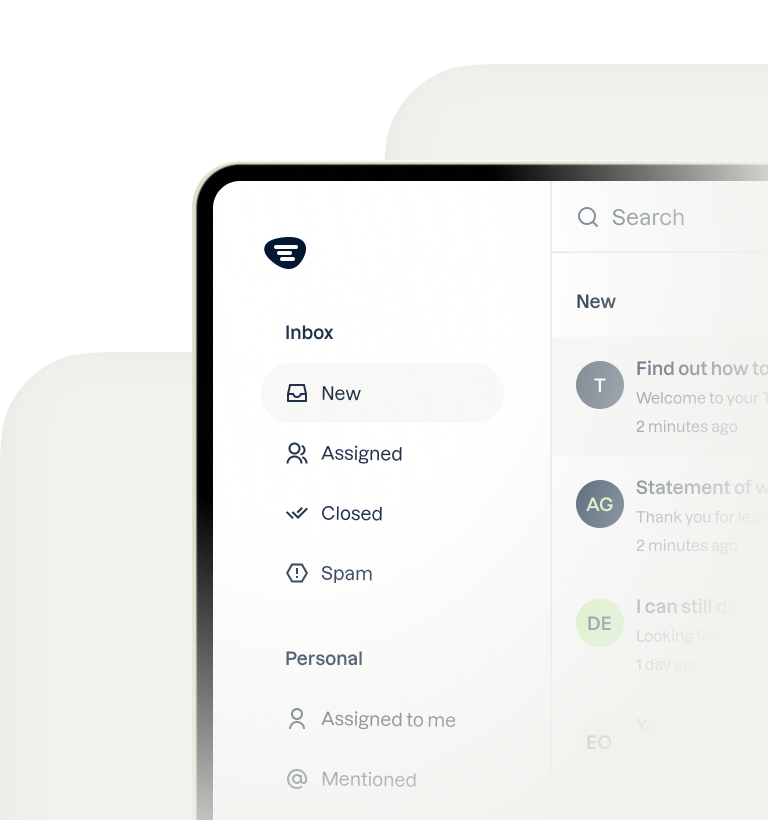
With Trengo, a contact's profile lives right alongside every conversation you've ever had with them. When an email, WhatsApp message, or Instagram DM arrives, you instantly see their entire history, purchase data, and internal notes. This complete context empowers your team to respond with speed and precision, delivering a seamless experience for the customer, regardless of the channel they choose to use.
Collaborate with Your Team to Deliver 5-Star Service
Trengo is built for teamwork. You can assign messages to the right person, tag colleagues in internal notes to ask for help, and see exactly who is working on what in real-time. This eliminates confusion and ensures every contact receives a fast, consistent, and high-quality response. Say goodbye to forwarded email chains and "who's handling this?" questions in Slack.
Automate Routine Tasks and Focus on What Matters
Free up your team's time to focus on building relationships, not on repetitive tasks. With Trengo's AI automations, you can set up rules to automatically tag and route incoming messages, send auto-replies, and even deploy smart chatbots to handle common queries 24/7. This allows you to manage contact interactions at scale while ensuring your team's expertise is reserved for the conversations that matter most.
Frequently Asked Questions

The best app depends entirely on your needs. For personal use, your phone's default contacts app is often enough. For businesses, the best app is one that integrates contact data directly with communications and team collaboration. A platform with a powerful mobile app, like Trengo, allows your team to manage all customer conversations and contact information from a single application on any device.
Yes, but its offerings can be complex. While Microsoft Outlook has basic contact features, its dedicated small business tool, Business Contact Manager, was discontinued. Microsoft's primary offering is now Dynamics 365, a full-scale, enterprise-level CRM. For many businesses, a more streamlined and communication-focused solution like Trengo is a much better fit than a complex enterprise system.
Major CRM players include Salesforce, HubSpot, Zoho, Freshworks, and Dynamics 365. However, it's important to note that these are often large, complex systems built around sales pipelines. For many businesses whose primary goal is to improve team communication and customer engagement across multiple channels, a full CRM can be overkill. A shared inbox platform like Trengo is often a more effective and efficient solution.
The best tool for a beginner is one that is intuitive, easy to set up, and solves an immediate, tangible problem. For most new businesses, that problem is managing messy, siloed communication. Instead of starting with a complex CRM, a platform like Trengo is the perfect starting point. It centralizes all your communication channels and contact data in one place, providing immediate value and a solid foundation to build on as you grow.




Let's meet
Grow your business with loyalty. Bring all of your customer contact into one, single platform to unlock delight at every step of the way.