

Customer Onboarding Checklist: 5 Stages to Boost Retention

Try Trengo for Free

Trengo unites WhatsApp, email, web, social media, and calls in one inbox, saving your team hours of repetitive work and ensures no conversation is ever lost
Why a Flawless Customer Onboarding Process is Your Best Retention Tool
Summary
This comprehensive look at the customer onboarding checklist provides an actionable framework for businesses to reduce churn and increase customer satisfaction. A well-structured customer onboarding process, supported by a detailed checklist, is the most effective way to guide new users to their first moment of value. We will explore the key stages, provide a ready-to-use template, and show how a unified communication platform transforms the entire experience.
TL;DR
- A strong onboarding process directly reduces early-stage customer churn and increases lifetime value (LTV).
- An onboarding checklist is a tactical tool that operationalizes your strategic onboarding process, ensuring no step is missed.
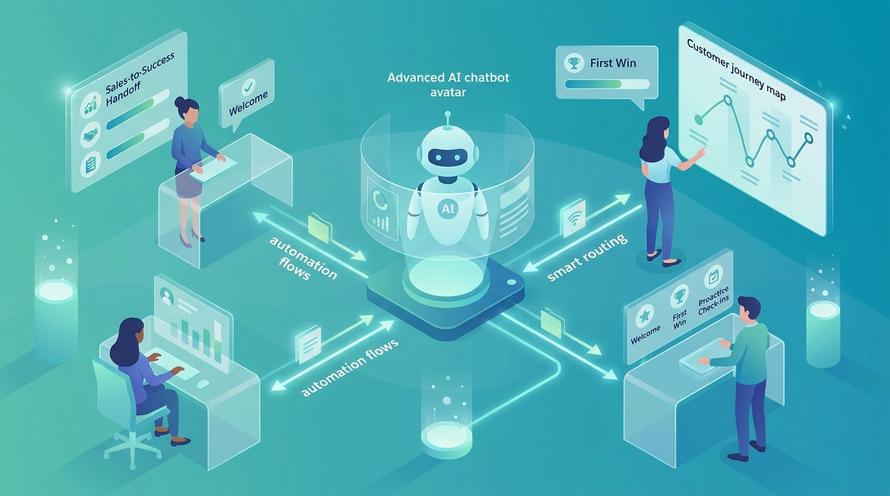
- The process consists of five key stages: Sales-to-Success Handoff, Welcome & Engagement, Achieving the "First Win," Proactive Check-ins, and Transition to Long-Term Success.
- Effective onboarding relies on seamless, cross-team communication, which is often a major challenge due to information silos.
- Using a shared, multichannel inbox like Trengo centralizes all customer conversations, from email to WhatsApp, creating a consistent and collaborative onboarding experience.
What is a Customer Onboarding Checklist?
A customer onboarding checklist is a tactical, itemized document that outlines every task, milestone, and communication touchpoint required to successfully integrate a new customer. It acts as a standardized playbook for your customer success, support, and sales teams. While the overall customer onboarding process is the strategic journey you design for your new user, the checklist is the actionable project plan that ensures the journey is executed consistently and effectively every single time.
The Anatomy of an Effective Onboarding Checklist
An effective checklist is far more than a simple to-do list; it’s a detailed plan that assigns accountability and maintains momentum. Its core components typically include: tasks, which are specific actions to be completed; owners, the team or individual responsible for each task; deadlines, which set the pace for the onboarding journey; communication channels, defining where each interaction happens; and status tracking, to monitor progress and identify bottlenecks.
Key Benefits: From Chaos to Clarity
Implementing a standardized checklist brings order and predictability to what can often be a chaotic post-sale period. The primary benefits are immediately clear and have a significant impact on both your team and your customers.
- Ensures Consistency: Every customer receives the same high-quality experience, regardless of who is managing their account.
- Improves Team Collaboration: With clear tasks and owners, handoffs between sales, support, and success become seamless, improving team collaboration and accountability.
- Reduces Manual Errors: A checklist minimizes the risk of forgetting critical steps like sending a welcome email or scheduling a kickoff call.
- Accelerates Time-to-Value: By guiding customers through key setup and training steps efficiently, you help them achieve their "aha!" moment and see ROI faster.
How to Build Your Customer Onboarding Process Flow: The 5 Key Stages
Your checklist supports a broader, strategic process. This journey can be broken down into five distinct stages, each with its own goals and activities. Framing your onboarding this way helps you guide customers from their initial purchase to becoming proficient, long-term advocates for your brand.
Stage 1: The Sales-to-Success Handoff
The onboarding journey begins before your new customer ever speaks to a success manager. This internal handoff is critical for a smooth customer experience. The sales team must transfer all relevant information, including the customer's primary pain points, their business goals, and a list of key stakeholders. A successful handoff ensures the customer never has to repeat themselves, making them feel understood and valued from day one.
Stage 2: The Official Welcome & First Engagement
This is your first direct interaction with the customer post-sale. It sets the tone for the entire relationship. This stage typically involves sending a personalized welcome email that introduces their dedicated point of contact, provides clear instructions for their first login, and sets expectations for the next steps in their onboarding journey. The goal is to make the customer feel confident and excited about their decision.
Stage 3: Initial Training & Achieving the "First Win"
The focus of this stage is on education and rapid value realization. You need to guide the customer to their "aha!" moment—the point where they experience the core value of your product or service—as quickly as possible. This can be achieved through live demos, a curated set of knowledge base articles, or short video tutorials. The key is to make the training goal-oriented and tailored to the specific outcomes the customer wants to achieve.
Stage 4: Proactive Check-ins and Ongoing Support
Once the initial setup is complete, the focus shifts to ensuring consistent product usage and satisfaction. A regular cadence of check-ins, such as at the 7, 30, and 90-day marks, is essential. These touchpoints are opportunities to gather feedback, offer proactive help, and share best practices. Proactive communication is a powerful way to identify and solve potential issues before they escalate, which is a key part of how you can improve customer service quality and build trust.
Stage 5: The Transition to Long-Term Success
This final stage marks the customer's "graduation" from the intensive onboarding program to a standard customer success relationship. This transition should include a formal review of their initial goals to confirm they've been met. It's also the perfect time to set new, more advanced goals and introduce them to other features or services that can provide additional value, paving the way for future expansion and advocacy.
Your Comprehensive Customer Onboarding Checklist Template
Here is a detailed, phase-based template you can adapt for your business. This checklist can be managed in a spreadsheet, a project management tool, or your CRM to ensure every new customer gets a world-class experience.
Phase 1: Pre-Welcome & Internal Handoff Days 0-2
- [ ] Sales lead fills out internal handoff form with customer goals and pain points.
- [ ] Customer account is created in the CRM and assigned to a Customer Success Manager (CSM).
- [ ] Internal kickoff meeting is scheduled between Sales and CSM to review the account.
- [ ] CSM reviews all notes and prepares a personalized welcome email template.
- [ ] All relevant internal teams are notified of the new customer.
Phase 2: The First Week Days 2-7
- [ ] CSM sends a personalized welcome email introducing themselves and outlining next steps.
- [ ] A 30-minute kickoff call is scheduled to align on goals and success criteria.
- [ ] Customer is guided through the initial account setup and user invitations.
- [ ] Customer receives a link to the relevant sections of the knowledge base.
- [ ] First "first win" goal is confirmed and a plan to achieve it is set.
Phase 3: The First Month Days 8-30
- [ ] A 14-day check-in email or call is conducted to address any early questions.
- [ ] CSM shares a relevant case study or best practice tip via email.
- [ ] Initial usage data is reviewed to spot adoption trends or potential issues.
- [ ] An advanced feature relevant to the customer's goals is introduced.
- [ ] CSM proactively requests initial feedback on the onboarding experience so far.
Phase 4: The First Quarter Days 31-90
- [ ] A 90-day business review is scheduled to assess progress against initial goals.
- [ ] Success in achieving primary goals is confirmed with the customer.
- [ ] Potential upsell or cross-sell opportunities are identified based on usage and needs.
- [ ] A satisfied customer is asked for a review, testimonial, or case study participation.
- [ ] The customer is officially transitioned from onboarding to the standard success program.
Customer Onboarding Checklist Examples for Different Industries
While the principles of good onboarding are universal, the specific tasks can vary significantly by industry. Tailoring your checklist to your business model is key to success.
Example for a SaaS Company
For a SaaS business, the focus is on technical setup and feature adoption. The checklist would heavily feature items like: guiding the user through API key generation, confirming successful data integration with other tools, inviting the first batch of team members, and hitting a key feature usage milestone within the first 30 days.
Example for a Bookkeeping or Accounting Firm
A service-based business like a bookkeeping firm prioritizes document collection and communication protocols. Their checklist would include: collecting prior tax returns and bank statements, granting the firm access to accounting software like QuickBooks, establishing a schedule for monthly financial reporting, and confirming the preferred method of communication for queries.
Example for a Bank B2B Client
For a B2B banking client, compliance and security are paramount. The onboarding checklist would be rigorous, including items like: completing all Know Your Customer (KYC) and Anti-Money Laundering (AML) verification, setting up authorized users and permission levels for online banking, providing mandatory training on treasury management tools, and reviewing fraud prevention protocols.
Unify Your Onboarding with Trengo’s Shared Inbox
One of the biggest obstacles to a smooth onboarding experience is fragmented communication. When sales, support, and success operate from different inboxes, information gets lost, responses are delayed, and the customer is forced to repeat themselves. This is where a unified communication platform becomes a game-changer.
Eliminate Communication Silos Between Sales and Support
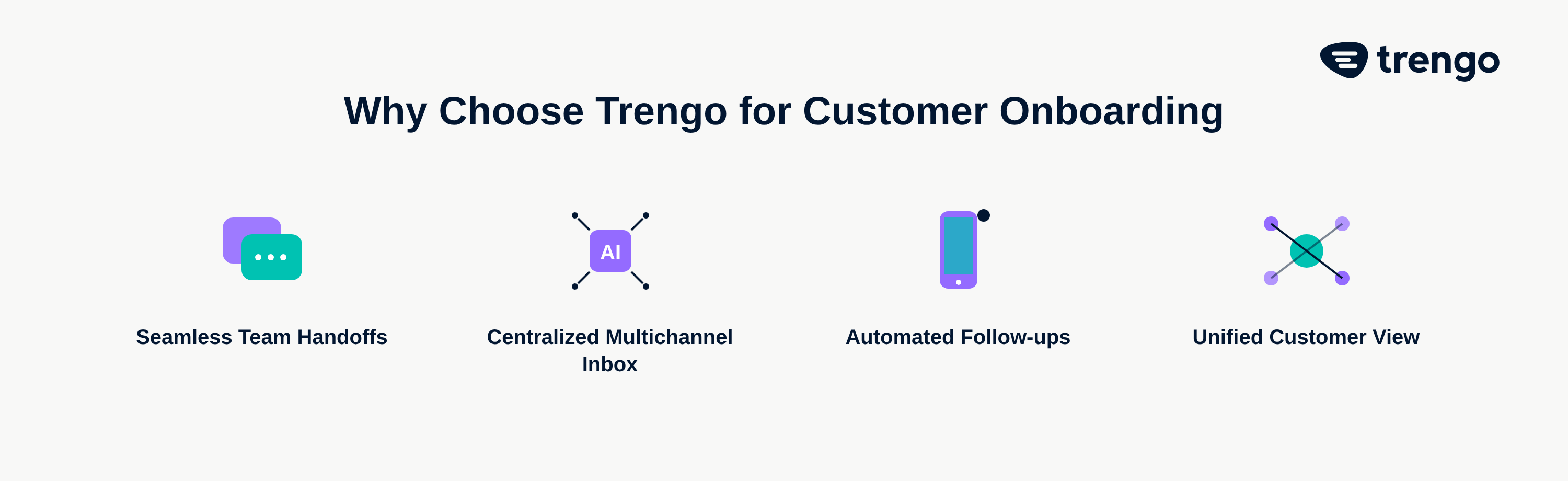
The critical sales-to-success handoff becomes effortless with Trengo's Omnichannel inbox. Because the entire pre-sale conversation history—from initial inquiry to final negotiation—lives in one shared view, the CSM has full context from the very beginning. There's no need for lengthy internal briefings or, worse, asking the customer to re-explain their needs. The transition is seamless and professional.
Meet New Customers Where They Are: Email, WhatsApp, and More
Modern customers expect to communicate on their preferred channels. A new user might follow a setup guide sent via email but ask a quick question via WhatsApp or website chat. Trengo centralizes these conversations into a single customer thread. Your team can see the entire interaction history across all channels, allowing them to provide a cohesive and context-aware experience without switching between tools. This is especially powerful when using channels like the WhatsApp Business API, which has exceptionally high open rates.
Automate Follow-ups and Never Miss a Check-in
Consistency is key in onboarding, and automation is your best ally. With Trengo, you can Automate Follow-ups by creating rules that trigger actions at specific intervals. For example, you can automatically send a 7-day check-in email, assign a 30-day follow-up task to the CSM, or apply a "Needs Review" label to a customer who hasn't logged in for a week. This ensures that no customer falls through the cracks and every milestone is met on time.
Frequently Asked Questions

The 5 C's of effective onboarding are Compliance, Clarification, Culture, Connection, and Check-back. They represent the key pillars of ensuring a new customer or employee is fully and properly integrated by covering rules, roles, company values, relationships, and ongoing progress checks.
A comprehensive onboarding checklist should include key categories such as internal handoff tasks, welcome communications, account setup and configuration steps, initial training sessions, goal setting and confirmation milestones, and scheduled points for proactive check-ins and feedback collection.
A client onboarding checklist is functionally the same as a customer onboarding checklist. The term "client" is more commonly used in service-based industries like marketing agencies, law firms, or consultancies, while "customer" is more common for product and SaaS businesses, but the principles of creating a structured, consistent process are identical.