Essential Customer Service Skills: The Complete Guide


Try Trengo for Free

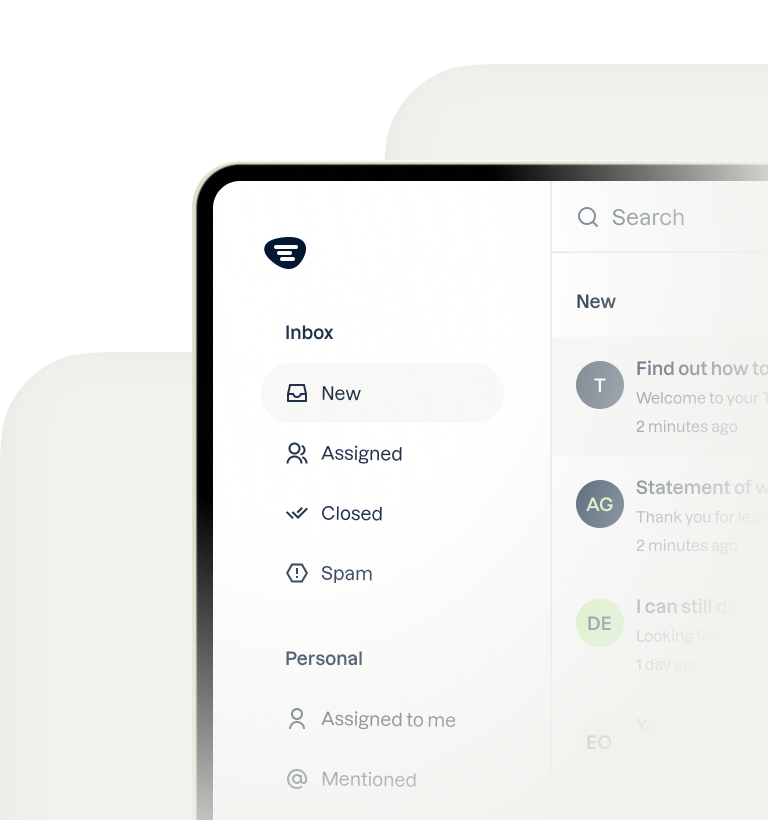
Trengo unites WhatsApp, email, web, social media, and calls in one inbox, saving your team hours of repetitive work and ensures no conversation is ever lost
Essential Customer Service Skills: The Complete Guide for Success
Customer service skills are the unique blend of emotional intelligence, communication abilities, and technical proficiency required to deliver exceptional support in 2026. This guide breaks down the essential soft and hard skills every agent needs, from empathy to multichannel management. We also explore how modern platforms like Trengo help teams leverage these skills to boost satisfaction and efficiency.
- Soft skills are foundational: Empathy, active listening, and patience remain the core of human connection.
- Hard skills drive efficiency: Technical proficiency and multichannel management are vital for modern workflows.
- Tools amplify talent: Unified inboxes allow agents to focus on problem-solving rather than tab-switching.
- Continuous improvement: Regular role-playing and analyzing metrics are key to upskilling.
- Career growth: Articulating these skills effectively on a resume opens doors to better opportunities.
Customer service skills are the specific behaviors and technical competencies that enable support agents to assist customers effectively. In today's competitive landscape, simply answering questions is not enough; businesses thrive on the quality of the customer experience (CX). The importance of customer service cannot be overstated—it is often the primary differentiator between retaining a loyal client and losing them to a competitor.
While the human element creates the connection, the right technology empowers agents to deliver that connection at scale. By combining innate human abilities with powerful tools, support teams can transform every interaction into a growth opportunity.
The Top Soft Skills for Customer Service Excellence
Soft skills refer to the interpersonal attributes that determine how an agent interacts with people. When looking for a comprehensive customer service skills list, these emotional intelligence traits are always at the top. They transform a transactional exchange into a relationship-building moment.
Empathy and Emotional Intelligence
Empathy is the ability to understand and share the feelings of another person. In the context of support, it is the cornerstone of good customer service. An empathetic agent validates the customer's frustration, making them feel heard and valued before a solution is even proposed. Emotional intelligence allows agents to read the tone of a conversation—whether it’s a frantic chat message or a confused email—and adjust their approach to de-escalate tension.
Active Listening and Communication
Active listening involves listening to understand, rather than listening to reply. Strong verbal and written communication skills are essential to ensure that the customer's issue is diagnosed correctly the first time. In a digital-first world, clarity is king. Miscommunication leads to unnecessary back-and-forth, which lowers customer satisfaction scores (CSAT). Agents must be able to explain complex technical steps in simple, accessible language.
Patience and Resilience
Handling difficult customers is an inevitable part of the job. Patience is the capacity to accept or tolerate delay, trouble, or suffering without getting angry or upset. Resilience allows an agent to bounce back after a tough interaction and greet the next customer with fresh energy. These are critical customer handling skills, particularly for high-volume industries like retail or SaaS, where agents may face repetitive inquiries or frustrated users.
Problem-Solving and Adaptability
Customers often approach support with unique or unprecedented issues. Problem-solving is the ability to analyze a situation, identify the root cause, and formulate a solution efficiently. Adaptability complements this by allowing agents to pivot when standard protocols don't apply. It is about thinking on one's feet and being creative within the boundaries of company policy to ensure the customer walks away satisfied.
Critical Hard Skills and Technical Proficiencies
While soft skills handle the human side, hard skills are the technical capabilities required to execute the job. In 2026, proficiency with digital tools is non-negotiable. This is where the gap between average and excellent teams often lies.
Product Knowledge and Expertise
You cannot serve a customer if you do not understand what you are selling or supporting. Deep product knowledge empowers agents to answer questions confidently and quickly. It also enables them to recognize upselling opportunities or identify when a "bug" is actually a user error. Continuous training on product updates is essential to maintain this skill.
Multichannel Communication Management
Modern customers expect to reach brands via WhatsApp, email, live chat, and social media. Managing these disparate channels simultaneously is a difficult skill to master. Agents must be able to switch contexts instantly without losing the thread of the conversation. To support this, forward-thinking companies utilize a comprehensive customer service solution like Trengo. With a unified inbox, agents can view and respond to messages from all channels in a single view, effectively turning a complex juggling act into a streamlined workflow.
Time Management and Prioritization
Agents often face a deluge of tickets. Time management is the skill of processing these inquiries efficiently without sacrificing quality. This involves knowing which tickets require immediate attention and which can wait. Today, this skill is heavily augmented by technology. Tools that offer AI-based customer support help agents by automatically categorizing and prioritizing tickets, allowing them to focus their energy on resolving complex issues rather than sorting through an inbox.
Collaboration and Teamwork
Customer service is rarely a solo endeavor. Complex issues often require input from logistics, billing, or development teams. The ability to collaborate effectively ensures that customers don't get stuck in limbo. As demonstrated in a recent team inbox case study, using software that allows for internal tagging and assigning tickets is crucial. This digital collaboration ensures that the right person handles the right query, reducing resolution times significantly.
How to Improve and Develop Customer Service Skills
Whether you are an agent looking to advance your career or a manager seeking to train your team, knowing how to improve customer service skills is vital for long-term success. Here are actionable strategies for development.
Role-Playing and Simulation Training
Theoretical knowledge is different from practical application. Role-playing simulates real-world scenarios—such as handling an angry client or a technical outage—in a safe environment. This allows agents to practice their customer service skills examples without the risk of upsetting a real customer.
Analyzing Customer Feedback and Metrics
Feedback is the breakfast of champions. Regularly reviewing CSAT scores, response times, and chat transcripts helps identify specific skill gaps. If an agent consistently scores low on "friendliness," they may need coaching on empathy. If their resolution time is high, they may need more product training. Using data-driven insights is key to refining customer support skills.
Continuous Learning and Product Updates
The landscape of customer service changes rapidly. To maintain excellent customer service skills, agents must stay updated on industry trends and product evolutions. Encouraging a culture of continuous learning ensures that the team remains agile and capable of utilizing new features, such as AI customer engagement tools, to their full potential.
Showcasing Your Abilities: Customer Service Skills for Resume
For job seekers, knowing how to word customer service skills on a resume is crucial. Hiring managers scan for specific keywords and competencies that demonstrate you can handle the demands of the role.
How to List Customer Service Skills on a Resume
When creating your resume, separate your skills into two categories: a dedicated "Skills" section for quick scanning, and descriptive bullet points within your work history.
- Skills Section: CRM Software (Trengo, Salesforce), Conflict Resolution, Multichannel Communication, WPM (Typing Speed), Data Entry.
- Work History: "Utilized active listening to resolve 50+ tickets daily, maintaining a 98% CSAT score."
Action Verbs and Synonyms for "Customer Service"
To make your application stand out, use dynamic language. Instead of repeatedly saying "helped customers," consider these customer service skills synonyms and action verbs:
- Advocated for client needs...
- Resolved complex technical issues...
- Facilitated smooth onboarding processes...
- Retained at-risk accounts through negotiation...
Common Customer Service Interview Questions
Preparing for customer service skills interview questions is the final step. Be ready to answer using the STAR method (Situation, Task, Action, Result).
- "Tell me about a time you handled a difficult client." (Tests Resilience and Empathy)
- "How do you prioritize multiple urgent tasks?" (Tests Time Management)
- "Describe a time you had to learn a new tool quickly." (Tests Adaptability and Technical Proficiency)
Frequently Asked Questions (FAQ)
What are the top 5 skills of a customer service representative?
The top 5 skills are Empathy (emotional connection), Clear Communication (avoiding misunderstandings), Product Knowledge (solving issues accurately), Patience (handling stress), and Technical Proficiency (navigating software like Trengo effectively).
Is customer service a professional skill?
Yes, customer service is a highly valueable professional skill set that combines soft skills like negotiation and emotional intelligence with hard skills like CRM management, applicable across almost every industry.
How do you describe customer service skills in an interview?
You should describe your skills by providing concrete examples of how you used them to solve problems; for instance, explain how your active listening turned an angry customer into a loyal advocate using the STAR method.
What is the difference between customer support and customer care skills?
Customer support skills are generally more technical and focused on fixing specific problems (troubleshooting), whereas customer care skills focus on the lifecycle of the customer relationship, emphasizing emotional connection and long-term satisfaction.
More like this

Let's meet
Grow your business with loyalty. Bring all of your customer contact into one, single platform to unlock delight at every step of the way.