Inbound Leads: What It is and How to Qualify Them

Try Trengo for Free

Trengo unites WhatsApp, email, web, social media, and calls in one inbox, saving your team hours of repetitive work and ensures no conversation is ever lost
What is Inbound lead and How to Qualify Them
Summary
In the fast-paced digital landscape of 2026, understanding inbound leads is crucial for revenue growth. This article explores the modern mechanics of inbound lead generation, from attracting prospects through multichannel strategies to the critical importance of instant response times. We provide an actionable framework on how to qualify inbound leads using AI-driven automation, ensuring your sales team only engages with the most promising prospects, ultimately boosting efficiency and conversion rates.
TL;DR
- Inbound leads are prospects who initiate contact with your business after discovering you through your marketing efforts.
- In 2026, speed is everything; you must respond to inbound leads within five minutes to maximize conversion potential.
- Generating more leads involves optimizing SEO, creating high-value content, and being present on conversational channels like WhatsApp.
- Automated tools like chatbots are essential for instant lead engagement and initial qualification, 24/7.
- Qualification frameworks like BANT help determine a lead's value by assessing their Budget, Authority, Need, and Timeline.
- Platforms like Trengo unify all inbound channels and use AI to automatically qualify and route leads to the right sales representatives.
What Exactly Is an Inbound Lead?
An inbound lead is a potential customer who has shown interest in your business and initiated contact with you. This is a result of ""pull"" marketing, where you attract customers by providing value through your content and online presence. Think of it like fishing with a wide net (inbound) versus hunting with a single spear (outbound). These individuals find you, consume your content, and voluntarily give you their information because they believe you can solve their problem. This makes inbound lead generation a highly effective and cost-efficient strategy.
Examples of inbound leads include someone who has:
- Filled out a ""Contact Us"" or demo request form on your website.
- Downloaded an ebook, whitepaper, or checklist.
- Signed up for a webinar or company newsletter.
- Started a conversation via your website's live chat.
- Sent a message to your business through WhatsApp Business API or Facebook Messenger.
What is Inbound Lead Generation?
In the competitive business environment of 2026, the concept of inbound leads has evolved significantly. An inbound lead is a potential customer who initiates contact with your business after being drawn in by your marketing content. This is the direct opposite of outbound strategies, where your business initiates contact through cold calls or emails. Inbound lead generation is the process of attracting these prospects by creating valuable content and experiences tailored to them. This includes everything from a prospect finding your blog through a search engine, to them sending your business a direct message on Instagram after seeing an interactive story.
The digital ecosystem of 2026 is built on a foundation of organic search, hyper-targeted conversational marketing, and interactive AI-driven content. A modern consumer expects to find answers and solutions instantly. When they proactively reach out, they demonstrate a high degree of intent. They already have a problem and believe you might have the solution. This makes them incredibly valuable, but this value is perishable. If your business isn't equipped to capture and engage with that intent the moment it's expressed, that lead will move on to a competitor who is.
The difference: Inbound Leads vs. Outbound Leads
Understanding the difference between an inbound and outbound lead is crucial for building an effective sales and marketing strategy. While both have a place, their origin, intent, and typical conversion rates are vastly different. Inbound leads are part of a long-term strategy that builds brand authority, while outbound is a direct, short-term approach.
What are the Effective Strategies for Generating Inbound Leads?
To keep your sales pipeline full, you need a robust strategy for generating inbound leads. The goal is to make it as frictionless as possible for a prospect to signal their interest. In 2026, this means going beyond traditional web forms and embracing a more dynamic, accessible approach. Here are three highly effective strategies:
- Optimize Your Website for Search and Conversion: SEO remains the bedrock of inbound marketing. Your website must be optimized to rank for keywords your ideal customers are searching for. But getting traffic is only half the battle. Your site must also be optimized for conversion with clear calls-to-action and easy ways to get in touch, such as prominent website live chat widgets that invite engagement.
- Create Gated, High-Value Content: Offer prospects something valuable in exchange for their contact information. This could be an AI-powered industry trend report, an interactive ROI calculator, or access to an exclusive webinar. By gating this content behind a simple conversational form (e.g., "Enter your email and we'll send you the report via WhatsApp"), you capture lead information from individuals who are genuinely interested in your expertise.
- Utilize Conversational Touchpoints: Make it easy for prospects to talk to you on the channels they already use every day. Integrating the WhatsApp Business API on your website or adding a "Message Us" button to your social media profiles lowers the barrier to entry. A quick question via WhatsApp feels less committal than filling out a lengthy form, making it a powerful tool for initiating conversations and generating new leads.
Actionable Ways on How to Increase Inbound Leads
For businesses that have a foundational lead generation process in place, the next challenge is scaling up. Knowing how to increase inbound leads sustainably is key to predictable growth. This doesn't always require a larger marketing budget. Often, the most significant gains come from optimizing your existing assets and expanding your reach to meet customers where they are. The focus shifts from just attracting traffic to converting that traffic at a higher rate. In 2026, this means removing every possible point of friction in the customer journey and offering familiar, instant communication options.
Expanding Your Multichannel Presence
One of the most effective strategies for increasing lead volume is expanding communication channels. In 2026, a "Contact Us" page with just a phone number and an email address is no longer sufficient. Modern buyers are spread across a multitude of digital platforms. They send DMs on Instagram, start chats on Facebook Messenger, and prefer the immediacy of WhatsApp for business inquiries. By opening up these channels, you naturally increase your inbound lead flow because you are present in the spaces where your customers spend their time. For example, a B2B SaaS company attending a virtual industry conference could place a QR code in their digital booth that links directly to their WhatsApp business number. Attendees can scan it and instantly start a conversation, creating a seamless lead capture experience that is far more effective than asking them to visit a website and fill out a form later.
Response Times: How Quickly Should You Contact Inbound Leads?
This is one of the most critical questions in modern sales, and the answer is unequivocal: instantly. The digital attention span of a 2026 consumer is incredibly fleeting. When a prospect submits a query, they are at their peak level of interest. If your business doesn't respond within seconds, they won't wait. They will simply open a new tab and contact your competitor. Research consistently shows that the likelihood of converting an inbound lead drops exponentially with every minute that passes. A five-minute delay can decrease the odds of qualifying that lead by a factor of ten. Waiting an hour is as good as throwing the lead away. This is why understanding how quickly should you contact inbound leads is not just a best practice; it's a fundamental requirement for survival and growth.
Automating the First Touchpoint
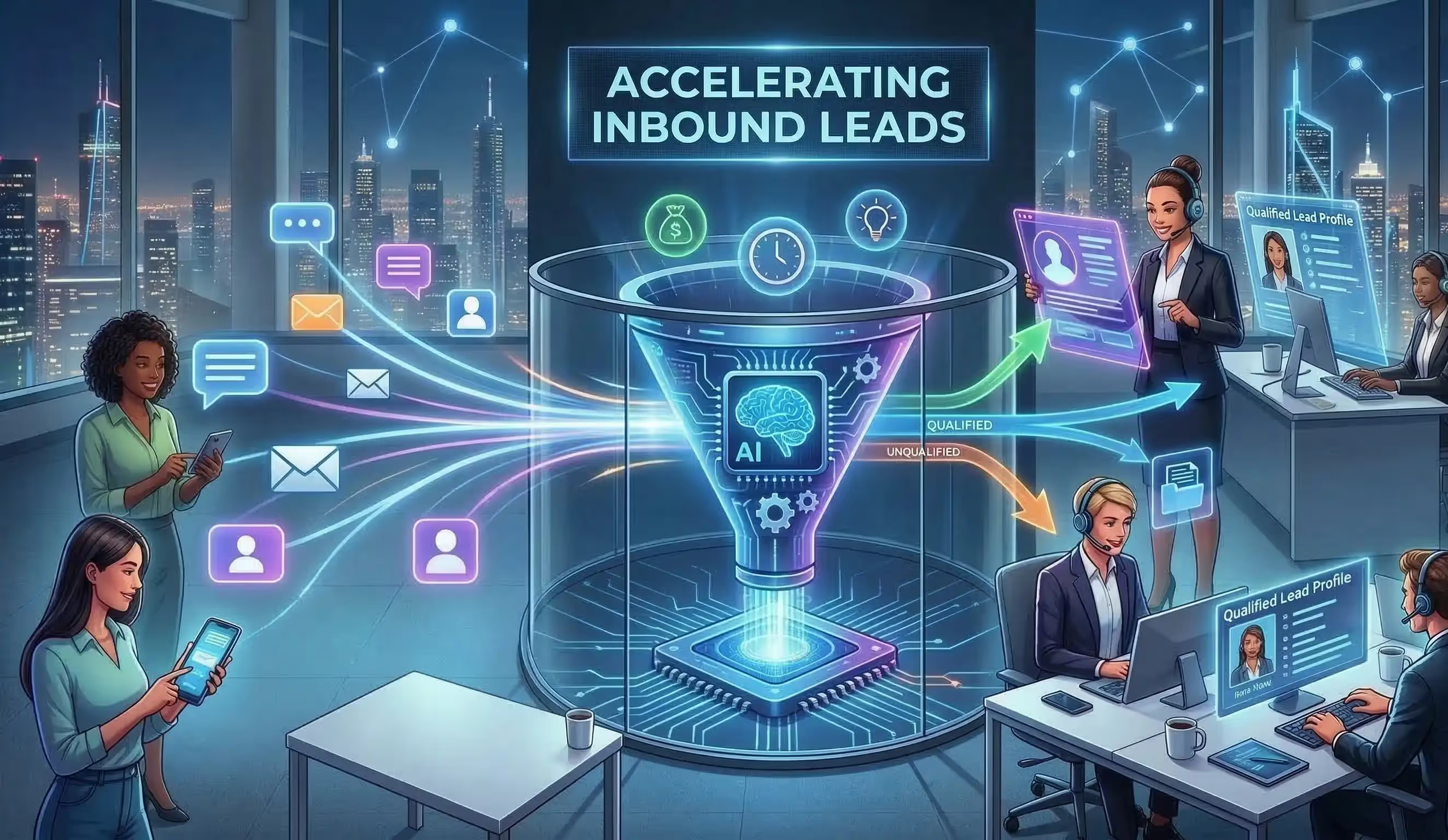
Since it's impossible for a human sales team to be available 24/7 to respond to every message from every channel within seconds, automation is the only viable solution. This is where chatbots and automated workflows become indispensable. An AI-powered bot can act as your first line of defense, providing an immediate and welcoming response the moment a lead makes contact. This instant acknowledgment satisfies the customer's need for an immediate reply, confirming their message has been received and assuring them that they will be helped shortly. This automated first touchpoint not only improves the customer experience but also buys your sales team valuable time to review the inquiry and step in with a personalized, human interaction when they are ready. To make that handoff even smoother, businesses can use an AI chatbot for lead qualification to respond instantly and guide prospects toward the right next step.
Step-by-Step Guide on How to Qualify Inbound Leads
Once you have a steady flow of inbound leads, the next critical step is qualification. Not every inquiry represents a genuine sales opportunity. The process of how to qualify inbound leads is about protecting your sales team's most valuable asset: their time. By systematically evaluating each lead against a set of predefined criteria, you ensure that your team only focuses its energy on prospects who have a real potential to become customers. In 2026, this process is powered by a blend of proven methodologies and advanced technology. Well-established frameworks like BANT are still highly relevant for structuring this evaluation.
- Budget: Does the prospect have the financial resources to purchase your product or service?
- Authority: Is the person you are communicating with the decision-maker, or do they have influence over the decision-making process?
- Need: Does the prospect have a clear pain point or challenge that your solution can solve?
- Timeline: How urgently does the prospect need to find a solution? Are they looking to buy this quarter or just researching for next year?
Gathering Data Through Conversational Commerce
The days of forcing potential customers to fill out long, tedious web forms are over. In 2026, lead qualification is a dynamic, conversational experience. Instead of presenting a wall of fields to fill out, you can gather the necessary data seamlessly within a live chat or WhatsApp conversation. By asking a few strategic, open-ended questions, you can extract the qualification criteria you need without making the prospect feel like they're being interrogated. For instance, a chatbot or sales agent could ask, "What specific challenge are you hoping to solve with a new platform?" to gauge their need. A follow-up like, "How many team members would need access?" can help estimate their company size and potential budget. This conversational approach feels more natural and human, leading to higher completion rates and better quality data.
Setting Up Automated Qualification Workflows in Trengo
This is where the power of a unified communication platform truly shines. The most effective way to manage and qualify leads at scale is by leveraging a combination of a multichannel shared inbox and intelligent automation. Trengo provides the perfect solution to operationalize your lead qualification process. Here’s how it works:
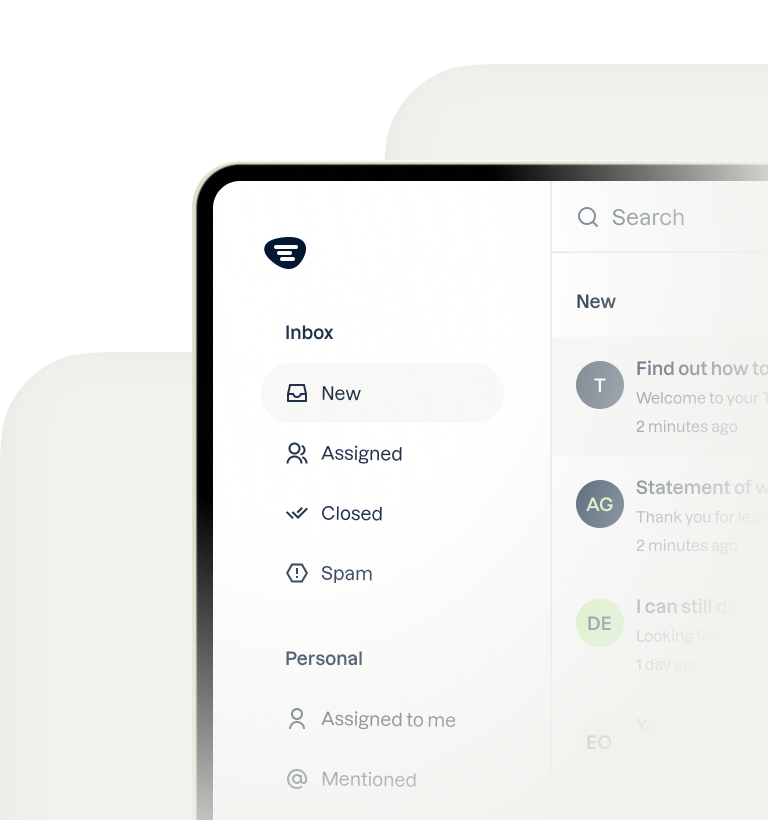
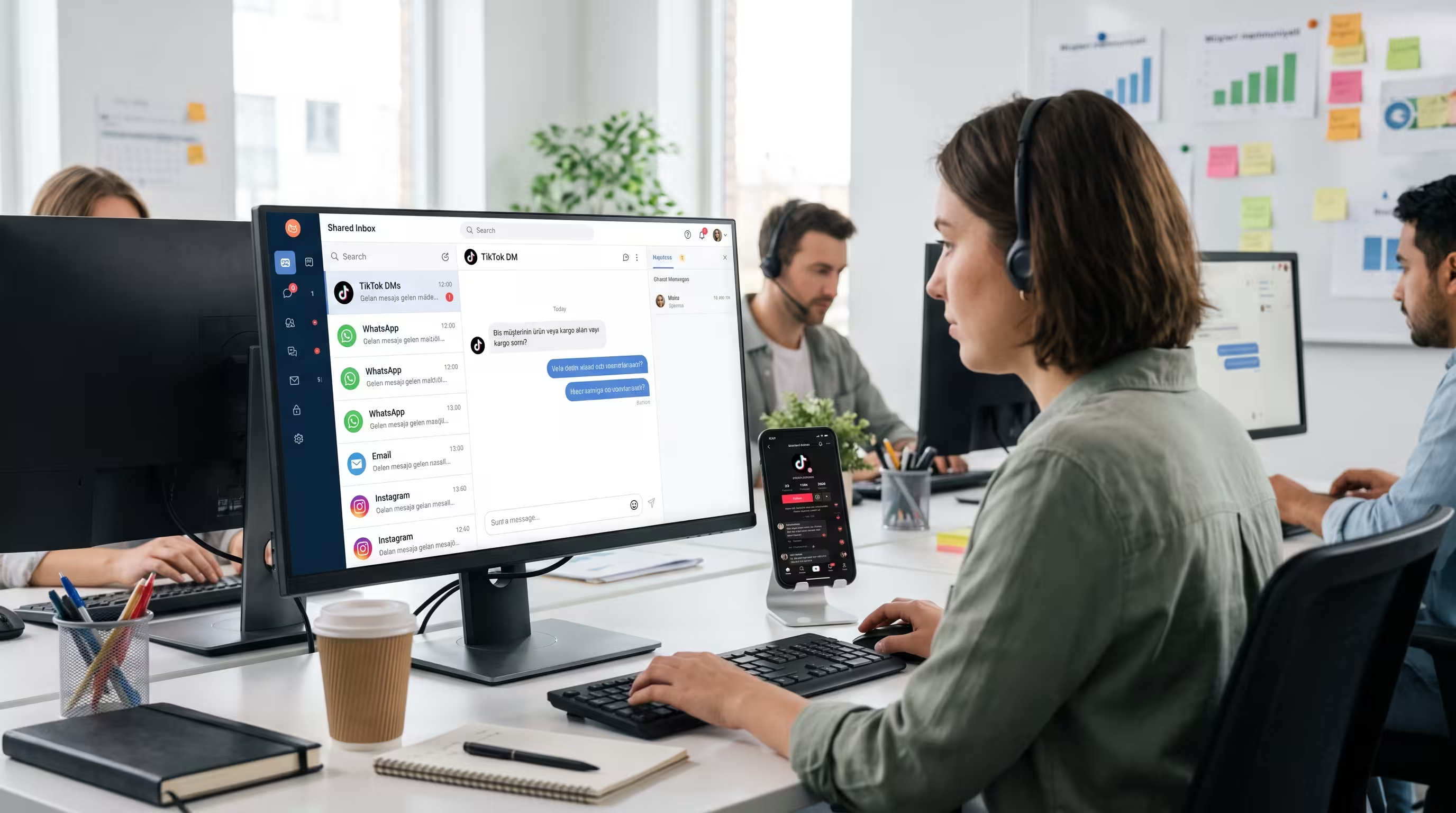
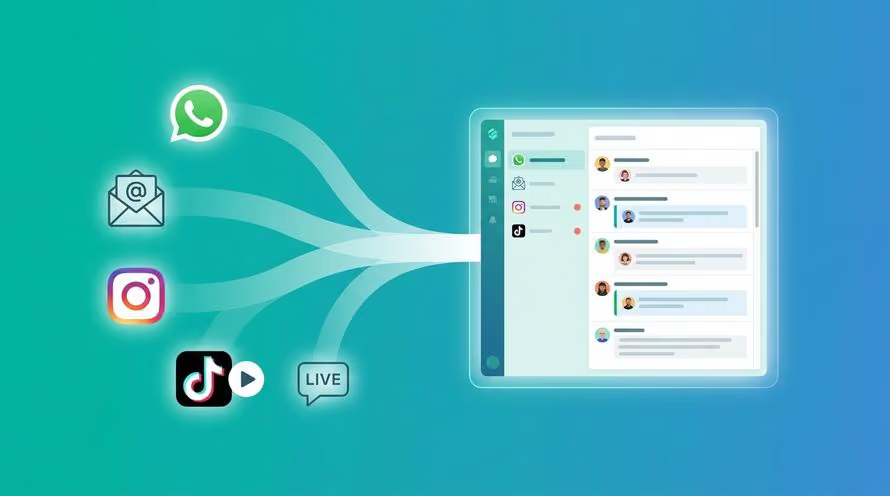
First, Trengo's Omnichannel inbox aggregates every single inbound lead into one unified view. Whether a message comes from WhatsApp, Instagram, email, or your website's live chat, it all lands in the same place. This eliminates communication silos and ensures no lead ever gets lost. It breaks down the walls between your marketing team, who generates the lead, and your sales team, who needs to act on it, by making the entire conversation history visible in one dashboard.
Next, you can deploy Trengo’s Flowbots, a powerful form of customer support automation. The moment a new inbound lead sends a message, a Flowbot can be triggered to instantly engage them. The bot can be configured to ask your key BANT qualification questions conversationally. For example, it can ask about company size, the specific problem they're trying to solve, and their timeline for implementation. The prospect's answers are automatically collected and tagged within the conversation.
Finally, based on the answers provided, Trengo's routing capabilities take over. If the Flowbot determines the lead is highly qualified (e.g., a large company with an urgent need), it can automatically route the conversation directly to the most appropriate sales representative's queue and send them an instant notification. Unqualified inquiries or support questions can be routed to a different team or handled with an automated response. This powerful blend of multichannel communication and AI-driven efficiency ensures that your most valuable leads get a VIP experience with a rapid human response, maximizing your team's effectiveness and driving more revenue.
Frequently Asked Questions
How to determine if a lead is qualified?
A lead is determined to be qualified when they match your ideal customer profile (ICP) and have a clear need, budget, authority, and timeline (BANT) for purchasing. You can confirm this by asking targeted questions during the initial interaction and using lead scoring systems to assign value based on their responses and behavior.
What is the 5 minute rule for leads?
The 5-minute rule is a sales benchmark stating that a business should respond to an inbound lead within five minutes of their initial inquiry. Data from 2026 continues to show that adhering to this rule dramatically increases the chances of converting the lead, as their interest and engagement are at their absolute peak during this window.
How to get inbound leads?
Getting inbound leads involves creating and distributing valuable content that naturally attracts your target audience. Key strategies include investing in search engine optimization (SEO) so people can find you, maintaining an active social media presence, and making it easy for website visitors to start a conversation through channels like live chat or WhatsApp.
How to qualify an inbound lead?
You qualify an inbound lead by systematically collecting data to verify their intent and fit for your product. This is done by asking questions about their budget, authority, needs, and timeline. Using a platform like Trengo, this process can be automated with chatbots that ask these questions and then route only the qualified prospects to your sales team.


Let's meet
Grow your business with loyalty. Bring all of your customer contact into one, single platform to unlock delight at every step of the way.