Best Sales Pipeline Software for 2026 | Trengo

Try Trengo for Free

Trengo unites WhatsApp, email, web, social media, and calls in one inbox, saving your team hours of repetitive work and ensures no conversation is ever lost
The Best Sales Pipeline Software for Communication-Driven Teams in 2026
Summary
The best sales pipeline software for 2026 focuses on managing conversations, not just tracking deals. For modern sales teams, success is determined by the speed and quality of their multichannel communication with leads across platforms like email, WhatsApp, and live chat. This article explores why a communication-first approach is crucial and highlights how tools built around a shared inbox are essential for driving sales pipeline velocity and closing more deals.
TL;DR
- A sales pipeline is a visual representation of the buyer's journey, but its success is driven by the quality of conversations at each stage.
- Traditional CRMs are great for data storage but often create communication silos, leading to slow response times and lost leads.
- Essential features in modern sales pipeline software include visual deal tracking, a unified multichannel communication hub, team collaboration tools, and smart automation.
- Trengo centralizes all customer conversations from channels like email, WhatsApp, and social media into one shared inbox, empowering sales teams to collaborate effectively.
- The five key stages of a sales pipeline are Prospecting, Qualification, Meeting, Proposal, and Closing, with each stage heavily reliant on clear communication.
- For communication-driven teams, a platform like Trengo is superior to traditional sales pipeline CRM software because it puts dialogue at the center of the sales process.
What is a Sales Pipeline? And Why It’s More Than Just a CRM Board
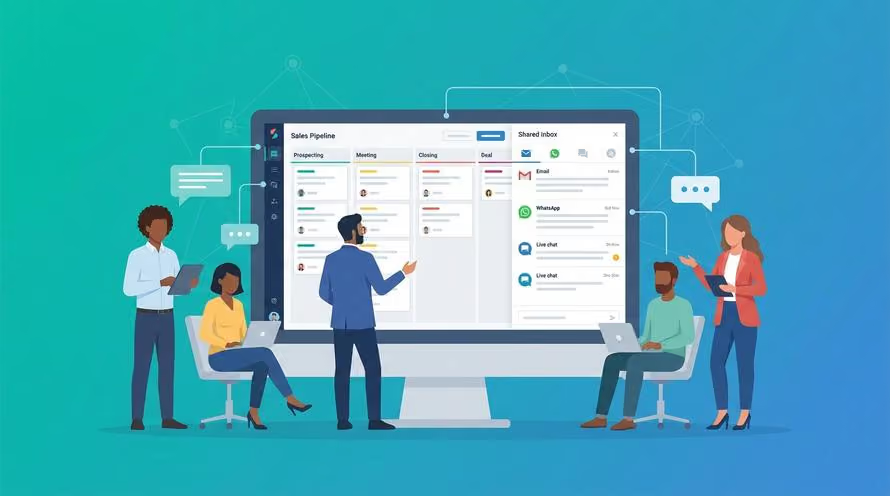
A sales pipeline is a visual tool that organizes and tracks potential buyers as they move through different stages of the sales process. It provides a clear overview of every deal a sales representative is working on, from initial contact to the final sale. But here's where many businesses get it wrong: a pipeline isn't just a static Kanban board for data entry. According to a report in the Harvard Business Review, firms that tried to contact potential customers within an hour of receiving a query were nearly seven times as likely to qualify the lead as those that tried even an hour later. This proves that the health of your sales pipeline is directly tied to the quality and speed of your communication. Each stage represents a series of conversations, and the tools you use should be built for dialogue, not just data.
Every conversation in one inbox
Bring email, WhatsApp, social, and voice together so your team replies faster — without switching tabs.
The 5 Essential Stages of a Sales Pipeline
To truly understand how to manage your sales process, it's crucial to know the typical stages. While the specifics can vary, most pipelines follow a five-stage framework. The key is to view each stage through the lens of the critical communication activities that drive a deal forward.
Stage 1: Prospecting & Lead Capture
This is the starting point where potential customers enter your world. Leads can come from anywhere: a form on your website, a direct message on Instagram, an inquiry via WhatsApp, or an email. The primary communication challenge here is capturing every single inquiry from these disparate channels without letting anything slip through the cracks. If your team has to manually check five different apps to find new leads, you're already behind.
Stage 2: Lead Qualification
Once a lead is captured, the next step is to determine if they are a good fit for your product or service. This stage is almost entirely conversational. Your sales reps need to ask the right questions via email, chat, or a call to understand the lead's needs, budget, and authority. The inefficiency of switching between a CRM, an email client, and a social media app just to talk to one person can slow down the entire process and create a disjointed experience for the prospect.
Stage 3: Meeting & Proposal
Qualified leads move on to a more detailed discussion, often a demo, consultation, or the review of a formal proposal. This stage involves significant back-and-forth communication to schedule meetings, answer detailed questions, and tailor the offer. Quick, clear follow-ups are non-negotiable here. A delay in responding to a question about your proposal could give a competitor the opening they need.
Stage 4: Negotiation & Follow-up
This is a high-stakes communication phase where details are finalized and objections are handled. Often, multiple people from your team need to be involved. A sales manager might need to approve a discount, or a technical expert might need to weigh in on a specific feature question. For this to work seamlessly, the entire team needs full visibility into the conversation history without relying on messy email forwards or Slack threads.
Stage 5: Closing the Deal
Once the deal is won, communication doesn't stop. A smooth handoff to an account manager or onboarding specialist is critical for customer satisfaction and retention. This requires a complete, easily accessible record of all pre-sale conversations, promises, and agreements. The new team member should be able to pick up the conversation without asking the customer to repeat themselves.
Key Features to Look For in Sales Pipeline Management Software
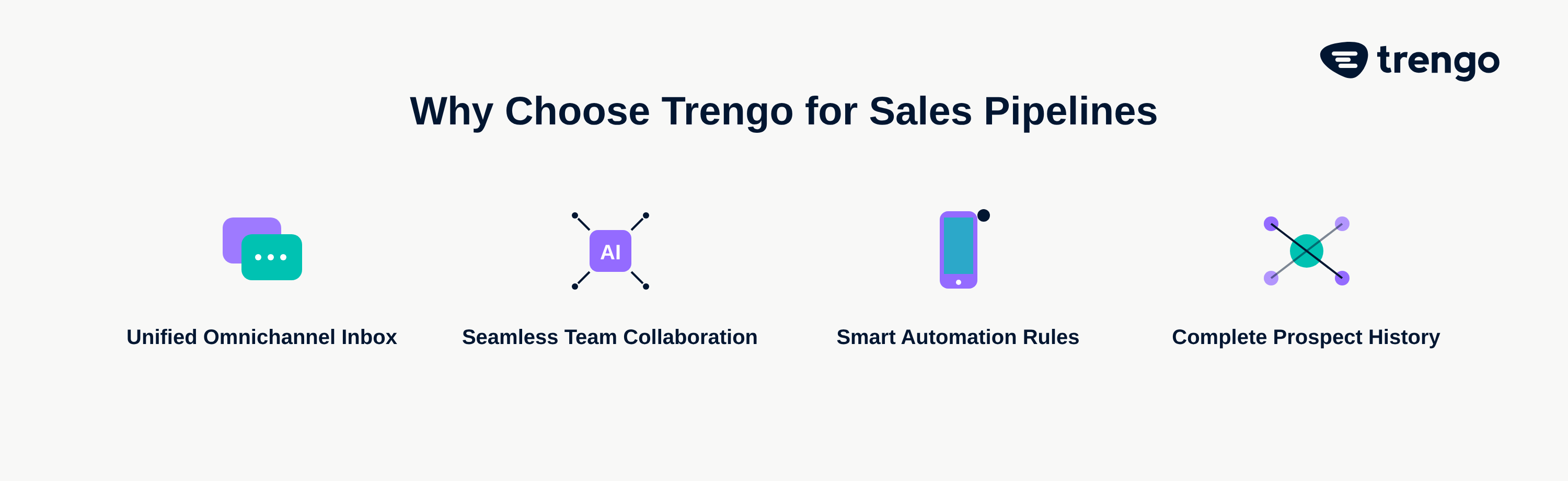
When evaluating sales pipeline management software, it's easy to get lost in a long list of features. To find the best solution for a modern, communication-driven team, focus on these four critical capabilities.
Visual Deal Tracking
First, the basics. Any good sales pipeline tracking software must provide a clear, visual way to see where every deal stands. Kanban-style boards with drag-and-drop functionality are the industry standard for a reason: they offer an at-a-glance overview of your entire pipeline, helping you forecast revenue and identify bottlenecks.
Multichannel Communication Hub
This is the game-changer. Your software shouldn't just store contact information; it should be the central hub for all your sales conversations. The best sales pipeline software unifies every customer interaction from email, WhatsApp, Instagram DMs, and live chat into a single, chronological thread per contact. A platform built for effective multichannel communication eliminates context-switching and ensures no lead is ever ignored, regardless of how they reached out.
Powerful Team Collaboration
Sales is a team sport, and your software should reflect that. Look for features that allow reps to collaborate directly within a conversation thread. The ability to tag a colleague with an @mention for input, leave private internal notes on a lead's profile, or assign conversations to the right expert is crucial for closing deals faster. This ends the chaos of internal communication happening in separate tools.
Smart Automation
Effective automation goes beyond just logging activities. Your software should help you in automating communication to improve response times and consistency. This includes setting up auto-replies for new inquiries, creating rules to automatically route leads from specific channels to the right sales reps, and even using chatbots to qualify leads on your website 24/7 before they ever speak to a human.
Juggling messages across five apps?
Trengo unifies every channel in one shared inbox.
How Trengo Powers Your Sales Pipeline with a Shared Inbox
Trengo is designed from the ground up to solve the communication challenges that cripple modern sales teams. While traditional sales pipeline CRM software focuses on data fields, Trengo focuses on the dialogues that actually drive revenue. Here’s how our platform acts as the engine for your sales pipeline.
Unify All Your Sales Channels in One View
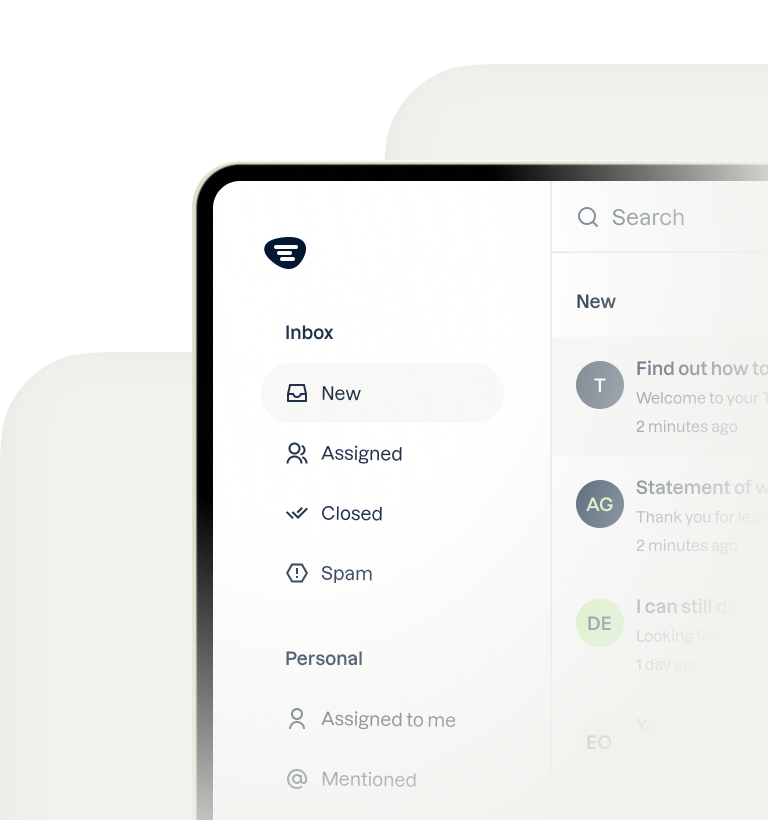
At the heart of this approach is Trengo's Omnichannel inbox, which consolidates every lead conversation into one place. Imagine a lead contacts you via the WhatsApp Business API on your website, then follows up with an email. In Trengo, both messages appear in the same unified thread, giving your sales reps complete context without having to switch tabs.
Collaborate on Hot Leads to Close Deals Faster
When a lead asks a tough question during a negotiation, your sales rep doesn't need to forward an email or start a separate Slack chat. They can simply @mention a manager or a product specialist directly in the conversation thread in Trengo. The colleague gets notified, can see the entire conversation history, and can leave an internal note with the answer—all without the customer ever knowing.
Never Miss a Follow-Up with Smart Automation Rules
Trengo’s rules and automation features ensure your team is always responsive. You can create simple yet powerful rules to streamline your workflow. For example: "If a new message arrives on our 'Sales' WhatsApp number and contains the word 'pricing', automatically assign it to a senior sales rep and apply the 'Hot Lead' label." This ensures high-priority leads get instant attention.
Get a Complete Picture of Every Prospect
With Trengo, every member of your sales team has a complete, chronological history of every interaction with a prospect. When a rep is out of office, another team member can step in, read the entire history in seconds, and confidently continue the conversation. This seamless experience not only helps you close deals but also builds trust with your future customers.
Frequently Asked Questions

The best software depends on your team's primary challenge. If your biggest problem is data management and reporting, a traditional CRM might suffice. However, if your sales process is slowed down by disorganized, multichannel conversations and slow response times, then the best software is a communication-focused platform like Trengo that unifies all your sales channels into one shared inbox.
No, but they are closely related. A Customer Relationship Management (CRM) system is a broad platform for storing and managing all customer data and history. A sales pipeline is a specific feature or process, often found within a CRM, that visually tracks active deals through the sales stages. Trengo provides the critical communication layer that makes both your pipeline and your CRM more powerful and effective.
A sales funnel represents the customer's journey from awareness to purchase from a marketing perspective, focusing on the quantity of leads and conversion rates at each stage. A sales pipeline represents the specific actions and deals a salesperson is actively managing. The funnel is about numbers and probabilities, while the pipeline is about a salesperson's concrete activities and deals.
Yes, some tools offer free plans, but they are typically very limited in features, user seats, and the number of contacts you can manage. These can be a starting point for solo entrepreneurs. However, for a growing team, the best approach is to use a free trial of a powerful platform to experience its full capabilities. Trengo's trial allows you to see the impact of a communication-first platform on your sales process before committing.




Let's meet
Grow your business with loyalty. Bring all of your customer contact into one, single platform to unlock delight at every step of the way.