Types of customer service: a complete guide for 2026


Try Trengo for Free

Trengo unites WhatsApp, email, web, social media, and calls in one inbox, saving your team hours of repetitive work and ensures no conversation is ever lost
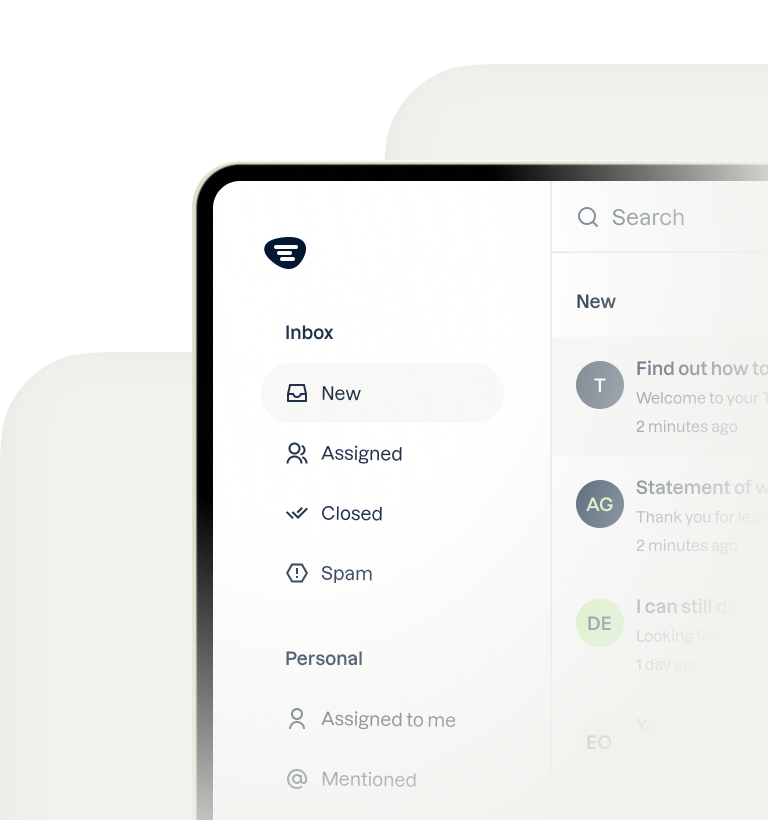
Customer expectations have changed a lot over the past decade. What once worked with simple phone support now needs a modern, multi-channel approach that blends technology with human expertise.
Today, customers expect quick answers, personalised service, and smooth experiences across every touchpoint. Whether they reach out on social media, by email, through live chat, or with a phone call, they want consistent and reliable support that solves their problems fast.
In this blog, we will look at the main types of customer service available in 2026 and explain how each one helps businesses keep customers happy while improving efficiency. From traditional face-to-face support to advanced AI solutions, we will explore how different methods create stronger customer experiences.
What is customer service, and why is it so important?
Customer service covers every interaction between a business and its customers, from the first question before a purchase to the support offered long after the sale. It includes pre-sales guidance, onboarding help, regular check-ins, and post-purchase follow-up. When done well, it builds trust, keeps people loyal, and drives business growth.
According to Salesforce, 88% of customers are more likely to make another purchase after a positive service experience. That is why companies that prioritise customer service see higher retention rates, stronger word-of-mouth referrals, and greater customer lifetime value.
As Jeff Bezos once said, “We see our customers as invited guests to a party, and we are the hosts. It’s our job every day to make every important aspect of the customer experience a little bit better.”
Great customer service also gives businesses direct insights into what customers want. Each interaction highlights preferences, product feedback, and opportunities for improvement. These insights help businesses refine their offers and create more value for their customers.
Also, strong customer service saves money. Keeping existing customers satisfied reduces churn, lowers acquisition costs, and increases overall profitability. Retaining customers through quality service is far more cost-effective than focusing only on finding new ones..
The different 10 types of customer service
When you understand the different types of customer service, you can build a support strategy that actually fits what your customers want. Each type has its own strengths and works best in certain situations. By knowing how they all work, you can choose the mix that helps you serve your customers more effectively and keep them coming back.
1. Phone support
Phone support is still the go-to option when customers need fast, personal help. A phone call lets you have a real conversation, pick up on tone and emotion, and solve complex issues in one interaction. Customers often turn to phone support when there is an urgent problem like a billing error, a service outage, or a warranty claim that cannot wait.
The benefit for your business is that agents can clarify details instantly and walk customers through solutions step by step. But phone support requires investment in trained staff and reliable systems, and long wait times can quickly create frustration.
2. Email support
Email works best when issues need clear explanations, supporting documents, or detailed step-by-step instructions. Customers can write out their concerns without the pressure of real-time communication, and your team can take the time to research and respond with accurate, structured solutions.
For example, warranty claims, account verification, or technical troubleshooting with screenshots often fit well with email support. It also creates a written record that both sides can reference later. The challenge is that response times can be slower, which can frustrate customers who want immediate answers.
3. Live chat support
Live chat combines the speed of real-time responses with the convenience of written communication. Customers can ask questions while browsing your website, track orders, or troubleshoot issues without making a call. Many chat platforms now allow file sharing and even screen sharing, which makes it easier to solve problems quickly.
You can also improve efficiency since one agent can handle multiple chats at once. This makes live chat ideal for handling common questions like shipping times, password resets, or product availability. However, when the issue is too complex, the chat may still need to be escalated to phone or email support.
4. Social media support
Social media has become a frontline channel for customer service. Customers often reach out on platforms like Facebook, Instagram, Twitter, or LinkedIn to ask questions, leave reviews, or share complaints. Because these conversations are public, your response time and tone directly affect your brand reputation.
Handled well, social media support can do more than fix issues. It can turn unhappy customers into loyal fans, showcase your commitment to service, and even build a community around your brand. For example, responding quickly to a complaint on Twitter not only helps the customer but also shows hundreds of other potential customers that you care.
The challenge is that mistakes are also public. A slow or poorly worded response can spread quickly and harm your image. Social media teams need clear guidelines on tone, timing, and when to move conversations into private channels for sensitive details..
5. Self-service support
Self-service tools give customers control and convenience. With resources like FAQs, help articles, video tutorials, and searchable knowledge bases, customers can find answers instantly without waiting for an agent. This is especially useful for common issues like tracking orders, resetting passwords, or checking return policies.
For your business, strong self-service options reduce repetitive questions and free up agents to focus on more complex problems. Customers also appreciate the independence and 24/7 access.
The key is keeping resources accurate, updated, and easy to navigate. If your self-service library is poorly organised or outdated, it frustrates customers and often leads to more support requests. Regular maintenance is essential to keep it effective.
6. Video support
Video support brings the benefits of face-to-face interaction into digital customer service. It is particularly helpful for technical troubleshooting, product demos, or scenarios where seeing the problem makes it easier to fix. For example, a customer struggling to install equipment can show the issue live, and an agent can walk them through the steps in real time.
Screen sharing makes video even more powerful by letting agents view exactly what the customer sees. This reduces confusion, speeds up resolutions, and builds trust. Many customers also value the personal connection of speaking to a real person on video.
The drawback is that not all customers have the technology or bandwidth to use video. It is best treated as a specialised channel for complex issues rather than a standard option for all inquiries. Agents also need proper training to communicate clearly and professionally on camera.
7. In-person support
In-person support still plays an important role, especially in industries where face-to-face interaction matters. Customers visiting retail stores, service centers, or having a technician come onsite get the benefit of hands-on help and personal attention. This works well for complex products that need demonstration, installations, or services that cannot be delivered remotely.
The value comes from complete communication—body language, tone, and immediate feedback all make it easier to understand the issue and provide a solution. For example, a customer struggling with a home appliance may feel more confident when a technician walks them through the repair in person.
The challenge is that in-person support requires staff, physical locations, and operational costs, and it is harder to scale compared to digital channels.
8. Community forums
Community forums create a space where customers help each other. They can ask questions, share tips, and learn from others who have faced similar issues. This peer-to-peer support not only reduces the workload on your team but also builds a sense of community around your brand.
For example, software users often turn to community forums for troubleshooting advice or creative ways to use a feature. Experienced members add value with practical insights, and the 24/7 nature of forums means customers can find answers even when your support team is offline.
The key is moderation. Without oversight, forums can spread misinformation or negativity. Successful forums usually have active community managers and integration with official support channels for cases that need expert handling.
9. Chatbot and AI support
AI-powered chatbots provide instant, scalable customer support that handles routine inquiries, guides customers through common processes, and escalates complex issues to human agents. Modern chatbots use natural language processing to understand customer intent and provide relevant, helpful responses.
Chatbots offer 24/7 availability, consistent response quality, and the ability to handle unlimited simultaneous conversations. They excel at routine tasks like order tracking, appointment scheduling, and FAQ responses while freeing human agents for complex problem-solving.
Trengo's AI capabilities seamlessly integrate chatbot functionality with human agent support, ensuring smooth handovers when issues require personal attention. The platform's omnichannel approach means AI support works consistently across WhatsApp, Instagram, Messenger, email, and live chat.
However, chatbots may struggle with complex or nuanced issues requiring empathy, creativity, or detailed problem-solving. Customer frustration can increase if chatbots fail to understand requests or provide irrelevant responses.
10. Proactive support
Proactive support is about reaching out before customers run into problems. This can include sending reminders about upcoming maintenance, sharing product usage tips, or notifying customers about updates or known issues. By anticipating needs, businesses show customers that they care about their success and not just their problems.
For example, an internet provider that alerts customers to a planned outage before it happens avoids frustration and builds trust. Proactive support not only improves satisfaction but also reduces ticket volume since fewer customers need to report issues.
The key to success is timing and relevance. Messages need to be helpful, not intrusive. When done right, proactive support strengthens relationships and keeps customers engaged long-term.
Traditional vs modern customer service channels
The evolution from traditional to modern customer service reflects changing technology capabilities and customer expectations. Understanding these differences helps businesses balance proven approaches with innovative solutions that meet contemporary demands.
Traditional customer service characteristics
Traditional customer service is what most people grew up with. It usually happens face-to-face, over the phone, or even by mail. These methods focus on personal interaction, detailed conversations, and building relationships through direct contact.
This approach works especially well for complex problems that need empathy, negotiation, or careful explanation. For example, a phone call allows back-and-forth clarification, while in-person visits give customers the chance to fully explain their concerns and get immediate feedback. Customers also know exactly who they are speaking to, which makes it easier to build trust with a specific agent or location.
The downside is that traditional service often costs more to run, takes longer to resolve issues, and is limited by working hours or location. If a customer needs help at night or lives far away, it can be difficult to get support quickly.
Modern customer service innovations
Modern customer service uses technology like AI, live chat, and multiple digital channels to make support faster and more convenient. With digital transformation, businesses can now offer 24/7 assistance and instant responses across platforms like websites, apps, email, and social media.
Self-service options such as FAQs, knowledge bases, and chatbots let customers find answers on their own, while AI-powered tools handle routine questions like order tracking or account updates. These modern systems can even use customer data to personalise the experience, suggesting solutions or anticipating needs before the customer asks.
For businesses, digital support is more cost-effective and easier to scale. Unlike traditional methods that require more staff and resources, digital channels can handle thousands of requests at once without significantly increasing costs. This makes modern customer service not only faster for customers but also smarter for businesses.
Hybrid approach benefits
The best customer service strategies mix both traditional and modern methods to meet the needs of different customers. For example, younger customers often prefer quick digital options like chatbots, WhatsApp, or social media messages. Older customers are more comfortable picking up the phone or visiting a service center in person.
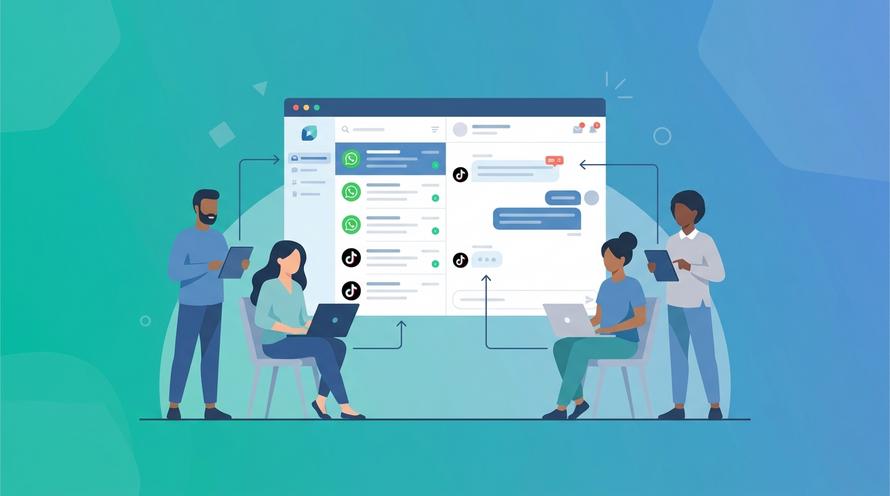
Trengo makes this balance simple by bringing everything into one platform. A customer can start with a chatbot on your website, move to live chat for more details, and then finish the conversation on a phone call without repeating their issue. All the context follows them, so the experience feels smooth and connected.
This approach allows businesses to solve simple questions instantly with AI or chat while keeping complex or sensitive issues for human agents. The result is faster support, happier customers, and more efficient use of staff time.
How Trengo brings all types together
Trengo's comprehensive customer service platform demonstrates how businesses can effectively integrate multiple service types into a cohesive, efficient system. Rather than forcing customers to adapt to rigid support structures, Trengo adapts to customer preferences while maintaining operational efficiency.
Unified omnichannel experience
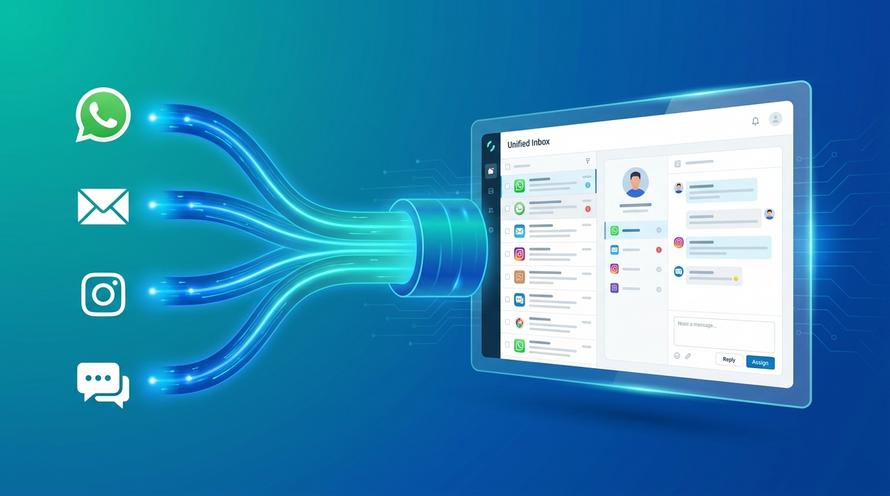
Trengo's greatest strength lies in its truly unified inbox that consolidates WhatsApp, Instagram, Messenger, email, live chat, and voice communications into a single interface. This integration means agents can manage all customer interactions from one platform while maintaining context and conversation history across channels.
Customers can start conversations on their preferred platform and continue on different channels without repetition or context loss. A customer might initiate contact via Instagram DM, continue through WhatsApp, and complete resolution via email, all while maintaining seamless conversation flow.
The omnichannel approach eliminates the frustration of explaining issues multiple times to different agents or departments. Customer information, interaction history, and resolution progress remain accessible regardless of communication channel changes.
Intelligent automation and human touch balance
Trengo's AI capabilities handle routine inquiries and guide customers through common processes while seamlessly escalating complex issues to human agents when necessary. This balance ensures efficiency without sacrificing service quality or customer satisfaction.
The platform's smart routing system directs conversations to the most appropriate agents based on expertise, availability, and customer needs. AI handles initial triage, information gathering, and simple resolutions, while human agents focus on complex problem-solving and relationship building.
Automation includes appointment scheduling, order tracking, FAQ responses, and process guidance, freeing human agents to address issues requiring empathy, creativity, and detailed problem-solving skills.
Self-service integration
Trengo integrates self-service capabilities directly into conversation flows, enabling customers to access knowledge base articles, video tutorials, and documentation without leaving their preferred communication channel. This approach provides immediate answers while maintaining the option for human assistance.
Interactive elements guide customers through troubleshooting steps, product setup, and common processes. If self-service resources don't resolve the issue, customers can immediately escalate to human agents with full context about attempted solutions.
Analytics and continuous improvement
Comprehensive analytics track performance across all service types and channels, providing insights into customer preferences, resolution effectiveness, and operational efficiency. This data enables continuous optimisation of service delivery and resource allocation.
Performance metrics include response times, resolution rates, customer satisfaction scores, and channel effectiveness. Teams can identify trends, optimise workflows, and make data-driven decisions about service improvements.
The analytics platform also tracks AI performance, helping businesses understand where automation succeeds and where human intervention remains necessary.
Final words
Customer service is no longer about choosing between traditional or digital support. Modern businesses need to create strategies that meet customers where they are, whether that is on the phone, through live chat, social media, or AI-powered tools. By blending these different service types, companies can offer fast responses, build stronger relationships, and stay competitive in an increasingly crowded market. The businesses that succeed are the ones that view customer service as an investment in long-term loyalty rather than a short-term cost.
This is where Trengo comes in. Instead of juggling multiple tools, platforms, and disconnected channels, Trengo gives you one place to manage them all. You can automate routine inquiries with AI chatbots, empower human agents to focus on complex issues, and maintain a consistent experience across every customer touchpoint. The result is smoother workflows for your team and better experiences for your customers.
If you are serious about improving customer satisfaction and building lasting relationships, now is the time to rethink your service strategy. Look closely at what your customers expect, choose the right mix of service types, and use a platform like Trengo to bring it all together.
By investing in comprehensive support today, you not only reduce costs and increase efficiency but also position your business as one that truly listens, responds, and cares. That is the kind of service that keeps customers coming back and turns them into loyal advocates for your brand.
Frequently Asked Questions (FAQs)
How many types of customer service are there?
There are several types of customer service, including face-to-face, phone, email, live chat, social media, omnichannel, personalised, and automated or AI-powered customer support. Each type serves different customer needs and channels of communication, offering flexibility in how businesses engage with their customers.
Which type of customer service is most effective?
The most effective type depends on the business and customer preferences, but omnichannel customer service is widely regarded as the best. It integrates multiple channels—such as chat, email, social media, and phone—into one seamless experience, allowing customers to switch channels without losing context or repeating information.
What is social media customer service?
Social media customer service involves using platforms like Facebook, Twitter, Instagram, and LinkedIn to respond to customer inquiries, complaints, and feedback. It allows businesses to engage publicly and quickly with customers, building transparency and brand loyalty.
What is omnichannel customer service?
Omnichannel customer service unifies all communication channels into a single system, ensuring consistent messaging and personalised experiences regardless of whether customers interact via email, chat, phone, or social media. This approach reduces friction and improves customer satisfaction by providing seamless transitions between channels.
What is personalised customer service?
Personalised customer service tailors interactions based on individual customer data, preferences, and history. It uses information such as past purchases, preferences, and previous interactions to create a more relevant and engaging experience, helping to foster loyalty and trust.
What is automated or AI-powered customer service?
Automated or AI-powered customer service uses technologies like chatbots, AI agents, and automated workflows to handle routine inquiries and tasks. These tools provide fast, accurate responses around the clock and support human agents by managing repetitive tasks. Trengo's AI Helpmate is an example that seamlessly integrates automation with live support.
How do businesses decide which type of customer service to focus on?
Businesses consider factors like customer demographics, channel preferences, available resources, and industry standards. They often adopt a mix of service types but focus on those that deliver the best customer experience and align with their brand values and operational capabilities.
How can CRM systems improve various customer service types?
CRM systems enhance customer service by centralising customer data from all interaction points, enabling personalised, informed support across different channels. Trengo integrates CRM capabilities to combine chat, social media, email, and phone data, empowering teams to deliver consistent, context-rich service.
Can automation tools handle both proactive and reactive service?
Yes, automation tools can support proactive service by sending follow-ups, reminders, or promotional messages and manage reactive service by responding instantly to inbound queries. Trengo’s automation features allow businesses to balance these approaches for a comprehensive customer support strategy.
How does Trengo support all types of customer service (chat, social media, email, phone) in one platform?
Trengo unifies communication across chat, WhatsApp, Instagram, email, phone, and more into one shared inbox. This consolidation enables teams to manage all interactions efficiently without switching tools, improving responsiveness and customer satisfaction across all touchpoints.
Can Trengo help businesses balance proactive and reactive customer service strategies?
Absolutely. Trengo’s platform allows businesses to automate proactive outreach like reminders and follow-ups, while also managing incoming customer requests in real time. This flexibility helps companies deliver timely support and maintain engagement proactively.
How does Trengo make self-service (e.g., knowledge base, chatbots) work alongside human support?
Trengo integrates self-service options such as AI Helpmate chatbots and knowledge base articles to answer common questions instantly. When issues require human expertise, Trengo seamlessly escalates requests to live agents, ensuring customers receive timely and relevant assistance.
How does Trengo ensure consistent service quality across all service types?
Trengo maintains consistent service quality by centralising all customer interactions and offering tools like automation, AI suggestions, shared inboxes, and performance analytics. This helps teams deliver uniform messaging, timely responses, and a cohesive experience regardless of the channel or service type.

Let's meet
Grow your business with loyalty. Bring all of your customer contact into one, single platform to unlock delight at every step of the way.