What is Lead Management? Process, Stages & Systems


Try Trengo for Free

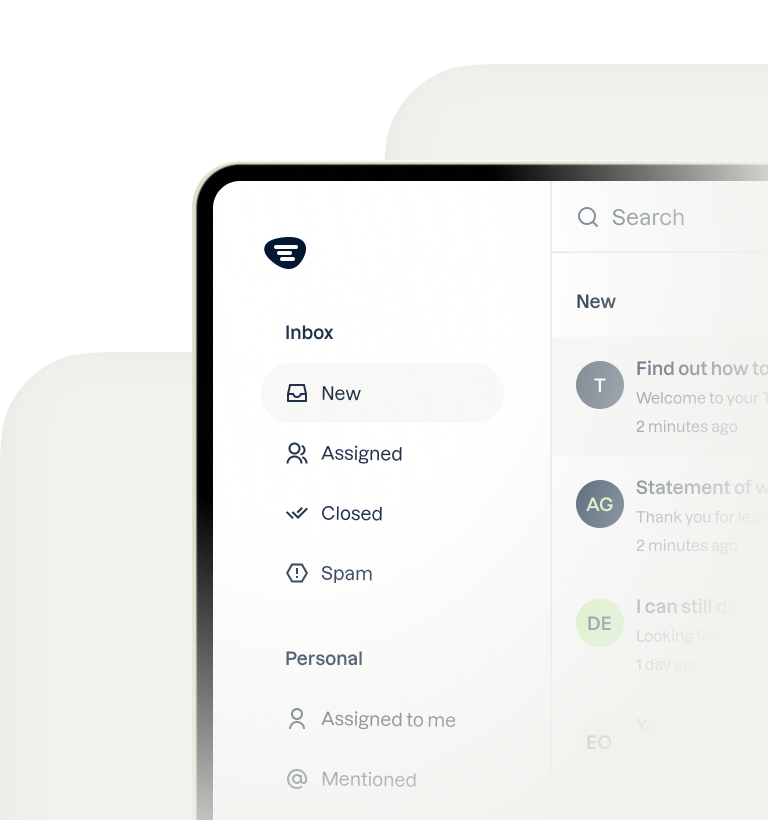
Trengo unites WhatsApp, email, web, social media, and calls in one inbox, saving your team hours of repetitive work and ensures no conversation is ever lost
What is Lead Management, Really?
Summary
Lead management is the comprehensive process of capturing, tracking, qualifying, and nurturing potential customers until they are ready to make a purchase. In 2026, this process is no longer about static spreadsheets but about using a dynamic, multichannel system to engage with leads on their preferred platforms. An effective lead management strategy ensures no opportunity is missed, streamlines sales workflows, and ultimately drives significant revenue growth.
TL;DR
- Lead management is the end-to-end process of converting an interested person into a paying customer.
- It involves five key stages: capture, tracking, qualification, distribution, and nurturing.
- Modern lead management must account for multiple communication channels like WhatsApp, email, social media, and live chat.
- Using a lead management system automates repetitive tasks, increasing sales team efficiency and conversion rates.
- Platforms like Trengo unify all lead communication into a single inbox, powered by AI for faster qualification and routing.
- The primary goal is to shorten sales cycles and improve the overall customer experience.
At its core, the lead management process is the systematic journey you create for a potential customer, from their first flicker of interest to the moment they sign a contract. It's the engine of your sales funnel. While this might sound simple, the reality in 2026 is far more complex. Leads no longer come from a single source; they flow in from your website, social media DMs, WhatsApp Business messages, and emails. Trying to manage leads with outdated tools like spreadsheets is like trying to direct city traffic with a whistle—it leads to chaos, missed opportunities, and frustrated sales reps. A modern, systemized approach uses technology to orchestrate every interaction, ensuring every one of your sales leads is engaged promptly and effectively, transforming a disorganized list of contacts into a predictable revenue stream.
Why Effective Lead Management is Crucial for Sales Success
A structured approach to lead management isn't just a "nice to have"; it's a fundamental requirement for any business looking to scale. When you get more leads, the risk of them falling through the cracks increases exponentially without a solid system in place. Implementing a robust process for managing leads provides tangible benefits that directly impact your bottom line.
- Increased conversion rates: By ensuring timely and consistent follow-up, you prevent valuable leads from going cold. A system ensures every lead is tracked and nurtured, maximizing your chances of conversion.
- Improved sales team productivity: Automation handles the repetitive tasks of data entry, lead scoring, and initial follow-up, freeing up your sales team to focus on what they do best: building relationships and closing deals.
- Better customer experience: When you track every interaction, you can provide a seamless and personalized experience. Customers don't have to repeat themselves, and your team has the full context of their journey, which builds trust.
- Enhanced data and analytics: A lead management system provides clear insights into which channels are generating the best leads, how long your sales cycle is, and where bottlenecks exist in your funnel, enabling smarter forecasting.
- Faster sales cycles: By prioritizing the hottest leads and automating key communication steps, you can move potential customers through the sales process more quickly and efficiently.
Every conversation in one inbox
Bring email, WhatsApp, social, and voice together so your team replies faster — without switching tabs.
The 5 Essential Stages of the Lead Management Process
To effectively manage sales leads, it's helpful to break the entire journey down into distinct, actionable stages. This five-step funnel provides a clear framework for moving a contact from initial interest to a sales-ready opportunity.
Stage 1: Lead Capture & Generation
Your lead management process begins the moment a potential customer shows interest. In 2026, lead sources are more diverse than ever. A person might fill out a lead generation form on your website, send a direct message to your Instagram page, start a conversation via live chat, or inquire through WhatsApp. The primary challenge at this stage is to consolidate all these online leads generation sources into a single, manageable system. Without a unified platform, your team is forced to constantly switch between different apps, inevitably leading to slow response times and lost leads.
Stage 2: Lead Tracking & Enrichment
Once a lead is captured, the next step is to track their journey and enrich their profile. This isn't just about noting their name and email. Modern lead tracking software records every interaction, from the web pages they visited before contacting you to the specific questions they asked in a chat. This data is then enriched with additional information, such as their company size, job title, or industry. This creates a comprehensive profile of your crm leads, giving your sales team the crucial context needed to understand their pain points and tailor their pitch effectively.
Stage 3: Lead Qualification & Scoring
Not all leads are created equal. Lead qualification is the critical process of determining which leads are most likely to become customers. A common method is using a lead scoring model, which assigns points to leads based on their demographic information (e.g., job title, company size) and their behavior (e.g., visited the pricing page, downloaded an ebook). This process helps differentiate between a Marketing Qualified Lead (MQL), someone who has shown interest but isn't ready for a sales call, and a Sales Qualified Lead (SQL), someone who is primed for a direct conversation. This prioritization ensures your sales team invests their time in the most promising opportunities for sales prospecting.
Stage 4: Lead Distribution & Assignment
Once a lead is qualified as an SQL, speed is of the essence. The lead needs to be assigned to the right salesperson immediately. Sales lead management systems can automate this distribution based on predefined rules, such as round-robin assignment (evenly distributing leads among the team) or territory-based assignment (assigning leads based on geographic location). The faster a sales rep can make contact with a hot lead, the higher the probability of winning the deal. A streamlined distribution process eliminates manual hand-offs and ensures no qualified lead is left waiting.
Stage 5: Lead Nurturing
Many MQLs are not yet ready to buy. This is where lead nurturing comes in. Instead of discarding them, you build a relationship over time through a carefully planned lead nurturing strategy. This involves sending them valuable content, personalized follow-up emails, and relevant updates that keep your brand top-of-mind. These nurture campaigns are designed to guide them through the buyer's journey, addressing their questions and building trust until they signal that they are sales-ready. Effective nurturing turns "not now" into "yes, now."
What is a Lead Management System And Why You Need One
A lead management system, often called lead management software or a lead management tool, is the technology that powers the entire five-stage process we've discussed. It's a centralized platform designed to automate and streamline how you capture, qualify, and engage with potential customers. While it shares some features with a traditional CRM, there's a key distinction. A CRM is primarily a database of record, a system for storing customer information. A lead management system, on the other hand, is an action-oriented platform focused on communication and conversion. It’s built to manage the dynamic, fast-paced interactions that happen before someone becomes a customer, and it often provides deeper lead management in crm by integrating seamlessly.
Key Features to Look for in a Modern Lead Management Platform
When evaluating a solution in 2026, you need a platform built for the modern, multichannel customer. Here are the essential features your business needs:
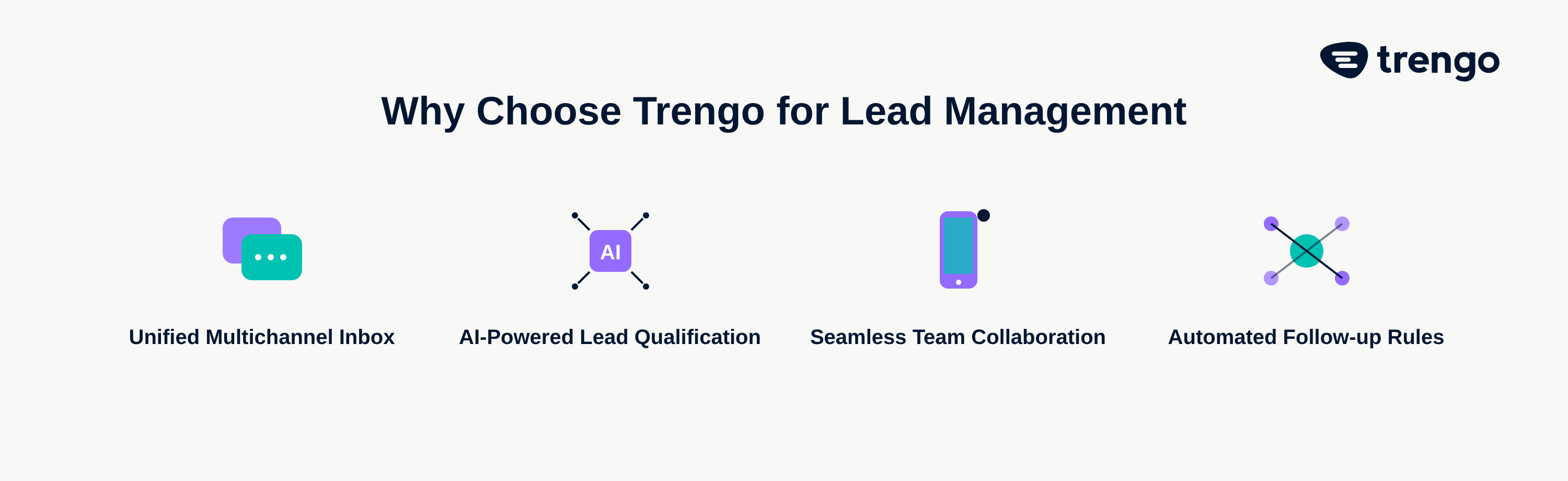
- Multichannel Shared Inbox: The ability to capture and respond to leads from email, WhatsApp, social media, and live chat all in one unified view.
- Automation Rules & Workflows: Tools to automatically score leads, assign them to the right reps, and send instant follow-up messages without manual intervention.
- CRM Integration: The capacity to sync lead and customer data with your existing CRM, like Salesforce or HubSpot, to maintain a single source of truth.
- AI Capabilities: Artificial intelligence to help with instant lead qualification, smart routing, and even suggesting replies to common questions.
- Reporting & Analytics: Dashboards that provide clear visibility into key metrics like response times, conversion rates by channel, and overall sales team performance.
Juggling messages across five apps?
Trengo unifies every channel in one shared inbox.
How Trengo Revolutionizes Lead Management with Multichannel Communication
Trengo is designed from the ground up to solve the core challenges of modern lead management. It moves beyond being a simple database and acts as the central communication hub where your sales team can engage with leads more efficiently and effectively, turning conversations into conversions.
Capture and Respond to Leads Instantly, from Any Channel
The biggest hurdle in managing leads today is the sheer number of channels they come from. A lead might ask a question on Instagram, then follow up via email. With Trengo's Omnichannel inbox, every single message—whether from WhatsApp, email, Facebook Messenger, or your website's live chat—lands in one unified view. This completely eliminates the need for your team to juggle multiple tabs and logins. It solves the problem of scattered conversations and empowers your team to deliver lightning-fast responses, which is often the deciding factor in winning a new customer.
Automate Your Follow-up and Qualification Process with AI
Imagine a system that works for you 24/7, ensuring no lead is ever missed, even outside of business hours. This is where Trengo's lead management automation shines. You can set up rules to automatically tag incoming leads, assign them to specific team members, and send an instant personalized reply. More powerfully, the Trengo AI lead qualification feature can act as your frontline sales assistant. It can engage leads in a natural conversation, ask key qualifying questions (like budget, timeline, and company size), score their potential, and route only the hottest, most qualified leads directly to your sales reps. This level of automation ensures every opportunity is captured and prioritized without any manual effort.
Collaborate with Your Sales Team to Close Deals Faster
Closing a deal is often a team effort. Trengo is built as a collaborative sales platform, not just a simple leads management software. A sales rep can easily tag a technical expert directly within a lead's conversation to get a quick answer to a complex question. They can leave internal notes on a lead's profile to provide context for a colleague who might be taking over. This seamless internal communication means your team can work together to craft the perfect response and move deals forward, all without ever leaving the inbox. This cohesive workflow ensures a smooth, professional experience for the lead and a more efficient process for your entire team.
Frequently Asked Questions

Yes, lead management is closely related to CRM, but they are distinct. A CRM is the central database for all customer information. Lead management is the active process and the tools used to convert a potential customer (a lead) into an actual customer, whose data is then managed in the CRM. The best lead management software integrates seamlessly with CRMs.
A lead manager oversees the entire lead management process. Their responsibilities include defining lead qualification criteria, setting up automation workflows in the software, ensuring leads are distributed efficiently to the sales team, and analyzing performance data to continuously optimize the sales funnel.
A 'lead' is a contact that has shown initial interest but has not yet been qualified. A 'prospect' is a lead that has been qualified by your team; they fit your ideal customer profile, have a clear need for your product, and are considered a viable sales opportunity further down the funnel.
The best tool depends on your specific business needs, but modern companies should prioritize platforms built for multichannel communication. Look for solutions with a unified inbox to manage all channels, powerful automation rules, and AI capabilities to improve efficiency, such as Trengo.
Lead generation is the process of creating interest and capturing new leads; it's the very top of the sales funnel. Lead management is the comprehensive process that occurs after a lead is generated, which includes tracking, qualifying, distributing, nurturing, and ultimately converting that lead into a customer.
More like this


Let's meet
Grow your business with loyalty. Bring all of your customer contact into one, single platform to unlock delight at every step of the way.