8 Best Abandoned Cart Email Examples & Templates

Try Trengo for Free

Trengo unites WhatsApp, email, web, social media, and calls in one inbox, saving your team hours of repetitive work and ensures no conversation is ever lost
What is an abandoned cart email?
Summary
Abandoned cart email examples show how online stores remind shoppers about the items they left behind and win back lost sales. This guide covers the five building blocks of a good abandoned cart email, a 3-step email flow with ready-to-use templates and subject lines, and 8 examples from brands like Adidas, Casper and Dyson. It also shows how to add WhatsApp and SMS follow-ups and handle every reply in one inbox. A free calculator helps you estimate how much revenue your store could recover.
TL;DR
- An abandoned cart email reminds a shopper about the items in their cart and makes it easy to finish the order.
- The best ones combine a strong subject line, product images, one clear CTA, social proof and an easy way to get help.
- A 3-email flow works well: a reminder after 1 to 4 hours, social proof after 24 hours and a final offer after 3 to 5 days.
- WhatsApp and SMS follow-ups help your message get seen, as long as every reply lands in one inbox.
- Personalise, optimise for mobile, A/B test and always include an unsubscribe link.
An abandoned cart email is an automated email that an online store sends when a shopper adds products to the cart but leaves without completing the purchase. It reminds them what they left behind and links straight back to the cart. Abandoned cart emails work best alongside other ways to reduce cart abandonment on your store. Use the calculator below to see how much revenue a recovery flow could win back for you.
See how much revenue you're losing to abandoned carts — and how much a simple recovery email flow could win back, every month and every year.
Turn lost carts into recovered revenue — on autopilot
What makes a great abandoned cart email?
Before diving into the best abandoned cart email examples, it's crucial to understand the core components that make them work. A successful abandoned cart email is a careful blend of psychology, design, and clear communication. These elements work together to remind, persuade, and make it incredibly easy for a customer to complete their purchase.
A Killer Subject Line
The subject line is your first and only chance to get an open. It must stand out in a crowded inbox. Effective tactics include using personalization with the customer's name, creating urgency with phrases like "Your cart expires soon!", sparking curiosity with a question like "Did you forget something?", or making a direct offer such as "10% off to complete your order."
A Visual Reminder of Their Cart
People are visual creatures. The most effective abandoned cart emails always include images of the items the customer left behind. Displaying the product name, image, and price instantly jogs their memory and reignites the desire they felt when they first added the items to their cart. This visual cue is often the strongest motivator to bring them back.
A Clear and Unmistakable Call-to-Action
There should be no confusion about what you want the user to do next. The call-to-action (CTA) button must be prominent, brightly colored, and use compelling, action-oriented text. Phrases like "Return to Your Cart," "Complete My Order," or "Claim My Discount" are direct and effective. Avoid vague language like "Click Here."
Social Proof & Urgency
Hesitation is a major cause of cart abandonment. You can overcome this by building trust with social proof. Including star ratings, customer reviews, or short testimonials for the abandoned items can reassure a potential buyer of their choice. Additionally, gentle urgency, such as "Items are selling fast" or "We've reserved your cart for 24 hours," can encourage immediate action.
An Easy Way to Get Help
Sometimes a customer abandons their cart because they have an unanswered question about shipping, returns, or the product itself. Removing this friction is key. Provide a clear link to your FAQ page, offer live chat support with the right live chat software for ecommerce, or simply invite them to reply to the email with questions. A platform like Trengo brings all these replies together in one inbox, so your support team can provide fast answers and save the sale. With AI in customer service, simple questions about shipping or returns can even get an instant answer.
The Perfect 3-Step Abandoned Cart Email Flow with Templates
A single email is good, but a well-timed sequence is better. Implementing a strategic 3-step flow addresses different stages of the customer's hesitation, dramatically increasing your recovery rate. This is the core of a modern abandoned cart email strategy.
Email 1: The Gentle Reminder, 1-4 Hours After Abandonment
The first email should be helpful, not pushy. The customer may have simply been distracted or encountered a technical glitch. The goal is to provide a simple nudge and an easy path back to their saved cart. Keep the tone light and customer-centric.
Subject line examples:
- You left something in your cart
- Still thinking it over?
- [First Name], did you forget something?
Abandoned cart email template 1:
Hi [Name], We noticed you left a few great items in your cart. We've saved them for you in case you want to come back. [Display Cart Items with Images] [CTA Button: Return to My Cart] Need help? Just reply to this email!
Email 2: Overcoming Objections, 24 Hours After Abandonment
If the first email didn't convert, the customer likely has a specific reason for not buying. This email should address common objections by building confidence and creating a sense of urgency. Highlighting product benefits, showcasing social proof, and mentioning scarcity can motivate them to act.
Subject line examples:
- Your items are selling out fast!
- Don't miss out on [Product Name]
- Complete your order before it's too late
Abandoned cart email template 2:
Hi [Name], Your cart is about to expire! These items are popular and we can't guarantee they'll stay in stock. See what other customers are saying: [Insert 1-2 short customer reviews]. [Display Cart Items] [CTA Button: Complete My Purchase] P.S. Have questions about shipping or returns? Check out our FAQ.
Email 3: The Final Offer, 3-5 Days After Abandonment
This is your last opportunity to recover the sale. For price-sensitive customers, a small incentive can be the final push they need. An exclusive discount or a free shipping offer can be highly effective. Make the offer time-sensitive to encourage immediate action.
Subject line examples:
- A special treat just for you: 15% off
- Here’s free shipping on us
- Your final chance to get [Product Name]
Abandoned cart email template 3:
Hi [Name], We really don't want you to miss out. To help you decide, here’s 15% off your entire order. Use code: SAVE15 at checkout. This offer is only valid for the next 48 hours! [Display Cart Items] [CTA Button: Apply My Discount & Checkout]
Abandoned Cart Email Subject Lines That Get Opened
The subject line decides whether your abandoned cart email gets opened at all. Use these abandoned cart email subject lines as a starting point and test them against each other:
- Reminder: "You left something behind", "Your cart is waiting for you" or "[First Name], still thinking it over?"
- Urgency: "Your cart expires in 24 hours", "Almost gone: [Product Name] is selling fast" or "Last chance to complete your order"
- Social proof: "See why customers love [Product Name]" or "[Product Name] is a customer favourite"
- Offer: "Here's 10% off to finish your order", "Free shipping on the items in your cart" or "A little something to help you decide"
Keep subject lines short so they fit on a mobile screen, and use the preview text to add context, such as the product name or your offer. A simple abandoned cart email with a clear subject line often works better than a clever one.
Answer “where is my order?” in seconds
Connect Shopify or WooCommerce and let the AI Agent reply with the real order status.
8 Best Abandoned Cart Email Examples to Inspire You
Theory is great, but seeing it in action is even better. Here are some of the best abandoned cart email examples from leading brands, showcasing how they apply the principles we've discussed to win back customers.
Example from Adidas: Bold Visuals & Simplicity
Adidas excels with a clean, image-focused email. They put the product front and center with a high-quality, full-width photo. The copy is minimal, and the bright, unmissable CTA button ("SHOP NOW") guides the user directly back to the checkout process. It’s a masterclass in visual reminders and clear direction.
Example from Chubbies: Personality-Packed Copy
Chubbies is famous for its fun, casual brand voice, and their abandoned cart emails are no exception. Using humorous subject lines like "Clocking in for the save" and playful copy, they make a transactional email feel like a conversation with a friend. This approach builds a stronger brand connection and makes the user want to re-engage.
Example from Casper: Overcoming Hesitation with Social Proof
Buying a mattress online is a big decision. Casper understands this and uses its abandoned cart emails to build confidence. They prominently feature customer testimonials and remind users of their "100-night risk-free trial." By highlighting these trust signals, they directly address customer hesitation and reduce the perceived risk of purchase.
Example from Google Store: Minimalist and Direct
The Google Store email is a perfect example of a no-frills, highly effective reminder. It has a clean layout, a clear headline ("You left this in your cart"), a picture of the product, and a simple blue CTA button. This direct approach works well for a brand where the product's value is already well-established.
Example from Rudy's Barbershop: A Classic Shopify Abandoned Cart Email
This is a great Shopify abandoned cart email example of a classic, effective setup. It typically features the brand's logo, a friendly reminder, clear images of the cart's contents, and a prominent "Return to cart" button. While easy to set up in Shopify, its effectiveness can be supercharged with multichannel follow-ups like SMS, and the Trengo Shopify integration puts the order details next to every reply your team receives.
Example from Dyson: Highlighting Value and Scarcity
Dyson's emails focus on the premium nature of their products. They use copy that highlights unique technology and superior benefits, reinforcing why the product is worth the price. They often couple this with a sense of urgency, noting that "stock is limited," to encourage quick action on high-consideration items.
Example from a Klaviyo Abandoned Cart Flow: Dynamic Product Blocks
Many top e-commerce brands use Klaviyo for its powerful automation. A typical Klaviyo abandoned cart email features a strong visual hierarchy with dynamic product blocks that automatically pull in the items a user abandoned. They often include personalized product recommendations and are A/B tested extensively for optimal performance, a common feature of sophisticated Klaviyo flows. Our guide to Klaviyo marketing automation shows how these flows are set up.
Example from Whiskey Loot: Cross-Selling & Product Recommendations
Whiskey Loot turns a recovery email into an opportunity. While reminding you of your cart, they also showcase related products or alternative subscription boxes. This smart cross-selling tactic can not only recover the original sale but also increase the final order value by showing the customer something else they might love.
Go Beyond Email: A Multichannel Strategy with Trengo
In 2026, a great abandoned cart email strategy isn't just about email. Customers live on multiple channels, and reaching them where they are most active can dramatically increase your recovery rates. Relying solely on email is leaving money on the table. This is where a platform like Trengo transforms your approach from a simple email sequence to a comprehensive, multichannel recovery engine.
Automate SMS & WhatsApp Follow-Ups
SMS and WhatsApp messages boast open rates of over 90%, far surpassing email. Using these channels for your second or third touchpoint is a game-changer, especially for high-value carts. Through the WhatsApp Business API, you can send an approved WhatsApp reminder when your first email doesn't lead to a purchase, so your message gets seen. The Shopify WhatsApp integration guide shows how online stores set up these reminders.
Unify Conversations in an Omnichannel Inbox
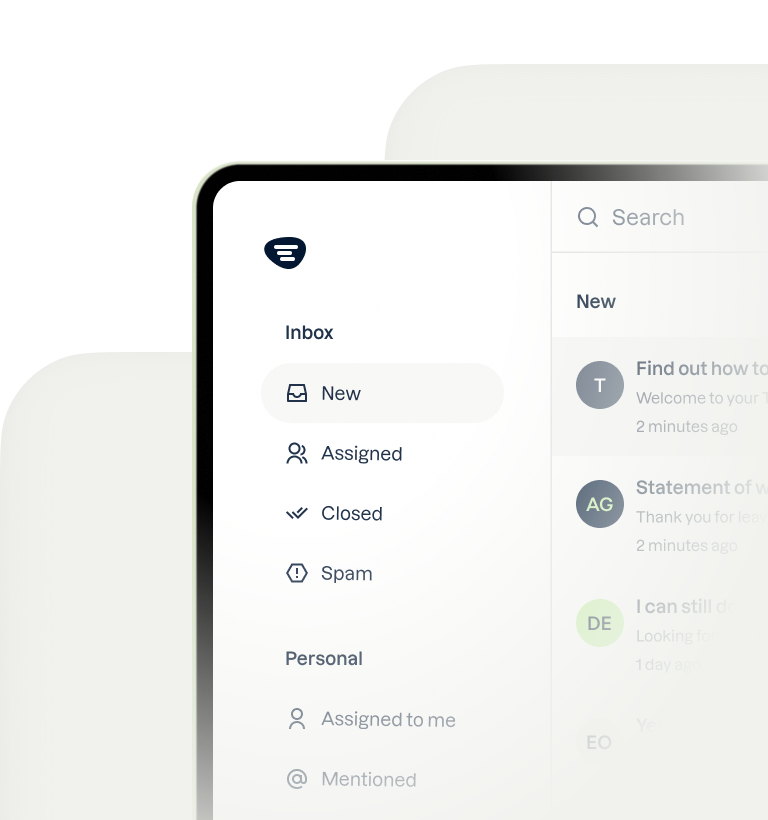
This is the critical link that makes a multichannel strategy work. What happens when a customer replies to your automated WhatsApp message with a question about a discount code? Without a unified system, that message gets lost. With Trengo's omnichannel inbox, that reply lands in the same inbox as your emails, live chats, and social media messages. Your support team has the full context and can respond instantly, closing the loop between automated outreach and human-powered support to save the sale.
Abandoned Shopping Cart Email Best Practices for 2026
To ensure your strategy is effective and future-proof, follow these abandoned shopping cart email best practices. This checklist summarizes the key takeaways for creating a high-performing recovery campaign. For the bigger picture, see our guide to email marketing for ecommerce.
Personalize Beyond the First Name
Go deeper than just using a customer's first name. Segment your audience based on their cart value, purchase history, or browsing behavior. You could send a higher discount to a first-time shopper or showcase related products to a repeat customer. This level of personalization shows you understand their needs.
Always Optimize for Mobile
The majority of emails are now opened on mobile devices. Your abandoned cart emails must be fully responsive. This means using a single-column layout, large and clear product images, easily readable text, and a CTA button that is big enough to be tapped with a thumb. If your email is difficult to read on a phone, it will be deleted.
A/B Test Everything
Never assume you know what works best. Continuously test every element of your abandoned cart emails. This includes subject lines, the copy in the email body, the color and text of your CTA button, the specific offer you provide, and the timing of each email in your sequence. Data-driven decisions will always outperform guesswork.
Maintain Brand Consistency
Your abandoned cart emails are an extension of your brand experience. They should use the same logo, colors, fonts, and tone of voice as your website and other marketing materials. A consistent brand identity builds trust and professionalism, making customers more comfortable completing their purchase.
Make it Easy to Unsubscribe
This is a non-negotiable legal and ethical requirement. Every abandoned cart email you send must include a clear and obvious link to unsubscribe. Complying with regulations like GDPR and CAN-SPAM is crucial for maintaining a good sender reputation and avoiding legal penalties. Honoring unsubscribe requests promptly builds long-term trust.
Frequently Asked Questions

A typical abandoned cart flow consists of a 3-step email sequence. The first email, sent 1 to 4 hours after abandonment, is a gentle reminder. The second, sent at 24 hours, adds urgency and social proof. The third, sent after 3 to 5 days, provides a final offer like a discount to encourage the purchase.
Most stores send three abandoned cart emails. The first goes out 1 to 4 hours after the shopper leaves, the second after about 24 hours and the third after 3 to 5 days. More emails can start to feel pushy, so test the timing and stop the flow as soon as the customer completes the order.
Send the first abandoned cart email within a few hours, while the shopper still remembers the products. A window of 1 to 4 hours works well for the first reminder. Follow up after 24 hours with social proof or urgency, and send a final offer after 3 to 5 days if the cart is still open.
To write a good abandoned cart email, focus on five key elements: an engaging subject line, a visual reminder of the cart's contents, a clear call-to-action button, social proof like reviews to build trust, and an easy way for the customer to get help if they have questions.
A good abandoned cart email subject line is short, personal and clear about why you are emailing. Examples are "You left something behind", "[First Name], still thinking it over?" and "Here's 10% off to finish your order". Test reminder, urgency and offer subject lines against each other to see what works best for your store.
An abandoned cart email is a triggered, or behavioural, email. It is sent automatically when a shopper adds items to the cart but leaves without buying, rather than as part of a scheduled newsletter. Because it is timely and personal, it usually gets higher open and engagement rates than regular campaigns. Under most privacy laws it still counts as a marketing email, so consent and unsubscribe rules apply.
Abandoned cart emails can be legal, but the rules depend on where your customers live. In the EU and the UK, privacy rules usually treat them as marketing emails, so you need the shopper's consent or must meet the soft opt-in conditions of the country you sell in. In the US, CAN-SPAM applies. Always include a clear and easy way to unsubscribe, and check the rules for your markets with your legal team.
Still checking order status by hand?
Trengo's AI Agent replies with the real status.


Let's meet
Grow your business with loyalty. Bring all of your customer contact into one, single platform to unlock delight at every step of the way.