Best SaaS eCommerce Platforms for Growth in 2026


Try Trengo for Free

Trengo unites WhatsApp, email, web, social media, and calls in one inbox, saving your team hours of repetitive work and ensures no conversation is ever lost
SaaS eCommerce Platforms: A Comprehensive Look for Growth in 2026
Summary
Choosing the right saas ecommerce platforms is a foundational decision for any online business aiming for growth in 2026. This content explores the SaaS model, covering its definition, core benefits like lower costs and scalability, and potential challenges. We compare the top saas ecommerce platforms and emphasize that success also hinges on unifying customer communication with a tool like Trengo to manage sales and support conversations effectively across all channels.
TL;DR
- SaaS eCommerce platforms are subscription-based, cloud-hosted solutions that handle all technical backend management for you.
- Key benefits include lower upfront costs, on-demand scalability for peak traffic, and enhanced security handled by the provider.
- Potential challenges involve customization limits, data portability issues, and recurring subscription fees over time.
- Top platforms for 2026 include Shopify, BigCommerce, Wix, Zoho Commerce, and Adobe Commerce, each serving different business needs.
- Choosing a platform is the first step; integrating a communication platform like Trengo is crucial for managing customer interactions and driving growth.
What is SaaS ecommerce?
A SaaS ecommerce platform is a software solution that allows you to build and run an online store on a subscription basis. In this model, a third-party provider hosts the software on their servers and is responsible for all the technical heavy lifting: security, maintenance, performance, and updates. This allows you, the business owner, to focus exclusively on what you do best: marketing your products and selling. This contrasts sharply with on-premise solutions, where you are responsible for buying and managing your own servers, software licenses, and security protocols, which is a significant technical and financial burden.
How does SaaS e-commerce work?
The mechanics of a saas based ecommerce platform are straightforward. You pay a recurring fee, typically monthly or annually, for access to the software. Everything runs in the cloud, meaning you can manage your store from any device with an internet connection. The provider handles all infrastructure, ensuring your website is fast, secure, and always online. Think of it like renting a fully-serviced retail space in a prime shopping mall versus building your own store from the ground up. With SaaS, the rent covers the location, security, maintenance, and utilities, so you can just move in and start arranging your products on the shelves.
What are the benefits of SaaS e-commerce solutions?
Adopting a SaaS model for your online store brings a host of powerful advantages that directly impact your bottom line and operational efficiency. For modern entrepreneurs and retail managers, these benefits are often the deciding factor in choosing a platform for long term growth and stability.
Lower Upfront Costs and Predictable Spending
One of the most significant financial benefits is the low barrier to entry. Instead of a massive capital investment in servers, software development, and IT staff required for an on-premise solution, you pay a manageable monthly subscription fee. This predictable spending model makes powerful enterprise-level technology accessible to startups and small to medium-sized businesses, leveling the playing field and allowing you to allocate capital to marketing and inventory.
Scalability on Demand
SaaS platforms are built to grow with your business. They can effortlessly handle sudden surges in website traffic during major sales events like Black Friday or a viral marketing campaign. The provider manages all server capacity behind the scenes, so you never have to worry about your site crashing during peak shopping hours and losing sales. This seamless scalability ensures a smooth customer experience, no matter how quickly you expand.
Enhanced Security and Compliance
Security is a major concern in ecommerce, and SaaS providers offload this immense burden from merchants. They manage everything from server security patches and SSL certificates to ensuring Payment Card Industry (PCI) compliance for processing credit card payments. This expert-level management protects your business and your customers' sensitive data, giving you peace of mind and reducing legal and financial risk.
Automatic Updates and Maintenance
With a SaaS platform, you are always on the latest version of the software. The provider rolls out new features, bug fixes, and security updates automatically, without any downtime or manual work required from your team. This means you constantly benefit from the latest innovations in ecommerce technology without having to manage complex software updates yourself, ensuring your store remains competitive and functional.
Challenges of SaaS ecommerce solutions
While the benefits are compelling, it's important to have a balanced view. Understanding the potential limitations of SaaS platforms helps you make a more informed decision and select a solution that aligns with your long term business goals.
Customization Limitations
The primary trade-off for the convenience of SaaS is a degree of control. While you can extensively customize your store's appearance with themes and add new features through apps, you do not have access to the platform's core source code. This can be a limitation for businesses that require highly specific, unique functionality that isn't available through the platform's native features or its app ecosystem.
Data Portability and Vendor Lock-in
While not impossible, migrating your entire store from one SaaS platform to another can be a complex process. Moving all of your data, including products, customer information, order history, and content, might present technical challenges. This potential difficulty can create a sense of "vendor lock-in," where the effort required to switch providers makes you hesitant to leave, even if another platform might be a better fit in the future.
Recurring Subscription Costs
Though upfront costs are low, the subscription model means you have a recurring operational expense. These monthly or annual fees, combined with transaction fees on some plans and the cost of premium apps or themes, can add up over time. For very large, high-volume businesses, these ongoing costs might eventually exceed the total cost of ownership of a custom-built solution over a long period.
Best SaaS ecommerce solutions
The market for ecommerce saas companies is filled with excellent options, but the "best" choice depends entirely on your business model, scale, and specific needs. Here's a breakdown of the top saas ecommerce platforms leading the way in 2026.
Shopify: The All-Rounder for D2C Brands
Shopify remains the market leader for a reason. It is incredibly user-friendly, making it a perfect starting point for new entrepreneurs, yet it possesses the power and scalability to support global, multi-million dollar brands. Its defining strength is its vast app ecosystem, which allows you to add virtually any functionality you can imagine. Shopify is the ideal choice for direct-to-consumer (D2C) brands that prioritize ease of use, speed to market, and a rich feature set.
BigCommerce: The Powerhouse for B2B and Headless Commerce
BigCommerce excels where others require complex workarounds. It is built with a strong focus on B2B functionality, offering features like custom pricing lists, bulk ordering, and quote management out of the box. Furthermore, its API-first architecture makes it a top choice for headless commerce, allowing you to use any front-end technology while BigCommerce powers the backend. With zero transaction fees on all plans, it's a compelling option for scaling businesses looking for more flexibility.
Wix eCommerce: The User-Friendly Website Builder
Wix is the perfect solution for businesses where content and branding are just as important as the store itself. If you're a creator, a restaurant, or a service-based business that also sells products, Wix's intuitive drag-and-drop website builder is second to none. It allows you to create a visually stunning, content-rich website where eCommerce is a seamlessly integrated component, rather than the sole focus of the entire site.
Zoho Commerce: The Integrated Solution for the Indian Market
Specifically targeting the needs of the Indian market, Zoho Commerce stands out among saas ecommerce platforms india. Its greatest strength is its native integration with the extensive Zoho ecosystem, including Zoho CRM, Books, and Inventory. This creates a unified business management suite. It also offers robust support for local payment gateways and shipping providers, making it an all-in-one solution for businesses in India looking to streamline their operations from a single vendor.
Adobe Commerce formerly Magento Commerce: The Enterprise-Grade Solution
Now delivered via a cloud (SaaS) model, Adobe Commerce is the go-to platform for large, established enterprises with highly complex needs. It offers unparalleled power for managing massive product catalogs, multiple storefronts, and intricate B2B requirements. While it has a steeper learning curve and higher cost, no other platform provides the same level of deep customization and raw capability for global corporations that require a truly bespoke solution.
Beyond the Platform: Unifying Customer Communication for Your eCommerce Store
Choosing one of the top saas ecommerce platforms is a critical first step, but it's only half the battle. Once your store is live, your success depends on how you manage the customer conversations that drive sales and build loyalty. The modern customer journey is fragmented, and a failure to manage it centrally can lead to lost revenue and a poor brand reputation.
The Challenge: Customer Conversations Are Everywhere
Think about a typical customer interaction. A shopper might see your product on an Instagram ad and ask a question in a DM. Later, they visit your website and use the live chat to ask about sizing. After purchasing, they might email your support address to check their order status. Without a unified system, each of these interactions is siloed. Your support team lacks context, leading to repetitive questions, slower response times, and a disjointed experience for the customer.
The Solution: A Multichannel Shared Inbox for eCommerce
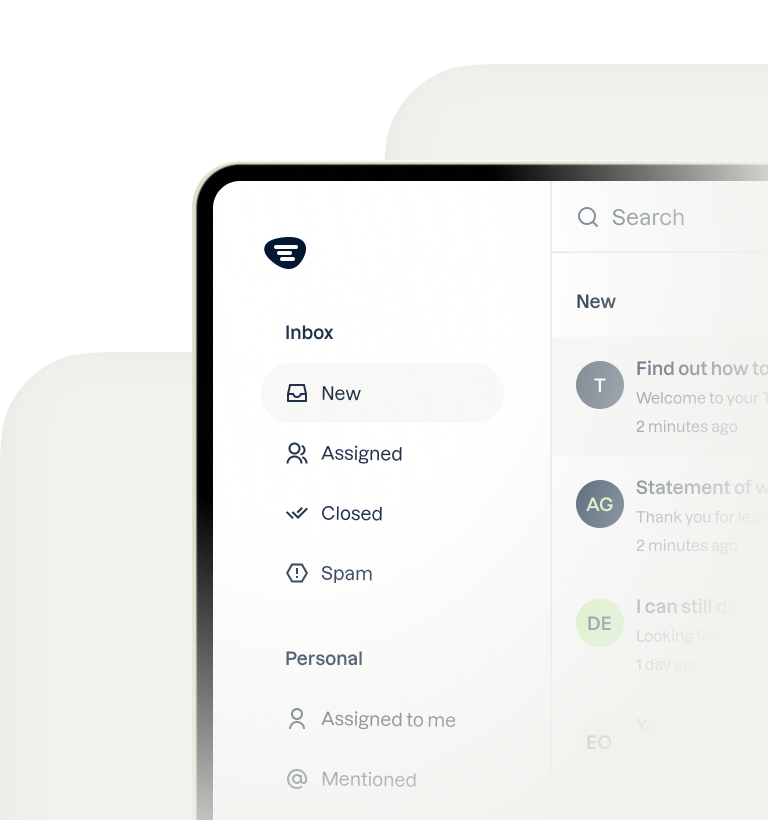
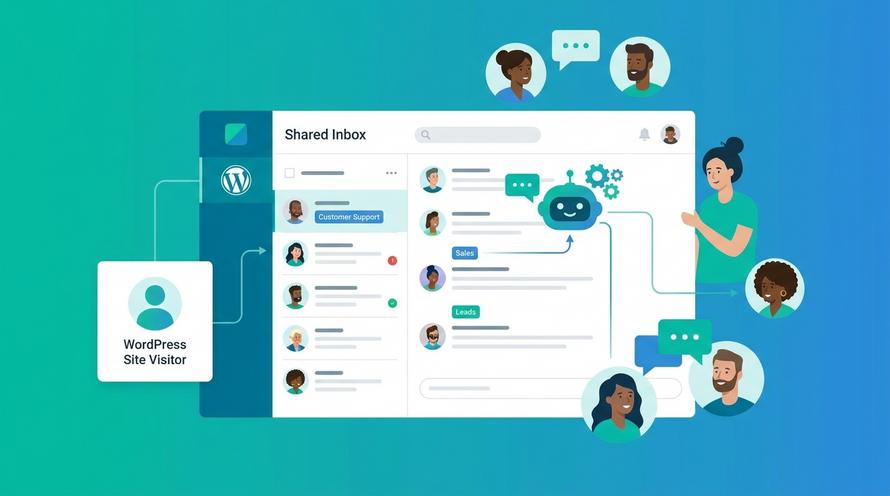
This is where a dedicated saas for ecommerce communication becomes essential. The solution is a centralized platform that brings all your customer channels into a single, unified view. Trengo's Omnichannel inbox acts as this central hub, consolidating emails, WhatsApp messages, social media DMs, and live chat conversations. This empowers your entire team to collaborate on customer queries, see the full conversation history, and provide faster, more consistent, and highly personalized service.
How Trengo Automates and Scales Your Customer Support
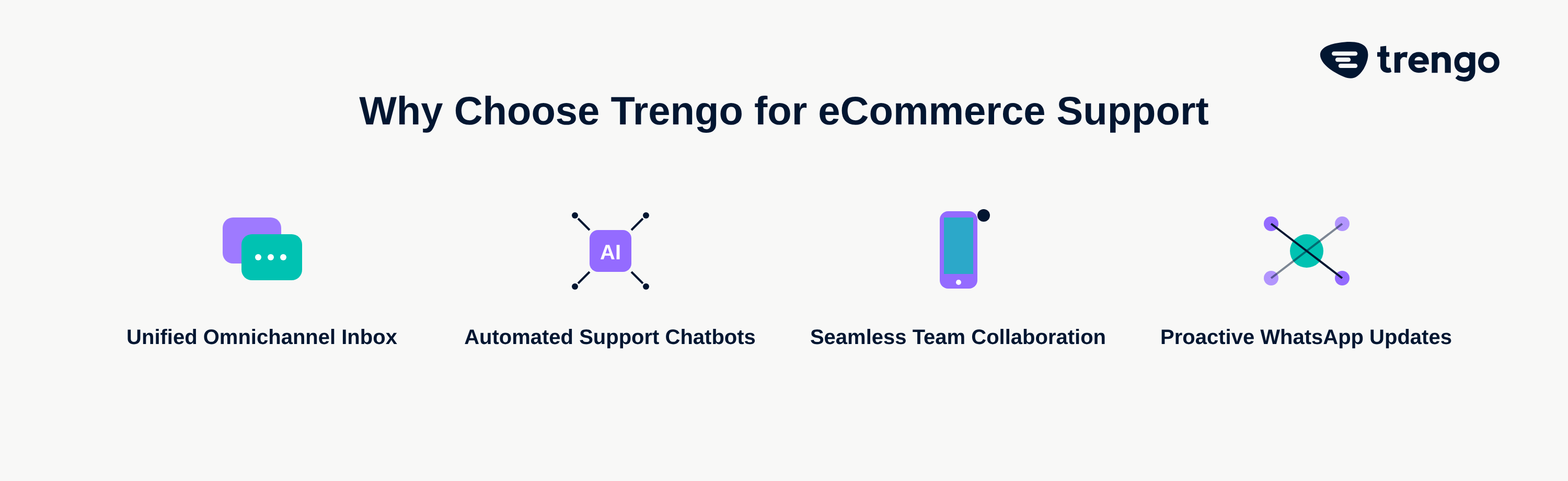
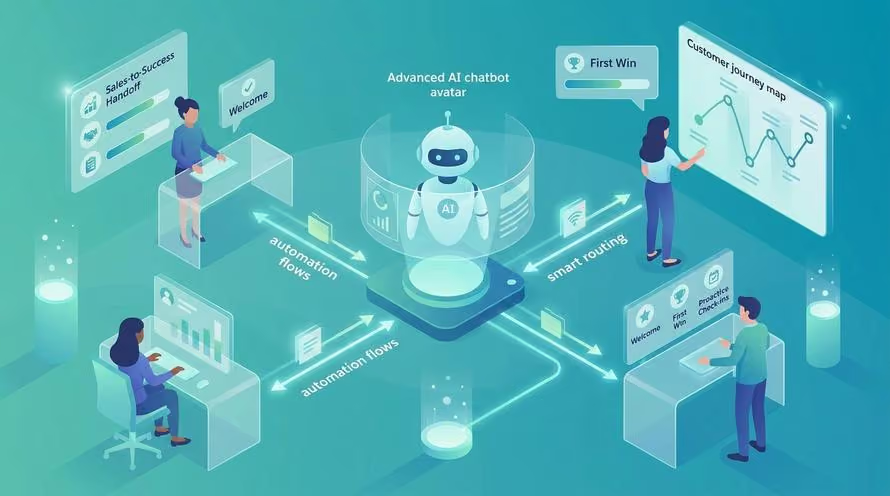
Beyond unifying conversations, the right platform helps you scale efficiently through automation. Trengo allows you to build powerful chatbots that can instantly handle common, repetitive questions like "Where is my order?" or "What is your return policy?" 24/7. You can set up rules to automatically route conversations to the right team or agent. By integrating the WhatsApp Business API, you can send proactive shipping updates and marketing messages on a channel with over 90% open rates. This level of automation frees up your human agents to focus on complex, high-value conversations that build relationships and close sales.
Frequently Asked Questions

The "best" platform depends on your specific business needs. For most D2C brands prioritizing ease of use, Shopify is an excellent choice. BigCommerce is superior for businesses with significant B2B operations or headless commerce ambitions, while Wix is ideal for content-first businesses that also sell products.
Shopify is a SaaS (Software as a Service) platform. It provides a complete, out-of-the-box solution for merchants, handling all hosting, security, and software maintenance. A PaaS (Platform as a Service) provides a framework for developers to build their own applications upon, which is a different model.
No, they are different but related concepts. E-commerce is a business model (selling goods and services online), while SaaS is a software delivery model (delivering software on a subscription basis). A SaaS eCommerce platform is simply a SaaS product that is used to run an eCommerce business.
No, Amazon.com is primarily an online marketplace where third-party sellers can list their products. While its cloud division, Amazon Web Services (AWS), is a leading infrastructure provider that powers many SaaS companies, the Amazon marketplace itself is not a SaaS platform for merchants in the same way Shopify or BigCommerce is.


Let's meet
Grow your business with loyalty. Bring all of your customer contact into one, single platform to unlock delight at every step of the way.