Customer support vs customer service: Key differences between both


Try Trengo for Free

Trengo unites WhatsApp, email, web, social media, and calls in one inbox, saving your team hours of repetitive work and ensures no conversation is ever lost
What is customer service?
Customer service is the umbrella term that encompasses every interaction a consumer has with your brand, from the moment they discover you until long after they have made a purchase. It focuses on relationship building, proactive engagement, and the overall quality of the Customer Experience (CX). While it includes technical assistance, its primary goal is to ensure the customer feels valued, understood, and satisfied with their journey.
In 2026, understanding what is customer service means looking beyond simple transactions. It requires soft skills like empathy and active listening to foster long-term loyalty. To deliver this effectively at scale, businesses often rely on a centralized customer service solution to manage inquiries across email, social media, and chat without losing the personal touch.
Summary
Customer support vs customer service represents the difference between fixing a technical problem and managing the entire customer relationship. While customer support focuses on reactive troubleshooting and product knowledge, customer service is proactive, focusing on the overall experience and satisfaction. Successful businesses in 2026 use unified platforms like Trengo to bridge the gap, ensuring technical issues are resolved quickly while maintaining a high quality of service.
TL;DR
- Customer service is the broad strategy for managing the entire customer lifecycle and experience.
- Customer support is a specialized subset focused on technical troubleshooting and resolving specific issues.
- Service relies heavily on soft skills and empathy, while support relies on hard skills and technical expertise.
- Modern businesses need both functions working together to maximize retention and Customer Lifetime Value (LTV).
- Tools like Trengo unify these teams, preventing data silos and ensuring seamless communication.
What is customer support?
Customer support is a specialized subset of the broader service function. When asking "what is customer support," we are specifically referring to the teams responsible for technical troubleshooting, documentation, and product assistance. It is typically a reactive function; a customer encounters a bug, a login failure, or a configuration issue, and the support team is triggered to fix it.
Unlike general service, customer support requires deep product knowledge and technical literacy. The interactions are often ticket-based and measured by how quickly and accurately a specific problem is resolved. For example, implementing AI-based customer support can help technical teams instantly diagnose common errors, allowing human agents to focus on complex troubleshooting.
Similarities between customer support and customer service
While we often analyze the difference between customer support and customer service, the lines between these roles are blurring. In 2026, the rise of "customer service support" indicates a hybrid approach where the distinction matters less to the customer than the outcome.
Both put the customer first
Whether an agent is fixing a broken API connection or helping a client choose a pricing plan, the core objective is identical: customer success. Both functions exist to remove friction from the user journey and ensure the customer achieves their goals with the product or service.
Both work to solve problems quickly
Time is a critical currency in the digital age. Both teams are measured by speed metrics, such as First Response Time (FRT) and Resolution Time. Whether the issue is technical or relational, a delayed response damages trust. Utilizing automation tools helps both teams reduce wait times significantly.
Both rely on clear, compassionate communication
Technical agents cannot rely solely on manuals; they must explain complex solutions in simple terms. Conversely, service agents cannot rely only on charm; they must be clear and accurate. Empathy is the bridge that connects these functions, ensuring that customers feel heard regardless of who they are speaking to.
Both influence customer satisfaction and loyalty
Performance in both areas directly impacts critical metrics like Customer Satisfaction (CSAT), Net Promoter Score (NPS), and Customer Lifetime Value (LTV). Excellent service cannot save a customer who is frustrated by unresolved bugs, and excellent technical support cannot save a customer who feels treated rudely. Both are essential for retention.
Benefits of customer support and customer service
Investing in both functions distinctively allows a business to cover all bases—ensuring technical reliability while fostering emotional connections.
Benefits of customer support
A strong support team builds trust through reliability. When products break, support fixes them. This function is vital for creating product feedback loops; support agents are often the first to identify bugs that engineering needs to address. High-quality support reduces churn by ensuring the product actually works for the user.
Benefits of customer service
Customer service drives brand advocacy and revenue. By focusing on the relationship rather than just the ticket, service agents can identify upselling opportunities and turn neutral buyers into loyal promoters. It fosters a positive brand reputation that attracts new business organically.
Customer service vs customer support
To fully understand the difference between customer support and customer service, it helps to view them as complementary forces with different operational focuses.
Customer service
Customer service is characterized by being:
- Proactive: Reaching out before a problem escalates (e.g., onboarding check-ins).
- Relationship-focused: Prioritizing long-term loyalty over short-term metrics.
- Strategic: guiding the customer toward success and value.
- Soft skills dominant: Relying on empathy, patience, and negotiation.
Customer support
Customer support is characterized by being:
- Reactive: responding to incoming tickets or error reports.
- Issue-focused: Concentrating on the specific malfunction at hand.
- Transactional: Closing the ticket is the immediate goal.
- Hard skills dominant: Relying on technical expertise and product logic.
Understanding the limitations of customer support and customer service
The primary danger for modern businesses is keeping these teams in silos. Without a unified view, customers fall through the cracks.
Customer support
Relying solely on a support mindset can lead to a cold, mechanical customer experience.
Reactive by nature
Waiting for a customer to complain means you are always on the defensive. A purely reactive support model misses opportunities to prevent churn before a ticket is even created.
Narrow focus on technical issues
A support agent might fix a bug perfectly, but if their tone is curt, the customer may still leave. Focusing only on the technical "fix" ignores the human element of the interaction.
Resource-heavy operations
Technical talent is expensive. Scaling a support team with humans for every query is unsustainable. Businesses must leverage tools like AI chatbot for customer service automation to handle routine troubleshooting, reserving human experts for complex issues.
Customer service
Conversely, a service team without technical backing can be friendly but ineffective.
Requires a wide mix of skills
It is difficult to hire agents who possess high emotional intelligence and deep technical literacy. This skills gap often leads to service agents being unable to help with product-specific inquiries.
High demand for ongoing effort
Relationships require constant maintenance. Without unified tools, keeping track of every conversation across WhatsApp, email, and social media becomes unmanageable, leading to agent burnout.
Limited ability to solve technical issues
A friendly agent who cannot resolve a billing error or a software glitch causes frustration. Empathy does not solve a server outage. Service teams need direct collaboration channels with technical support to be effective.
Risk of over-personalisation
Sometimes, customers just want a quick answer, not a conversation about their day. An over-emphasis on "service" can slow down resolution times for users who simply want a fast transactional fix.
Examples of customer support and customer service in action
Let's look at concrete scenarios to visualize the nuance between these two functions.
Customer support scenarios
These interactions are defined by a specific problem hindering product usage.
Resolving technical issues
A customer encounters a 404 error when trying to export a report. The support team investigates the logs, identifies a bug, patches it, and informs the user. This is a classic support function.
Helping with setup or configuration
A new user is trying to integrate their CRM via API but fails authentication. A support agent steps in to review the API keys and guide the user through the technical documentation to complete the setup.
Customer service scenarios
These interactions are defined by advice, guidance, and relationship management.
Guiding customers toward the right choice
A potential lead visits the website and asks via live chat which subscription tier is best for a small business. The service agent assesses their needs and recommends the optimal plan, acting as a trusted advisor.
Clarifying billing or account questions
A long-time customer wants to pause their subscription due to budget cuts. A service agent handles this with empathy, perhaps offering a temporary discount to retain the relationship, focusing on agentic AI in customer experience strategies to predict churn risks before they happen.
Tips for delivering excellent customer service and customer support
Regardless of the department, excellence requires a blend of humanity and technology.
Practise empathy and active listening
Validate the customer's feelings before attempting to solve the problem. A simple "I understand why that is frustrating" can de-escalate a tense technical support ticket immediately.
Offer seamless omnichannel support
Customers should not have to repeat themselves when switching from Instagram DM to email. A unified platform ensures that the history of a technical support ticket is visible to the service agent handling a renewal conversation.
Prioritise timely responses
Set clear Service Level Agreements (SLAs). Whether it is a bug report or a general inquiry, acknowledging receipt immediately is crucial for maintaining trust.
Use technology to support your team
Leverage technology to route tickets intelligently. Use automation to send technical keywords (like "API" or "bug") directly to support, while routing questions about "pricing" to service teams. This reduces transfer times and confusion.
Measure performance and improve continuously
Track metrics for both teams. High CSAT but low Resolution Time suggests your team is nice but ineffective. Low CSAT but high Resolution Time suggests your team is efficient but rude. You need to balance both.
Managing both customer service and customer support with Trengo
The distinction between customer support and customer service often leads to operational silos. Trengo bridges this gap by offering a single platform where both functions coexist efficiently.
One inbox for every conversation
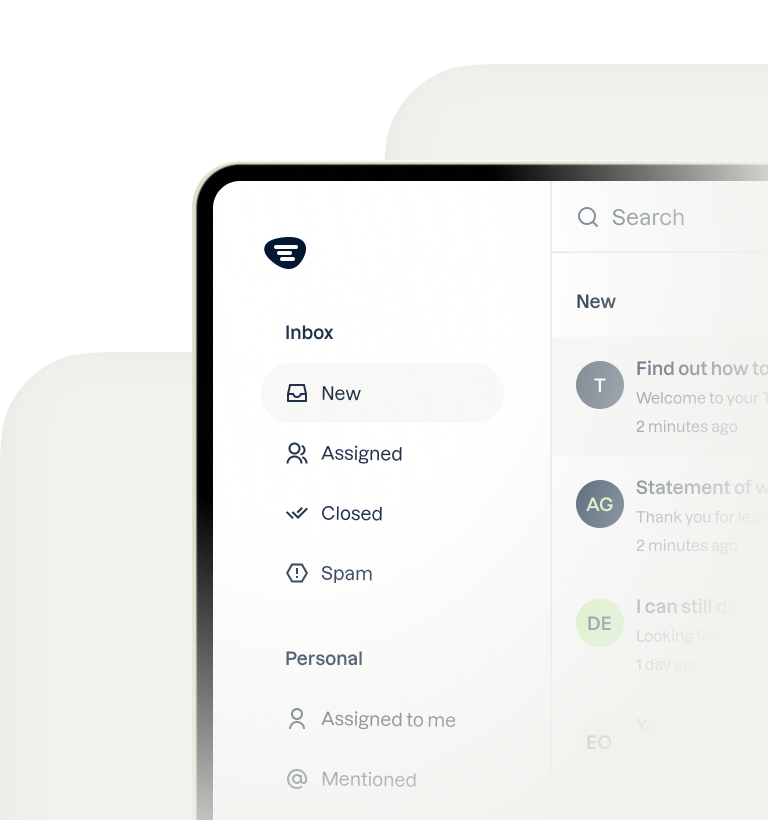
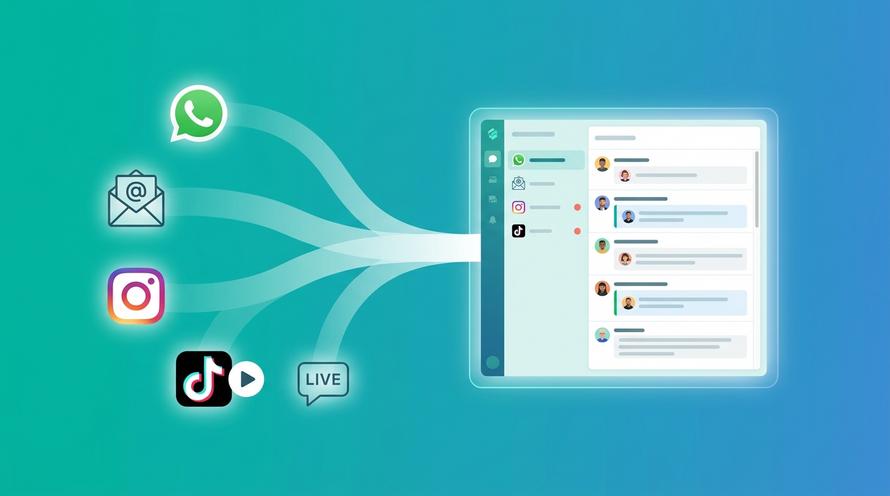
With Trengo’s Unified Inbox, support and service teams work from the same view. Whether a query comes in via WhatsApp, email, or live chat, it lands in one central hub. This ensures that a technical support agent can see the previous service conversations, providing context that solves issues faster.
Smart automation for faster service
Trengo’s Flowbots and rules automate the busy work. You can configure the system to automatically tag and route technical queries to your support specialists, while general inquiries are directed to your service team. This ensures the right agent handles the right ticket, instantly.
Personalised help at scale
Trengo provides AI customer engagement tools that give agents a sidebar view of the customer profile, including purchase history and past interactions. This empowers technical agents to be more personal and service agents to be more informed.
Reporting that supports better decisions
Gain insights across the board. Trengo’s analytics dashboard allows managers to monitor both support metrics (like resolution time) and service metrics (like satisfaction scores) in one place, enabling holistic decision-making.
Frequently Asked Questions (FAQ)
Is customer service the same as customer support?
No, they are not the same. Customer service is the umbrella term for managing the overall customer relationship and experience. Customer support is a specific subset of service focused on resolving technical issues and product troubleshooting.
What is the difference between customer care and customer service?
Customer service focuses on providing assistance and advice to customers. Customer care goes a step further by focusing on the emotional connection and empathy shown during those interactions. While service is functional, care is emotional.
What's the difference between CS (Customer Success) and CX (Customer Experience)?
Customer Success (CS) is a proactive function dedicated to helping customers achieve their desired outcomes using your product. Customer Experience (CX) is the holistic perception a customer has of your brand across all touchpoints, including marketing, sales, support, and success. Understanding the distinction between customer service and customer experience can help you see where CS fits into the bigger picture. And If you're wondering how AI is starting to play a role in all of this, here's more on AI for customer success.
What is customer service support?
Customer service support is a modern, hybrid term describing teams equipped with both the soft skills of service agents and the technical tools of support agents. It reflects the 2026 trend of unifying these functions to provide holistic help.
Why is customer service so important?
In a competitive market, customer service is the primary differentiator. It drives customer retention, boosts lifetime value, and builds brand reputation. Excellent service turns customers into advocates, while poor service leads to churn.



Let's meet
Grow your business with loyalty. Bring all of your customer contact into one, single platform to unlock delight at every step of the way.