Does Live Chat Increase Conversions? Pros, Cons & Best Practices

Try Trengo for Free

Trengo unites WhatsApp, email, web, social media, and calls in one inbox, saving your team hours of repetitive work and ensures no conversation is ever lost
Does Live Chat Increase Conversions? The 2026 Guide to Boosting Sales
Yes, live chat absolutely increases conversions. In the fast-paced e-commerce landscape of 2026, a static website is no longer enough to meet consumer expectations for real-time, conversational commerce. While driving traffic to your site is expensive, optimizing the onsite experience is the most cost-effective way to generate revenue. Modern consumers expect answers in seconds, not minutes. Implementing a strategic live chat ecommerce solution acts as the digital equivalent of an expert in-store sales assistant, proactively engaging customers the moment they show hesitation or need guidance, effectively turning browsers into buyers.
Summary
The core question of whether live chat increases conversions is answered with a definitive yes, especially in the 2026 e-commerce environment. This article explores the direct link between conversational commerce and revenue, supported by key statistics and actionable strategies. We break down how to leverage automation and multichannel communication to reduce cart abandonment, increase average order value, and solve the common disadvantages of traditional chat systems by unifying all customer contact points into a single, efficient platform.
TL;DR
- Live chat directly increases e-commerce conversions by providing real-time answers and reducing purchase friction.
- In 2026, consumers expect instant responses, making live chat a necessity for a competitive customer experience.
- Automation and AI handle common queries 24/7, allowing human agents to focus on high-value sales conversations.
- A multichannel approach that unifies website chat, WhatsApp, and social media DMs is crucial for capturing all sales opportunities.
- Tracking key metrics like chat-to-sale conversion rates is essential for optimizing your strategy and proving ROI.
- Modern platforms like Trengo solve traditional chat disadvantages by centralizing all communications into one shared inbox.
The Direct Connection Between Conversational Commerce and Revenue
The link between conversational commerce and revenue is rooted in psychology and operational efficiency. In 2026, the modern buyer operates with minimal patience; any friction in the buying journey leads to an abandoned cart. Common reasons for abandonment include unexpected shipping costs, doubts about product sizing, or minor technical glitches. A conversion chat strategy intercepts these hesitations in real-time. When a customer has a question, they don't have to leave the product page to search for a contact form or send an email into the void. They get an answer instantly, keeping their purchase momentum alive and their focus on the checkout button. This is the essence of frictionless buying.
Furthermore, this proactive engagement transforms a passive browsing session into an active sales cycle. Imagine a potential customer lingering on a high-value product page for over 30 seconds. A proactive chat pop-up asking, "Do you have any questions about the features or sizing?" can be the catalyst that initiates a sale. Skilled agents can then use this interaction to provide personalized recommendations, effectively upselling or cross-selling related products. This not only increases conversions but also significantly boosts the Average Order Value (AOV). This marks the critical shift from reactive customer support, which solves problems after they occur, to proactive sales enablement, which prevents problems and creates revenue opportunities before the customer even thinks of leaving.
Key Live Chat Statistics Driving E-Commerce in 2026
Data provides the undeniable proof that investing in live chat technology yields a powerful return. The statistics projected for 2026 paint a clear picture of how conversational commerce directly impacts the bottom line for both B2C retail and B2B SaaS businesses. Here are the key figures driving e-commerce strategies:
- Cart Abandonment Reduction: E-commerce stores that trigger a proactive chat message during the checkout phase can reduce cart abandonment by up to 35%. Intercepting last-minute questions about shipping or payment is one of the highest-impact uses for live chat.
- Conversion Rate Lift: Website visitors who engage with a brand through live chat are 4.5 times more likely to convert than those who do not. The ability to get instant clarification builds the trust and confidence needed to make a purchase.
- Increased Average Order Value: Customers who use live chat before making a purchase tend to spend, on average, 60% more than those who don't. This is a direct result of agents' ability to upsell, cross-sell, and recommend premium products.
- Enhanced Customer Retention: An estimated 82% of customers who have a positive live chat experience are more likely to return and make a repeat purchase. This immediate and personal connection fosters significant brand loyalty.
These 2026 live chat statistics reflect a fundamental shift in consumer behavior. Customers are no longer just asking "Where is my order?" They are now using chat for pre-sales consultations, asking "Which of these two models is better for my specific needs?" This evolution makes live chat a critical sales channel, not just a support tool.
How to Increase Conversion Rate with Actionable Chat Strategies
Simply adding a live chat button to your website is not a strategy; it's just a starting point. Many businesses install a chat widget and then fail to optimize it, leading to poor results and frustrated customers. To turn your basic chat feature into a high-performance conversion engine, you need a tactical methodology. The most critical metric to master in 2026 is Time to First Response (TTFR). Today's consumers expect a response in under 30 seconds. Anything longer risks them closing the tab. Achieving this speed requires a combination of smart automation and efficient team workflows. Another crucial element is contextual routing. A generic "How can I help you?" approach is outdated. Your system must be intelligent enough to route a question about pricing directly to the sales team, while a bug report about a broken link is sent to technical support, ensuring the customer always reaches the right expert on the first try.
Leverage Customer Support Automation for Instant Replies
In 2026, providing 24/7 coverage without massive overhead is impossible without automation. However, effective customer support automation is not about creating frustrating, robotic chat menus. It’s about using an intelligent AI agent and smart workflows to instantly handle the top 80% of repetitive, high-volume queries. Questions like "Do you ship to Australia?" or "What is your return policy?" can and should be answered instantly by a bot, day or night. When this low-level friction is removed immediately, the buyer remains on the path to purchase without any delays.
The most powerful strategy is the hybrid approach. A chatbot or flowbot initiates the conversation, answers basic questions, and qualifies the lead. If the query is simple, the bot resolves it and the customer is satisfied. If the query is complex or indicates high purchase intent—for example, a question about bulk pricing—the bot seamlessly transfers the entire conversation history to the appropriate human agent. This ensures that human experts spend their valuable time closing high-value deals, not answering the same questions over and over again.
Track Performance Using a Live Conversion Rate Excel Tracker
What gets measured gets managed. To truly understand the ROI of your chat strategy, you must track its impact on sales. While modern platforms offer built-in analytics, many e-commerce managers find value in exporting data to a dedicated live conversion rate Excel tracker to merge it with broader business KPIs from tools like Google Analytics 4. Setting up a basic tracking sheet is simple and provides powerful insights. Create a spreadsheet with the following columns:
- Column A: Total Chat Sessions
- Column B: Chats Resulting in a Sale (you can track this using post-chat surveys or by integrating with your CRM)
- Column C: Conversion Rate
In cell C2, use the formula =B2/A2*100 to calculate your chat conversion rate as a percentage. By tracking this metric weekly, you can test different proactive messages, agent scripts, and routing rules to see what drives the highest performance. This data-driven approach is essential for demonstrating the value of your conversational commerce efforts to stakeholders and for continuously optimizing your strategy.
Adopt a Multichannel Approach to Increase Conversions on Social Media
So, how to increase conversions on social media? In 2026, the answer is to treat social media DMs with the exact same urgency and professionalism as your website live chat. Social commerce is no longer a niche; it's a primary sales channel. When a potential customer comments on your Instagram ad, replies to a TikTok story, or sends a message to your WhatsApp Business number, their purchase intent is incredibly high. They are actively seeking information to make a buying decision, and a slow or missed response is a guaranteed lost sale.
The challenge, however, is that it's nearly impossible to manage multiple social platforms manually without messages falling through the cracks. Each platform has its own separate inbox, notifications, and interface. This fragmentation creates information silos and makes it difficult for teams to respond quickly and consistently. This operational chaos not only leads to lost revenue from missed sales opportunities but also damages brand perception when high-intent customers are ignored.
The Realities of Conversational Commerce: Pros and Cons
To build a sustainable strategy, it's crucial to understand both sides of implementing a live chat solution. A balanced, objective view helps build trust and topical authority by acknowledging the real-world challenges while highlighting the definitive benefits. By addressing the pros and cons head-on, you can make an informed decision and implement a system that truly works for your business model and team structure.
What Are the Benefits of Live Chat?
The advantages of a well-executed live chat strategy are significant and directly impact both revenue and customer relationships. By focusing on the financial and relational upsides, the business case for conversational commerce becomes clear.
- Immediate Resolution of Purchase Hesitations: Live chat eliminates doubt in real-time, answering questions about products, shipping, or policies at the exact moment they arise, preventing cart abandonment.
- Higher Average Order Value (AOV): Trained agents can intelligently upsell and cross-sell products based on the customer's needs, leading to larger purchases than a customer would have made on their own.
- Improved Customer Loyalty and Lifetime Value (LTV): Providing instant, personal, and helpful support creates a memorable customer experience, fostering loyalty and encouraging repeat business over the long term.
- Cost Efficiency and Scalability: A single support agent can typically handle 4-5 chat conversations simultaneously, a level of efficiency that is impossible to achieve with phone support, where the ratio is always one-to-one.
What Are the Disadvantages of Live Chat?
While the benefits are powerful, it's important to be honest about the potential friction points of traditional, outdated live chat tools. Recognizing these disadvantages is the first step toward solving them with a modern approach.
- Resource Drain: The expectation of 24/7 availability can quickly exhaust small teams and lead to agent burnout if not managed with smart automation and scheduling.
- Siloed Information: When website chat data is disconnected from email, WhatsApp, and social media DMs, agents lack a complete customer history. This leads to a fragmented and impersonal customer experience.
- Slow Response Times: An understaffed or poorly managed live chat is often worse for conversions than no chat at all. A "live" chat that takes 10 minutes to get a first response actively harms customer perception and trust.
Crucially, these "disadvantages" are not inherent flaws in the concept of live chat itself. Instead, they are symptoms of using legacy, single-channel chat widgets. These problems are entirely solvable by adopting a unified, multichannel communication platform designed for the realities of 2026 e-commerce.
Unifying Your Live Chat Ecommerce Strategy with Trengo
After establishing that live chat definitively increases conversions, that social media is a vital channel, and that fragmented inboxes are the primary cause of failure, the solution becomes clear. The key to unlocking the full revenue potential of conversational commerce is to centralize every customer interaction. Trengo is the platform built to solve this exact challenge, transforming chaotic, multichannel communication into a streamlined, efficient, and conversion-focused operation.
Centralize Conversations in a Multichannel Shared Inbox
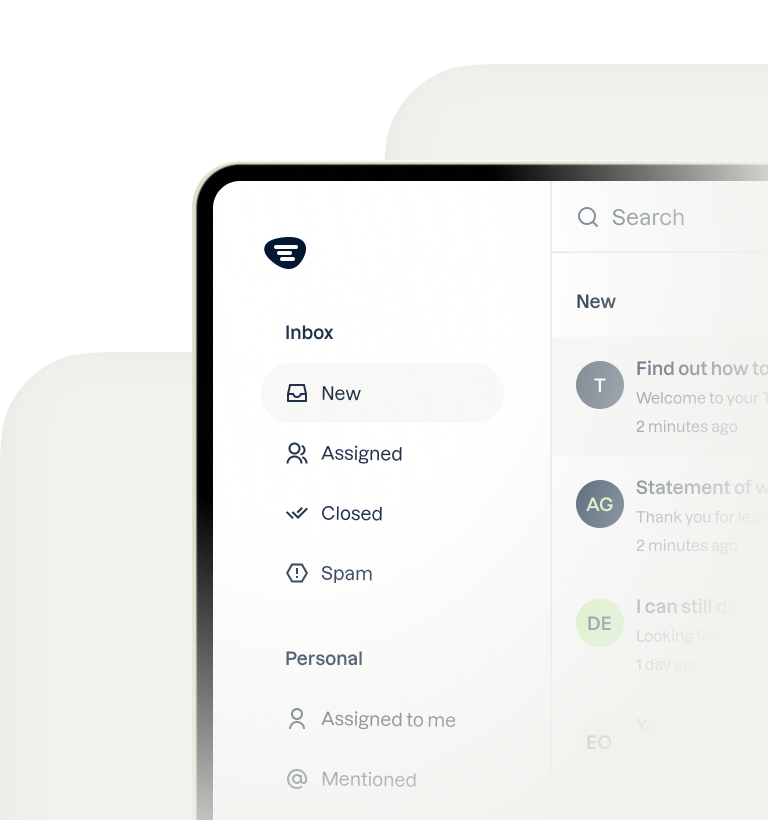
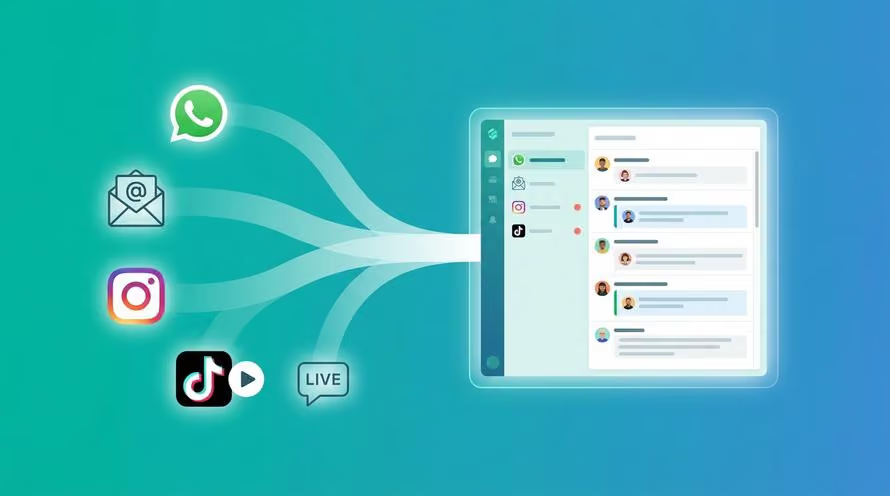
Trengo's core power lies in its ability to eliminate the chaos of modern e-commerce communication. Instead of having one team member logged into the website chat, another checking Instagram DMs, and a third monitoring the WhatsApp Business account, Trengo's Omnichannel inbox pulls every single customer message from every channel into one unified, collaborative workspace. This fundamentally changes how your team operates and how your customers experience your brand.
This centralization delivers immediate, tangible benefits. Firstly, it enables seamless team collaboration. An agent handling a complex product question can simply @mention a product expert internally to get an answer in seconds, all without leaving the chat or making the customer wait. Secondly, it creates a unified customer view. When a customer starts a chat, the agent can instantly see their entire history, including a support email from last week and a WhatsApp message from yesterday. This context allows for hyper-personalized service that makes customers feel understood and valued, dramatically increasing the likelihood of a conversion. It's time to stop losing sales in disconnected inboxes. See for yourself how centralizing your channels will instantly lift your e-commerce conversion rates.
Frequently Asked Questions
Does live chat increase sales?
Yes, live chat directly increases sales. By providing immediate answers to product questions, offering personalized recommendations, and eliminating friction at the checkout stage, businesses consistently see a significant lift in both conversion rates and overall sales volume. Customers who engage in a chat are statistically proven to spend more and have a higher lifetime value than those who do not.



Let's meet
Grow your business with loyalty. Bring all of your customer contact into one, single platform to unlock delight at every step of the way.