What Is an LLC? A 2026 Guide for Small Businesses


Try Trengo for Free

Trengo unites WhatsApp, email, web, social media, and calls in one inbox, saving your team hours of repetitive work and ensures no conversation is ever lost

What Is an LLC? A 2026 Reference for Small Businesses
Summary
Understanding what an LLC is becomes crucial for any aspiring entrepreneur in 2026. A Limited Liability Company (LLC) is a U.S. business structure that combines the liability protection of a corporation with the tax efficiencies and operational flexibility of a sole proprietorship or partnership. It's designed to protect your personal assets from business debts while being relatively simple to set up and maintain, making it a popular choice for small businesses and freelancers.
TL;DR
- An LLC, or Limited Liability Company, creates a legal barrier between your personal assets and your business liabilities.
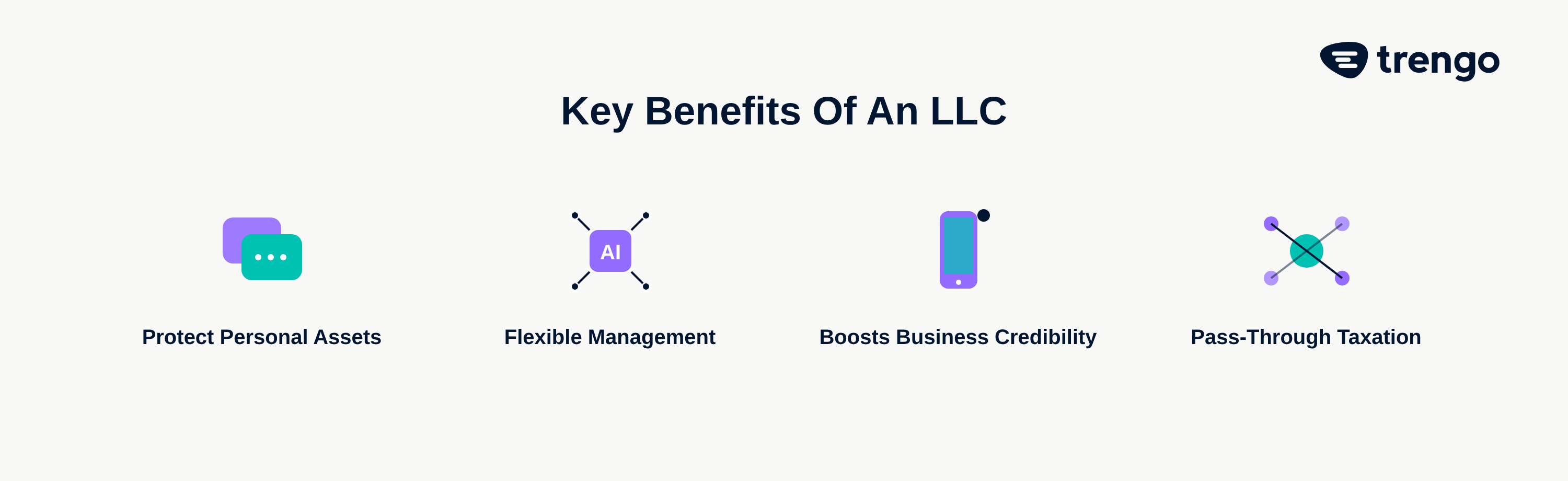
- Key benefits include personal asset protection, enhanced business credibility, and flexible management and taxation options.
- LLCs are taxed by default as "pass-through" entities, meaning profits are reported on the owners' personal tax returns.
- Forming an LLC involves choosing a name, appointing a registered agent, filing Articles of Organization, creating an Operating Agreement, and getting an EIN.
- After formation, establishing professional communication channels is the critical next step for growth.
What Does LLC Stand For? A Simple Definition
LLC stands for Limited Liability Company. At its core, this business structure is designed to provide one primary benefit: limited liability. The core of this concept is a simple, jargon-free explanation of what that means for you as a business owner. Imagine a protective wall between your personal assets, like your house, car, and personal savings, and your business's financial obligations and debts. An LLC legally builds that wall. If the business faces a lawsuit or accrues debt it cannot pay, your personal assets are generally protected and cannot be seized to satisfy those business liabilities. This separation is the fundamental reason so many entrepreneurs choose this structure.
The Core Benefits: Why Form an LLC for Your Business?
Deciding on a business structure is a foundational step. For many small business owners, the LLC offers a compelling blend of protection and simplicity that is hard to match. It addresses the core needs of a new venture without the burdensome complexity of other entities.
Personal Asset Protection
As mentioned, this is the number one reason to form an LLC. Without this structure, as a sole proprietor or partner, you and your business are legally the same entity. This means if your business is sued, your personal wealth is at risk. An LLC severs that direct link, ensuring that business debts and legal troubles stay with the business. This protection gives entrepreneurs the confidence to take calculated risks and grow their ventures.
Simplicity and Flexibility
Compared to a corporation, an LLC is significantly easier and less expensive to set up and maintain. The ongoing compliance requirements are less stringent, typically involving an annual report and fee rather than mandatory board meetings, minutes, and complex record keeping. LLCs also offer great flexibility in how they are managed and how profits are distributed among owners, which can be defined in the operating agreement.
Enhanced Credibility
Adding "LLC" or "Limited Liability Company" to your business name instantly boosts your professional image. It signals to customers, suppliers, and potential partners that you are a serious, legitimate business entity. This enhanced credibility can make it easier to secure contracts, open a business bank account, and build trust in the marketplace.
How to Form an LLC in 5 Key Steps
Forming an LLC is a straightforward process that you can often complete on your own, though consulting with a legal professional is always a good idea. While requirements vary slightly by state, the core steps remain consistent across the country.
- Choose a Unique Business Name: Your chosen name must be unique in your state and cannot be confused with another registered business. Most states have an online database to check for name availability. Your name must also typically end with an indicator like "LLC," "L.L.C.," or "Limited Liability Company."
- Appoint a Registered Agent: A registered agent is an individual or company designated to receive official legal and government correspondence on behalf of your LLC. This person must have a physical address in the state of formation and be available during business hours.
- File Your Articles of Organization: This is the official document that legally creates your LLC. You'll file it with your state's business agency, usually the Secretary of State. The document includes basic information like your LLC's name, address, and the name of your registered agent.
- Create an LLC Operating Agreement: While not required in all states, this internal document is highly recommended. It outlines the ownership structure and operating procedures of your LLC, detailing member roles, responsibilities, profit distribution, and what happens if a member leaves.
- Get an EIN from the IRS: An Employer Identification Number (EIN) is like a Social Security number for your business. It's required if you plan to hire employees, open a business bank account, or file certain business tax returns. You can apply for an EIN for free on the IRS website.
Understanding LLC Taxes: How Your Business Gets Taxed
Taxation is a critical aspect of any business structure, and the LLC's flexibility is one of its most powerful features. Understanding the basics can help you make informed decisions for your company's financial health.
The Default: Pass-Through Taxation Explained
By default, the IRS does not tax an LLC directly. Instead, it employs "pass-through taxation." For a single-member LLC, the IRS treats it as a "disregarded entity," meaning all profits and losses are reported on the owner's personal tax return (Schedule C). For a multi-member LLC, it's treated as a partnership, and each owner reports their share of the profits and losses on their personal returns. The business itself does not pay federal income tax.
The S Corp Election: A Potential Tax Advantage
An LLC also has the flexibility to elect to be taxed as an S Corporation. This can be a strategic move for profitable businesses. Under an S Corp election, owners can pay themselves a "reasonable salary" and take remaining profits as distributions. Only the salary is subject to self-employment taxes (Social Security and Medicare), while distributions are not. This can result in significant tax savings, though it's crucial to consult a tax professional to see if this is the right choice for your specific situation.
LLC vs Other Business Structures: Making the Right Choice
Choosing the right business entity depends on your specific goals, from liability tolerance to future growth plans. Here’s how the LLC stacks up against other common structures.
LLC vs Sole Proprietorship: The Key Difference is Liability
The primary distinction is liability protection. A sole proprietorship offers no legal separation between the owner and the business. Your personal assets are fully exposed to business debts and lawsuits. An LLC creates that crucial protective barrier, making it a much safer option for almost any business venture.
LLC vs Corporation C Corp: Flexibility vs Formality
A C Corporation is a more rigid and complex entity, with strict requirements for board meetings, minutes, and corporate bylaws. However, it's the preferred structure for businesses seeking to raise venture capital or issue stock. An LLC is far more flexible and simpler to manage, making it ideal for most small businesses that don't have immediate plans for outside investment.
LLC vs Partnership: Formal Protection
A general partnership, much like a sole proprietorship, offers no liability protection for its owners. All partners are personally liable for the business's debts, including those incurred by other partners. An LLC provides that same limited liability protection to every member, formalizing the business and protecting everyone involved.
Your LLC is Formed. What's Next? Setting Up for Professional Communication
Congratulations, you've taken a massive step by legally forming your business. But the legal paperwork is just Step 1. To succeed, your new LLC needs to look and act like a professional, credible company from day one. That foundation is built on excellent customer communication.
Unify Your Customer Channels with a Shared Inbox
As a new business, inquiries will start coming from everywhere. You'll have messages from email, questions from a contact form on their website, DMs on social media, and perhaps texts to a WhatsApp number. Juggling all these channels is chaotic, leads to missed opportunities, and makes your small operation feel disorganized. This is where a unified platform becomes a game-changer.
Why a Single Platform Matters for a New LLC
The solution is to centralize every customer conversation into one place. Trengo's Omnichannel inbox acts as a central hub where all these conversations land in one organized shared inbox. Even if you're a one-person LLC, this system allows you to manage everything efficiently, respond quickly and professionally, and build a strong reputation from the start. You'll never miss a lead and will project the image of an established, customer-focused business without needing a large team or a complex setup. You can even connect a WhatsApp Business API to manage customer conversations on the world's most popular messaging app.
Ready to manage your new business's communications like a pro? See how Trengo unifies all your customer channels in one simple inbox. Start your free trial today.
Frequently Asked Questions

The primary disadvantage is that LLC members' profits are subject to self-employment taxes (Social Security and Medicare). Additionally, ownership can be more complex to transfer than shares of a corporation, and raising capital from venture capitalists can be more difficult as they often prefer to invest in C Corporations.
While not legally required for all businesses, it is highly recommended if you want to protect your personal assets from business debts and lawsuits. If your business interacts with customers, has expenses, or carries any risk, forming an LLC is a prudent step to separate your personal and business liabilities.
Both offer limited liability, but their taxation and structure differ. A US based LLC has pass-through taxation by default, while a UK Limited Company (Ltd) pays corporation tax on its profits, and owners are taxed separately on salaries and dividends. The formation and regulatory requirements are also specific to each country's laws.
Yes, forming an LLC is a very common and effective strategy for real estate investors. It allows you to separate each property or a portfolio of properties into its own legal entity, protecting your other personal and business assets from liabilities associated with a specific property, such as tenant lawsuits or debt.
If you operate a business without forming a legal entity like an LLC, you are by default a sole proprietorship or a general partnership. This means there is no legal distinction between you and your business, and your personal assets are fully at risk to cover any business debts or legal claims.
No, an LLC cannot be a nonprofit organization itself. LLCs are for-profit business structures. To be recognized as a tax-exempt nonprofit by the IRS, an organization must be formed as a nonprofit corporation, a trust, or an association, not an LLC.




Let's meet
Grow your business with loyalty. Bring all of your customer contact into one, single platform to unlock delight at every step of the way.