Tour Operator Emergency Communication Calculator


Try Trengo for Free

Trengo unites WhatsApp, email, web, social media, and calls in one inbox, saving your team hours of repetitive work and ensures no conversation is ever lost
Tour Operator Emergency Communication Calculator
Use the interactive calculator below to discover how many customers you need to reach during emergencies, how much revenue is at risk, and how much time you can save with automated communication.
How to Calculate Tour Pricing and Manage Hidden Operational Costs
The emergency communication calculator above highlights a critical aspect of your business that standard spreadsheets often miss. While calculating the base price of a tour—factoring in hotels, transport, and guides—is standard practice, many operators fail to account for the "hidden costs" of operations. Specifically, the time and revenue lost during emergencies, cancellations, and the subsequent manual communication required effectively eats into your profit margins. This guide explores how to master tour costing and how tools like Trengo can bridge the gap between efficient accounting and efficient communication.
TL;DR
- Tour costing combines direct costs (tickets, meals) and indirect costs (marketing, salaries).
- The break-even point determines the minimum number of passengers needed to avoid a loss.
- Cost-plus pricing is the standard model, but demand-based pricing maximizes peak season revenue.
- Manual communication during emergencies is a massive hidden cost that drains staff hours.
- Revenue at risk is the potential financial loss from refunds and reputation damage due to poor crisis management.
- Automation tools like Trengo reduce operational costs by centralizing communication and enabling mass broadcasts.
Understanding the Fundamentals of Tour Costing
Tour costing is the process of determining the total expenditure incurred to organize and operate a specific tour package. It serves as the foundation for your pricing strategy, ensuring that every departure contributes to the company's financial health rather than operating as a loss leader.
Direct vs. Indirect Costs in Tour Itineraries
To calculate an accurate cost per passenger (pax), you must distinguish between variable and fixed expenses. Direct costs are variable and occur per person, such as entrance tickets, individual meals, and room rates. Indirect costs are fixed overheads that exist regardless of how many people book, including marketing campaigns, office rent, liability insurance, and the salaries of your administrative staff. A robust team inbox case study often reveals that administrative time is a significant portion of these indirect costs that goes unmeasured.
Calculating the Break-Even Point for Tour Departures
Learning how to calculate tour costing effectively requires identifying your break-even point. This is the precise number of bookings required to cover all direct and allocated indirect costs. Operating a tour below this threshold results in a financial loss unless it is a strategic marketing decision to gain market share. Accurate costing ensures you know exactly when a departure becomes profitable.
Strategic Tour Pricing Models for Profitability
Once you have established your costs, you must transition to pricing—determining the value exchange between you and the customer. The goal is to set a price that covers costs, ensures a healthy margin, and remains attractive to your target demographic.
Cost-Plus Pricing Strategy
The cost-plus pricing strategy involves setting the tour price based on total costs plus a defined profit margin. It is the most straightforward formula: Total Cost + Markup Percentage = Selling Price. For example, if a tour costs $100 to operate per person and you require a 20% margin, the selling price becomes $120. This method ensures that every sale contributes to profit, provided your cost calculations are accurate.
Competitor-Based and Demand-Based Pricing
While cost-plus protects margins, it ignores market reality. You must also analyze "how much is a tour" within the current market landscape. Competitor-based pricing involves benchmarking your rates against similar operators. Additionally, demand-based or dynamic pricing allows you to increase margins during peak seasons when demand outstrips supply, helping to offset lower margins during shoulder seasons.
The Hidden Costs of Operations: Cancellations and Crisis Management
Traditional accounting often ignores the operational cost of handling disruptions. As the calculator at the top of this page demonstrates, when an emergency occurs—whether it is a weather event, a strike, or a mechanical breakdown—the cost is not just the potential refund. It is the operational paralysis that follows.
Analyzing the "Revenue at Risk" Metric
Refer to the "Revenue at Risk" output in the calculator above. This figure represents the money you stand to lose not just from immediate refunds, but from the long-term impact of reputation damage. If a crisis is handled poorly, negative reviews can deter future bookings. Revenue at risk is a critical KPI that highlights why efficient operations are just as important as low procurement costs.
The High Cost of Manual Communication
Input your current data into the "Current Communication Method" field in the calculator. If you are manually calling 25 guests to cancel a tour, the tool likely shows that this process takes several hours. This time costs money in terms of staff wages and opportunity cost. While your team is stuck on the phone handling one crisis, they are unable to sell to new leads or assist other customers. This inefficiency is a major leak in your tour costing structure.
Reducing Operational Costs with Communication Automation
If time is money, then communication delays are expensive debts. Reducing operational overhead allows you to either increase your profit margin or offer more competitive pricing to customers. Tools like Trengo bridge this gap by automating the labor-intensive parts of tour operations.
Centralizing Channels with a Unified Inbox
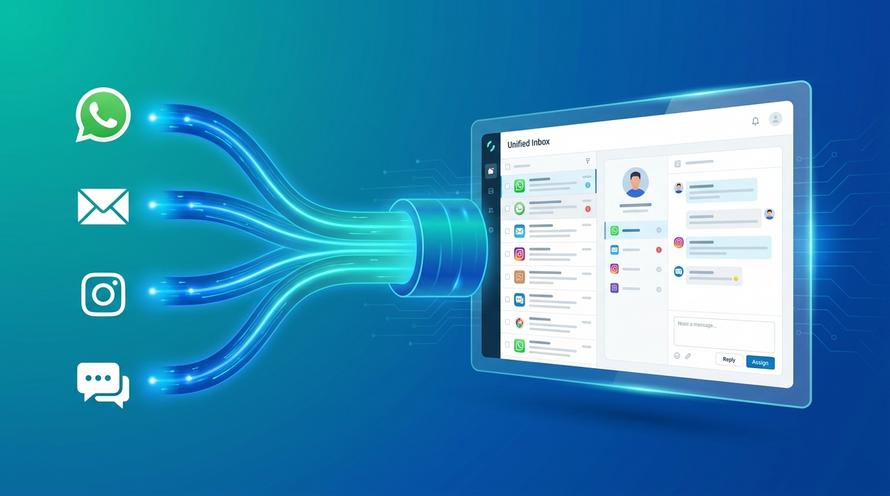
Fragmented communication increases error rates and response times. A unified inbox allows tour operators to manage emails, WhatsApp, and social messages in a single view. This prevents the costly scenario where one agent processes a refund via email while another agent is unknowingly chatting with the same client on Instagram. You can easily add WhatsApp and Instagram to one dashboard to streamline this process.
Using Broadcast Messages for Mass Updates
This feature directly solves the "hours vs. minutes" comparison shown in the calculator. Instead of calling 50 people individually to notify them of a cancellation, you can send a single WhatsApp Broadcast. Utilizing WhatsApp Business bulk message samples allows you to prepare templates for emergencies, meaning you can reach all affected customers in under a minute. This drastically reduces the "Time Spent" metric and improves customer satisfaction by providing instant information.
Automating Reviews and Feedback Requests
Adjust the "Negative Review Rate" slider in the calculator to see how improved communication protects revenue. Fast, proactive updates significantly reduce the likelihood of negative feedback. Furthermore, you can implement AI chatbot automation to automatically request positive reviews after a successful trip. This proactive reputation management improves your SEO and organic booking rates, effectively lowering your marketing acquisition costs.
Frequently Asked Questions (FAQ)
How do you calculate the cost of a tour itinerary?
You calculate the cost by summing all variable expenses (accommodation, transport, guide fees, attraction tickets) and adding a portion of your fixed overheads (admin, marketing) divided by the number of expected guests.
What is the concept of tour costing?
Tour costing is the comprehensive process of identifying and assigning a monetary value to every element of a tour product to determine its break-even price and ultimate profit potential.
How much does a tour cost to operate on average?
The cost varies wildly based on geography and luxury level, but operational costs (staff time and administration) typically account for 15-20% of the gross margin, which can be reduced through automation.
How does efficient communication affect tour pricing?
Efficient communication lowers operational overhead and staffing costs, allowing operators to either increase their profit margin or pass the savings on to customers for more competitive pricing.


Let's meet
Grow your business with loyalty. Bring all of your customer contact into one, single platform to unlock delight at every step of the way.