12 key customer service metrics + how to improve the performance


Try Trengo for Free

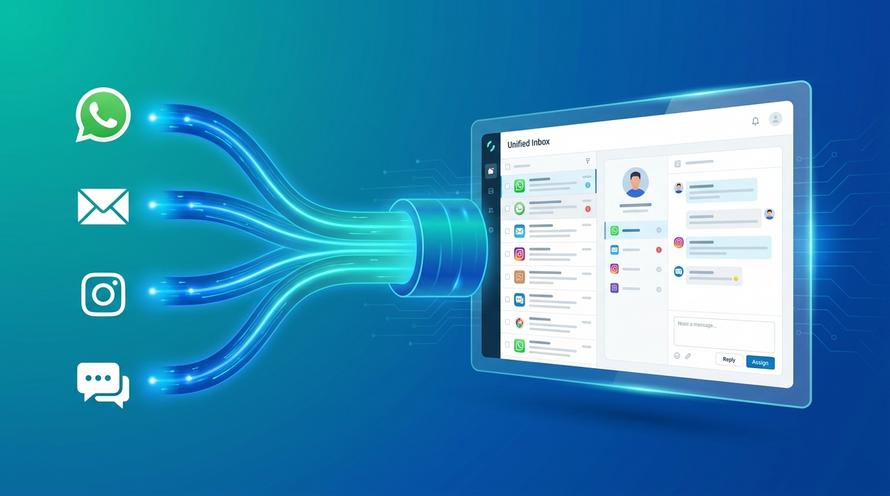
Trengo unites WhatsApp, email, web, social media, and calls in one inbox, saving your team hours of repetitive work and ensures no conversation is ever lost
What are customer service metrics and KPIs?
Customer service metrics are the data points and measurements that businesses track to evaluate the effectiveness, efficiency, and quality of their support teams. In the modern business landscape of 2026, relying on gut feeling is no longer sufficient. Leaders must rely on concrete data to understand how their team interacts with customers across email, live chat, WhatsApp, and social media.
While the terms are often used interchangeably, there is a distinct difference between "metrics" and "KPIs" (Key Performance Indicators). Customer service metrics refer to the raw data you collect—such as the number of tickets received or the average time it takes to reply. KPIs are the specific targets or goals you set based on those metrics to measure success against business objectives. For example, "First Response Time" is a metric, but "Maintaining a First Response Time under 30 minutes" is a KPI.
Summary
Customer service metrics are essential data points used to track the health of your support operations and the satisfaction of your client base. By monitoring these numbers, businesses can identify operational bottlenecks, improve agent performance, and ultimately drive revenue growth through higher retention rates. In 2026, the most effective teams utilize a unified inbox to centralize data from all channels, ensuring that metrics like CSAT, NPS, and First Response Time are accurate and actionable.
TL;DR
- Customer service metrics track data, while KPIs set the targets for that data.
- Tracking metrics is vital for identifying gaps in agent training and aligning support with business growth.
- Quantitative metrics measure efficiency (speed/volume), while qualitative metrics measure sentiment (happiness/loyalty).
- Key metrics for 2026 include CSAT, NPS, First Response Time (FRT), and Customer Effort Score (CES).
- Unified inboxes like Trengo are crucial for aggregating data from fragmented channels into a single dashboard.
- Automation and AI agents are the primary drivers for improving response times and resolution rates.
Customer service vs. customer support metrics
Although the lines are blurring in 2026, it is helpful to distinguish between customer support and customer service. Customer service operations generally encompass the entire customer lifecycle—focusing on advice, relationship building, and the overall experience. Consequently, customer service metrics often lean towards qualitative measures like satisfaction and loyalty.
Customer support, on the other hand, is typically more technical and transactional. It focuses on fixing bugs, resolving account issues, and troubleshooting. Customer support metrics usually prioritize quantitative data, such as ticket volume, resolution speed, and backlog size. However, for businesses using unified communication platforms, these two functions often overlap, requiring a dashboard that tracks both relationship health and operational efficiency simultaneously.
Why are customer service metrics important for business growth?
Many businesses mistakenly view support as a cost center. However, data-driven organizations understand that excellent service is a revenue generator. Tracking customer service metrics is not just about keeping customers happy; it is about protecting the bottom line. You cannot improve what you do not measure. Without clear visibility into your performance, you risk losing customers to competitors who offer a faster, smoother experience.
Identifying performance gaps and training opportunities
Data tells a story that observation alone cannot. Comprehensive metrics allow managers to drill down into individual agent performance or channel-specific issues. For instance, you might discover that your team answers emails rapidly but struggles to maintain the same pace on WhatsApp. Alternatively, you might find that a specific agent has a high ticket volume but a low Customer Satisfaction Score (CSAT).
These insights allow you to implement targeted training rather than generic coaching. If the data shows that technical tickets have a high reopening rate, you know your team needs better technical resources or training, rather than just being told to "work faster."
Aligning support goals with business objectives
Customer support metrics provide the bridge between daily operations and high-level business goals. If the company’s objective is to reduce churn by 5% this year, support leaders can look at the "Customer Churn Rate" and "Net Promoter Score" to understand the correlation between support quality and cancellations. By aligning KPIs with broader goals, the support team becomes a strategic partner in business growth, driving retention and increasing customer lifetime value (CLV).
The two main types of service metrics
To get a holistic view of your performance, you must balance your tracking between hard numbers and customer feelings.
Quantitative metrics (Operational efficiency)
Quantitative metrics are objective, numerical data points that measure the *efficiency* of your team. These are the "hard numbers." They answer questions like: How many tickets did we handle? How fast did we reply? How many messages did it take to solve the issue? These metrics are essential for workforce planning, staffing, and identifying bottlenecks in your workflow.
Qualitative metrics (Customer sentiment)
Qualitative metrics are subjective and measure the *experience* of the customer. These are the "soft numbers." They answer questions like: Did the customer feel heard? Will they recommend us? Was the interaction easy? In an era where AI handles simple tasks, the human element measured by qualitative metrics is becoming the primary differentiator for premium brands.
12 Essential customer service metrics to track in 2026
To build a comprehensive customer service metrics dashboard, you need a mix of efficiency and sentiment data. Here are the 12 most critical metrics to track this year.
1. Customer Satisfaction Score (CSAT)
Definition: CSAT measures how satisfied a customer is with a specific interaction, product, or service. It is typically gathered via a survey sent immediately after a ticket is closed.
How to calculate:
(Number of positive responses / Total number of responses) x 100 = CSAT %
Why it matters: CSAT provides immediate feedback on the quality of support. A sudden drop in CSAT is a red flag that operational changes or product issues are negatively impacting your users. It is the most direct way to gauge if your customers are happy right now.
2. Net Promoter Score (NPS)
Definition: NPS measures long-term loyalty and the likelihood of a customer recommending your business to others. It asks the question: "On a scale of 0-10, how likely are you to recommend us to a friend or colleague?"
How to calculate:
% Promoters (score 9-10) - % Detractors (score 0-6) = NPS
Why it matters: While CSAT measures a single interaction, NPS measures the overall relationship. High NPS correlates strongly with organic growth and low churn. Identifying "Detractors" allows you to proactively reach out and save the relationship before they leave.
3. First Response Time (FRT)
Definition: Also known as "average time to first reply," this measures the time elapsed between a customer sending a message and an agent sending the first response (automated receipts do not count).
How to calculate:
Total time taken to send first replies / Total number of tickets = Average FRT
Why it matters: Speed is the number one driver of customer satisfaction in 2026. Customers expect near-instant responses on chat and quick turnarounds on email. Using a unified inbox with auto-assignment rules can significantly lower FRT by ensuring no ticket sits unassigned in a queue.
4. Average Resolution Time (ART)
Definition: The average time it takes for a support team to completely resolve a customer's issue and close the ticket.
How to calculate:
Total duration of all resolved tickets / Total number of resolved tickets = ART
Why it matters: While a fast reply (FRT) is good, a fast solution is better. Long resolution times frustrate customers. However, this metric must be balanced with quality; you do not want agents rushing to close tickets without actually solving the root problem.
5. Customer Effort Score (CES)
Definition: CES measures how much effort a customer had to exert to get their issue resolved. Questions are phrased like: "To what extent do you agree that the company made it easy for me to handle my issue?"
How to calculate:
Average of all survey responses (usually on a 1-5 or 1-7 scale).
Why it matters: In the age of AI-automated customer service, convenience is king. High-effort experiences (having to repeat information, waiting on hold, switching channels) are the biggest predictors of disloyalty. Lowering effort is often more effective than "delighting" customers.
6. Customer Churn Rate
Definition: The percentage of customers who stop doing business with you over a specific period.
How to calculate:
(Customers lost during period / Total customers at start of period) x 100 = Churn Rate %
Why it matters: This is the ultimate health metric for SaaS and subscription businesses. Poor customer service is a leading cause of churn. Tracking this helps you understand the direct financial impact of your support team's performance.
7. Ticket Volume and Backlog
Definition: Ticket volume is the total number of inquiries received. Backlog is the number of unresolved tickets remaining at the end of a period.
How to calculate:
Sum of all incoming requests across all channels (Email, WhatsApp, Chat, Voice).
Why it matters: You need to know when your team is overwhelmed. Spikes in volume help you plan staffing schedules. A growing backlog indicates that your current team size or efficiency tools are insufficient for the demand.
8. First Contact Resolution (FCR)
Definition: The percentage of tickets that are resolved in a single interaction, requiring no follow-up from the customer.
How to calculate:
(Tickets resolved on first contact / Total tickets) x 100 = FCR %
Why it matters: FCR is the "holy grail" of efficiency. It means the customer got what they wanted immediately, and your agents didn't have to spend time on follow-ups. High FCR drastically lowers overall ticket volume and boosts CSAT.
9. Ticket Reopen Rate
Definition: The percentage of tickets that are marked as "solved" but are subsequently reopened because the customer replied indicating the issue wasn't actually fixed.
How to calculate:
(Number of reopened tickets / Total resolved tickets) x 100 = Reopen Rate %
Why it matters: A high reopen rate suggests your agents are prioritizing speed over quality (closing tickets prematurely) or that your solutions are unclear. It is a key quality control metric.
10. Agent Touches (Replies per Ticket)
Definition: The average number of times an agent has to reply to a customer within a single ticket to reach a resolution.
How to calculate:
Total number of agent replies / Total number of tickets = Average Touches
Why it matters: If it takes 10 emails to solve a password reset, your process is broken. Lowering the number of touches per ticket increases agent capacity and reduces customer frustration.
11. Customer Sentiment Analysis
Definition: An AI-driven metric that scans the text of customer interactions to determine the emotional tone (Positive, Neutral, Negative, Angry).
How to calculate:
Utilize AI tools within platforms like Trengo to automatically tag and score conversations based on language patterns.
Why it matters: CSAT surveys only capture the opinions of people who fill them out (often a small percentage). Sentiment analysis gives you a 100% view of how customers are feeling across every single conversation, helping you spot heated situations before they escalate.
12. Self-Service Usage Rate
Definition: The percentage of customers who resolve their issues using a Knowledge Base, Help Center, or AI Chatbot without speaking to a human agent.
How to calculate:
(Total Help Center views or Chatbot resolutions / Total Ticket Volume) = Usage Rate
Why it matters: Agentic AI and self-service are the future of scaling support. A high self-service rate means your documentation is effective, saving your human agents for complex, high-value interactions.
Industry-specific metrics: Retail, SaaS, and Manufacturing
While the 12 metrics above apply to most businesses, different industries often weight them differently based on their specific operational needs.
- Retail & E-commerce: Speed is critical here. First Response Time and Return Rate are paramount. Retailers also track social media engagement heavily, as many support queries come through Instagram or Facebook comments.
- SaaS (Software as a Service): Retention is the main goal. Churn Rate, NPS, and Product Feedback volume are the top priorities. SaaS teams also focus heavily on Ticket Reopen Rates to ensure complex bugs are actually fixed.
- Manufacturing: Customer service metrics for manufacturing often focus on logistics and specifications. Metrics like Warranty Claim Rate, Order Accuracy, and On-Time Delivery Support take center stage. Manufacturing support often involves complex, technical queries, so Average Resolution Time is typically longer and less critical than First Contact Resolution (accuracy).
How to track and measure customer service metrics effectively
Knowing which metrics to track is step one. Step two is implementing a system that gathers this data automatically, so you don't spend hours wrestling with spreadsheets.
Centralize data with a Customer Service Metrics Dashboard
The biggest challenge for modern support teams is data fragmentation. If you handle phone calls on a mobile, emails in Outlook, and WhatsApp on a personal device, you have no way to calculate a unified "First Response Time." You end up with blind spots.
The solution is a unified inbox. By centralizing all communication channels into one platform, you can view a consolidated customer service metrics dashboard. This allows you to see, for example, that your Instagram DM response time is 2 hours while your email response time is 12 hours, giving you actionable data to reallocate resources.
Setting benchmarks and goals
Once you have the data, you need to set standards. Avoid setting arbitrary goals like "reply in 1 minute" if your current average is 4 hours. Start by benchmarking your current performance over the last 30 days. Set incremental goals—aim to improve FRT by 10% month-over-month. Use industry benchmarks as a guide, but remember that your own historical data is the most important baseline for improvement.
Strategies to improve your customer service metrics
If your numbers aren't where you want them to be, you can use technology and process improvements to move the needle.
Reduce response times with automation and chatbots
You cannot scale a support team linearly with customer growth—it becomes too expensive. To improve FRT and Deflection Rates, you must leverage automation. Implementing AI chatbots for customer service allows you to answer common questions (FAQs, order status, pricing) instantly, 24/7. This keeps your FRT low and frees up human agents to focus on complex tickets, improving their efficiency.
Improve resolution time with team collaboration
Long resolution times often stem from "siloed" information. An agent might need to ask a manager for a refund approval or ask the logistics team about a shipment. In traditional email setups, this involves forwarding emails and waiting days for a reply.
With a unified platform like Trengo, agents can use internal tagging and @mentions to chat with colleagues right inside the ticket thread. This eliminates the need for external emails, drastically reducing the time it takes to get an answer and close the ticket.
Enhance CSAT with personalized support
Customers hate repeating themselves. When your metrics show a low Customer Effort Score or low CSAT, it is often because the customer feels treated like a ticket number. By using a platform that integrates with your CRM or e-commerce software (like Shopify or Magento), agents can see the customer's order history and profile immediately. This context allows for personalized, empathetic support that drives loyalty and high satisfaction scores. If you are ready to see how this works in practice, book a free demo with Trengo today to explore these features.
Frequently Asked Questions (FAQ)
What are the 5 key performance indicators for customer service?
While priorities vary by industry, the top 5 universally accepted KPIs are Customer Satisfaction Score (CSAT), Net Promoter Score (NPS), First Response Time (FRT), First Contact Resolution (FCR), and Customer Churn Rate.
How do you calculate customer service metrics?
Most modern helpdesk software calculates these metrics automatically in real-time dashboards. However, you can calculate them manually using standard formulas; for example, CSAT is calculated by dividing positive survey responses by the total number of responses and multiplying by 100.
What are the 7 C's of quality customer service?
The 7 C's are generally defined as Clear, Concise, Concrete, Correct, Coherent, Complete, and Courteous. These principles guide the *quality* of communication, which directly impacts metrics like CSAT and NPS.
What metrics track the performance of a customer service representative?
To evaluate individual agent performance, managers typically track "handled tickets per hour," individual CSAT scores, agent-specific First Response Time, and quality assurance (QA) scores based on ticket reviews.


Let's meet
Grow your business with loyalty. Bring all of your customer contact into one, single platform to unlock delight at every step of the way.