Blog

Multichannel / omnichannel
What is omnichannel marketing strategy and What is the best omnichannel marketing platform?
What is omnichannel marketing strategy and What is the best omnichannel marketing platform?

Try Trengo for Free

Trengo unites WhatsApp, email, web, social media, and calls in one inbox, saving your team hours of repetitive work and ensures no conversation is ever lost
Summary
This comprehensive guide explores how to build a winning omnichannel marketing strategy in 2026. We define what an omnichannel approach entails, distinguish it from multichannel marketing, and outline a five-step framework for implementation. By leveraging tools like Trengo's unified inbox and automation features, businesses can create seamless customer experiences that drive retention and increase lifetime value.
TL;DR
- An omnichannel marketing strategy connects all customer touchpoints into a single, seamless experience.
- Unlike multichannel marketing, which keeps platforms in silos, omnichannel ensures data and history travel with the customer.
- Key pillars of success include channel visibility, data measurement, personalization, and continuous optimization.
- Creating a strategy involves mapping the customer journey, centralizing data, and unifying communication channels.
- Technology plays a vital role; platforms like Trengo enable teams to execute these strategies through a shared inbox and automation.
What Is an Omnichannel Marketing Strategy?
An omnichannel marketing strategy is a business approach that provides customers with a fully integrated shopping experience. Whether the consumer is shopping online from a desktop or mobile device, by telephone, or in a brick-and-mortar store, the experience is seamless and consistent. The core omnichannel definition revolves around placing the customer at the center of the strategy, ensuring that the brand message and service quality remain uniform regardless of the channel used.
When we look at the omnichannel marketing strategy meaning in a practical context, it implies that data is synchronized. If a customer adds an item to their cart on a mobile app but abandons it, they might receive an email reminder later that day, or see a retargeting ad on Instagram. This level of interconnectivity distinguishes a true omnichannel business strategy from disjointed marketing efforts.
Omnichannel vs. Multichannel: What’s the Difference?
While the terms are often used interchangeably, there is a distinct difference between multichannel and omnichannel marketing. Multichannel marketing means a brand is present on multiple platforms—such as a website, social media, and a physical store—but these channels often operate in silos. They do not "talk" to each other.
In contrast, an omnichannel framework creates a network. It bridges the gaps between channels. In a multichannel setup, a customer service agent on the phone might not know that the customer just complained via email. In an omnichannel setup, the agent has immediate access to that history, allowing for a fluid and frustration-free resolution.
Why the Omnichannel vs. Multichannel difference matters
Customers today expect fast, seamless service, no matter where they are. According to a CM report, no matter the age or origin, the top three annoyances in customer service are:
1. Long waiting times
2. Having to repeat yourself
3. Difficulty in reaching
Multichannel might get their attention. But only an omnichannel approach keeps it and stops them from having to repeat themselves by making every interaction feel connected and personal.
Benefits of an Omnichannel Marketing Strategy
An omnichannel marketing strategy should transform your entire customer experience. Here’s how it creates real business value.
1. It builds better brand experiences
Consistency builds trust. When customers get the same helpful tone, fast responses, and relevant content across every channel, they’re more likely to become loyal to your brand, even when other options exist.
With Trengo, brands create this kind of experience daily by syncing WhatsApp, email, Instagram DMs and automating follow-ups through AI-powered omnichannel inboxes.
2. It gives you a competitive edge
In crowded markets, experience is the differentiator. While others focus on pushing out content, an omnichannel strategy listens, responds, and adapts across every channel.
Using insights from past conversations, preferences, and behaviours, you can fine-tune your outreach and support to create more meaningful interactions.
With Trengo, teams gain a central view of the customer journey, powered by automation and AI. That means less guesswork, customers don't have to repeat themselves, and your team can deliver more personalised responses.
3. It drives long-term sales growth
Customers spend more with brands they feel connected to. According to research from SocialSprout, 77% of consumers say they’re more likely to increase spending with companies that ‘get them’.
An omnichannel marketing strategy helps make that connection happen. By aligning your marketing, sales and support teams with one shared view of the customer, you remove friction from the buying process and open the door to higher-value relationships.
4. It reduces internal complexity
A connected strategy isn't just great for your customer experience, it's great for your internal teams, too. When communication is centralised and data is shared, everyone works with the same context. No more switching between platforms, chasing down customer history, or duplicating work. This makes life so much easier for your staff, reducing stress and frustration for them which in turn can reduce staff turn over.
With Trengo, teams collaborate in one shared inbox, use labels and rules to stay organised, and let automation handle the repetitive stuff. That means faster onboarding, clearer workflows, and fewer missed messages, especially as you scale and grow your teams.
How To Build An Effective Omnichannel Marketing Strategy
An effective omnichannel marketing strategy starts with mapping every customer touchpoint, then unifying your data and communication channels so nothing falls through the cracks. The key is aligning your messaging across platforms, integrating your tools, and using automation to stay responsive at scale. Brands that get this right see stronger retention, faster response times, and measurable revenue growth. We break down the full process in our guide on how to build an effective omnichannel marketing strategy.
Top 3 omnichannel marketing platforms
Choosing the right platform is key to building a unified omnichannel marketing strategy. You need a system that brings everything together, supports automation, and puts your customer at the centre.
Here are three of the top platforms for creating connected customer journeys, starting with Trengo.
1. Trengo
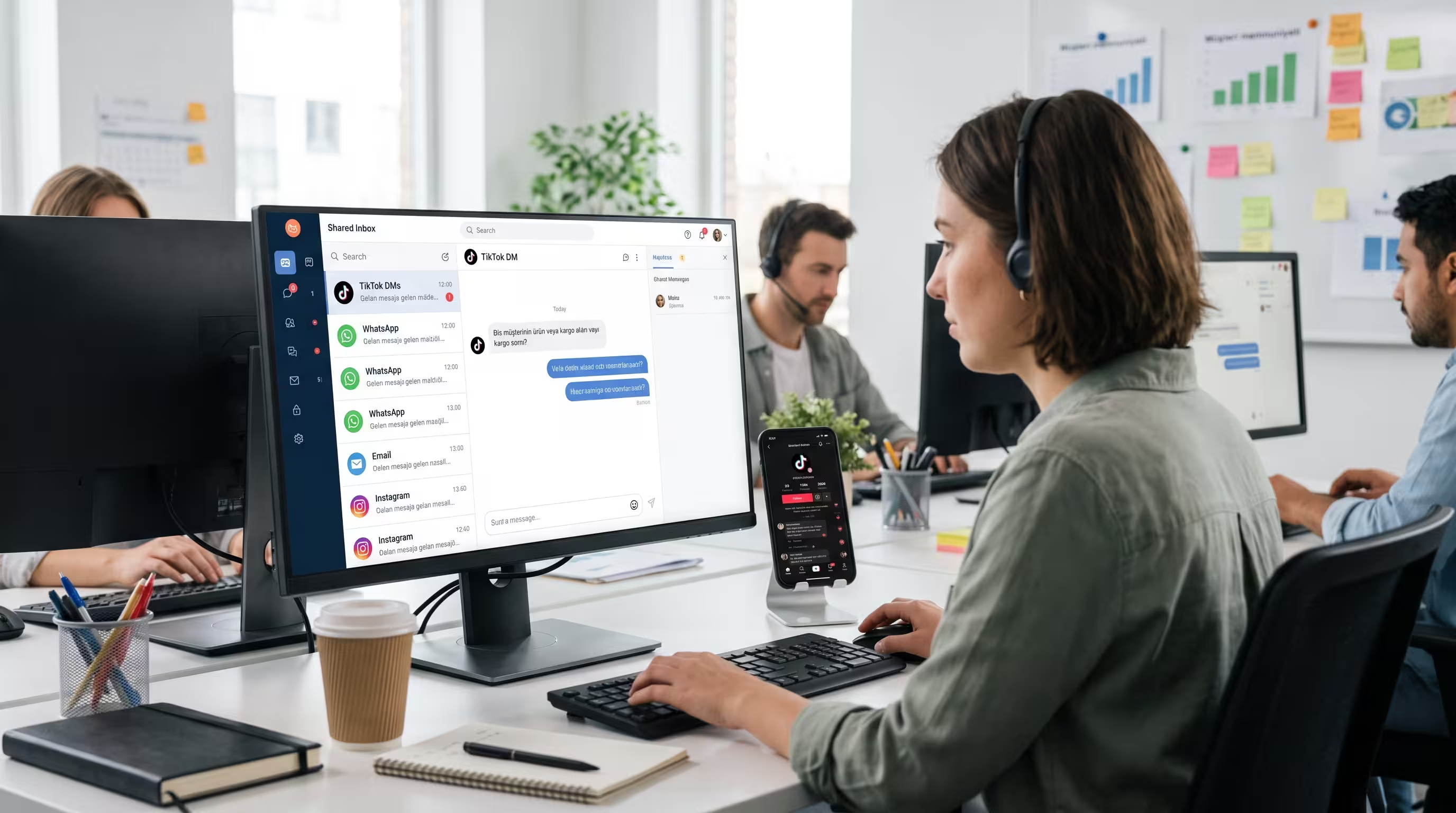
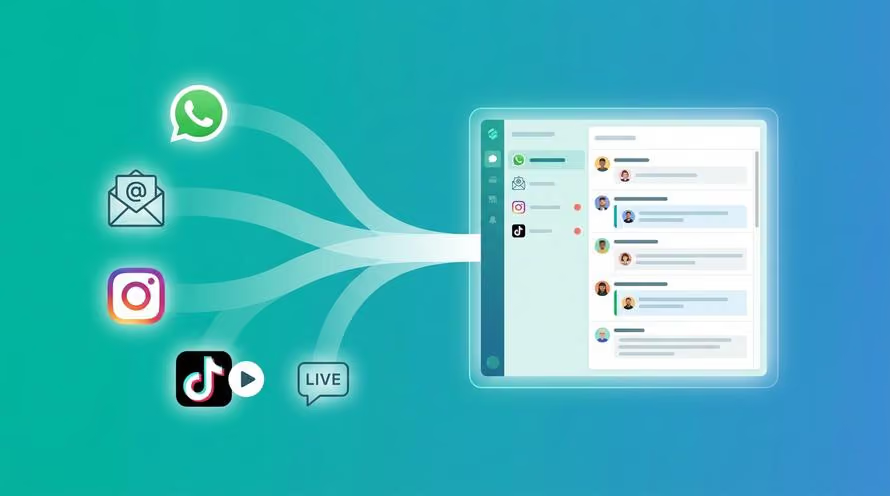
Trengo is a leading omnichannel inbox and engagement platform designed to make customer communication effortless. It brings channels like WhatsApp, email, Instagram, live chat, and Facebook Messenger into one shared inbox, so your team has full context for every conversation.
With Trengo’s AI capabilities, you can speed up responses using smart suggestions, automated workflows, and HelpMate AI-powered messaging. You can handle FAQs instantly, personalise follow ups, and even tag conversations automatically for better insights.
It’s built for growing teams who want to scale without losing the human touch. Trengo makes it easy to stay consistent, stay fast, and stay in control, all from one platform.
2. Zendesk
Zendesk is a widely-used customer service platform that supports omnichannel communication across email, chat, phone, and social media. It’s especially known for its ticketing system and analytics.
Zendesk allows teams to create detailed workflows and route messages based on priority or topic. With the right setup, it offers a unified view of customer interactions and integrates with hundreds of apps to expand functionality.
However, some businesses find Zendesk’s complexity overwhelming. It may take more time to configure, and customising the experience often requires developer support. It’s best suited for larger teams with dedicated technical resources.
3. HubSpot
HubSpot offers a full suite of tools for marketing, sales, and customer service, with omnichannel capabilities built into its CRM. It connects email, live chat, social media, and forms into one platform, making it easier to follow leads through the entire funnel.
For marketers, HubSpot excels in automation and personalisation. You can create custom journeys based on customer behaviour and trigger messages across multiple channels. Its reporting features give insight into what’s working across the journey.
While powerful, HubSpot’s pricing can be a barrier for smaller teams. Many of the more advanced features are locked behind higher-tier plans, which may not be cost-effective for businesses just starting their omnichannel journey.
Successful omnichannel marketing examples that will inspire you to get started
A unified omnichannel marketing strategy helps brands create consistent, personal experiences across every channel that your customers use to interact with your brand. These five examples show how different businesses, across industries and regions, have used omnichannel thinking to drive measurable results.
Adore Beauty: Driving loyalty with cross-channel personalisation
Adore Beauty, a leading online cosmetics retailer, needed a better way to retain customers after their first purchase. By launching a loyalty program with SAP Emarsys, they used customer lifecycle data to deliver tailored experiences across email, mobile, and web.
Their campaigns included personalised product recommendations, loyalty incentives, and real-time targeting based on browsing behaviour. Each interaction was designed to feel relevant and connected.
The result? A 47% revenue increase, 56% more returning customers, and over 95% retention among their top-tier loyalty members. This is a great example in turning customer data into engagement, and that engagement into growth.
Marriott: Increasing bookings with unified ad experiences
Marriott International ran an omnichannel campaign to boost awareness of its loyalty programme, Marriott Bonvoy. Using Connected TV, digital out-of-home, and online display ads, they delivered consistent messaging across multiple touchpoints.
The brand centralised data and ad management to track which combinations of channels led to the most engagement. Customers exposed to three or more touchpoints were 1.8x more likely to visit the website. Those who saw CTV ads were 3.8x more likely to convert.
This campaign led to a 45% uplift in conversions, proving how synchronised storytelling across channels can drive bookings and brand loyalty.
De Huidkliniek: Supporting growth with Trengo AI
Dutch skincare chain De Huidkliniek wanted to keep customer communication fast and personal as they grew. With clinics across the country and a rising number of queries, their support team needed help.
They turned to Trengo, shifting focus from live chat to WhatsApp and deploying Trengo AI to handle common questions like appointment changes. They also automated follow-ups using smart labels and rules.
The result? No leads lost after hours, fewer repetitive tasks, and better response times. AI helped the team stay productive, even during peak season. Customers stayed engaged, and many didn’t even realise they were talking to a bot.
NA-KD: Scaling personalised journeys with AI
European fashion brand NA-KD wanted to break away from rigid marketing calendars and create more dynamic, personalised experiences. With Insider’s platform and AI-native journey orchestration tool, Architect, they achieved a 360° view of every customer.
Using AI and behavioural data, NA-KD launched personalised journeys across SMS, email, app, and web push notifications. They tested what worked using predictive features like send time optimisation and channel preferences.
In just 12 months, the brand saw a 72 X return on investment and a 25% increase in customer lifetime value. Their strategy showed that real-time personalisation that is driven by connected data, builds loyalty and revenue at scale.
Vogacloset: Boosting ROI with WhatsApp personalisation
Fashion eCommerce brand Vogacloset needed a solution to unify fragmented data and connect better with both new and loyal customers. After integrating Insider’s CDP and journey builder, they gained full visibility into each customer’s behaviour.
WhatsApp quickly became their highest-performing channel. With personalised price-drop alerts and product recommendations, Vogacloset created conversations that felt immediate and relevant.
They launched multi-channel journeys without relying on developers, giving their marketing team added speed and flexibility. The results were impressive: a 30X ROI, faster campaign delivery, and higher conversion rates through messaging that met users where they were.
Why omnichannel is worth the effort
A strong omnichannel marketing strategy helps you connect with customers on their terms, across every channel they use, with no friction or frustration. We’ve seen how leading brands use unified data, personalisation, and the right tools to build loyalty, boost conversions, and stay ahead. Whether it’s through AI, automation, or a shared inbox, the key is putting the customer experience first.
Ready to do the same? Trengo makes it simple to centralise conversations, automate the busywork, and keep your team in control.
Book your free demo today and start building smarter, more connected experiences.
Frequently Asked Questions (FAQs)
How is omnichannel marketing different from multichannel marketing?
Multichannel marketing uses several separate channels—such as email, social media, and physical stores—but they often operate independently. Omnichannel marketing integrates those channels so customer data and interactions flow seamlessly between them. For example, a customer might start a chat on Facebook Messenger, continue via email, and complete a purchase in-store, with Trengo ensuring your team has the full conversation history at every step.
What is the difference between cross-channel and omnichannel?
Cross-channel marketing implies the ability to pass a customer from one channel to another (e.g., clicking an email link to go to a website), but the channels are still distinct steps. Omnichannel marketing implies a simultaneous, ubiquitous presence where the channels are so tightly integrated that the customer perceives them as one single brand experience.
Which businesses benefit most from omnichannel marketing?
Omnichannel marketing benefits:
- Retail and e-commerce – to connect online shopping, mobile apps, and physical stores.
- Hospitality and travel – to unify bookings, in-stay communication, and loyalty programmes.
- Financial services – to ensure consistent support across branches, apps, and contact centres.
With Trengo, even smaller teams can manage an omnichannel approach without needing multiple separate tools.
How do I create an omnichannel marketing plan for my business?
- Map your customer journey – Identify all touchpoints where customers interact with your brand.
- Unify your data – Use a platform like Trengo to centralise communication history.
- Align messaging – Ensure tone, offers, and branding are consistent across all channels.
- Integrate your tools – Connect your CRM, email marketing, and sales platforms.
- Measure and optimise – Track performance metrics and adjust based on customer behaviour.
Which tools or platforms are best for managing an omnichannel strategy?
Look for tools that integrate multiple communication channels, CRM data, and automation. Trengo is ideal for omnichannel communication, combining WhatsApp, email, live chat, social media, and more into one unified inbox. Other complementary tools include HubSpot for marketing automation, Shopify for e-commerce, and Google Analytics for tracking behaviour. We also talked about best omnichannel marketing tools to grow your business, you can have a look at it.
How can I integrate social media, email, and in-store marketing into one strategy?
Use a centralised platform like Trengo to manage social media messaging, email replies, and in-store customer queries in one place. Sync customer data across all channels so, for example, an email subscriber who also visits your store receives personalised offers based on both online and offline activity. Consistency in branding and messaging across touchpoints ensures customers feel they’re dealing with one connected brand.
Can small businesses use omnichannel marketing effectively?
Yes. Omnichannel isn’t just for large enterprises. Small businesses can start with a few key channels and link them using tools like Trengo. Even a basic setup integrating WhatsApp, email, and a simple CRM can create a more consistent and professional customer experience without a huge budget.
How can AI and automation improve an omnichannel strategy?
AI can personalise content, recommend products, and predict customer behaviour, while automation ensures timely responses and consistent follow-ups. With Trengo, AI chatbots can handle initial queries across channels, route conversations to the right team member, and keep records synced, helping businesses scale their customer interactions without sacrificing quality.
What are the 4 C's of omnichannel?
The 4 C's of omnichannel are Consumer, Convenience, Consistency, and Communication. These pillars remind strategists to prioritize the customer's needs, make the journey easy, maintain a uniform brand voice, and ensure open lines of dialogue across all platforms.

Let's meet
Grow your business with loyalty. Bring all of your customer contact into one, single platform to unlock delight at every step of the way.