Upselling vs. Cross-Selling: Key differences & examples


Try Trengo for Free

Trengo unites WhatsApp, email, web, social media, and calls in one inbox, saving your team hours of repetitive work and ensures no conversation is ever lost
What Are Upselling and Cross-Selling?
Summary
Upselling and cross selling are powerful sales strategies that increase revenue by maximizing the value of each customer transaction. Upselling involves persuading a customer to purchase a more expensive, upgraded version of a product, while cross selling is the art of recommending complementary items. By mastering these techniques, businesses can significantly boost their average order value and enhance customer loyalty without relying solely on new customer acquisition.
TL;DR
- Upselling: Encouraging customers to buy a more premium version of a product (e.g., a larger phone memory).
- Cross-selling: Suggesting related or complementary products to a purchase (e.g., a phone case).
- Key Difference: Upselling offers a better version of the same item; cross-selling offers additional, different items.
- Core Benefits: Increased revenue, higher customer lifetime value (CLV), and better return on investment (ROI).
- Best Practice: Use customer data and conversation context to make relevant, timely, and helpful offers.
- Trengo's Role: A shared omnichannel inbox provides the context and tools to identify and act on these opportunities seamlessly.
Upselling Meaning: Encouraging a Premium Purchase
Upselling is a sales technique where you persuade a customer to buy a more expensive or upgraded version of the product they are already considering. The core idea is to increase the Average Order Value (AOV) by demonstrating how a premium option provides more value, features, or benefits. It’s the classic "Would you like to supersize that?" at a fast food restaurant. The customer gets a better product that more completely solves their problem, and you generate more revenue from a single sale.
Cross-Selling Meaning: Recommending a Complementary Product
Cross selling involves suggesting related or complementary products to a customer based on the item they are about to purchase. If upselling is "supersizing," cross selling is asking, "Would you like fries with that?" This technique focuses on fulfilling a broader set of the customer's needs. For instance, if someone buys a new laptop, cross selling a wireless mouse, a protective sleeve, or software enhances their overall experience with the primary product.
Upselling vs. Cross-Selling: What’s the Key Difference?
While both upselling and cross selling aim to increase revenue per customer, they do so in distinct ways. The fundamental distinction lies in whether you are offering a better version of the same product or an entirely different, complementary product. Understanding this difference is key to applying the right tactic at the right time. Here is a clear breakdown.
The Goal
Upselling: To sell a more expensive, feature rich, or higher quality version of the same product the customer is already interested in. The goal is to increase the value of that single item purchase.
Cross-selling: To sell additional, related products that complement the primary purchase. The goal is to increase the total number of items in the customer's cart.
The Tactic
Upselling: This tactic involves comparison. You show the customer the product they are considering and then present the upgraded version next to it, highlighting the added benefits for a marginally higher price.
Cross-selling: This tactic is about association. You suggest items that logically go together with the main purchase, often presented as a "complete the set" or "customers also bought" offer.
The Example
Upselling: A customer selects a 256GB laptop, and you suggest the 512GB model for faster performance and more storage for only a small price increase.
Cross-selling: A customer buys a new digital camera, and you recommend they also purchase a memory card, a camera bag, and a spare battery.
Every conversation in one inbox
Bring email, WhatsApp, social, and voice together so your team replies faster — without switching tabs.
Why Mastering Both Sales Techniques is Crucial for Growth
Effectively implementing upselling and cross selling strategies is not just about making a quick extra buck; it's a fundamental pillar of sustainable business growth. These techniques directly impact your most important metrics and strengthen customer relationships when done correctly.
- Increased Revenue & Average Order Value (AOV): This is the most direct benefit. Small, incremental additions to each order compound over time, leading to significant profit gains. Amazon reported that cross selling and upselling contribute up to 35% of its revenue, proving the power of these small nudges at scale.
- Enhanced Customer Loyalty & Lifetime Value (CLV): When you successfully upsell or cross sell, it’s because you’ve accurately identified and solved a customer's need. This demonstrates that you understand them, which builds trust and turns a one time transaction into a long term relationship, thereby increasing CLV.
- Improved ROI on Customer Acquisition: Acquiring a new customer can be five times more expensive than retaining an existing one. Upselling and cross selling focus on maximizing the value of customers you already have, making your marketing spend far more efficient and profitable.

7 Powerful Upselling and Cross-Selling Techniques
Here are seven actionable techniques your sales and support teams can use to effectively upsell and cross sell, turning everyday customer conversations into revenue opportunities.
1. Know Your Customer and Their Journey
Context is king. The most successful offers are relevant and personalized. You can only make a relevant offer if you understand the customer's purchase history, past inquiries, and previous pain points. Generic offers feel pushy, but personalized suggestions feel helpful. This is where a unified customer view becomes a superpower. For example, a shared inbox like Trengo gives teams a complete history of a customer's conversations across all channels, making it simple to spot relevant opportunities.
2. Practice Active Listening During Conversations
Opportunities often reveal themselves organically in customer support or sales chats. An agent must practice active listening to catch these cues. For example, if a customer buying a new tent mentions they are new to camping, it's a perfect, natural cue to cross sell a "beginner's camping bundle" with a sleeping bag and a lantern. The offer solves a problem the customer just shared.
3. Offer Smart Bundles
Bundling products together is an effective cross selling technique because it simplifies the decision for the customer and often feels like a better deal. Instead of selling a camera, lens, and memory card separately, offer a "Photographer's Starter Kit" at a slightly discounted package price. This increases the perceived value and makes it easy for the customer to say yes.
4. Use Data to Make Relevant Recommendations
Leverage your existing data to make intelligent recommendations. E-commerce platforms excel at this with automated "Customers who bought this also bought..." and "Frequently bought together" sections. This social proof is a powerful psychological trigger that validates the cross sell suggestion and makes it feel like a trusted recommendation rather than a sales pitch.
5. Time Your Pitch Perfectly
Timing can make or break an offer. The best moment to upsell is often just before the purchase when the customer has high buying intent. Cross selling can be effective on the checkout page, but it's also incredibly powerful post purchase. A well-timed follow-up email or WhatsApp message suggesting a complementary product can re-engage the customer. With the right platform, you can automate these timely messages as part of your WhatsApp marketing campaigns.
6. Make it a Gentle Nudge, Not a Hard Sell
The delivery of your offer is crucial. It should always be positioned as a helpful suggestion that adds value, not a desperate attempt to extract more money. Use phrases that focus on the customer's benefit. For example, "For just $10 more, you can get the pro version which includes [key benefit], which many of our customers find really useful for [customer's goal]."
7. Limit the Options
Don't fall into the "paradox of choice" trap. Overwhelming a customer with ten different upsell or cross sell options will likely lead to decision fatigue and no extra purchase at all. Instead, analyze your data and present one or two of the most relevant, high value options. A focused recommendation is much more likely to convert.
Juggling messages across five apps?
Trengo unifies every channel in one shared inbox.
Real-World Upselling and Cross-Selling Examples
To make these concepts more concrete, here are clear upselling and cross selling examples across several common industries.
Upselling and Cross-Selling in E-commerce & Retail
Upsell Example: A customer is viewing a 2025 model year television on a retailer's website. A pop-up or side panel shows the 2026 model, highlighting its brighter screen and better processor for a small price difference.
Cross-sell Example: When a customer adds a new dress to their online shopping cart, the checkout page suggests a matching handbag and pair of shoes to "complete the look."
Upselling and Cross-Selling in Restaurants
Upsell Example: When a customer orders a gin and tonic, the server asks, "Would you like to make that with a premium gin like Hendrick's for a smoother taste?"
Cross-sell Example: After a group finishes their main course, the server brings over a dessert menu and asks if they would like to see the options or order coffee and tea.
Upselling and Cross-Selling in Banking
Upsell Example: A customer with a basic free checking account frequently incurs overdraft fees. A bank advisor suggests upgrading to a premium account that includes overdraft protection for a low monthly fee, saving them money in the long run.
Cross-sell Example: A couple is approved for a mortgage. The loan officer then offers them a related home and contents insurance policy from the bank's insurance partner.
Upselling and Cross-Selling in the Hotel Industry
Upsell Example: During the online booking process or at the check-in desk, the hotel offers a room upgrade from a standard view to a sea view or a suite for an additional fee per night.
Cross-sell Example: After a customer books a room, they receive a confirmation email that includes options to add on airport transfers, book a spa treatment, or reserve a table at the hotel restaurant.
How Trengo Supercharges Your Upselling & Cross-Selling
Identifying and acting on upselling and cross selling opportunities requires context, speed, and collaboration. These techniques thrive in the natural flow of conversation, which is why a central communication platform is essential. Here’s how Trengo empowers your teams to excel.
Unify All Customer Conversations in One Shared Inbox
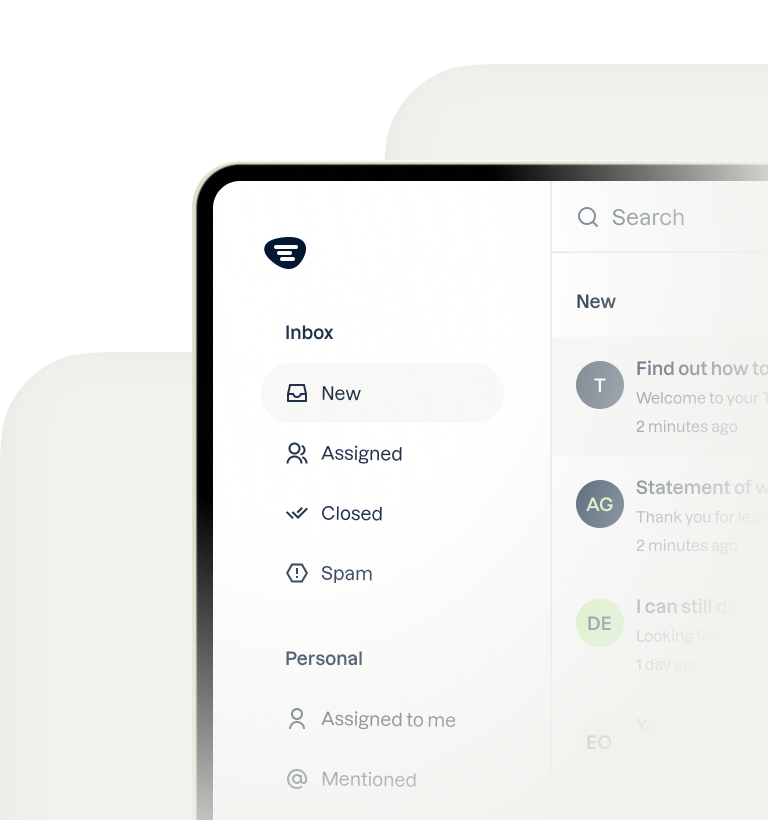
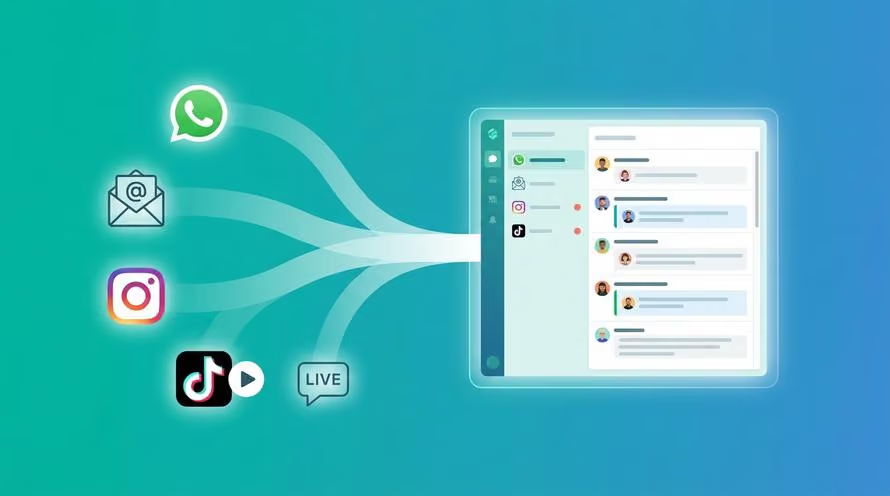
Opportunities can arise on any channel: email, WhatsApp, live chat, or social media. Without a unified view, your team is flying blind. Trengo's Omnichannel inbox brings every customer interaction into a single, shared view. This gives your sales and support agents the full context of a customer's history, allowing them to make smart, personalized offers without ever switching tabs.
Leverage Automation for Timely, Personalized Offers
Timing is critical, and automation ensures you never miss the perfect moment. With Trengo, you can use powerful rules and auto-replies to trigger cross sell offers automatically. For example, once a customer receives a shipping confirmation, a rule can trigger a follow-up WhatsApp message 24 hours later, suggesting a product that complements their recent purchase. This is proactive, personalized, and highly effective.
Collaborate with Your Team to Seize Opportunities
Sometimes the person talking to the customer isn't the best person to close the deal. In Trengo, a support agent who spots a potential upsell opportunity can instantly collaborate with a sales expert. By using internal comments and `@tagging` a colleague directly within the customer conversation, they can seamlessly pass the lead without the customer ever knowing. This ensures no opportunity slips through the cracks and the right expert handles the sale.
Frequently Asked Questions

The 3 3 3 rule is a general sales framework, not specific to upselling, that suggests a salesperson should prepare three talking points, ask the prospect at least three questions, and make three follow up attempts. It's a guideline for structuring a thorough sales interaction.
The 3 C's in sales refer to Company, Customer, and Competition. This represents the foundational knowledge a salesperson needs: a deep understanding of their own company's offerings, clear insight into the customer's needs and pain points, and awareness of the competitive landscape. This knowledge is essential for effective upselling and cross selling.
The 2 2 2 rule is a follow up strategy that dictates a timeline for re-engaging a prospect or customer: follow up two days after the initial contact, then again two weeks later, and a final time two months later. This cadence is a useful strategy for post purchase cross selling, allowing you to re-engage customers when they might be ready for another product.



Let's meet
Grow your business with loyalty. Bring all of your customer contact into one, single platform to unlock delight at every step of the way.