What is a CRM? 2026 Guide to Customer Relationship Management


Try Trengo for Free

Trengo unites WhatsApp, email, web, social media, and calls in one inbox, saving your team hours of repetitive work and ensures no conversation is ever lost
What is a CRM? The 2026 Guide to Customer Relationship Management
Summary
A CRM, or Customer Relationship Management, is a technology for managing all your company’s relationships and interactions with both current and potential customers. The primary goal is simple: improve business relationships to grow your business. In 2026, a CRM system acts as a central database for customer data, but its true potential is unlocked when it powers real-time, personalized conversations on a platform like Trengo.
TL;DR
- A CRM is a system for managing customer relationships and data.
- It centralizes customer information, tracks sales pipelines, and automates tasks.
- Key benefits include increased sales, better customer satisfaction, and improved team collaboration.
- CRMs are used by sales, marketing, and customer support teams of all sizes.
- While a traditional CRM stores data, a platform like Trengo activates that data for real-time customer conversations across all channels.
- The three main types of CRM are Operational, Analytical, and Collaborative.
What is a CRM System, Really?
While the acronym stands for Customer Relationship Management, the term represents both a strategy and a technology. The strategy is about putting the customer at the center of your business operations. The technology is the tool that makes this strategy possible. When people talk about needing a CRM, they are almost always referring to CRM software—a platform designed to help businesses organize, automate, and synchronize every facet of customer interaction. This customer relationship management software is essentially a digital rolodex on steroids for your entire team, creating a single, shared source of truth for all customer information and history.
What Does a CRM System Do?
A CRM system is more than just a contact list. It’s a powerful engine designed to streamline processes, enhance profitability, and build lasting customer loyalty. Its core functions are centered around collecting, organizing, and acting on customer data to provide a seamless experience. Here’s a breakdown of what a CRM does for a business.
Centralizes All Customer Data
At its core, a CRM serves as a single source of truth for all customer-related information. It captures and stores everything from basic contact details like names and email addresses to detailed histories of every interaction. This includes records of phone calls, email exchanges, past purchases, and previous support tickets, all housed in one universally accessible location for your team.
Manages the Sales Pipeline
For sales teams, a CRM is indispensable for managing the entire sales process. It helps visualize and track leads as they move through different deal stages, from initial contact to a closed deal. Features like a CRM pipeline and lead scoring allow sales reps to prioritize opportunities, forecast revenue more accurately, and ensure no potential customer falls through the cracks.
Automates Repetitive Tasks
One of the biggest productivity boosters a CRM offers is automation. It can handle a wide range of repetitive, manual tasks that consume valuable time. This includes automatically sending follow up emails to new leads, creating tasks for sales reps after a meeting, routing incoming support tickets to the right agent, or updating customer records after a purchase.
Unifies Customer Communication
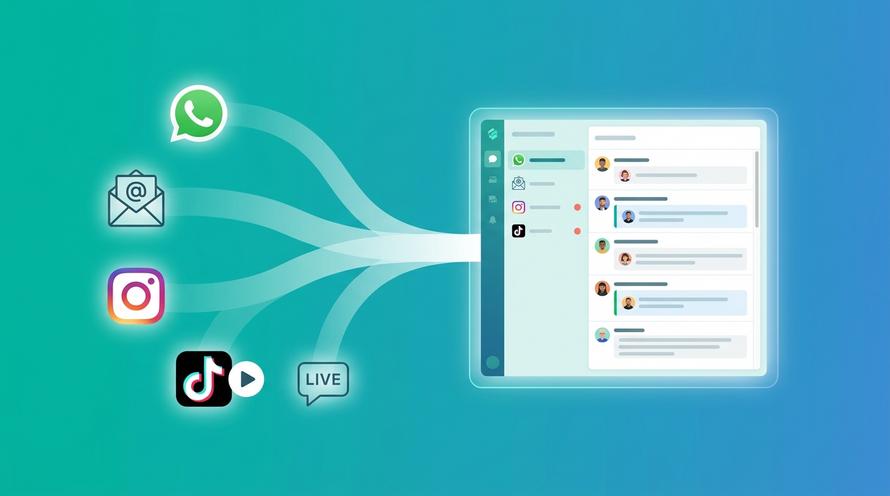
While traditional CRMs are excellent at logging past communications, modern business demands a system that actively manages ongoing, real time conversations. This is where a traditional CRM's power is amplified by an engagement platform. Instead of just being a static database, it can connect to a system that brings all communication channels—email, WhatsApp, live chat, Instagram DM—into one collaborative view. This turns static data into dynamic, personalized conversations and ensures every team member has the full context they need to respond effectively.
Why is a CRM System Important for Your Business?
Investing in a CRM system is a strategic decision that directly impacts a company's ability to grow and scale effectively. Its importance lies in its ability to solve a fundamental challenge that every growing business faces: managing an expanding volume of customer data and interactions without losing the personal touch. A CRM ensures that every team member, from sales to support, has access to the same up to date information, allowing them to create a consistent and cohesive customer experience at every touchpoint.
As a business grows, customer data can quickly become fragmented and siloed in separate spreadsheets, individual email inboxes, or notebooks. This chaos leads to missed opportunities, inefficient processes, and frustrated customers. A CRM prevents this by creating a centralized hub that scales with your business. Furthermore, it plays a critical role in improving customer retention. By understanding your customers' history and needs, you can provide proactive support and personalized communication, which builds loyalty and increases their lifetime value.
What Are the Benefits of CRM?
Implementing a CRM system yields tangible and measurable outcomes that directly contribute to a healthier bottom line and a stronger market position. These benefits extend across every department, transforming how a company interacts with its customers and manages its internal operations.
Enhanced Customer Relationships and Satisfaction
With a 360 degree view of every customer, teams can deliver highly personalized and efficient service. When a customer contacts support, the agent can instantly see their entire purchase history and previous interactions. This context eliminates the need for customers to repeat themselves and allows for faster, more effective problem resolution, leading to higher satisfaction and loyalty.
Increased Sales and Team Productivity
CRM features directly translate to better sales outcomes. By automating routine administrative tasks, sales reps can spend more time selling. Pipeline management provides a clear view of the sales funnel, helping teams identify bottlenecks and focus on the most promising leads. The result is shorter sales cycles, higher conversion rates, and increased revenue.
Improved Team Collaboration and Alignment
A CRM breaks down the silos that often exist between sales, marketing, and customer support departments. When everyone works from the same data set, collaboration becomes seamless. A sales rep can see if a prospect has recently opened a marketing email or contacted support, while a support agent can see the customer's sales history. This shared knowledge ensures all teams are aligned and working toward the same goal: delivering an exceptional customer experience.
Better Data-Driven Decision Making
The wealth of data stored in a CRM is a goldmine for strategic insights. Powerful CRM analytics and reporting tools allow managers to track key performance indicators, analyze customer behavior, and identify trends. This data enables leaders to make informed, strategic decisions about sales strategies, marketing campaigns, and product development, rather than relying on guesswork.
Who is CRM for?
The simple answer is that a CRM is for any business that wants to maintain and nurture its customer relationships. Its flexibility makes it a vital tool across various departments and industries, from small startups to global enterprises. Different teams leverage a CRM for specific functions that are critical to their success.
Sales Teams
For sales teams, a CRM is the command center for all sales activities. It is used for comprehensive lead management, from capturing and qualifying new leads to nurturing them through the sales funnel. They rely on it for meticulous pipeline tracking, sales forecasting, and managing daily tasks like calls and meetings, ensuring every opportunity is maximized.
Marketing Teams
Marketing teams use a CRM to gain a deeper understanding of customers and prospects. The system is crucial for customer segmentation, allowing them to create targeted and personalized marketing campaigns. It also helps with lead nurturing by automating communication workflows and tracking how prospects interact with marketing materials, ensuring a smooth handoff to the sales team.
Customer Support Teams
For customer support teams, a CRM is the key to providing efficient and contextual service. It helps them manage support tickets, track the status of customer issues, and access a complete history of every customer interaction. When a CRM is integrated with a smart communication platform, agents gain full context when speaking to customers on any channel. For instance, they can manage all your customer conversations from social media with an Instagram CRM integration right alongside emails and chats.
Small Businesses to Large Enterprises
A common misconception is that CRMs are only for large corporations with massive sales teams. In reality, CRM solutions are available for businesses of all sizes. CRMs for small businesses offer affordable, scalable platforms that help them organize their customer data, professionalize their processes, and compete effectively with larger players, laying a solid foundation for future growth.
The 3 Main Types of CRM Systems
While most modern CRM platforms blend features from all categories, understanding the three primary types helps clarify their core focus. Each type is designed to address a specific set of business challenges, though they all work toward the ultimate goal of improving customer relationships.
Operational CRM
An Operational CRM is focused on automating and streamlining business processes related to sales, marketing, and customer service. Its main goal is to automate the customer journey from lead generation to post sale support. This includes sales automation to manage pipelines, marketing automation for campaigns, and service automation for handling customer inquiries and support tickets efficiently.
Analytical CRM
An Analytical CRM is all about data. Its primary function is to help businesses analyze the vast amount of customer data they collect to uncover actionable insights. It focuses on identifying customer patterns, understanding behavior, and measuring the effectiveness of sales and marketing initiatives. This analysis helps companies make smarter, data driven decisions to improve customer acquisition and retention strategies.
Collaborative CRM
A Collaborative CRM, also known as a Strategic CRM, is designed to break down departmental silos and improve the customer experience by sharing information across the entire organization. It ensures that teams in sales, marketing, support, and even finance have a unified view of the customer. This shared knowledge enables seamless collaboration and a consistent brand experience for the customer, no matter which department they interact with. This philosophy is at the heart of platforms with a shared inbox, which facilitate real time team collaboration.
Frequently Asked Questions

A CRM is a digital tool that helps businesses organize and manage all their customer information and conversations in one central place. Think of it as a shared address book and activity log for your entire company, designed to help you build stronger relationships with your customers.
Common examples of traditional CRMs include Salesforce, HubSpot, and Zoho, which are known for their extensive data management and sales pipeline features. A platform like Trengo complements or acts as an alternative by focusing on unifying all customer communication channels like email, WhatsApp, and live chat into a single view, turning CRM data into real-time conversations.
A traditional CRM is primarily a database for storing and organizing customer data, like contact information and purchase history. A shared inbox, like Trengo, is a platform for acting on that data through real time, collaborative conversations across multiple channels. The most powerful setup combines the data repository of a CRM with the action oriented communication hub of a multichannel shared inbox.
A CRM manager is responsible for the successful implementation and ongoing optimization of the CRM system. Their duties include configuring the platform, training teams on how to use it, ensuring data integrity, building reports and dashboards, and continuously finding ways to improve business workflows within the system.
In today's competitive landscape, a CRM is no longer a luxury but an essential foundation for any business aiming for sustainable growth. It provides the structure needed to manage customer relationships at scale while preserving the personal touch that builds loyalty. However, the true power of a CRM in 2026 is realized when its rich data is used not just for analysis, but to fuel meaningful, real-time conversations. By pairing your CRM with a smart communication platform, you transform a static database into a dynamic engine for customer engagement. See how Trengo brings all your customer data and conversations together in one powerful, collaborative platform.



Let's meet
Grow your business with loyalty. Bring all of your customer contact into one, single platform to unlock delight at every step of the way.