

.png)
The Best Customer Service and Management Software for Small Business
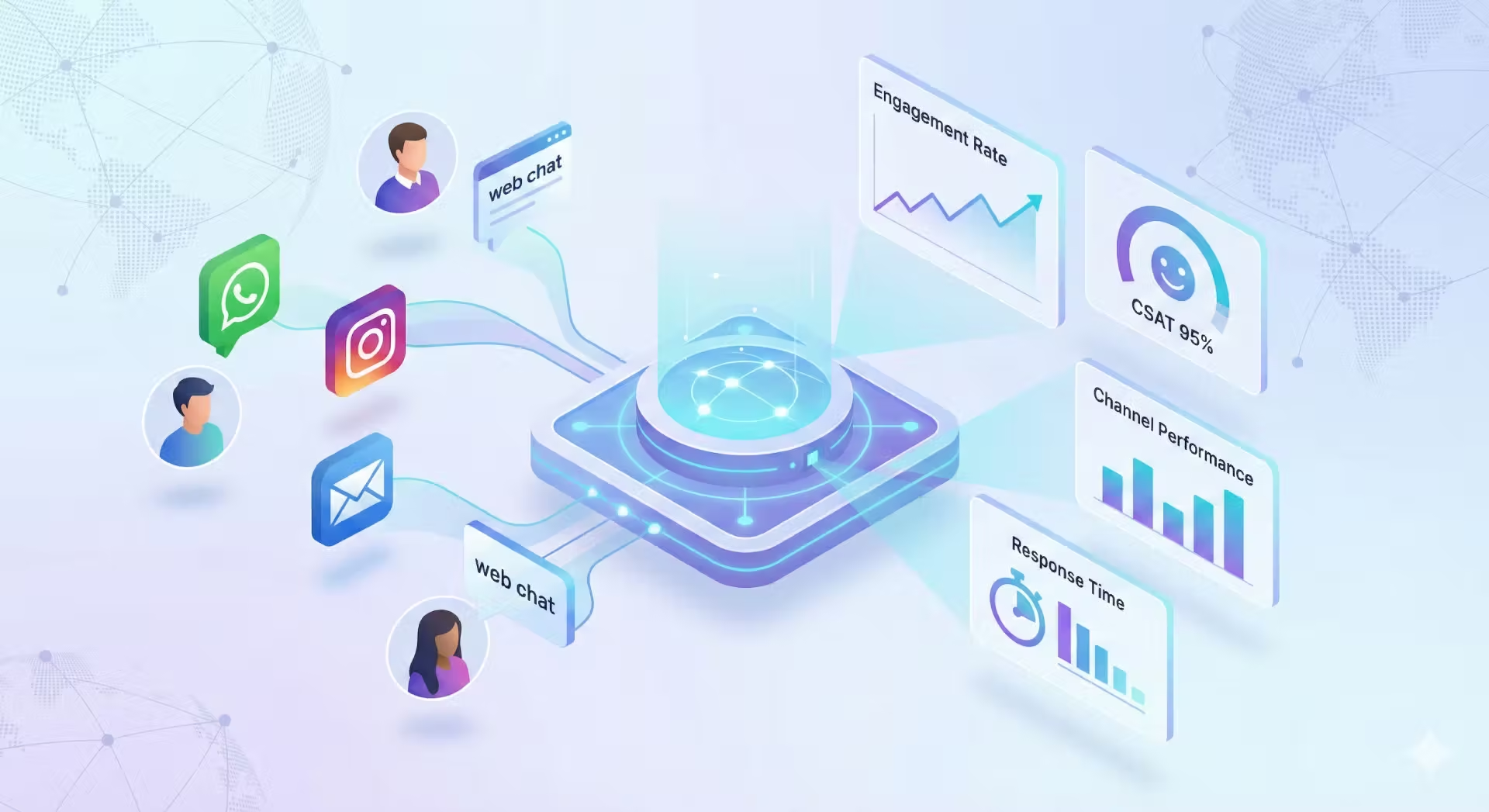
Running a small business in 2026 means juggling more communication channels than ever before. You aren't just answering phone calls anymore; you are managing emails, WhatsApp messages, Instagram DMs, and live chats simultaneously. For many business owners, this leads to fragmented communication, missed leads, and a chaotic workflow. The solution isn't hiring more staff—it is adopting the best customer service software for small business that acts as a "Unified Inbox."
By centralizing your communication stack, you can turn a scattered mess into a streamlined revenue engine. Below, we explore how the right customer management software for small business can transform your operations.
Small businesses often struggle with disjointed tools for customer support. This guide explores how modern service software consolidates communication channels, automates repetitive tasks, and improves team collaboration. We define the critical differences between CRM and service platforms and highlight why a unified inbox is the ultimate solution for efficiency and growth in 2026.
- Centralization is Key: Stop switching tabs. A unified inbox brings Email, WhatsApp, Social, and Voice into one dashboard.
- CRM vs. Service Platform: A CRM stores customer data; a service platform manages the actual conversation. You need both to work together.
- Automation Scaling: Use flowbots and rules to handle FAQs, allowing your small team to focus on complex issues.
- Collaboration: Features like internal tagging and comments prevent inbox collision and speed up resolution times.
- The Right Fit: Look for "service management software for small business" that balances enterprise features with ease of use.
What Is Customer Service Software?
When we ask "what is customer service software," the answer has evolved significantly over the last decade. Historically, it might have referred to a simple call logging system. Today, service software for small business acts as a central communication hub. It is the digital headquarters where all customer interactions—regardless of the platform they originated from—are collected, organized, and resolved.
Unlike legacy systems that force you to monitor a physical phone line and a separate email client, modern platforms integrate everything. This means you can add WhatsApp and Instagram directly alongside your email and website chat. For a small business, this shift is critical. It eliminates the "toggle tax" of switching between apps and ensures that a DM on Instagram gets the same professional attention as a formal support email.
The Difference Between CRM and Customer Service Platforms
There is often confusion regarding "what is crm software for small businesses" versus service platforms. While they are related, they serve distinct functions. Customer Relationship Management (CRM) software acts as your database. It stores static information: contact details, purchase history, and lead status. It is your system of record.
However, customer management software for small business (the service platform) is your system of action. It handles the live conversation. While a CRM remembers that "John bought a coffee machine in 2024," the service platform enables you to answer John's question about how to descale it in 2026 via WhatsApp. The best setup involves using a platform like Trengo that integrates seamlessly with your customer database software for small business, bridging the gap between data and dialogue.
Essential Features of Client Management Software for Small Business
Not all tools are created equal. When building your tech stack, specific features distinguish average tools from the best customer management software for small business. Here is what you should prioritize.
Unified Inbox and Multichannel Communication
The core of modern client management software for small business is the Unified Inbox. This feature consolidates every channel—Email, Messenger, WhatsApp, Voice, and Live Chat—into a single view. This consolidation is vital for preventing missed messages. When a customer sends a query, it lands in one shared team inbox, ensuring that anyone on your team can pick it up without needing passwords for five different social media accounts.
Customer Support Automation and Chatbots
Efficiency is the name of the game for small teams. Service management software for small business must include automation capabilities. By utilizing AI chatbots for business, you can automate responses to frequently asked questions, such as opening hours or return policies. Flowbots can guide customers to the right department or answer, allowing your human agents to focus on high-value interactions rather than repetitive typing.
Team Collaboration Tools
The "best customer management software for small business" recognizes that support is a team sport. Look for platforms that offer internal collaboration tools. Features like tagging colleagues in a conversation (without the customer seeing) or leaving internal notes prevent inbox collisions—where two agents accidentally reply to the same customer. This streamlines operations and ensures a consistent voice across all communications.
Customer Service Software Examples: Finding the Right Fit
When searching for customer service software examples, you will likely encounter two main categories: traditional Help Desks and Shared Inboxes. Traditional Help Desks often use ticket numbers and feel robotic, which can alienate customers who prefer personal interactions. Shared Inboxes offer a more conversational feel but can lack power.
Trengo positions itself as the ideal middle ground for small businesses. It offers the power of enterprise tools—like analytics and agentic AI in customer experience—without the steep learning curve or clunky interface. If you are currently overwhelmed by complex enterprise tools, looking for Zendesk alternatives might lead you to a solution that is better agile and suited for a growing small business.
Frequently Asked Questions (FAQ)
What is the best software for customer service?
The best software for customer service is one that unifies all your communication channels into a single interface while offering robust collaboration features. Trengo is a top contender for small businesses because it combines email, social messaging, and voice into one easy-to-use platform, ensuring you never miss a conversation.
Which is the best CRM for small business?
Platforms like HubSpot, Pipedrive, or Salesforce are excellent for managing data and pipelines. However, the "best" CRM setup for a small business is one that integrates with a dedicated communication platform like Trengo. This ensures that your actionable conversations are always informed by the data stored in your CRM.
Is there a free CRM for small businesses?
Yes, several platforms offer free tiers, such as HubSpot CRM. While these are good starting points for data storage, they often lack advanced communication features like adding a live chat to your website or multi-channel inboxes. Investing in paid service management software for small business usually pays for itself through increased efficiency and customer retention.
What is the best software to use for a small business?
The best software strategy for a small business is an "all-in-one" approach regarding communication. You need a tool that handles client management and active customer service simultaneously. By choosing a platform that centralizes your operations, you reduce overhead and improve response times, which is essential for growth.