What is an ERP for eCommerce? Everything You Need to Know

Try Trengo for Free

Trengo unites WhatsApp, email, web, social media, and calls in one inbox, saving your team hours of repetitive work and ensures no conversation is ever lost
What is an ERP for eCommerce?
Summary
An ERP for eCommerce is a central software system designed to manage and integrate all core business processes, from inventory and order management to accounting and shipping, into a single, unified database. For growing online businesses, an ecommerce ERP system is the backbone that enables scalability, automates manual tasks, and provides a single source of truth for all operational data. This comprehensive approach not only streamlines back-end operations but is essential for creating an efficient and responsive customer experience in 2026.
TL;DR
- An ERP (Enterprise Resource Planning) system for eCommerce centralizes core business operations like inventory, orders, and finance into one platform.
- It differs from standard eCommerce platforms (like Shopify) which handle the storefront, while an ERP manages the entire back-end operation.
- Growing businesses need an ERP to automate processes, maintain a single source of data truth, and scale operations without chaos.
- ERP ecommerce integration connects your ERP with other tools, like customer communication platforms, to unlock its full potential.
- Integrating an ERP with a platform like Trengo empowers support teams with real-time data to resolve customer queries faster.
- Choosing the right ERP involves evaluating features like real-time inventory management, multi-channel capabilities, and robust integrations.
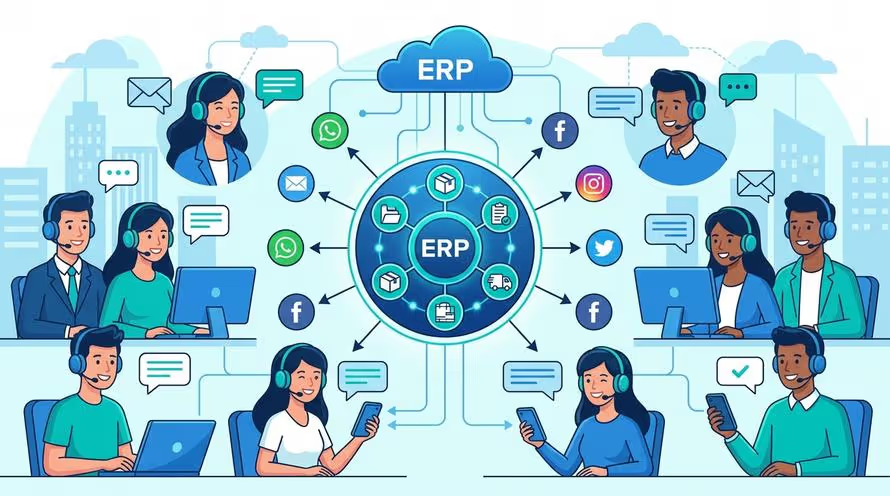
In the context of eCommerce, ERP stands for Enterprise Resource Planning. It is a type of software that acts as the central nervous system for an online business. An ecommerce erp system integrates and manages all the essential back-office functions that a company needs to operate efficiently. This includes processes like inventory management, order processing, shipping and logistics, accounting, supply chain management, and even customer relationship management (CRM), all within a single, cohesive platform. Instead of juggling multiple disconnected spreadsheets and applications, an ERP provides one unified database, creating a single source of truth for the entire organization.
ERP vs. Standard eCommerce Platforms: Understanding the Difference
A common point of confusion is the difference between an eCommerce platform and an ERP. To address the "ecommerce vs erp" question, think of it with an analogy: an eCommerce platform like Shopify or BigCommerce is your digital shopfront and checkout counter. It's where customers browse products, add items to their cart, and make a purchase. It excels at presentation, marketing, and processing transactions. An ERP, on the other hand, is the entire operational powerhouse running behind the scenes. It’s the warehouse tracking every item, the accounting department managing finances, the logistics team coordinating shipping, and the procurement office managing suppliers, all working together seamlessly. While platforms handle the sale, an ERP manages the entire lifecycle of an order after the "buy" button is clicked.
Why Your Growing eCommerce Business Needs an ERP System
As an online business grows, complexity multiplies. Managing increasing order volumes, expanding product catalogs, and multiple sales channels with manual processes becomes unsustainable. This is where an ERP system becomes not just a luxury, but a necessity for survival and growth. It provides the foundational structure to handle complexity and scale efficiently. Here are the key reasons why your growing eCommerce business needs an ERP.
- Centralize Your Data for a Single Source of Truth: An ERP eliminates data silos. You no longer have conflicting inventory numbers between your warehouse management system and your website, or discrepancies between sales reports and financial statements. Every department works from the same real-time data, leading to better decision-making.
- Automate Key Business Processes: Repetitive, manual tasks like entering order data, generating invoices, and sending shipping notifications are a drain on resources and a source of human error. An ERP automates these workflows, freeing up your team to focus on more strategic initiatives that drive growth.
- Enhance Inventory and Supply Chain Management: Prevent stockouts and overselling with real-time inventory tracking across all your channels, whether it's your website, Amazon, or a physical retail store. An ERP provides sophisticated tools for demand forecasting, purchase order management, and supplier coordination.
- Improve Financial Reporting and Analytics: Gain a clear, instantaneous view of your business's financial health. An ERP integrates sales data with accounting, allowing for real-time tracking of profitability per product, channel, or customer segment, and simplifying financial reporting.
- Scale Your Operations Efficiently: Perhaps the most critical benefit is scalability. An ERP provides the robust framework needed to handle a surge in orders, products, and customers without your operations breaking down. It's the key to growing from a small business to a large-scale enterprise.
The Power of ERP and eCommerce Integration
Implementing an ERP system is a massive step forward, but its true power is unlocked through ERP ecommerce integration. A standalone ERP is powerful for your internal team, but when it "talks" to your other business-critical systems, its value extends across the entire organization, from the warehouse floor to the customer-facing front lines. This connectivity transforms the ERP from a simple record-keeping tool into an active, dynamic hub of your entire tech stack, ensuring that data flows seamlessly where it's needed most.
How Does ERP eCommerce Integration Work?
In simple terms, ERP ecommerce integration is achieved through Application Programming Interfaces (APIs) and pre-built connectors. These are essentially digital bridges that allow different software systems to communicate and exchange data automatically. For example, when a new order is placed on your Shopify store, an API call instantly sends that order data to your ERP. The ERP then processes the order, updates inventory levels, and when the item ships, it sends the tracking information back to Shopify, which in turn notifies the customer. This automated, two-way data sync eliminates manual entry and ensures information is consistent everywhere.
Unifying Back-End Operations with Front-End Customer Experience
The most significant benefit of integration is bridging the gap between back-end efficiency and front-end service. When a customer contacts you asking, "Where is my order?" the answer lies within the ERP. Without integration, your support agent has to pause the conversation, log into a separate ERP system, search for the order, and then return to the customer. This is slow and inefficient. However, by connecting your ERP to a customer communication platform, you bring that crucial data directly to your agents. This is how you improve your e commerce customer experience with Trengo. It transforms your support function from a reactive cost center into a proactive, data-driven team that can create a superior customer experience.
Choosing the Best ERP Software for Your eCommerce Business
Selecting the right ecommerce erp system is a critical decision that will impact your business for years to come. The market is filled with options, so it's essential to approach the selection process with a clear understanding of your specific needs, budget, and future growth plans. The best erp for ecommerce is not a one-size-fits-all solution; it's the one that aligns with your unique operational workflows and scalability requirements.
Key Features to Look For in an eCommerce ERP
As you evaluate different ERP software for your ecommerce business, prioritize solutions that offer these non-negotiable features:
- Real-time inventory management: The system must be able to track stock levels across all sales channels accurately and in real time to prevent overselling.
- Multi-channel order management: It should consolidate orders from your website, marketplaces like Amazon or eBay, and any physical stores into a single, centralized dashboard.
- Robust integration capabilities (APIs): A strong and well-documented API is crucial for connecting the ERP to your eCommerce platform, payment gateways, shipping carriers, and other essential tools.
- Scalability and performance: The software must be able to handle your current order volume and grow with you, without performance degradation during peak sales periods.
- Advanced reporting and analytics: Look for customizable dashboards and reporting tools that give you deep insights into sales trends, customer behavior, and overall profitability.
On-Premise vs. Cloud-Based vs. Open-Source ERPs
ERPs generally come in three main deployment models, each with its own set of advantages and disadvantages:
- Cloud-Based (SaaS): This is the most popular model for modern eCommerce businesses. The software is hosted by the vendor and accessed via a web browser for a monthly or annual subscription fee. Examples like NetSuite and Acumatica offer flexibility, lower upfront costs, automatic updates, and easy scalability.
- On-Premise: In this model, the software is installed and run on your company's own servers. This offers greater control and customization but requires a significant upfront investment in hardware and IT staff for maintenance and security. SAP Business One is a common example.
- Open-Source: An erp ecommerce open source solution, like Odoo, provides its source code for free. This offers maximum flexibility for customization but requires a highly skilled technical team to implement, maintain, and secure the system. It's best for businesses with unique needs and strong in-house development resources.
Supercharge Your ERP with AI-Powered Customer Communication
Your ERP is the single source of truth for all operational data. But what if you could put that data directly into the hands of your customer-facing teams and even your customers themselves? This is where the synergy between an ERP and an AI-powered communication platform like Trengo creates a competitive advantage. By integrating the two, you don't just manage your business better; you supercharge your entire customer experience.
Give Your Support Team ERP Data Directly in Their Shared Inbox
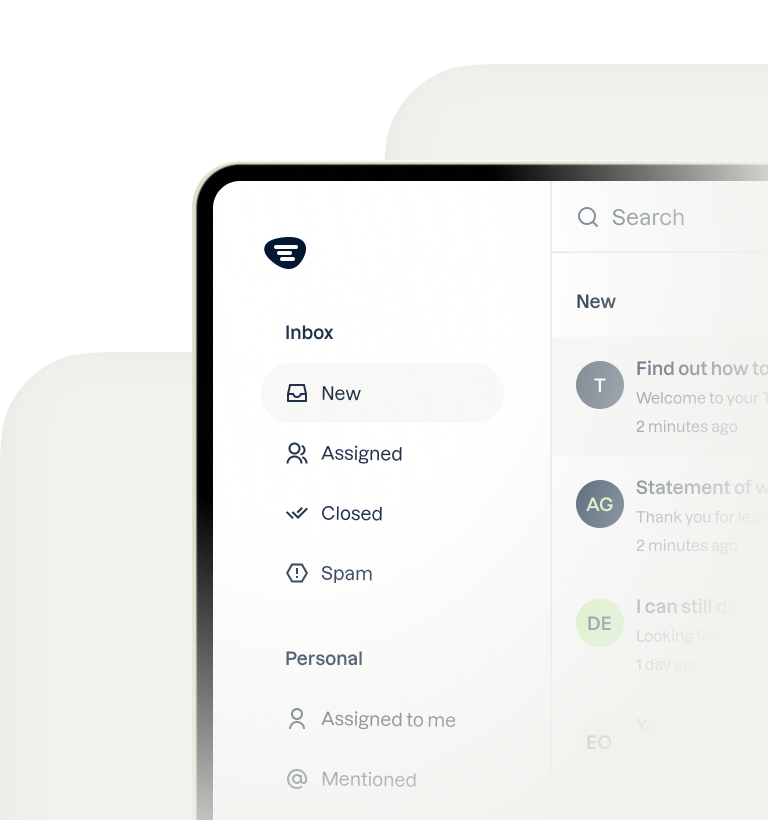
The most immediate benefit of integrating an ERP with Trengo is empowering your agents. Imagine a customer contacting your support team via WhatsApp, email, or live chat. With a direct integration, the agent immediately sees the customer's complete order history, real-time shipping status, payment details, and return information right next to the conversation in Trengo's shared inbox. This eliminates the need to switch between tabs or log into different systems. Your customer support teams can answer questions instantly and accurately, dramatically reducing resolution times and improving customer satisfaction.
Automate Customer Queries with AI and Real-Time Data
The integration goes beyond empowering human agents; it enables powerful automation. You can build intelligent bots that leverage live data from your ERP to handle common customer queries 24/7. For instance, a customer can ask a chatbot, "What is the status of my order #12345?" Trengo's AI agent can instantly query the integrated ERP, retrieve the latest shipping status, and provide an accurate, automated response without any human intervention. This automation isn't limited to text-based channels. With an AI voice agent, customers can call your support line, ask about their order, and receive an instant, spoken update pulled directly from your ERP, any time of day or night.
Frequently Asked Questions

In eCommerce, ERP (Enterprise Resource Planning) is a centralized software system that manages all key back-office operations, including inventory, order processing, shipping, accounting, and supply chain management, in one unified platform.
No, Shopify is a leading eCommerce platform focused on the online storefront, shopping cart, and basic order management. While it has some ERP-like features through apps, it is not a true ERP system, which manages the entire business's backend operations. Many businesses integrate Shopify with a dedicated ERP.
Five top ERPs popular in the eCommerce space include: 1. Oracle NetSuite, a leading cloud-based ERP for scalability. 2. SAP S/4HANA, a powerful solution for large enterprises. 3. Acumatica, a flexible cloud ERP for mid-sized businesses. 4. Microsoft Dynamics 365 Business Central, a comprehensive solution integrating with Microsoft products. 5. Odoo, a popular open-source option with a suite of business apps.
Amazon uses a highly customized, proprietary in-house ERP system built on Oracle's database technology and combined with services from Amazon Web Services (AWS). This system is unique to their massive scale and is not a commercial product that other businesses can purchase.



Let's meet
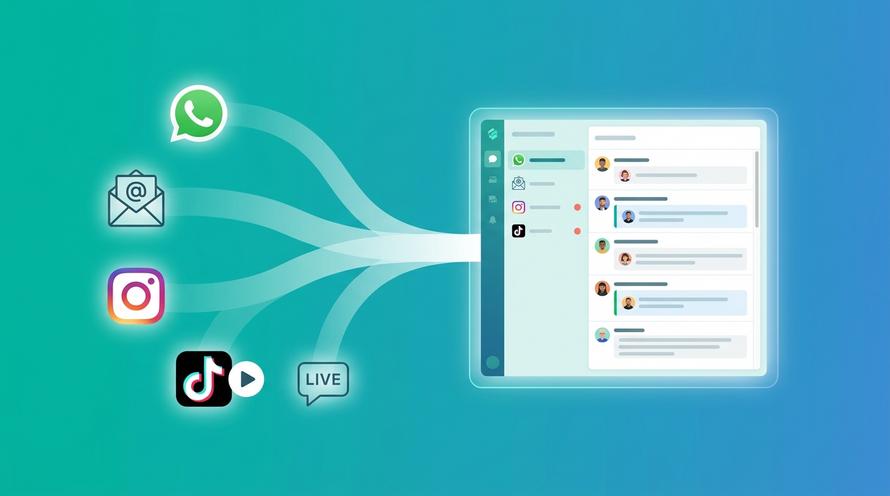
Grow your business with loyalty. Bring all of your customer contact into one, single platform to unlock delight at every step of the way.