Unified Sales & Marketing Strategy: Your Biggest Growth Lever


Try Trengo for Free

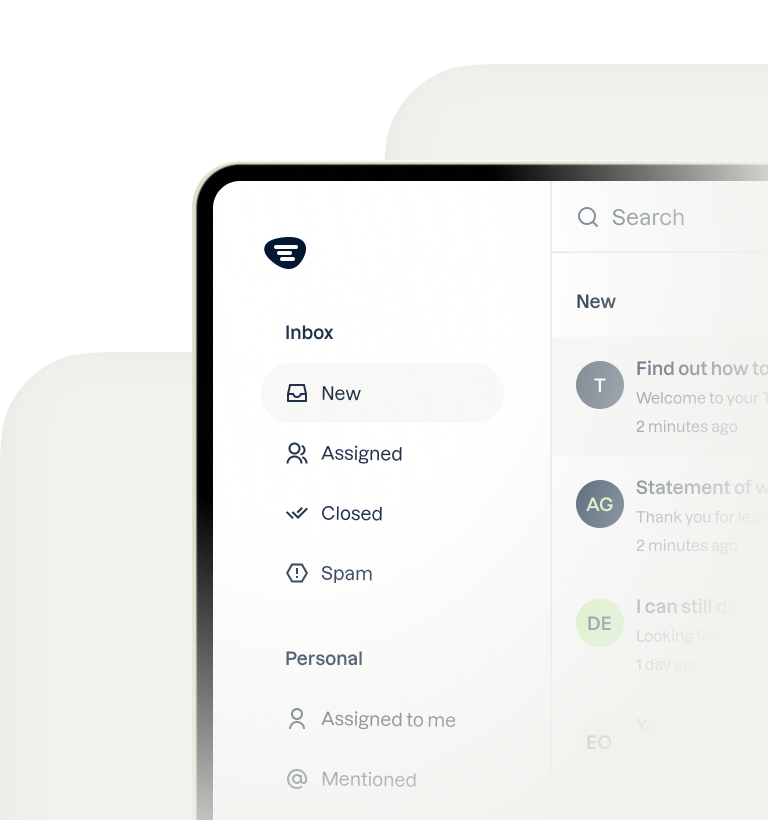
Trengo unites WhatsApp, email, web, social media, and calls in one inbox, saving your team hours of repetitive work and ensures no conversation is ever lost
What is a Unified Sales and Marketing Strategy and Why Alignment is Your Biggest Growth Lever
Summary
A unified sales and marketing strategy is a cohesive plan where marketing activities directly support sales goals, and sales insights continuously inform marketing campaigns. For 2026, this alignment is the most critical growth lever for businesses, eliminating wasteful silos and creating a seamless customer experience that boosts revenue. By integrating teams, data, and communication channels onto a single platform, companies can achieve higher lead quality, faster sales cycles, and improved customer retention.
TL;DR
- A unified strategy combines sales and marketing into one cohesive commercial engine, not two separate departments.
- Alignment leads to increased revenue, higher quality leads, shorter sales cycles, and better customer lifetime value.
- Building this strategy requires shared customer profiles, common goals and KPIs, a mapped customer journey, and a formal Service Level Agreement (SLA).
- Modern alignment is impossible without a unified communication platform that breaks down channel silos like email, WhatsApp, and live chat.
- Key tactics for 2026 include omnichannel engagement, content-driven nurturing, Account-Based Marketing (ABM), and leveraging AI for lead qualification.
A unified sales and marketing strategy is a single, integrated approach where marketing and sales teams work in tandem toward shared revenue goals. It’s a departure from the traditional model where marketing generates leads and throws them over the wall to sales. In 2026, this is no longer an option; it's a necessity. True alignment means marketing’s campaigns are built on sales feedback, and the sales team leverages marketing content to close deals. This cohesive approach is your company's most powerful engine for sustainable growth.
Why sales and marketing alignment matters
Why is this alignment so crucial? Because silos kill growth. When teams operate independently, the customer experience suffers. A prospect might interact with a marketing ad on Instagram, ask a question via website chat, and then receive a cold call from a salesperson who has no context of the previous interactions. This disjointed journey creates friction and loses deals. A unified strategy ensures every touchpoint is seamless, leading to higher lead quality, increased revenue, and a stronger brand reputation. The core challenge is communication, which is impossible to solve when conversations are fragmented across different tools. A platform like Trengo centralizes all customer dialogue from email, social media, WhatsApp, and live chat into one view, giving both sales and marketing the shared context needed to succeed.
How to Build Your Integrated Sales and Marketing Strategy from Scratch
Creating a cohesive commercial engine requires a foundational plan built on shared principles and mutual accountability. This step-by-step process ensures both teams are rowing in the same direction, equipped with the right tools and agreements to drive revenue together.
Step 1: Define Your Ideal Customer Profile and Buyer Personas
The absolute foundation of any sales and marketing strategy is a crystal-clear understanding of who you are selling to. Both teams must agree on this. An Ideal Customer Profile (ICP) defines the perfect-fit company for your product or service, considering factors like industry, company size, and revenue. Buyer personas represent the specific individuals within those companies you engage with, detailing their job titles, goals, pain points, and motivations. When sales and marketing share the same vision of the target customer, every ad, piece of content, and sales call becomes more effective.
Step 2: Set Shared SMART Goals and KPIs
Siloed goals create friction. If marketing is only measured on generating a high volume of Marketing Qualified Leads (MQLs) and sales is measured only on closed deals, their interests can diverge. Instead, establish shared goals that tie both teams to revenue. Use the SMART (Specific, Measurable, Achievable, Relevant, Time-bound) framework to set these goals. Key Performance Indicators (KPIs) should be shared, such as lead-to-customer conversion rate, customer acquisition cost (CAC), and customer lifetime value (CLV). This ensures both teams are working towards the same ultimate outcome: profitable growth.
Step 3: Map the Entire Customer Journey Across All Channels
In 2026, the customer journey is not a straight line. It’s a complex web of interactions that span multiple channels. A potential customer might first discover your brand through a LinkedIn post, then read a blog, visit your website, ask a question on live chat, and finally request a demo via email. You must map out every potential touchpoint to understand the customer's multichannel experience. This shared map allows marketing to deliver the right content at the right time and enables sales to have more contextual, relevant conversations.
Step 4: Create a Service Level Agreement SLA
An SLA is a formal, written agreement that codifies the commitments between your sales and marketing teams. It creates mutual accountability and eliminates finger-pointing. The marketing side of the SLA defines what constitutes a qualified lead and commits to delivering a specific number of them per month. The sales side of the SLA outlines the process and speed for following up on those leads, for instance, committing to contact every MQL within one hour. This agreement ensures that marketing’s efforts are never wasted and that sales has a predictable pipeline to work with.
Step 5: Equip Your Teams with a Unified Communication Platform
All the strategic planning in the world will fail if your teams are working with fragmented tools. A unified communication platform is the technology that makes a cohesive strategy possible. Consider this scenario: a prospect from a high-value account asks a detailed product question via your website's live chat, which is handled by a marketing team member. The next day, they send a follow-up message on WhatsApp. Without a tool like Trengo, that WhatsApp message goes to a different inbox, and the salesperson who picks it up has zero context. The prospect is forced to repeat themselves, and the experience feels broken. With a shared, multichannel inbox, the salesperson sees the entire conversation history—from chat to WhatsApp—instantly. They can provide a seamless, intelligent response, drastically increasing the chances of closing the deal. This is where tools that integrate channels like the WhatsApp Business API become a non-negotiable part of your tech stack.
5 Powerful Sales and Marketing Strategies to Implement Today
With a solid foundation in place, you can execute powerful, integrated plays that accelerate growth. These strategies leverage the alignment you’ve built to create a superior customer experience and drive more revenue.
1. Omnichannel Engagement
Omnichannel is more than just being present on multiple channels; it’s about providing a single, continuous conversation across them. For a SaaS company, this means a user can start a conversation on web chat, continue it via email, and get a follow-up on WhatsApp without ever losing context. Each agent who interacts with the customer has the full history, creating a frictionless and personalized experience. This strategy turns customer service into a powerful sales and retention tool.
2. Content-Driven Lead Nurturing
Marketing shouldn't just create top-of-funnel content. A powerful strategy is to develop assets specifically for sales to use at different stages of the deal cycle. For example, marketing can create a detailed case study for a salesperson to send to a prospect who is weighing their options, a competitor comparison sheet to handle objections, or a webinar recording that addresses a key pain point. This equips the sales team with valuable tools to educate prospects and build trust.
3. Account-Based Marketing ABM
ABM is the epitome of sales and marketing alignment. Instead of casting a wide net, sales and marketing collaborate to identify a select list of high-value target accounts. They then work together to execute a highly personalized "one-to-one" or "one-to-few" campaign. Marketing creates bespoke content and runs targeted ads aimed at key stakeholders within those accounts, while sales conducts personalized outreach. It's a highly efficient strategy for winning large, complex deals.
4. Social Selling
Social selling involves salespeople using social media to find, connect with, and nurture sales prospects. This is most effective when it’s a joint effort. The marketing team produces and shares valuable content on platforms like LinkedIn—articles, videos, industry insights. The sales team then leverages this content to engage with their network, comment on prospect posts, and start meaningful conversations. They build authority and credibility, transforming from cold callers into trusted advisors.
5. Leveraging AI for Lead Qualification and Support
By 2026, AI is no longer a futuristic concept but a practical tool for efficiency. An AI agent or chatbot can be deployed on your website to engage visitors 24/7. It can ask qualifying questions, gather crucial information, and book demos for your sales team. This allows you to instantly qualify leads and route only the most promising conversations to human reps. This not only saves the sales team an immense amount of time but also ensures that no inbound lead is ever missed, regardless of the time of day.

What are Sales Promotion Strategies With Examples
Sales promotion strategies are short-term tactics designed to create a sense of urgency and stimulate immediate demand for a product or service. Unlike long-term brand building, these are all about boosting sales figures quickly. They are a key part of an integrated sales and marketing plan, often executed by marketing to support sales goals.
Time-Sensitive Discounts and Flash Sales
This is one of the most common sales promotion techniques. It involves offering a discount for a limited period. For an e-commerce store, this could be a "48-hour flash sale with 25% off everything." For a SaaS company, it might be "Sign up this week and get your first two months free." The urgency motivates potential customers who were on the fence to make a purchase decision now.
Bundles and Cross-Sells
Bundling involves selling multiple products or services together for a single, often discounted, price. A hotel might bundle a two-night stay with a spa treatment and dinner. A professional services firm could bundle an initial consultation with a follow-up strategy session. This tactic increases the average transaction value while providing more value to the customer.
Loyalty Programs and Referral Bonuses
These strategies focus on retaining existing customers and turning them into advocates. A loyalty program rewards repeat purchases with points or perks, encouraging customers to stay. A referral bonus incentivizes existing customers to bring in new business by offering them a discount, credit, or cash reward for every successful referral. This effectively turns your customer base into a powerful and cost-effective sales channel.
Frequently Asked Questions

The 3-3-3 rule is a prospecting guideline for sales professionals. It suggests identifying three key people at three different levels within a target company and attempting to contact each of them in three different ways (e.g., email, phone call, LinkedIn message) to maximize the chances of starting a conversation.
The 5 C's of sales refer to key attributes and skills for effective selling: Compassion (understanding the customer's needs), Conviction (believing in the product's value), Confidence (projecting self-assurance), Credibility (being a trustworthy expert), and Control (guiding the sales process effectively).




Let's meet
Grow your business with loyalty. Bring all of your customer contact into one, single platform to unlock delight at every step of the way.