What Is Conversational Marketing? Strategy & Examples

Try Trengo for Free

Trengo unites WhatsApp, email, web, social media, and calls in one inbox, saving your team hours of repetitive work and ensures no conversation is ever lost
What is Conversational Marketing?
Summary
Conversational marketing is a modern strategy that uses real-time, two-way conversations to build relationships with customers and move them through the sales and support funnels. This approach shifts away from traditional one-way marketing to create personalized, dialogue-driven experiences across channels like live chat, social media, and messaging apps. By leveraging a powerful conversational marketing platform, businesses in 2026 can shorten sales cycles, generate higher-quality leads, and scale their customer engagement efforts with AI and automation.
TL;DR
- Conversational marketing uses two-way dialogues to engage customers, replacing one-way traditional marketing.
- Key benefits include a shorter sales cycle, higher-quality leads, an enhanced customer experience, and scalable support.
- A successful strategy involves defining goals, mapping journey touchpoints, designing conversations, and choosing a unified tech stack.
- This approach relies on tools like AI-powered chatbots and unified inboxes to manage conversations across all channels.
- Platforms like Trengo combine all communication channels, automation, and AI into a single solution.
- In 2026, it is the standard for creating human-centric customer experiences at scale.
In 2026, the age of one-way marketing broadcasts is over. Modern customers expect and demand two-way, personalized dialogues with the brands they do business with. This fundamental shift has given rise to a powerful new approach. So, what is conversational marketing? It is a feedback-oriented methodology that focuses on building customer relationships through one-on-one conversations. This strategy moves beyond static lead forms and generic email blasts, using real-time, dialogue-driven interactions to guide customers through their journey. The core principle of the conversational marketing definition is to meet customers where they are—on your website, on social media, or on their favorite messaging apps—and engage them whenever they are ready, 24/7. It's about leveraging technology to create human-centric experiences at scale, making every conversation in digital marketing feel personal and valuable. This approach is not just a trend; it's the new standard for effective customer engagement.
Conversational Marketing vs Traditional Marketing
To truly grasp the impact of conversational marketing, it's helpful to see it side-by-side with traditional methods. The differences highlight a major evolution in how businesses connect with their audience. Where traditional marketing speaks *at* customers, conversational marketing speaks *with* them.
- Communication Style: Traditional marketing is a monologue. Think TV ads, print media, and email blasts sent to a mass audience. Conversational marketing is a dialogue, using personalized, one-on-one conversational messaging to engage each individual.
- Lead Capture: Traditional methods rely on static lead forms that create friction and delays. Conversational marketing uses Interactive chatbots that capture and qualify leads in real-time, directly within the conversation.
- Customer Experience: The traditional experience is often generic and impersonal. The conversational approach is personalized, context-aware, and happens in real-time, making the customer feel heard and valued.
- Availability: Traditional marketing and support teams are typically available only during standard business hours. Conversational tools provide 24/7/365 availability, ensuring no opportunity is missed.
- Data Collection: Traditional marketing gathers anonymous analytics and basic contact details. Conversational marketing collects rich, first-party data directly from conversations, providing deep insights into customer needs, intent, and pain points.
What are the Benefits of Conversational Marketing?
Adopting a conversational marketing strategy delivers tangible business results across the entire customer lifecycle. It directly addresses the modern customer's need for speed, personalization, and convenience, creating a more efficient and profitable GTM motion.
Shorten the Sales Cycle and Increase Conversions
Friction is the biggest enemy of conversion. Traditional funnels force potential buyers to fill out a form and wait, often for 24 hours or more, for a response. This delay kills momentum. Conversational marketing removes this friction entirely. An interested prospect on your pricing page can have their questions answered instantly by a bot, get qualified, and book a demo with a sales rep in a single, seamless interaction that takes minutes, not days.
Generate Higher Quality Leads, 24/7
Your website is your best salesperson, and it should work around the clock. Automated chatbots and AI agents can act as a tireless first line of sales development. They can engage every visitor, ask crucial qualifying questions about their needs, budget, and timeline, and instantly route high-intent leads to the right sales team member. Lower-intent leads aren't lost; they can be nurtured with helpful content until they are ready to buy.
Enhance the Customer Experience and Build Loyalty
Instant gratification and personalization are the cornerstones of a great customer experience. When a customer receives an immediate, helpful, and personalized response—whether it's on your website, WhatsApp, or Facebook Messenger—it builds trust. This feeling of being understood and valued is far more effective at creating brand loyalty than any generic marketing campaign ever could be.
Scale Your Marketing and Support Efforts with Automation
One of the biggest challenges for growing businesses is managing an increasing volume of customer inquiries without sacrificing quality. This is where a unified platform shines. By managing thousands of conversations from every channel in one view, teams can work more efficiently. This is where AI plays a monumental role. For instance, Trengo's AI agent can handle common, repetitive queries automatically, freeing up human agents to focus on complex, high-value interactions.
How to Plan a Successful Conversational Marketing Strategy
A successful conversational marketing strategy is not just about installing a chatbot; it’s a deliberate plan to integrate meaningful conversations at key moments in the customer journey. Follow these steps to build a framework that drives results.
Step 1: Define Your Goals and Target Audience
Before you write a single script, define what you want to achieve. Is your primary goal to generate more qualified leads for the sales team? Is it to reduce customer support response times? Or is it to increase e-commerce conversion rates by proactively assisting shoppers? Once you know your "why," focus on the "who." Understand your target audience, their pain points, and, crucially, their preferred communication channels.
Step 2: Map Key Conversation Points in the Customer Journey
Identify the moments where a conversation would have the most impact. Don't try to be everywhere at once. Start with high-intent pages and moments of friction. This could be a proactive chat engaging a visitor who has spent more than 30 seconds on your pricing page, a WhatsApp bot for easy post-purchase order tracking, or a Facebook Messenger bot that answers questions from users who clicked an ad. Making it easy for customers to start a conversation is key; you can learn how to add a chat to your website to make this first step immediately actionable.
Step 3: Design Your Conversations Engage, Understand, Recommend
Use the "Engage, Understand, Recommend" framework for your conversation flows. First, engage the user with a relevant, contextual greeting. Next, design your bot's questions to understand their needs and qualify their intent. A great tactic for this is the "3-3-3 rule in sales": ask 3 key questions in 3 minutes to get 3 crucial pieces of information. Finally, recommend the next best step, whether that's routing them to a sales rep, sharing a help article, or guiding them to a product page. For more tips on crafting the perfect opening, check out these best live chat greeting examples.
Step 4: Choose the Right Tech Stack
Your technology choice is critical. Using a collection of disjointed tools for different channels creates data silos and an inconsistent customer experience. A unified, all-in-one platform is essential. Furthermore, understand the difference between basic and advanced tools by comparing a chatbot vs conversational ai. A basic chatbot follows a rigid script, while true conversational AI understands user intent, sentiment, and context to have more natural, effective conversations.
Conversational Marketing Examples
Theory is great, but seeing conversational marketing in action makes its value clear. Here are a few common scenarios where this strategy excels across different business models.
E-commerce: The Proactive Shopping Assistant
Imagine a visitor browsing a product page for running shoes. A proactive website chatbot pops up and asks, "Hi there! Looking for the perfect running shoe? I can help. Are you looking for trail or road running?" The bot then asks a few more questions about pronation and weekly mileage before recommending the top three shoes. It can also answer questions about shipping and returns. If the visitor leaves without buying, the bot can even trigger an abandoned cart message an hour later with a small discount to encourage conversion.
B2B SaaS: The 24/7 Lead Qualification Bot
A potential customer from a different time zone lands on your pricing page at 2 AM. Instead of a static "Contact Us" form, they are greeted by a chatbot. The bot asks about their company size, primary use case, and if they're evaluating other solutions. Based on their answers, the bot identifies them as a high-intent lead. It then says, "It looks like our Enterprise plan would be a great fit. One of our account executives would love to walk you through it. Here's a link to their calendar to book a time that works for you." The lead is qualified and a demo is booked without any human intervention.
Customer Service: Instant Order Updates via WhatsApp
A customer wants to know the status of their recent order. Instead of having to find an order number, log into an account, or call a support line, they simply message a business on WhatsApp and ask, "Where is my order?" The integrated bot recognizes their phone number, pulls up their most recent purchase, and replies instantly: "Hi Alex! Your order #12345 is out for delivery and should arrive today before 5 PM. Here's the tracking link." The entire interaction is effortless, instant, and occurs on an app the customer uses every day.
Top Conversational Marketing Tools in 2026
Choosing the right conversational marketing tools is the final piece of the puzzle. The market is divided between specialized point solutions and comprehensive platforms. While a point solution can be good at one thing, a platform approach provides a scalable and efficient foundation for your entire strategy.
Trengo: The All in One Conversational Marketing Platform
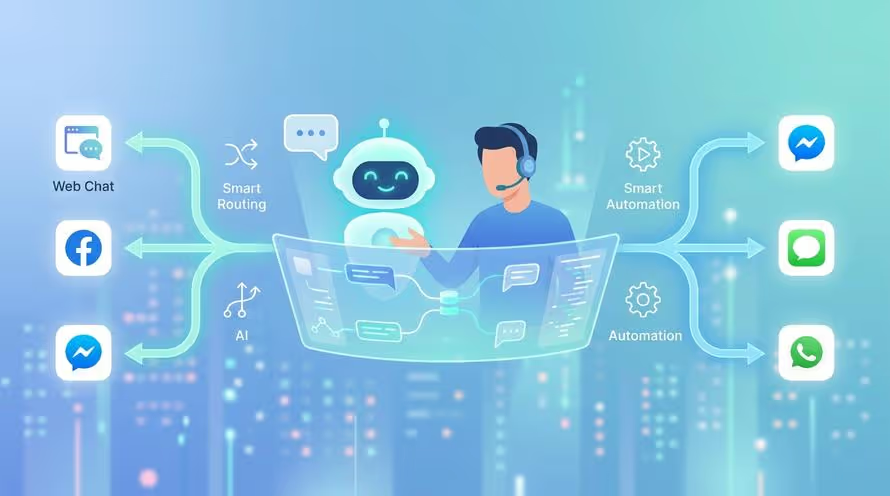
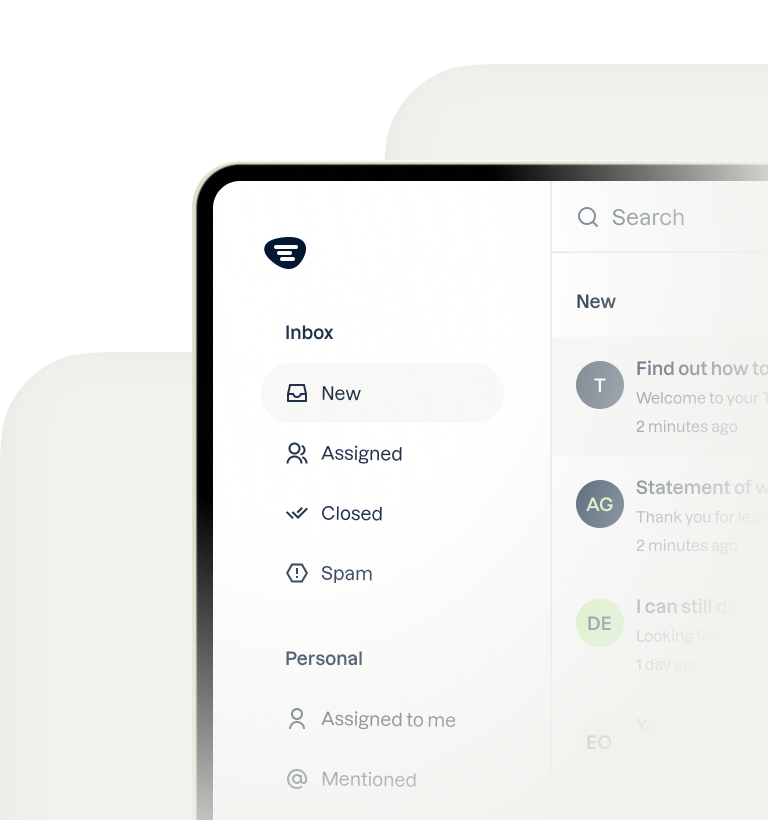
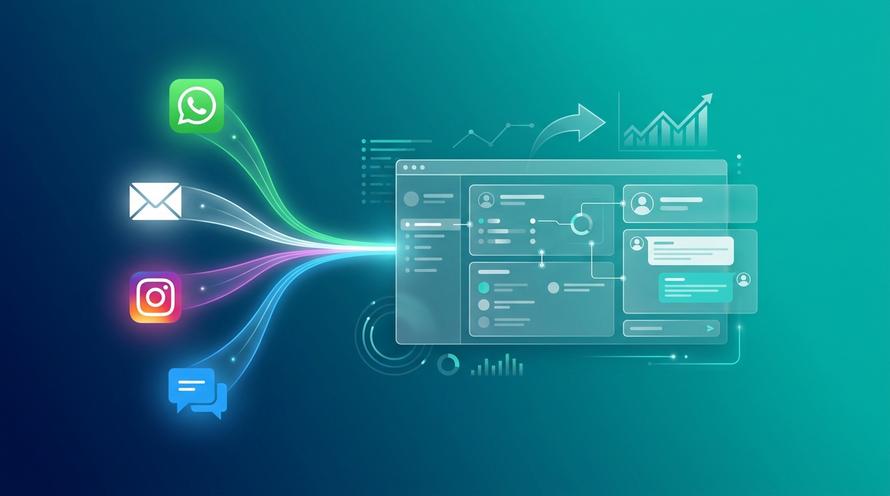
Trengo is a leading conversational marketing platform designed for businesses that want to unify their customer communication. Instead of juggling separate tools for live chat, email, and social media, Trengo brings every channel—including WhatsApp, Facebook Messenger, Instagram, and more—into a single shared inbox. This provides a complete view of the customer conversation and empowers teams to collaborate effectively. More than just an inbox, Trengo is powerful conversational marketing software built with advanced automation and AI. You can build intelligent workflows, deploy AI agents to handle routine tasks, and get AI-powered insights to improve performance. By centralizing communication and leveraging smart automation, Trengo makes it easy to deliver seamless customer journeys at scale. If you are wondering what is a conversational AI platform?, Trengo is the perfect example of how it brings channels, automation, and intelligence together.
Other Specialized Tools
While all-in-one platforms provide the most value, some businesses may start with more specialized tools. For example, certain tools are known specifically for creating website chatbots, offering deep customization for on-site engagement. Other tools focus exclusively on Instagram and Facebook Messenger automation, providing a robust feature set for social media marketers. However, the limitation of these tools is clear: they operate in a silo. As your strategy grows, managing these disparate systems becomes inefficient and leads to a fragmented customer experience, reinforcing the value of a unified platform like Trengo.
Frequently Asked Questions (FAQs)

The main objective is to build customer relationships and accelerate the sales cycle through personalized, real-time, two-way conversations, moving away from the impersonal, one-way communication of traditional marketing.
It refers to a comprehensive strategy that uses conversational tools and techniques across the entire customer lifecycle—from initial marketing awareness and lead generation, through sales qualification and closing, to post-sale customer support and loyalty.
Yes, a chatbot is one of the most common tools used in conversational marketing. However, the strategy itself is broader, encompassing live chat, messaging apps, and the overall approach of creating dialogues with customers.
Conversational AI elevates the strategy by moving beyond simple, scripted chatbots. AI understands user intent, sentiment, and context, allowing for more natural, human-like conversations. It can handle more complex queries, personalize responses dynamically, and learn over time to improve performance, enabling businesses to scale high-quality conversations.



Let's meet
Grow your business with loyalty. Bring all of your customer contact into one, single platform to unlock delight at every step of the way.