Blog

Service à la clientèle
7 tendances marketing dans le secteur des biens de grande consommation qui vont révolutionner l'industrie en 2026
7 tendances marketing dans le secteur des biens de grande consommation qui vont révolutionner l'industrie en 2026

Essaie Trengo gratuitement

Trengo rassemble WhatsApp, les e-mails, le web, les réseaux sociaux et les appels dans une seule boîte de réception, ce qui fait gagner à ton équipe des heures de boulot répétitif et garantit qu'aucune conversation ne se perd.
Voir Trengo en action
- Intégrations étendues
- Configuration facile
- Structure tarifaire évolutive
7 tendances marketing dans le secteur des biens de grande consommation qui vont révolutionner l'industrie en 2026
Résumé
Les tendances marketing les plus marquantes du secteur des biens de grande consommation pour 2026 font évoluer l'industrie, passant d'une publicité de masse à des relations clients directes et personnalisées. Cette évolution est portée par l'essor des modèles de vente directe au consommateur (D2C), du commerce conversationnel et de l'utilisation stratégique des données de première main. Pour prospérer, les marques de produits de grande consommation doivent adopter une stratégie de communication multicanal qui unifie les interactions avec les clients et exploite des outils puissants comme l'API WhatsApp Business pour créer des expériences fluides et engageantes.
TL;DR
- Le secteur des produits de grande consommation évolue rapidement vers des modèles de vente directe au consommateur (D2C), ce qui nécessite une nouvelle approche marketing.
- L'hyper-personnalisation, qui s'appuie sur les données de première main, est en train de remplacer le marketing de masse générique.
- Le commerce conversationnel via des plateformes comme WhatsApp est en train de devenir un canal de vente incontournable, ce qui facilite grandement la vie des consommateurs.
- Une expérience omnicanale, qui réunit les points de contact numériques et physiques, est désormais une norme incontournable pour les marques de produits de grande consommation.
- Les analyses basées sur l'IA permettent d'obtenir des informations prédictives utiles pour prévoir la demande et identifier les tendances.
- Une transparence totale en matière d'approvisionnement et de développement durable est essentielle pour gagner la confiance et la fidélité des consommateurs.
Tout d'abord, qu'est-ce que le marketing des produits de grande consommation (CPG) exactement ?
Les biens de grande consommation (CPG) sont des articles que les clients utilisent et remplacent fréquemment, comme les aliments, les boissons, les produits d'hygiène et les produits d'entretien. Le marketing des CPG désigne donc l'ensemble des stratégies utilisées pour promouvoir et vendre ces produits à fort volume et à bas prix. Traditionnellement, ce marketing se concentrait principalement sur l'obtention d'emplacements de choix dans les rayons des supermarchés, la publicité télévisée à large audience et la notoriété de la marque via les médias de masse. L'objectif était de remporter la bataille au point de vente, dans un magasin physique. Cependant, les tendances actuelles du marketing des CPG ont bouleversé ce modèle. Aujourd'hui, l'accent est mis sur l'établissement d'une relation directe avec le consommateur final via les canaux numériques, la collecte de données de première main et le développement d'une fidélité qui dépasse le cadre du commerce de détail.
Tendance n° 1 : l'impératif de l'hyper-personnalisation
L'époque des messages standardisés pour les marques de produits de grande consommation est révolue. En 2026, les consommateurs n'apprécient pas seulement que les marques comprennent leur historique d'achat, leurs préférences alimentaires et leurs besoins en matière de mode de vie, ils s'attendent carrément à ce qu'elles le fassent. Ce passage du marketing de masse à la personnalisation individuelle est le changement le plus important pour fidéliser la clientèle. Il s'agit de faire en sorte que chaque client se sente pris en compte et valorisé, en transformant un simple achat en une expérience relationnelle.
Exploiter les données de première main pour offrir des expériences personnalisées
Les marques de produits de grande consommation qui réussissent mettent en place de solides écosystèmes de données de première main. En recueillant des informations directement à partir des programmes de fidélité, des interactions sur leur site web, des parcours de quiz et des conversations directes avec les clients, elles peuvent aller au-delà du simple ciblage démographique générique. Ces données leur permettent de créer des recommandations de produits hautement personnalisées, de proposer des offres sur mesure qui sont vraiment pertinentes et de produire du contenu qui répond directement aux intérêts spécifiques des consommateurs, ce qui augmente considérablement les taux d'engagement et de conversion.
Comment la communication multicanal favorise la personnalisation
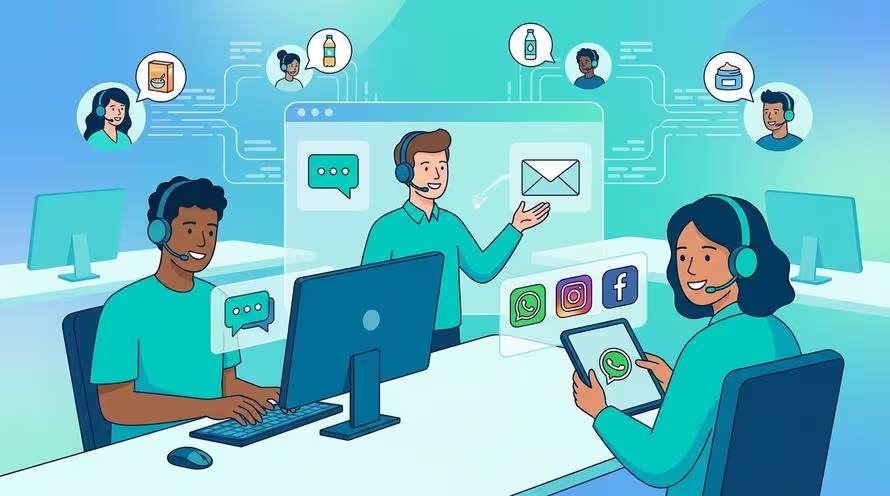
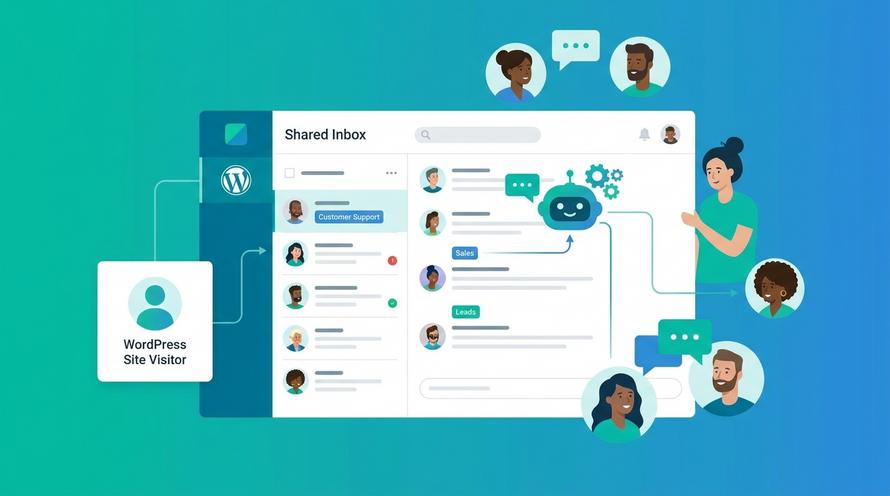
Une véritable personnalisation est impossible lorsque les données clients sont cloisonnées entre les différents canaux. Un client peut poser une question par e-mail, effectuer un achat sur le site web et laisser un commentaire sur Instagram. Pour offrir une expérience cohérente et personnalisée, les équipes marketing et d'assistance ont besoin d'une vue d'ensemble de toutes les interactions. C'est là qu'une plateforme comme Trengo devient indispensable. En regroupant toutes les conversations provenant des e-mails, de WhatsApp et des messages privés sur les réseaux sociaux dans une seule boîte de réception partagée, les équipes ont une vue d'ensemble du parcours client. Ça leur permet d'offrir une assistance sur mesure, de faire des suggestions pertinentes et de construire une relation basée sur une compréhension complète de l'historique du client avec la marque.
Tendance n° 2 : le commerce conversationnel s'impose comme la nouvelle façon de passer à la caisse
La friction est l'ennemie de la conversion, et les tendances du commerce en ligne dans le secteur des biens de grande consommation (CPG) montrent clairement une volonté de la supprimer complètement. Le commerce conversationnel consiste à vendre des produits directement au sein d'applications de messagerie. Au lieu de rediriger un client vers un site web pour finaliser un achat, les marques vont à sa rencontre là où il passe déjà son temps : sur des plateformes comme WhatsApp, Instagram Messenger et Facebook Messenger. Cette tendance vise à rendre le parcours, de la découverte à l'achat, aussi court et fluide que possible.
De la simple navigation à l'achat via le chat
Imagine qu'un client tombe sur ta nouvelle collation bio sur Instagram. Il t'envoie un message privé pour te demander s'il y a des allergènes. Grâce au commerce conversationnel, ton équipe (ou un chatbot) peut répondre à sa question et lui proposer immédiatement un lien vers la page de paiement directement dans la conversation. Il peut alors ajouter le produit à son panier, saisir ses informations de paiement et valider sa commande sans jamais quitter l'application. Cette réactivité transforme un simple coup de cœur en vente assurée, et les marques de produits de grande consommation adoptent rapidement cette approche comme un élément central de leur stratégie de marketing numérique.
Le rôle de l'API WhatsApp Business
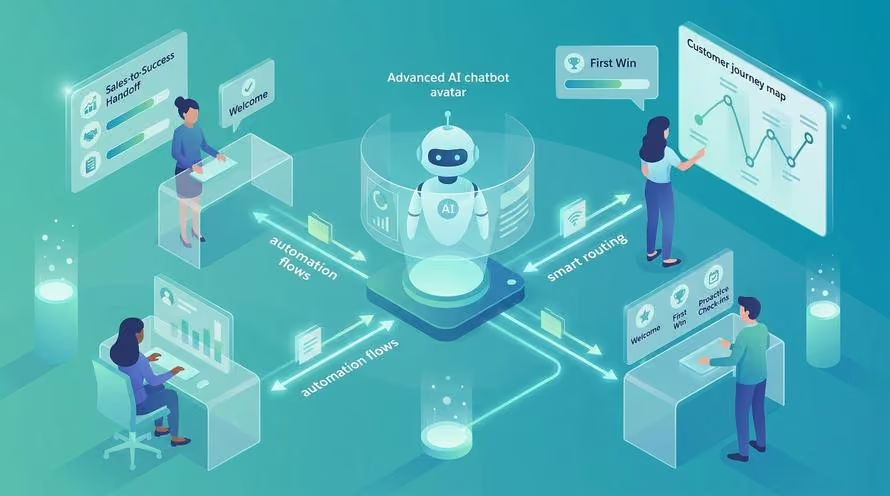
Le moteur qui sous-tend un commerce conversationnel performant, c'est l'API WhatsApp Business. Elle permet aux marques de produits de grande consommation d'aller au-delà de la simple messagerie individuelle. Avec Trengo, les entreprises peuvent exploiter cette API pour envoyer des notifications proactives, comme des alertes de réapprovisionnement ou des offres promotionnelles exclusives. De plus, elle permet un service client automatisé sophistiqué grâce à des flowbots capables de répondre aux questions courantes, de guider les utilisateurs vers les produits et de faciliter l'ensemble du processus de vente, 24 h/24 et 7 j/7. Cette fonctionnalité est la clé pour déployer le commerce conversationnel à grande échelle et offrir une vitrine D2C toujours accessible.
Tendance n° 3 : l'expérience omnicanale D2C est incontournable
Le modèle Direct-to-Consumer (D2C) a évolué, passant d'une stratégie de niche à un élément fondamental du secteur des biens de grande consommation. La prochaine étape ne consiste pas seulement à disposer d’un site web D2C ; il s’agit de créer une expérience véritablement omnicanale. Cela signifie que tu dois t’assurer que la voix de ta marque, ton niveau de service et l’expérience globale sont parfaitement cohérents, que le client interagisse avec ton produit dans un magasin, navigue sur ton site web ou discute avec ton équipe d’assistance sur les réseaux sociaux. Une expérience décousue est une expérience ratée.
Réunir les rayons numériques et physiques
Les marques innovantes du secteur des biens de grande consommation (CPG) comblent le fossé entre leurs produits physiques et leur présence numérique. L'utilisation de codes QR sur les emballages en est un exemple simple mais efficace. Un client peut scanner un code sur un paquet de café pour être redirigé directement vers une conversation WhatsApp où il pourra obtenir des conseils de préparation, en savoir plus sur l'origine du café ou s'abonner. Ce geste tout simple transforme un produit physique statique en une passerelle interactive permettant un engagement numérique continu et le développement d'une relation avec le client.
Gérer la communication D2C à grande échelle
À mesure que le canal D2C d'une marque de produits de grande consommation se développe, le volume de demandes de renseignements, de commentaires et de demandes d'assistance des clients augmente sur plusieurs plateformes. C'est un défi opérationnel majeur. Un message privé manqué ou une réponse par e-mail trop tardive peut nuire à l'image de marque. Une plateforme de messagerie multicanal est le système nerveux central d'une marque D2C en pleine croissance. Elle garantit qu'aucun message ne passe entre les mailles du filet et permet aux équipes de collaborer efficacement pour résoudre les problèmes des clients, tout en maintenant l'expérience de marque haut de gamme à laquelle s'attendent les clients D2C.
Tendance n° 4 : l'analyse basée sur l'IA pour des informations prédictives
Le secteur des biens de grande consommation a toujours disposé d'une multitude de données, mais la qualité des informations tirées de celles-ci fait aujourd'hui un bond en avant grâce à l'IA. La tendance va désormais au-delà de l'analyse descriptive (qui rend compte de ce qui s'est passé) pour s'orienter vers l'analyse prédictive (qui prévoit ce qui va se passer). Les spécialistes du marketing dans ce secteur utilisent des modèles d'IA sophistiqués pour prévoir la demande de produits avec une plus grande précision, optimiser les dépenses publicitaires en temps réel en fonction des performances et identifier les nouvelles tendances de consommation avant qu'elles ne se généralisent.
De l'écoute des réseaux sociaux à la prévision des tendances
Les outils d'IA sont désormais capables d'analyser des millions de conversations en ligne, d'avis et de publications sur les réseaux sociaux pour détecter les changements subtils dans le sentiment et les intérêts des consommateurs. Par exemple, une IA pourrait repérer un engouement croissant pour un ingrédient « superaliment » spécifique ou un nouveau profil gustatif dans une région donnée. Ça permet à une marque de produits de grande consommation avisée d'accélérer son processus de développement de produits et de lancer un produit adapté avant ses concurrents, s'emparant ainsi d'une part de marché précieuse.
Tendance n° 5 : Transparence totale et marketing axé sur une mission
Aujourd'hui, les consommateurs n'achètent pas seulement un produit ; ils adhèrent à l'histoire d'une marque et à ses valeurs. D'ici 2026, la transparence totale sera la norme. Les consommateurs veulent connaître tous les détails des produits qu'ils achètent : d'où proviennent les ingrédients ? Quelle est l'empreinte carbone de la marque ? Les pratiques de travail sont-elles éthiques ? Les marques qui cachent ces informations perdront la confiance des consommateurs, tandis que celles qui misent sur la transparence et un engagement clair gagneront une loyauté sans faille.
Comment communiquer la raison d'être de ta marque
Pour communiquer efficacement la raison d'être de ta marque, il ne suffit pas d'une simple page « À propos » sur ton site web. Elle doit être intégrée à chaque point de contact avec le client. Cela implique de mettre en avant tes initiatives en matière de développement durable dans tes publications sur les réseaux sociaux, de former tes conseillers du service client pour qu'ils puissent parler en connaissance de cause de ton approvisionnement éthique, et de faire preuve d'honnêteté et de transparence dans toutes tes communications. La cohérence sur tous les canaux est essentielle pour construire une marque authentique, animée par une mission, qui trouve un écho profond auprès des consommateurs d'aujourd'hui.
Tendance n° 6 : L'économie des créateurs et la croissance portée par les communautés
Le paysage du marketing d'influence est en pleine mutation. Si les méga-influenceurs continuent d'avoir une grande portée, les marques de produits de grande consommation (CPG) trouvent désormais un immense intérêt à s'associer à des micro- et nano-créateurs. Ces derniers disposent souvent de communautés de niche, certes plus restreintes mais très engagées, qui font aveuglément confiance à leurs recommandations. La stratégie évolue : il ne s'agit plus de « louer » une large audience générique, mais de co-créer du contenu authentique avec de véritables fans de la marque et de bâtir une communauté à partir de zéro.
Tisser des liens grâce à des témoignages authentiques
En 2026, les partenariats les plus fructueux avec les créateurs seront des collaborations à long terme, et non des publications sponsorisées ponctuelles. Les marques de produits de grande consommation identifient les créateurs qui utilisent et apprécient déjà sincèrement leurs produits, et leur donnent les moyens de devenir de véritables ambassadeurs de la marque. Cette approche permet de créer un contenu plus authentique et plus accessible, qui favorise non seulement la notoriété, mais aussi l'intérêt et la conversion au sein d'une communauté ciblée et très fidèle.
Tendance n° 7 : L'essor des expériences « phygitales »
Le « phygital » est un concept qui consiste à fusionner les mondes physique et numérique pour créer des interactions avec la marque plus immersives et mémorables. Pour les marques de produits de grande consommation, dont le principal point de contact est un produit physique, cela offre un nouveau moyen puissant d’interagir avec les clients au-delà du moment de la consommation. Cette tendance vise à ajouter une dimension numérique agréable et utile à l’expérience du produit physique.
Imagine un filtre de réalité augmentée (RA) sur Instagram qui te permet de voir à quoi ressemblerait un nouvel ustensile de cuisine sur ton plan de travail avant de l'acheter. Ou imagine un emballage interactif sur une bouteille de vin qui, une fois scanné avec un smartphone, te donne accès à des recettes d'accords mets-vins exclusives et à une vidéo du vigneron. Ces expériences « phygitales » créent un effet « waouh », rendent la marque plus mémorable et apportent une valeur ajoutée concrète qui renforce la relation client.
Questions qu'on nous pose souvent

Parmi les principales tendances du secteur des biens de grande consommation (BGC) en 2026, on peut citer la prédominance des canaux de vente en direct au consommateur (D2C), l'utilisation de l'IA pour l'analyse prédictive, l'importance incontournable accordée à la durabilité et à la transparence, ainsi que l'essor du commerce conversationnel via les applications de messagerie. L'hyper-personnalisation est également une tendance majeure, qui fait évoluer le marketing d'une approche de masse vers un engagement individuel.
Si des tendances comme l'IA et la personnalisation sont universelles, leur application aux marques de produits de grande consommation (PGC) est unique. Il s'agit d'utiliser ces technologies pour combler le fossé qui existe depuis toujours entre un produit à bas prix et à fort volume et une relation client profonde et fidèle. Pour la première fois, les marques de PGC peuvent prendre en main l'ensemble du parcours client, en collectant des données et en créant directement une communauté, plutôt que de dépendre uniquement des détaillants.
Une stratégie de communication multicanal est essentielle, car les consommateurs d'aujourd'hui interagissent avec les marques via une multitude de points de contact et ne se limitent pas à un seul canal. Pour s'imposer dans un environnement D2C très concurrentiel, une marque de produits de grande consommation doit être capable de gérer de manière fluide les échanges par e-mail, WhatsApp et les réseaux sociaux afin de nouer des relations, d'offrir une assistance immédiate et de stimuler les ventes, où que se trouve le client.
Les perspectives d'avenir du marché des biens de grande consommation sont très dynamiques et axées sur le numérique. Le succès dépendra de la capacité d'une marque à tirer parti de la technologie, à exploiter ses propres données et à établir des relations directes et authentiques avec les consommateurs. Les marques qui maîtriseront cette approche D2C, axée sur les données et centrée sur le dialogue, seront les leaders de la prochaine génération dans le secteur des biens de grande consommation.
Plus de détails


Rencontrons-nous
Développe ton activité grâce à la fidélisation. Rassemble tous tes contacts avec les clients sur une seule et même plateforme pour débloquer l'enchantement à chaque étape.